Industry-Verified Manufacturing Data (2026)

Compression/Transition Section

Based on aggregated insights from multiple verified factory profiles within the CNFX directory, the standard Compression/Transition Section used in the Rubber and Plastic Product Manufacturing sector typically supports operational capacities ranging from standard industrial configurations to heavy-duty production requirements.

Technical Definition & Core Assembly

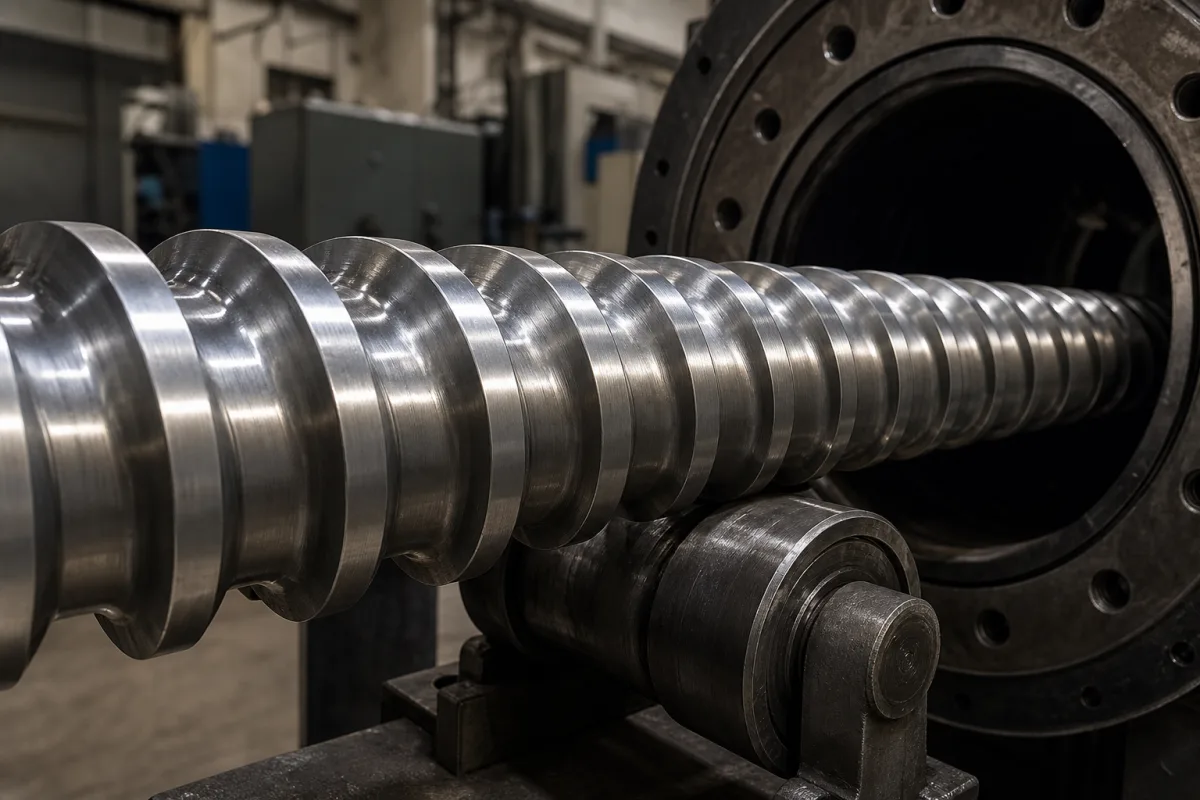
A canonical Compression/Transition Section is characterized by the integration of Screw Root and Flight. In industrial production environments, manufacturers listed on CNFX commonly emphasize Nitrided Steel construction to support stable, high-cycle operation across diverse manufacturing scenarios.

The section of an extrusion screw where material is compressed and transitions from solid to molten state.
Product Specifications

Technical details and manufacturing context for Compression/Transition Section

Definition
The compression/transition section is a critical component of an extrusion screw, located between the feed and metering sections. Its primary function is to compress the solid polymer material, remove entrapped air, and gradually melt the material through shear heating and conduction from the barrel. This section features a decreasing channel depth that creates the necessary pressure for proper melting and homogenization before the material enters the metering section.
Working Principle
As the extrusion screw rotates, material moves from the feed section into the compression/transition section where the decreasing channel depth creates increasing pressure. This pressure, combined with shear forces from screw rotation and heat transfer from the barrel, compresses the material, removes air voids, and initiates melting. The tapered design ensures gradual compression and controlled melting to prevent material degradation.
Common Materials
Nitrided Steel, Bimetallic Alloy, Tool Steel
Technical Parameters
  • Length of the compression/transition section relative to total screw length (mm) Per Request
Components / BOM
  • Screw Root
    Forms the base structure of the screw with tapered diameter to create compression
    Material: Steel Alloy
  • Flight
    Helical ridges that convey and compress material while generating shear heat
    Material: Wear-Resistant Steel
  • Flight Land
    Top surface of flight that contacts barrel, creating shear and heat transfer
    Material: Hardened Steel
Engineering Reasoning
15-80 bar pressure, 180-240°C temperature, 0.8-1.2 m/s material velocity
Pressure exceeds 85 bar causing screw deflection >0.5 mm, temperature exceeds 260°C causing polymer degradation, or material velocity drops below 0.6 m/s causing stagnation
Design Rationale: Excessive pressure induces screw bending stress exceeding yield strength (σ_y > 250 MPa), thermal degradation occurs at temperatures above polymer's thermal decomposition threshold (T_d > 260°C for polypropylene), and material stagnation leads to localized overheating and thermal degradation
Risk Mitigation (FMEA)
Trigger Insufficient barrel heating or excessive cooling causing temperature gradient >30°C/cm
Mode: Incomplete polymer melting leading to solid particle carryover and downstream die blockage
Strategy: Implement PID-controlled multi-zone heating with thermal sensors every 15 cm and redundant heating elements
Trigger Screw wear reducing compression ratio from 3.0:1 to below 2.5:1 over 5000 operating hours
Mode: Inadequate pressure buildup causing insufficient mixing and density variations in extrudate
Strategy: Apply tungsten carbide coating (HVOF) to screw flights and implement predictive maintenance based on motor torque monitoring with 5% increase threshold

Industry Taxonomies & Aliases

Commonly used trade names and technical identifiers for Compression/Transition Section.

Applied To / Applications

This component is essential for the following industrial systems and equipment:

Industrial Ecosystem & Supply Chain DNA

Complementary Systems
Downstream Applications
Specialized Tooling

Application Fit & Sizing Matrix

Operational Limits
pressure: Up to 50 MPa (500 bar) maximum
flow rate: 10-5000 kg/hr (depends on screw diameter)
temperature: 150-350°C (typical polymer processing)
slurry concentration: Not applicable - designed for solid pellet feed
Media Compatibility
✓ Polyethylene (PE) resins ✓ Polypropylene (PP) compounds ✓ Polyvinyl chloride (PVC) formulations
Unsuitable: Highly abrasive mineral-filled composites (excessive wear)
Sizing Data Required
  • Required throughput (kg/hr)
  • Screw diameter (mm)
  • Polymer melt flow index (MFI)

Reliability & Engineering Risk Analysis

Failure Mode & Root Cause
Fatigue cracking in transition welds
Cause: Cyclic thermal and pressure stresses from process fluctuations causing stress concentration at weld joints
Erosion-corrosion in compression flow paths
Cause: High-velocity process streams containing particulates or corrosive elements wearing away protective oxide layers
Maintenance Indicators
  • Abnormal high-frequency vibration detected in transition zone during operation
  • Visible discoloration or hot spots on external surfaces indicating internal degradation
Engineering Tips
  • Implement phased array ultrasonic testing during shutdowns to detect subsurface defects before catastrophic failure
  • Optimize process parameters to minimize thermal cycling and maintain stable operating conditions within design specifications

Compliance & Manufacturing Standards

Reference Standards
ISO 286-2:2010 (Limits and fits) ASTM A370-24 (Standard Test Methods and Definitions for Mechanical Testing of Steel Products) DIN 7150-1:2011 (Tolerances for cylindrical fits)
Manufacturing Precision
  • Bore diameter: ±0.02 mm
  • Flatness of mating surfaces: 0.05 mm
Quality Inspection
  • Dimensional verification with CMM (Coordinate Measuring Machine)
  • Dye penetrant inspection for surface defects

Factories Producing Compression/Transition Section

Verified manufacturers with capability to produce this product in China

✓ 93% Supplier Capability Match Found

P Project Engineer from Germany Jan 13, 2026
★★★★★
"Testing the Compression/Transition Section now; the technical reliability results are within 1% of the laboratory datasheet."
Technical Specifications Verified
S Sourcing Manager from Brazil Jan 10, 2026
★★★★★
"Impressive build quality. Especially the technical reliability is very stable during long-term operation."
Technical Specifications Verified
P Procurement Specialist from Canada Jan 07, 2026
★★★★★
"As a professional in the Rubber and Plastic Product Manufacturing sector, I confirm this Compression/Transition Section meets all ISO standards."
Technical Specifications Verified
Verification Protocol

“Feedback is collected from verified sourcing managers during RFQ (Request for Quote) and factory evaluation processes on CNFX. These reports represent historical performance data and technical audit summaries from our B2B manufacturing network.”

10 sourcing managers are analyzing this specification now. Last inquiry for Compression/Transition Section from Turkey (1h ago).

Supply Chain Compatible Machinery & Devices

Modular Injection Molded Plastic Pallet

Interlocking plastic pallet system for logistics and storage.

Explore Specs →
Multi-Layer Co-Extruded Barrier Film

Plastic film with multiple layers for superior barrier properties.

Explore Specs →
High-Precision Silicone Gasket

Custom-molded silicone seal for industrial equipment.

Explore Specs →
High-Density Polyethylene Storage Container

Industrial-grade plastic container for bulk material storage and transport.

Explore Specs →

Frequently Asked Questions

What is the function of the compression/transition section in extrusion screws?

This critical section compresses raw material and facilitates the transition from solid pellets to a uniform molten state, ensuring proper mixing and flow in rubber and plastic extrusion processes.

Which material is best for high-wear extrusion applications?

Bimetallic alloys offer superior wear resistance for abrasive materials, while nitrided steel provides excellent surface hardness for general applications, and tool steel balances durability with cost-effectiveness.

How does the flight design affect extrusion performance?

The flight geometry in the compression section controls material compression rate, shear forces, and melt uniformity - directly impacting product quality, output consistency, and energy efficiency in manufacturing.

Can I contact factories directly on CNFX?

CNFX is an open directory, not a transaction platform. Each factory profile provides direct contact information and production details to help you initiate direct inquiries with Chinese suppliers.

Get Quote for Compression/Transition Section

Request technical pricing, lead times, or customized specifications for Compression/Transition Section directly from verified manufacturing units.

Your business information is encrypted and only shared with verified Compression/Transition Section suppliers.

Thank you! Your message has been sent. We'll respond within 1–3 business days.

Need to Manufacture Compression/Transition Section?

Connect with verified factories specializing in this product category

Add Your Factory Contact Us
Previous Product
Automotive Weatherstrip
Next Product
Conveyor Belt/Chain