Editorial Technical Reference

Infrared Heating Zone

This page explains how Infrared Heating Zone is classified within Rubber and Plastic Product Manufacturing. Technical values and manufacturer relationships are research references; confirm the current specification and supplier evidence for each order.

Technical Definition & Core Assembly

A specialized heating section within an automated mold preparation station that uses infrared radiation to preheat molds to optimal processing temperatures.
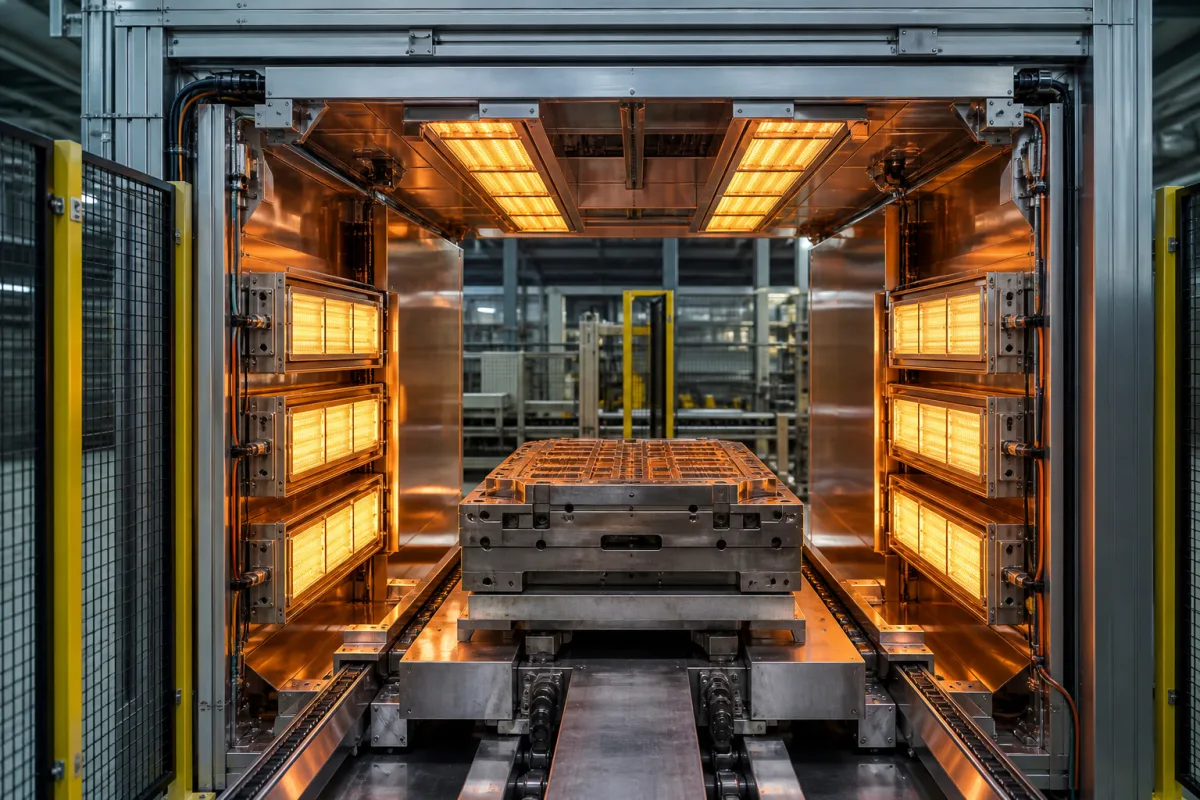
Infrared Heating Zone in a manufacturing environment
Representative product image. Confirm appearance and specifications with the manufacturer.

Product Specifications

Technical details and manufacturing context for Infrared Heating Zone

Definition
The Infrared Heating Zone is a critical component of the Automated Mold Preparation Station designed to uniformly and efficiently heat molds using infrared radiation technology. This zone ensures molds reach precise temperature requirements before processing, eliminating moisture, reducing thermal stress, and improving material flow characteristics during manufacturing operations. The heating zone is typically integrated into a larger automated system, where molds are conveyed through the zone for preheating before entering the molding process. It is suitable for rubber and plastic product manufacturing, where mold temperature control is essential for product quality and cycle time optimization. The zone features quartz infrared heating elements housed in a stainless steel frame with ceramic insulation, providing durable and efficient operation. Key parameters include heating power ranging from 10 to 50 kW, heating zone length from 1000 to 3000 mm, width from 500 to 1500 mm, and a temperature range of 50 to 200 °C with uniformity of ±5 °C. Heating time varies from 5 to 20 minutes, and control accuracy is ±1 °C. The system operates on a three-phase supply voltage of 380–480 V AC (IEC 60038) with power consumption matching heating power. Ingress protection is rated IP54–IP65 (IEC 60529), and operating humidity is up to 85% RH non-condensing. The frame material is stainless steel (ASTM A240), and the weight ranges from 200 to 800 kg depending on size. These specifications are reference ranges; actual values must be confirmed with the legal manufacturer or supplier for specific models and applications. The Infrared Heating Zone is designed for integration into automated mold preparation stations, and its performance directly impacts molding efficiency and product consistency.
Working Principle
Infrared emitters generate electromagnetic radiation in the infrared spectrum, which is absorbed by the mold surface and converted into heat energy. This radiant heating method provides direct, contactless heat transfer with rapid response times and uniform temperature distribution across the mold surface. The heating zone uses quartz infrared tubes as the heating elements, which emit infrared radiation that penetrates the mold surface and heats it from within. The stainless steel housing and ceramic insulation ensure efficient heat containment and safety. The temperature is controlled via PID control, maintaining accuracy of ±1 °C. The system is designed to heat molds to the required temperature within 5 to 20 minutes, depending on the mold size and initial temperature. The heating process is monitored and controlled to ensure uniform temperature distribution, critical for consistent molding results.
Common Materials
Quartz infrared heating elements, Stainless steel housing, Ceramic insulation
Technical Parameters
ParameterTypical rangeNotes & selection driver
Heating Power10–50 kWDetermines heating rate and throughput
Heating Zone Length1000–3000 mmMust match mold dimensions
Heating Zone Width500–1500 mmMust match mold width
Temperature Range50–200 °CTypical mold preheating temperatures
Temperature Uniformity±5 °CCritical for consistent molding
Heating Time5–20 minTime to reach set temperature
Supply Voltage380–480 V ACThree-phase, 50/60 HzIEC 60038
Power Consumption10–50 kWMatches heating power
Control Accuracy±1 °CPID control typical
Ingress ProtectionIP54–IP65Dust and water resistanceIEC 60529
Operating Humidity≤85 % RHNon-condensing
Heater TypeQuartzInfrared quartz tubes
Frame MaterialStainless steelCorrosion resistantASTM A240
Weight200–800 kgDepends on size

Ranges are indicative industry figures for RFQ preparation, not a supplier commitment. Confirm every value and standard with the legal manufacturer before ordering.

Components / BOM
  • Infrared Emitter Array
    Generates infrared radiation for heating
    Material: Quartz with tungsten filament
  • Reflector Panel Part
    Directs infrared radiation toward mold surface
    Material: Polished aluminum
  • Temperature Sensor
    Monitors mold surface temperature for feedback control
    Material: Stainless steel with thermocouple
  • Cooling System
    Prevents overheating of heating zone components
    Material: Aluminum heat sinks with fans
  • Stainless Steel Housing
    Contains the radiant heat and keeps the operator off the hot parts.
    Material: Stainless steel
  • Ceramic Insulation
    Backs the reflector so the heat goes toward the mould, not into the frame.
    Material: Ceramic
  • PID Controller
    Holds the surface temperature to ±1 °C by trimming emitter power.

Applied To / Applications

This component is essential for the following industrial systems and equipment:

Industrial Ecosystem & Supply Chain Structure

Complementary Systems
Downstream Applications
Specialized Tooling

Application Fit & Sizing Matrix

Operational Limits
pressure: Atmospheric pressure only (non-pressurized system)
other spec: Heating rate: 10-50°C/min, Power density: 5-30 kW/m², Response time: <30 seconds
temperature: Ambient to 600°C (typical operating range 150-400°C)
Media Compatibility
✓ Steel alloy molds ✓ Aluminum molds ✓ Ceramic composite molds
Unsuitable: Explosive or flammable atmosphere (requires inert gas purge)
Sizing Data Required
  • Mold surface area (m²)
  • Target temperature rise (°C)
  • Required heating time (minutes)

Reliability & Engineering Risk Analysis

Failure Mode & Root Cause
Reflector Degradation
Cause: Accumulation of dust, oxidation, or physical damage reducing infrared reflectivity and heating efficiency.
Heater Element Failure
Cause: Thermal cycling stress, electrical overload, or moisture ingress leading to element burnout or insulation breakdown.
Maintenance Indicators
  • Uneven heating patterns or cold spots on the product surface
  • Unusual buzzing, arcing sounds, or visible sparking from the heating elements
Engineering Tips
  • Implement regular cleaning schedules for reflectors and protective quartz tubes using appropriate non-abrasive methods to maintain optimal reflectivity.
  • Install thermal monitoring with feedback control to prevent overheating and ensure uniform temperature distribution across the heating zone.

Indicative industry ranges for design and RFQ preparation. Confirm the exact figures and applicable standard with the manufacturer before specifying.

Compliance & Manufacturing Standards

Applicable Standards
IEC 60335-2-30 - Safety of household and similar electrical appliances EN 60335-2-30 - Household and similar electrical appliances - Safety

Quoted from the published standard.

Manufacturing Precision
  • Temperature Uniformity: +/- 5°C across heating zone
  • Heating Element Positioning: +/- 2mm from design specification
Quality Inspection
  • Infrared Thermography Test for temperature distribution
  • Electrical Safety Test for insulation resistance and leakage current

Manufacturers of Infrared Heating Zone

Manufacturer profiles associated with Infrared Heating Zone.

Sourcing Infrared Heating Zone from China?
Tell us your specification and target quantity — we will match it against manufacturer records and come back with the factories that fit.
Request manufacturers We manufacture this

Manufacturer listings support early research and capability understanding. They are not certification, ranking, or transaction guarantees.

Share this page
Technical documentation
Request current drawings, revision history, and a signed specification sheet.
Manufacturing capability
Verify equipment lists, process limits, capacity, and representative production evidence.
Inspection readiness
Confirm test methods, calibrated equipment, sampling plans, and traceable reports.
Supplier transparency
Check the legal entity, factory address, ownership, certifications, and direct contacts.

CNFX does not score or rank suppliers. Buyers must verify all claims and documents with the legal manufacturer before ordering.

Supply Chain Compatible Machinery & Devices

High-Precision Silicone Gasket

A precision-engineered sealing component manufactured from liquid silicone rubber (LSR) via injection molding.

Explore Specs →
Silicone Rubber

A synthetic elastomer composed of silicone polymers with exceptional temperature resistance, flexibility, and chemical stability.

Explore Specs →
Non-post Cured

A rubber or plastic processing machine that produces cured products without requiring a separate post-curing stage.

Explore Specs →
Fumed Silicone Rubber

A high-performance silicone rubber reinforced with fumed silica, offering enhanced mechanical strength and thermal stability.

Explore Specs →

Frequently Asked Questions

What is the typical heating power range for the Infrared Heating Zone?

The heating power range is 10 to 50 kW, as listed in the reference specifications. This determines the heating rate and throughput. Actual power requirements depend on the mold size and desired heating time, so confirm with the manufacturer for your specific application.

What temperature uniformity can be expected?

The temperature uniformity is specified as ±5 °C, which is critical for consistent molding. This ensures that the mold surface is heated evenly, reducing thermal stress and improving material flow. Verify the uniformity for your specific model with the supplier.

What are the electrical requirements?

The supply voltage is three-phase, 380–480 V AC, according to IEC 60038. The power consumption matches the heating power, ranging from 10 to 50 kW. Ensure your facility's electrical system meets these requirements and consult the manufacturer for detailed specifications.

What is the ingress protection rating?

The ingress protection rating is IP54–IP65 as per IEC 60529, providing dust and water resistance. This is suitable for industrial environments. Confirm the exact rating for your unit with the manufacturer to ensure it meets your operational conditions.

Data Basis

Editorial classification, named public sources where available, and source-reviewed manufacturer records.

Preliminary Technical Classification
This page supports structured research, RFQ preparation, and supplier evaluation. It does not replace buyer-led supplier qualification, standards review, or technical approval.
Buyer enquiry

Request manufacturing insight for Infrared Heating Zone

Ask for use case, specification boundaries, supplier type, and RFQ preparation information for this product.

Where it goes
Straight to the CNFX editorial desk, and to the manufacturer if this product is linked to a claimed profile. Nothing is broadcast to a supplier list.
Your details stay here
We do not sell or rent enquiry data, and we do not add you to a mailing list. Used only to answer this request.
No commission, no middleman
CNFX is a directory. We take no cut of any order and never negotiate on a supplier's behalf.
What we don't claim
A listing is not an endorsement. Qualify every supplier and verify every figure yourself before ordering.

Your business information is used only to process this request.

Thank you! Your message has been sent. We'll respond within 1–3 business days.
Sorry, we couldn't send your message. Please try again, or email us at [email protected].

Need to Manufacture Infrared Heating Zone?

Compare manufacturer profiles with relevant product and process capability.

Previous Product
High-Precision Silicone Gasket
Next Product
Injection Molding Machine
Get QuotesChat