Industry-Verified Manufacturing Data (2026)

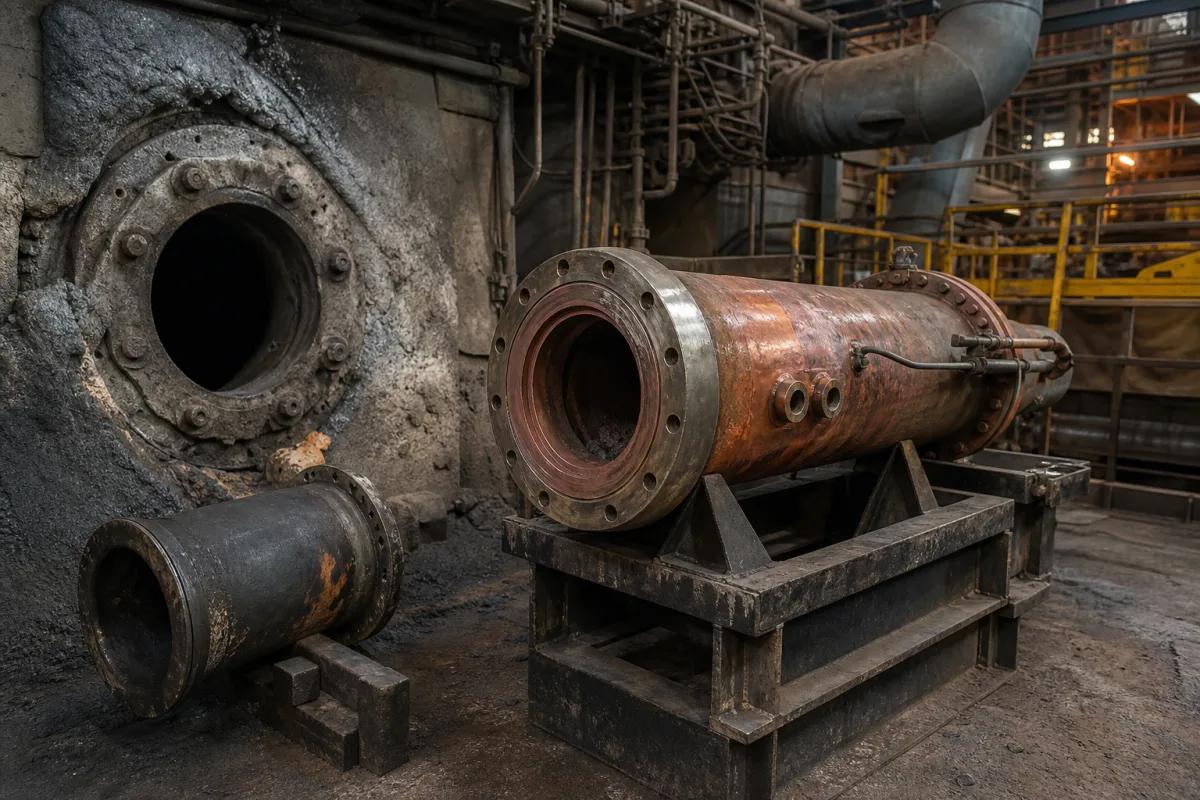
Blast Furnace Tuyere Assembly

Based on aggregated insights from multiple verified factory profiles within the CNFX directory, the standard Blast Furnace Tuyere Assembly used in the Basic Metal Manufacturing sector typically supports operational capacities ranging from standard industrial configurations to heavy-duty production requirements.

Technical Definition & Core Assembly

A canonical Blast Furnace Tuyere Assembly is characterized by the integration of Tuyere Nozzle and Cooling Water Jacket. In industrial production environments, manufacturers listed on CNFX commonly emphasize Copper Alloy construction to support stable, high-cycle operation across diverse manufacturing scenarios.

Critical blast furnace component for injecting hot air into the furnace hearth

Product Specifications

Technical details and manufacturing context for Blast Furnace Tuyere Assembly

Definition
A tuyere assembly is an essential component installed in the blast furnace hearth wall, responsible for injecting preheated air (hot blast) into the furnace to combust coke and generate the high temperatures required for iron ore reduction. It maintains precise airflow control and protects furnace structure from extreme heat. The assembly ensures efficient combustion and uniform temperature distribution within the furnace, directly impacting iron production quality and furnace longevity.
Working Principle
Hot blast air is forced through the tuyere nozzle into the furnace, where it reacts with coke to produce carbon monoxide and intense heat for iron ore reduction, while cooling water circulates through the assembly to prevent thermal damage.
Common Materials
Copper Alloy, Stainless Steel, Refractory Lining
Technical Parameters
  • Nozzle diameter for airflow control (mm) Per Request
  • Maximum operating pressure rating (bar) Per Request
Components / BOM
  • Tuyere Nozzle
    Directs and controls hot blast airflow into furnace
    Material: Copper alloy for heat conductivity
  • Cooling Water Jacket
    Circulates cooling water to prevent thermal damage
    Material: Stainless steel for corrosion resistance
  • Mounting Flange
    Secures assembly to blast furnace shell
    Material: Carbon steel with refractory coating
  • Thermal Protection Lining Optional
    Insulates assembly from extreme furnace heat
    Material: Ceramic refractory material
Engineering Reasoning
2.5-4.0 bar (250-400 kPa) hot blast pressure, 1200-1350°C blast temperature, 0.8-1.2 m/s tuyere velocity
Thermal stress exceeds 350 MPa yield strength of copper alloy at 450°C, or pressure exceeds 6.0 bar causing mechanical deformation
Design Rationale: Thermal fatigue from cyclic heating (1200°C blast) and cooling (water cooling at 40°C) creates stress concentrations exceeding material endurance limit (280 MPa at 10^6 cycles)
Risk Mitigation (FMEA)
Trigger Cooling water flow reduction below 15 m³/h per tuyere
Mode: Copper tuyere tip melting at 1085°C melting point
Strategy: Dual redundant cooling circuits with flow sensors and automatic blast shutoff at 12 m³/h
Trigger Hot blast temperature exceeding 1400°C for >30 minutes
Mode: Thermal expansion mismatch between copper tuyere (16.5 μm/m·K) and steel housing (11.0 μm/m·K)
Strategy: Temperature-controlled blast mixing with ceramic-lined hot blast main maintaining 1350°C maximum

Industry Taxonomies & Aliases

Commonly used trade names and technical identifiers for Blast Furnace Tuyere Assembly.

Industrial Ecosystem & Supply Chain DNA

Complementary Systems
Downstream Applications
Specialized Tooling

Application Fit & Sizing Matrix

Operational Limits
pressure: 3-6 bar (blast pressure)
flow rate: 1000-5000 Nm³/min per tuyere
temperature: 1200-1600°C (hot blast temperature)
slurry concentration: Not applicable - designed for hot air/gas injection only
Media Compatibility
✓ Hot blast air (1200-1600°C) ✓ Oxygen-enriched blast ✓ Natural gas/coal injection mixtures
Unsuitable: Liquid slag or molten metal direct contact (causes rapid erosion)
Sizing Data Required
  • Blast furnace inner volume/hearth diameter
  • Required total blast volume (Nm³/min)
  • Number of tuyeres in furnace design

Reliability & Engineering Risk Analysis

Failure Mode & Root Cause
Thermal fatigue cracking
Cause: Cyclic thermal stress from hot blast injection (up to 1300°C) and cooling water temperature fluctuations, leading to crack initiation and propagation in tuyere body and tip
Oxidation and erosion
Cause: High-temperature oxidation from hot blast and abrasive wear from burden materials (coke, ore) impacting the tuyere tip, accelerated by improper blast velocity or burden distribution
Maintenance Indicators
  • Visible coolant leaks or steam emission from tuyere body indicating cooling system failure or crack development
  • Abnormal blast pressure fluctuations or audible whistling/hissing sounds suggesting tuyere tip wear or partial blockage
Engineering Tips
  • Implement predictive maintenance using thermal imaging to monitor tuyere temperature profiles and detect early-stage thermal fatigue before catastrophic failure
  • Optimize cooling water chemistry and flow rates to maintain consistent heat transfer, and use refractory coatings on tuyere tips to reduce oxidation/erosion rates

Compliance & Manufacturing Standards

Reference Standards
ISO 10855:2017 (Foundry products - Blast furnace tuyeres) ASTM A297/A297M (Standard Specification for Steel Castings, Iron-Chromium and Iron-Chromium-Nickel, Heat Resistant, for General Application) DIN 17440 (Heat-resisting cast steel; technical delivery conditions)
Manufacturing Precision
  • Bore diameter: +/-0.05mm
  • Surface flatness at mounting flange: 0.15mm maximum deviation
Quality Inspection
  • Dye Penetrant Testing (PT) for surface crack detection
  • Ultrasonic Testing (UT) for internal defect detection

Factories Producing Blast Furnace Tuyere Assembly

Verified manufacturers with capability to produce this product in China

✓ 95% Supplier Capability Match Found

P Project Engineer from Brazil Jan 01, 2026
★★★★★
"Found 39+ suppliers for Blast Furnace Tuyere Assembly on CNFX, but this spec remains the most cost-effective."
Technical Specifications Verified
S Sourcing Manager from Canada Dec 29, 2025
★★★★★
"The technical documentation for this Blast Furnace Tuyere Assembly is very thorough, especially regarding Nozzle Diameter (mm)."
Technical Specifications Verified
P Procurement Specialist from United States Dec 26, 2025
★★★★★
"Reliable performance in harsh Basic Metal Manufacturing environments. No issues with the Blast Furnace Tuyere Assembly so far."
Technical Specifications Verified
Verification Protocol

“Feedback is collected from verified sourcing managers during RFQ (Request for Quote) and factory evaluation processes on CNFX. These reports represent historical performance data and technical audit summaries from our B2B manufacturing network.”

8 sourcing managers are analyzing this specification now. Last inquiry for Blast Furnace Tuyere Assembly from Thailand (1h ago).

Supply Chain Commonly Integrated Components

Purge Air System

A system that provides controlled airflow to clear optical paths and protect sensors in molten metal temperature measurement applications.

Explore Specs →
Degassing Chamber

A specialized vessel within a molten metal degassing system where dissolved gases are removed from molten metal through controlled processes.

Explore Specs →
Gas Control System

A system that regulates and controls the flow, pressure, and composition of gases used in molten metal degassing processes.

Explore Specs →
Burner Assembly

A combustion system component that generates controlled flame for heating applications in industrial preheating stations.

Explore Specs →

Frequently Asked Questions

What materials are used in blast furnace tuyere assemblies and why?

Our tuyere assemblies use copper alloy for superior heat conductivity, stainless steel for structural integrity, and refractory lining for thermal protection. This combination ensures optimal heat transfer, durability, and resistance to extreme furnace conditions.

How does the cooling system work in a tuyere assembly?

The cooling water jacket circulates water through the assembly to dissipate heat from the hot blast injection process. This maintains safe operating temperatures, prevents thermal damage, and extends the component's service life in continuous blast furnace operations.

What specifications should I consider when selecting a tuyere assembly?

Key specifications include connection flange size (DN), cooling water flow rate (m³/h), hot blast pressure rating (bar), maximum operating temperature (°C), nozzle diameter (mm), and overall length (mm). These ensure compatibility with your blast furnace system and operational requirements.

Can I contact factories directly on CNFX?

CNFX is an open directory, not a transaction platform. Each factory profile provides direct contact information and production details to help you initiate direct inquiries with Chinese suppliers.

Get Quote for Blast Furnace Tuyere Assembly

Request technical pricing, lead times, or customized specifications for Blast Furnace Tuyere Assembly directly from verified manufacturing units.

Your business information is encrypted and only shared with verified Blast Furnace Tuyere Assembly suppliers.

Thank you! Your message has been sent. We'll respond within 1–3 business days.

Need to Manufacture Blast Furnace Tuyere Assembly?

Connect with verified factories specializing in this product category

Add Your Factory Contact Us
Previous Product
Blast Furnace Structure
Next Product
Branch Connections