Industry-Verified Manufacturing Data (2026)

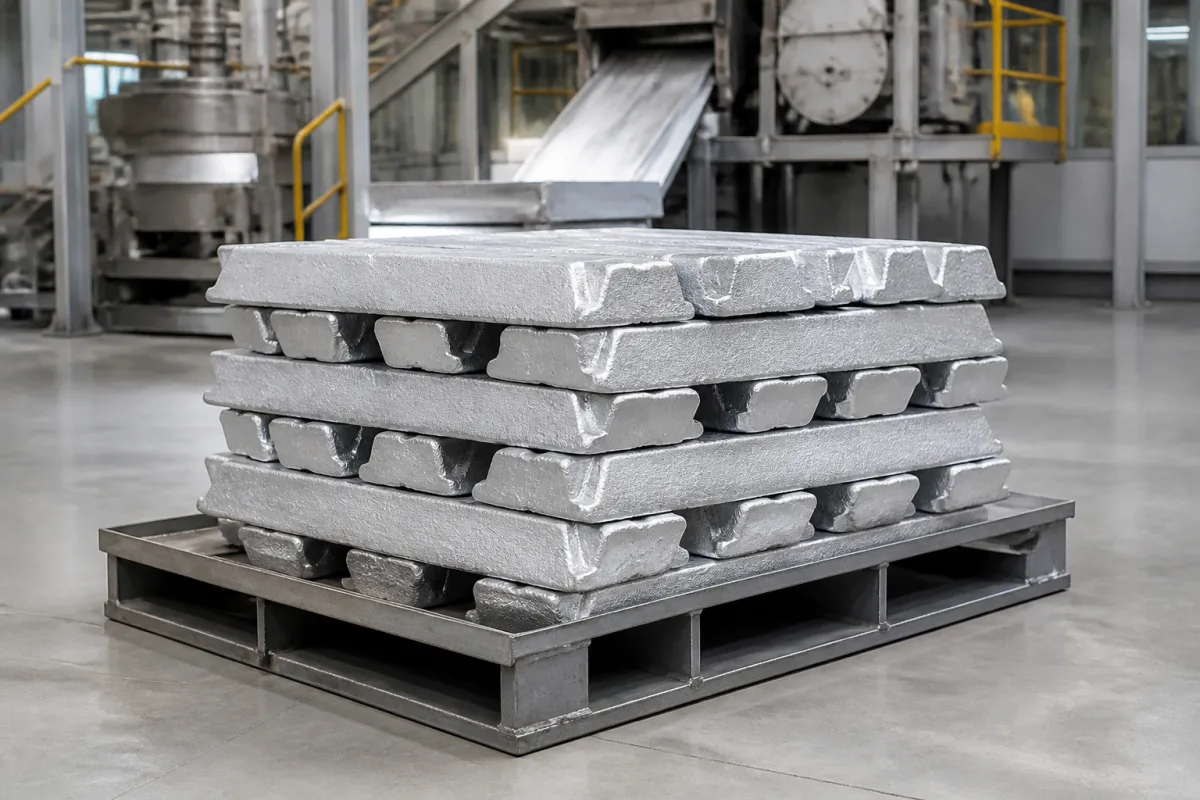
High-Purity Aluminum Ingot

Based on aggregated insights from multiple verified factory profiles within the CNFX directory, the standard High-Purity Aluminum Ingot used in the Basic Metal Manufacturing sector typically supports operational capacities ranging from standard industrial configurations to heavy-duty production requirements.

Technical Definition & Core Assembly

A canonical High-Purity Aluminum Ingot is characterized by the integration of Aluminum Matrix and Trace Elements. In industrial production environments, manufacturers listed on CNFX commonly emphasize Alumina (Al₂O₃) construction to support stable, high-cycle operation across diverse manufacturing scenarios.

Semi-finished aluminum with ≥99.7% purity for industrial manufacturing.

Product Specifications

Technical details and manufacturing context for High-Purity Aluminum Ingot

Definition
High-purity aluminum ingots are standardized semi-finished products produced through electrolytic refining and casting processes. They serve as the primary raw material input for downstream fabrication of aluminum alloys, extrusions, and rolled products. In B2B supply chains, these ingots are traded as commodities based on purity grades and chemical specifications. They enable manufacturers to produce consistent, high-quality aluminum components for aerospace, automotive, and construction applications.
Working Principle
Produced by electrolytic reduction of alumina (Al₂O₃) in molten cryolite, followed by casting into standardized shapes for handling and transport.
Common Materials
Alumina (Al₂O₃), Cryolite (Na₃AlF₆)
Technical Parameters
  • Minimum aluminum purity percentage (%) Standard Spec
  • Standard ingot weight (kg) Standard Spec
Components / BOM
  • Aluminum Matrix
    Primary metallic structure providing mechanical and electrical properties
    Material: High-purity aluminum (≥99.7% Al)
  • Trace Elements
    Controlled impurities affecting material properties and processing characteristics
    Material: Iron, silicon, copper, magnesium
  • Surface Oxide Layer
    Natural protective coating preventing further oxidation during storage and transport
    Material: Aluminum oxide (Al₂O₃)
Engineering Reasoning
Melting point: 660.32°C, Solidus temperature: 660.32°C, Liquidus temperature: 660.32°C, Density: 2.70 g/cm³ at 20°C, Thermal conductivity: 237 W/(m·K) at 25°C, Electrical resistivity: 2.65 μΩ·cm at 20°C
Oxidation threshold: 660.32°C (melting point) where protective Al₂O₃ layer destabilizes, Grain boundary embrittlement: 0.3% Fe content by weight, Hydrogen porosity formation: 0.15 mL/100g dissolved hydrogen
Design Rationale: High-temperature oxidation due to breakdown of protective Al₂O₃ layer above melting point, Intermetallic compound formation (Al₃Fe) at grain boundaries causing embrittlement, Hydrogen solubility decrease during solidification causing porosity formation (Sievert's Law)
Risk Mitigation (FMEA)
Trigger Thermal cycling between 20°C and 500°C exceeding 1000 cycles
Mode: Thermal fatigue cracking at grain boundaries with crack propagation rate >10⁻⁸ m/cycle
Strategy: Grain refinement through Al-5Ti-1B master alloy addition to achieve ASTM grain size ≤6
Trigger Chloride ion contamination >50 ppm in processing environment
Mode: Pitting corrosion initiation at potentials >-0.75 V vs SCE with pit growth rate >0.1 mm/year
Strategy: Controlled atmosphere processing with <10 ppm O₂ and <5 ppm H₂O using argon gas blanket

Industry Taxonomies & Aliases

Commonly used trade names and technical identifiers for High-Purity Aluminum Ingot.

Industrial Ecosystem & Supply Chain DNA

Complementary Systems
Downstream Applications
Specialized Tooling

Application Fit & Sizing Matrix

Operational Limits
pressure: Atmospheric to 10 MPa for forming processes
flow rate: Not applicable (solid material)
temperature: Up to 660°C (melting point), typical processing range: 20-600°C
slurry concentration: Not applicable (solid ingot form)
Media Compatibility
✓ Electrical conductor manufacturing ✓ Aerospace alloy production ✓ Food-grade packaging applications
Unsuitable: Strong alkaline or acidic chemical processing environments
Sizing Data Required
  • Required annual production volume (tons/year)
  • Target alloy composition specifications
  • Required ingot dimensions (length x width x height)

Reliability & Engineering Risk Analysis

Failure Mode & Root Cause
Surface oxidation and contamination
Cause: Exposure to atmospheric oxygen and moisture leading to oxide layer formation, or contact with foreign materials during handling/storage
Thermal stress cracking
Cause: Rapid temperature changes during processing (heating/cooling cycles) causing differential expansion and micro-fractures
Maintenance Indicators
  • Visible white powdery residue or discoloration on ingot surfaces
  • Audible cracking or popping sounds during thermal processing cycles
Engineering Tips
  • Implement controlled atmosphere storage with inert gas (argon/nitrogen) blankets to prevent oxidation
  • Use gradual, controlled heating and cooling rates during processing to minimize thermal shock stresses

Compliance & Manufacturing Standards

Reference Standards
ASTM B179-21: Standard Specification for Aluminum Alloys in Ingot and Molten Forms for Castings from All Casting Processes ISO 115:2003: Wrought aluminium and aluminium alloys - Chemical composition and form of products DIN EN 576:2003: Aluminium and aluminium alloys - Unalloyed aluminium ingots for remelting - Specifications
Manufacturing Precision
  • Chemical composition: +/-0.05% for major alloying elements
  • Ingot dimensions: Length +/-10mm, Width +/-5mm, Height +/-3mm
Quality Inspection
  • Optical Emission Spectrometry (OES) for chemical composition verification
  • Visual and dimensional inspection for surface defects and conformance to size specifications

Factories Producing High-Purity Aluminum Ingot

Verified manufacturers with capability to produce this product in China

✓ 95% Supplier Capability Match Found

P Project Engineer from Brazil Jan 17, 2026
★★★★★
"The technical documentation for this High-Purity Aluminum Ingot is very thorough, especially regarding Aluminum Purity (%)."
Technical Specifications Verified
S Sourcing Manager from Canada Jan 14, 2026
★★★★★
"Reliable performance in harsh Basic Metal Manufacturing environments. No issues with the High-Purity Aluminum Ingot so far."
Technical Specifications Verified
P Procurement Specialist from United States Jan 11, 2026
★★★★★
"Testing the High-Purity Aluminum Ingot now; the Aluminum Purity (%) results are within 1% of the laboratory datasheet."
Technical Specifications Verified
Verification Protocol

“Feedback is collected from verified sourcing managers during RFQ (Request for Quote) and factory evaluation processes on CNFX. These reports represent historical performance data and technical audit summaries from our B2B manufacturing network.”

9 sourcing managers are analyzing this specification now. Last inquiry for High-Purity Aluminum Ingot from UAE (1h ago).

Supply Chain Commonly Integrated Components

Signal Processor

Electronic device that conditions, amplifies, filters, and converts raw sensor signals into standardized outputs for temperature measurement systems

Explore Specs →
Purge Air System

A system that provides controlled airflow to clear optical paths and protect sensors in molten metal temperature measurement applications.

Explore Specs →
Degassing Chamber

A specialized vessel within a molten metal degassing system where dissolved gases are removed from molten metal through controlled processes.

Explore Specs →
Gas Control System

A system that regulates and controls the flow, pressure, and composition of gases used in molten metal degassing processes.

Explore Specs →

Frequently Asked Questions

What are the typical applications for high-purity aluminum ingots?

High-purity aluminum ingots are used in electrical components, aerospace manufacturing, automotive parts, packaging materials, and construction applications where superior conductivity and corrosion resistance are required.

How does the purity level affect aluminum ingot performance?

Higher purity (≥99.7%) improves electrical conductivity, enhances corrosion resistance, increases ductility, and reduces brittleness. Lower trace element content ensures consistent performance in demanding industrial applications.

What quality control measures ensure ingot specifications?

Quality is maintained through spectral analysis for purity verification, dimensional checks, weight validation, and trace element testing (iron, silicon content). Certificates of analysis accompany each batch to confirm specifications.

Can I contact factories directly on CNFX?

CNFX is an open directory, not a transaction platform. Each factory profile provides direct contact information and production details to help you initiate direct inquiries with Chinese suppliers.

Get Quote for High-Purity Aluminum Ingot

Request technical pricing, lead times, or customized specifications for High-Purity Aluminum Ingot directly from verified manufacturing units.

Your business information is encrypted and only shared with verified High-Purity Aluminum Ingot suppliers.

Thank you! Your message has been sent. We'll respond within 1–3 business days.

Need to Manufacture High-Purity Aluminum Ingot?

Connect with verified factories specializing in this product category

Add Your Factory Contact Us
Previous Product
High-Purity Aluminum Alloy Ingot
Next Product
High-Purity Copper Alloy Continuous Casting Billet