Editorial Technical Reference

High-Purity Aluminum Alloy Ingot

This page explains how High-Purity Aluminum Alloy Ingot is classified within Basic Metal Manufacturing. Technical values and manufacturer relationships are research references; confirm the current specification and supplier evidence for each order.

Technical Definition & Core Assembly

High-purity aluminum alloy ingots are standardized, semi-finished metal products produced through direct chill casting or continuous casting processes.
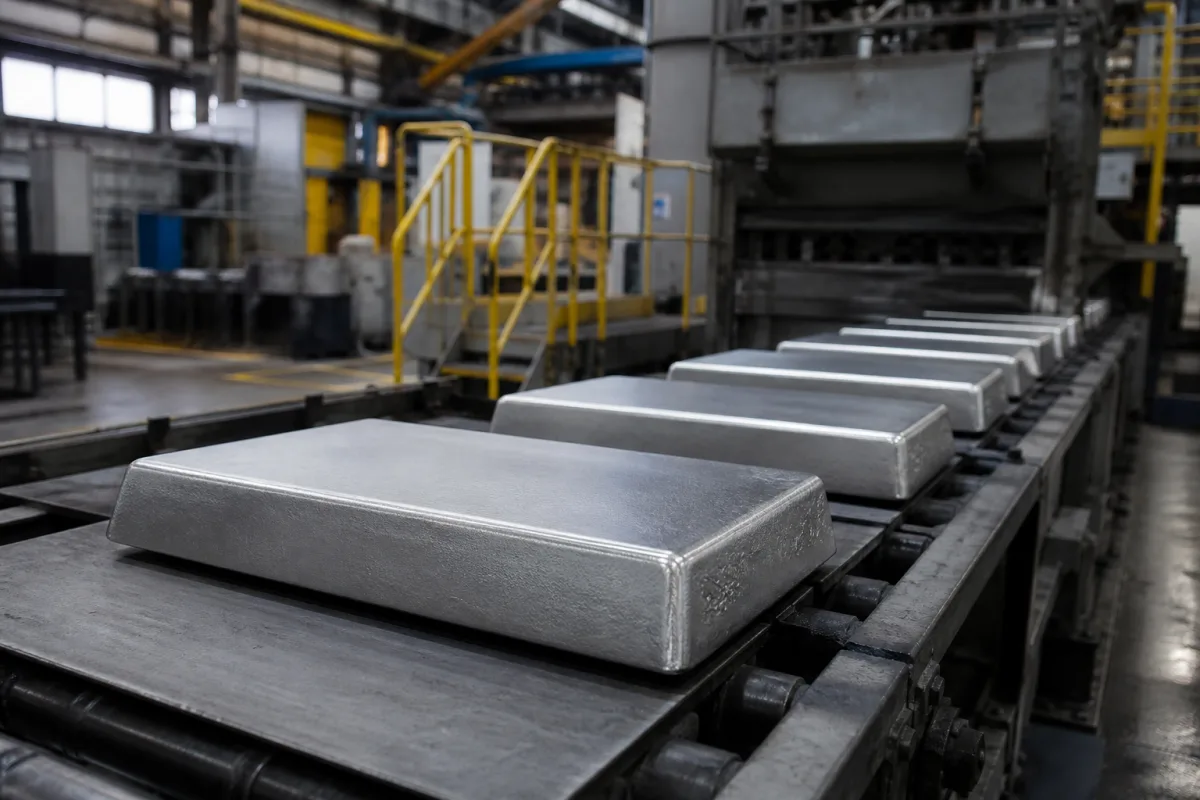
High-Purity Aluminum Alloy Ingot in a manufacturing environment
Representative product image. Confirm appearance and specifications with the manufacturer.

Product Specifications

Technical details and manufacturing context for High-Purity Aluminum Alloy Ingot

Definition
High-purity aluminum alloy ingots are standardized, semi-finished metal products produced through direct chill casting or continuous casting processes. They serve as the primary raw material input for downstream manufacturing sectors including automotive, aerospace, and construction. These ingots are designed for remelting in foundries to produce cast components, extrusion billets, or rolling stock. Their controlled chemical composition and metallurgical structure ensure consistent quality and performance in final products. The ingots are available in common alloy grades such as 6061, 6063, and 6082, with aluminum purity ranging from 99.7% to 99.9% by weight. Mechanical properties, such as ultimate tensile strength in T6 temper, range from 180 to 310 MPa. Density is 2.70 g/cm³, and melting point (solidus) ranges from 585°C to 660°C. Thermal conductivity at 25°C is between 150 and 230 W/m·K. Ingot weight can be customized from 5 to 25 kg, with dimension tolerance of ±5 mm. Hydrogen content is limited to ≤0.15 mL/100g Al to reduce porosity, and oxide inclusion is ≤0.02 mm²/kg for cleanliness. Casting temperature is optimized at 700–750°C, and grain size is controlled to ASTM 1–3 for fine structure. These parameters are referenced against Chinese standards such as GB/T 1196, GB/T 3190, GB/T 228.1, GB/T 1423, GB/T 1425, GB/T 10297, GB/T 8005.3, and GB/T 14979, as well as ASTM E112 for grain size. It is essential to verify model-specific values and standards with the legal manufacturer or supplier before procurement, as the listed ranges are directory references and not guarantees of compliance. The ingots are intended for industrial remelting and fabrication, and their suitability for specific applications must be confirmed through material testing and consultation with the supplier.
Working Principle
Molten aluminum alloy is poured into molds, solidifying under controlled cooling to form standardized blocks with specific dimensions and metallurgical properties. The casting process, whether direct chill or continuous, ensures a fine grain structure and low gas content. During remelting, the ingot is heated to its melting range, and the controlled composition allows for predictable alloy behavior. The ingot's dimensions and weight facilitate handling and charging into furnaces. The solidification rate and cooling conditions influence the final microstructure, which in turn affects mechanical properties like tensile strength. The ingot's purity and low inclusion content minimize defects in downstream castings. The casting temperature is maintained within a specified range to optimize grain refinement. The ingot's design ensures consistent feeding and melting in foundry operations.
Common Materials
Primary Aluminum, Alloying Elements (e.g., Silicon, Magnesium, Copper)
Technical Parameters
ParameterTypical rangeNotes & selection driver
Aluminum PurityRequired99.7–99.9 %Minimum aluminum content by weightGB/T 1196
Alloy GradeRequired6061, 6063, 6082 N/AStandard alloy designation (e.g., A356, 6061)GB/T 3190
Tensile StrengthRequired180–310 MPaMinimum ultimate tensile strength in T6 temperGB/T 228.1
DensityRequired2.70 g/cm³Material density at room temperatureGB/T 1423
Melting Point585–660 °CSolidus temperature of the alloyGB/T 1425
Thermal Conductivity150–230 W/m·KThermal conductivity at 25°CGB/T 10297
Ingot Weight5–25 kgCustom weights available on requestGB/T 1196
Dimension Tolerance±5 mmEnsures consistent feeding in remeltingGB/T 1196
Hydrogen Content≤0.15 mL/100g AlLow hydrogen reduces porosity in castingsGB/T 8005.3
Oxide Inclusion≤0.02 mm²/kgCleanliness affects mechanical propertiesGB/T 14979
Casting Temperature700–750 °COptimized for grain structure
Grain Size1–3 ASTMFine grain improves mechanical propertiesASTM E112

Ranges are indicative industry figures for RFQ preparation, not a supplier commitment. Confirm every value and standard with the legal manufacturer before ordering.

Components / BOM
  • Aluminum Matrix Part
    Primary metallic base providing structural integrity and conductivity
    Material: High-purity aluminum
  • Alloying Elements Part
    Enhance mechanical properties, corrosion resistance, and castability
    Material: Silicon, magnesium, copper, etc.
  • Grain Refiner Optional Part
    Controls microstructure during solidification for improved properties
    Material: Titanium-boron or similar master alloy

Industry Taxonomies & Aliases

Commonly used trade names and technical identifiers for High-Purity Aluminum Alloy Ingot.

Industrial Ecosystem & Supply Chain Structure

Complementary Systems
Downstream Applications
Specialized Tooling

Application Fit & Sizing Matrix

Operational Limits
pressure: Atmospheric pressure during remelting; no pressure rating as semi-finished casting
flow rate: Not applicable - solid ingot form
other spec: Typical ingot dimensions: 500-1000mm length, 100-200mm cross-section; Weight: 20-50kg per ingot
temperature: Melting range: 660°C to 750°C (1220°F to 1382°F), depending on alloy composition
slurry concentration: Not applicable - solid form
Media Compatibility
✓ Aerospace component fabrication ✓ Automotive structural parts manufacturing ✓ Electrical conductor production
Unsuitable: Marine/saltwater environments without proper alloying or coating
Sizing Data Required
  • Required final product volume/weight
  • Target alloy composition specifications
  • Remelting furnace capacity constraints

Reliability & Engineering Risk Analysis

Failure Mode & Root Cause
Intergranular corrosion
Cause: Presence of impurities at grain boundaries, improper heat treatment, or exposure to corrosive environments leading to preferential attack along grain boundaries
Stress corrosion cracking
Cause: Combination of tensile stress (residual or applied) and corrosive environment, particularly chloride-containing solutions, causing crack propagation
Maintenance Indicators
  • Visible white powdery deposits or localized pitting on ingot surfaces indicating active corrosion
  • Audible cracking or popping sounds during thermal cycling or handling suggesting internal stress relief or crack propagation
Engineering Tips
  • Implement strict environmental controls including humidity regulation (<40% RH) and chloride-free storage to prevent corrosion initiation
  • Apply controlled heating/cooling rates during processing (max 100°C/hour) and stress-relief annealing at 250-300°C to minimize residual stresses

Indicative industry ranges for design and RFQ preparation. Confirm the exact figures and applicable standard with the manufacturer before specifying.

Compliance & Manufacturing Standards

Applicable Standards
ISO 209-1:2019 (Wrought aluminium and aluminium alloys) ASTM B179-18 (Standard Specification for Aluminum Alloys in Ingot Form) EN 576:2003 (Aluminium and aluminium alloys - Unalloyed aluminium ingots for remelting)

Quoted from the published standard.

Manufacturing Precision
  • Chemical Composition: +/-0.05% for major alloying elements
  • Ingot Dimensions: Length +/-10mm, Width/Thickness +/-5mm
Quality Inspection
  • Optical Emission Spectrometry (OES) for chemical composition
  • Ultrasonic Testing for internal defects

Manufacturers of High-Purity Aluminum Alloy Ingot

1 company lists this product among what they make. Company figures are quoted from each company's own website; every card states where the relationship came from.

Wan Star Aluminum Industry
Qingdao, Shandong, CN
Listed on the company's own website · profile compiled by CNFX from public sources
Listed there as: “Aluminum Alloy Ingots”
View source page ↗ wanstaraluminumgroup.com · checked 2026-09-04

Manufacturer listings support early research and capability understanding. They are not certification, ranking, or transaction guarantees.

Share this page
Technical documentation
Request current drawings, revision history, and a signed specification sheet.
Manufacturing capability
Verify equipment lists, process limits, capacity, and representative production evidence.
Inspection readiness
Confirm test methods, calibrated equipment, sampling plans, and traceable reports.
Supplier transparency
Check the legal entity, factory address, ownership, certifications, and direct contacts.

CNFX does not score or rank suppliers. Buyers must verify all claims and documents with the legal manufacturer before ordering.

Supply Chain Commonly Integrated Components

Gas Control System

A system that regulates and controls the flow, pressure, and composition of gases used in molten metal degassing processes.

Explore Specs →
Refractory Lined Ladle

A steel ladle with an interior refractory lining designed to withstand high temperatures and contain molten metal during transfer operations.

Explore Specs →
Reagent Injection System

A system designed to precisely inject desulfurization reagents into molten metal within a desulfurization reactor

Explore Specs →
Lance Manipulator

A mechanical device designed to precisely position, insert, and retract desulfurization lances into molten metal during the desulfurization process.

Explore Specs →

Frequently Asked Questions

What are the typical alloy grades available for these ingots?

The directory lists common grades such as 6061, 6063, and 6082, but actual availability may vary. Always confirm with the supplier.

What is the aluminum purity range?

The aluminum content is typically 99.7% to 99.9% by weight, but this should be verified for each batch.

How is the ingot's quality controlled?

Quality is indicated by parameters like hydrogen content (≤0.15 mL/100g Al) and oxide inclusion (≤0.02 mm²/kg), but these are reference values. Confirm with the manufacturer.

Can the ingot weight be customized?

Yes, custom weights from 5 to 25 kg are possible, but this depends on the supplier's capabilities. Verify before ordering.

Data Basis

Editorial classification, named public sources where available, and source-reviewed manufacturer records.

Preliminary Technical Classification
This page supports structured research, RFQ preparation, and supplier evaluation. It does not replace buyer-led supplier qualification, standards review, or technical approval.
Buyer enquiry

Request manufacturing insight for High-Purity Aluminum Alloy Ingot

Ask for use case, specification boundaries, supplier type, and RFQ preparation information for this product.

Where it goes
Straight to the CNFX editorial desk, and to the manufacturer if this product is linked to a claimed profile. Nothing is broadcast to a supplier list.
Your details stay here
We do not sell or rent enquiry data, and we do not add you to a mailing list. Used only to answer this request.
No commission, no middleman
CNFX is a directory. We take no cut of any order and never negotiate on a supplier's behalf.
What we don't claim
A listing is not an endorsement. Qualify every supplier and verify every figure yourself before ordering.

Your business information is used only to process this request.

Thank you! Your message has been sent. We'll respond within 1–3 business days.
Sorry, we couldn't send your message. Please try again, or email us at [email protected].

Need to Manufacture High-Purity Aluminum Alloy Ingot?

Compare manufacturer profiles with relevant product and process capability.

Previous Product
Work Rolls
Last Product
Get QuotesChat