This page explains how High-Purity Ferrovanadium Master Alloy is classified within Other Basic Metal Production. Technical values and manufacturer relationships are research references; confirm the current specification and supplier evidence for each order.
A master alloy of iron and vanadium used as a grain refiner and strengthening agent in steel production.
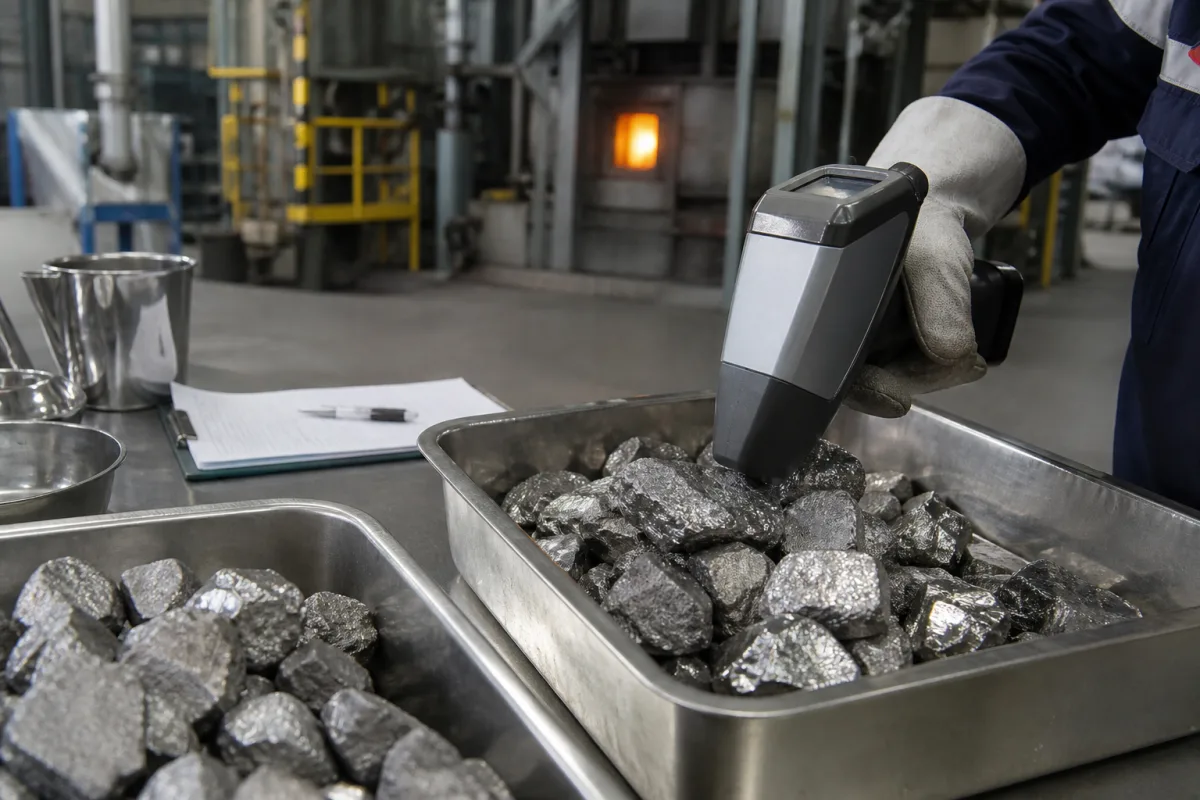
Technical details and manufacturing context for High-Purity Ferrovanadium Master Alloy
| Parameter | Typical range | Notes & selection driver |
|---|---|---|
| Vanadium ContentRequired | 75–85 wt% | Mass percentage of vanadium in alloyGB/T 4139 |
| Silicon ContentRequired | ≤1.5 wt% | Maximum silicon impurity levelGB/T 4139 |
| Phosphorus ContentRequired | ≤0.05 wt% | Maximum phosphorus impurity levelGB/T 4139 |
| Sulfur ContentRequired | ≤0.03 wt% | Maximum sulfur impurity levelGB/T 4139 |
| Bulk Density | 3.5–4.5 g/cm³ | Apparent density of crushed alloy pieces |
| Particle Size Distribution | 10–50 mm | Size range of alloy pieces for dissolution controlGB/T 4139 |
| Melting Point | 1480–1520 °C | Critical for alloying in steelmaking. |
| Density | 6.0–6.2 g/cm³ | Higher density ensures better dissolution in molten steel. |
| Aluminum Content | ≤1.0 % | Aluminum can affect deoxidation and inclusion control.GB/T 4139 |
| Carbon Content | ≤0.5 % | Low carbon is essential for low-carbon steel grades.GB/T 4139 |
| Manganese Content | ≤0.5 % | Manganese is a residual element.GB/T 4139 |
| Nitrogen Content | ≤0.1 % | High nitrogen can cause aging in steel.GB/T 4139 |
| Oxygen Content | ≤0.2 % | Low oxygen improves steel cleanliness.GB/T 4139 |
Ranges are indicative industry figures for RFQ preparation, not a supplier commitment. Confirm every value and standard with the legal manufacturer before ordering.
Commonly used trade names and technical identifiers for High-Purity Ferrovanadium Master Alloy.
| pressure: | Atmospheric (standard steelmaking conditions) |
| other spec: | Slurry concentration: Not applicable (solid addition), Flow rate: Batch addition, not continuous |
| temperature: | 1500-1650°C (typical steelmaking range) |
Indicative industry ranges for design and RFQ preparation. Confirm the exact figures and applicable standard with the manufacturer before specifying.
Quoted from the published standard.
Manufacturer profiles associated with High-Purity Ferrovanadium Master Alloy.
Manufacturer listings support early research and capability understanding. They are not certification, ranking, or transaction guarantees.
A practical evidence checklist for RFQ preparation and supplier evaluation.
CNFX does not score or rank suppliers. Buyers must verify all claims and documents with the legal manufacturer before ordering.
According to the directory reference, the vanadium content is 75–85 wt%, as specified in GB/T 4139. However, actual product specifications may vary, so it is essential to confirm the exact value with the supplier or manufacturer.
The maximum impurity levels are: silicon ≤1.5 wt%, phosphorus ≤0.05 wt%, and sulfur ≤0.03 wt%, as per GB/T 4139. These limits are important for controlling steel quality, but you should verify them with the supplier for the specific batch.
The particle size distribution is 10–50 mm, as listed in the directory. This range is designed to control dissolution in molten steel. However, the actual size may vary, so it is recommended to check with the supplier.
It is added to molten steel during secondary metallurgy to introduce vanadium, which forms fine carbides that refine grain structure and strengthen the steel. The addition is typically done in a ladle or furnace, and the alloy's density and melting point influence its dissolution behavior.
Editorial classification, named public sources where available, and source-reviewed manufacturer records.
Ask for use case, specification boundaries, supplier type, and RFQ preparation information for this product.
Compare manufacturer profiles with relevant product and process capability.