Editorial Technical Reference

Primary Crusher

This page explains how Primary Crusher is classified within Basic Metal Manufacturing. Technical values and manufacturer relationships are research references; confirm the current specification and supplier evidence for each order.

Technical Definition & Core Assembly

The first-stage crushing equipment in a slag processing system that reduces large slag chunks to smaller, manageable sizes.
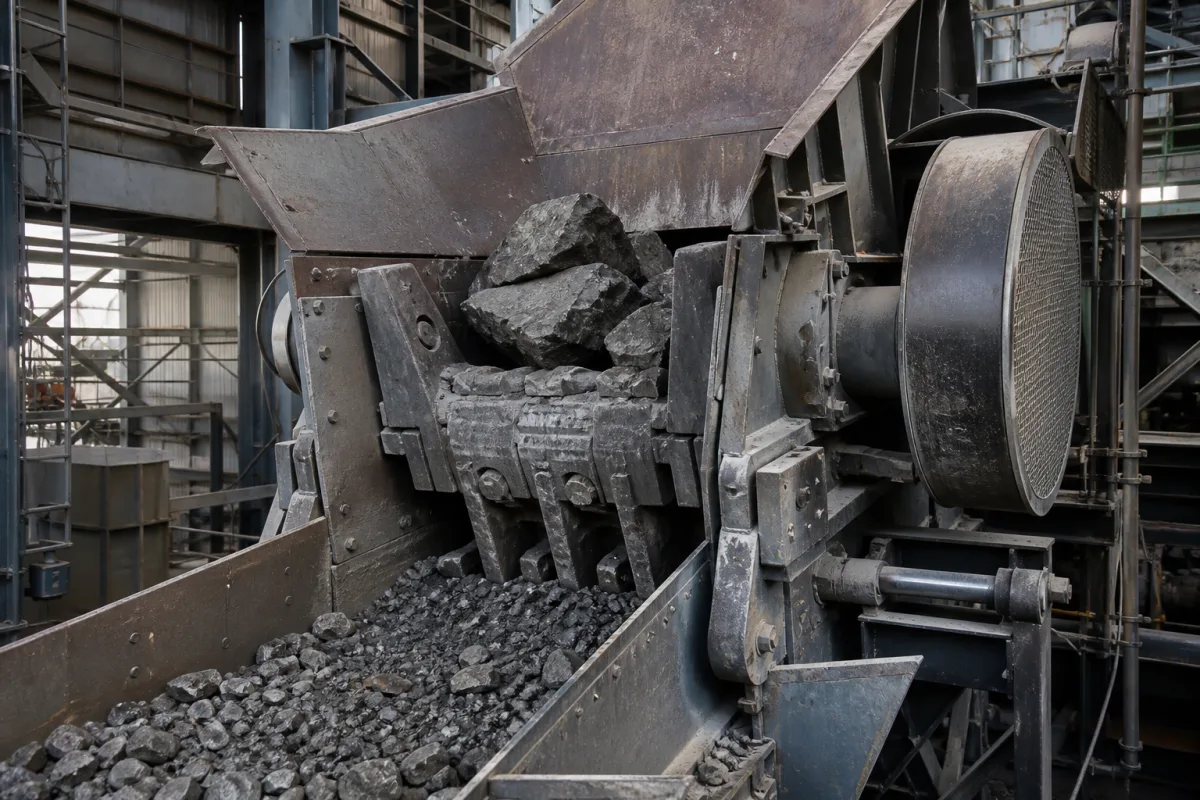
Representative product image. Confirm appearance and specifications with the manufacturer.

Product Specifications

Technical details and manufacturing context for Primary Crusher

Definition
The Primary Crusher is the initial crushing unit in a slag processing system. It receives raw slag material directly from the feed source and performs coarse reduction through mechanical force, preparing the material for subsequent secondary or tertiary crushing stages in the processing line. This component is essential in basic metal manufacturing, where slag from furnaces must be reduced to sizes suitable for further processing or disposal. The crusher typically employs jaw, gyratory, or impact mechanisms, depending on the specific application requirements. Key specifications include a throughput capacity of 50–200 t/h, a feed opening size of 400×600–900×1200 mm, and a discharge opening range of 60–200 mm. The maximum feed size is 350–800 mm, and the rated power ranges from 30–160 kW. Operating voltage is 380–660 V AC (IEC 60038), with a frequency of 50–60 Hz (IEC 60038). The eccentric shaft speed is 250–350 r/min, and the crushing ratio is 4–8. The machine operates in ambient temperatures from -20 to 40 °C and has an ingress protection rating of IP54–IP55 (IEC 60529). Machine weight varies from 5–50 t, and overall dimensions range from 2000×1500×1800 mm to 5000×3000×3500 mm. Materials used include high manganese steel and alloy steel. These values are reference ranges and must be confirmed for the actual model and application. Always verify model-specific values and standards with the legal manufacturer or supplier.
Working Principle
The Primary Crusher operates on the principle of mechanical force, using compression, impact, or shear to break down large slag pieces into smaller fragments. In a jaw crusher, a fixed jaw and a movable jaw create a V-shaped chamber; the movable jaw exerts pressure on the material, fracturing it. In a gyratory crusher, a conical head gyrates within a stationary concave, compressing the material. In an impact crusher, high-speed rotors throw the material against impact plates, causing breakage. The choice of mechanism depends on the feed size, hardness, and desired product size. The eccentric shaft speed, typically 250–350 r/min, influences the crushing efficiency. The discharge opening is adjustable to control the product size, and the crushing ratio of 4–8 indicates the reduction achieved. The machine is powered by an electric motor with a rated power of 30–160 kW, operating at 380–660 V AC and 50–60 Hz. The crushing process is continuous, with material fed from the top and discharged from the bottom.
Common Materials
High manganese steel, Alloy steel
Technical Parameters
ParameterTypical rangeNotes & selection driver
Throughput Capacity50–200 t/hDepends on feed size and material hardness
Feed Opening Size400×600–900×1200 mmDetermines max lump size
Discharge Opening Range60–200 mmAdjustable to control product size
Max Feed Size350–800 mmMust be smaller than feed opening
Rated Power30–160 kWMotor power for crushing
Operating Voltage380–660 V ACThree-phase; other voltages on requestIEC 60038
Operating Frequency50–60 HzAuto-sensing or selectableIEC 60038
Eccentric Shaft Speed250–350 r/minAffects crushing efficiency
Crushing Ratio4–8Ratio of feed to product size
Operating Temperature-20–40 °CFor ambient conditions
Ingress ProtectionIP54–IP55For motor and electrical cabinetIEC 60529
Machine Weight5–50 tDepends on model
Overall Dimensions (L×W×H)2000×1500×1800–5000×3000×3500 mmVaries with model

Ranges are indicative industry figures for RFQ preparation, not a supplier commitment. Confirm every value and standard with the legal manufacturer before ordering.

Components / BOM
  • Crushing Chamber
    Area where slag is compressed and broken between fixed and moving surfaces
    Material: High manganese steel
  • Jaw Plates Part
    Wear-resistant surfaces that directly contact and crush the slag material
    Material: Manganese steel alloy
  • Eccentric Shaft Part
    Transmits rotational motion to create the crushing action
    Material: Forged alloy steel
  • Conical Head and Concave Optional
    The gyratory version of the crushing pair: a gyrating cone inside a fixed concave.
  • Impact Rotor and Plates Optional
    The impact version: a high-speed rotor throws the slag against fixed impact plates.

Applied To / Applications

This component is essential for the following industrial systems and equipment:

Industrial Ecosystem & Supply Chain Structure

Complementary Systems
Downstream Applications
Specialized Tooling

Application Fit & Sizing Matrix

Operational Limits
pressure: Atmospheric operation, no internal pressure
feed size: Up to 1500mm maximum feed dimension
throughput: 50-500 tons/hour (slag dependent)
temperature: Ambient to 150°C (slag dependent)
moisture content: Max 15% moisture in feed material
slurry concentration: Not applicable - dry crushing operation
Media Compatibility
✓ Blast furnace slag ✓ Steelmaking slag ✓ Non-ferrous metallurgical slag
Unsuitable: Highly abrasive silica-based materials (excessive wear)
Sizing Data Required
  • Maximum feed size (mm)
  • Required throughput (tons/hour)
  • Desired product size (mm)

Reliability & Engineering Risk Analysis

Failure Mode & Root Cause
Fatigue cracking of jaw plates
Cause: Cyclic loading from crushing hard materials leads to stress concentration at bolt holes and plate edges, compounded by material embrittlement from impact wear.
Bearing seizure in eccentric assembly
Cause: Inadequate lubrication due to contamination from rock dust and moisture ingress, combined with misalignment from frame deflection under load.
Maintenance Indicators
  • Metallic grinding noise from crushing chamber indicating metal-to-metal contact from worn/damaged components
  • Excessive vibration (>7 mm/s RMS) detected at bearing housings or foundation during operation
Engineering Tips
  • Implement predictive maintenance using vibration analysis and thermography on bearings and drives monthly, with oil analysis quarterly to detect early degradation
  • Establish controlled feed practices using apron feeders to prevent tramp metal ingress and optimize material size distribution to reduce shock loading on components

Indicative industry ranges for design and RFQ preparation. Confirm the exact figures and applicable standard with the manufacturer before specifying.

Compliance & Manufacturing Standards

Applicable Standards
ISO 21873-1:2015 (Mobile crushers) ANSI/ASME B73.1 (Process pump standards for crusher lubrication systems) DIN 22101 (Continuous conveyors for bulk materials - Belt conveyors for loose bulk materials)

Quoted from the published standard.

Manufacturing Precision
  • Shaft alignment: +/-0.05mm
  • Rotor balance: G6.3 per ISO 1940-1
Quality Inspection
  • Magnetic Particle Inspection (MPI) for crack detection in cast components
  • Hardness testing (Rockwell/Brinell) for wear plates and hammers

Manufacturers of Primary Crusher

Manufacturer profiles associated with Primary Crusher.

Sourcing Primary Crusher from China?
Tell us your specification and target quantity — we will match it against manufacturer records and come back with the factories that fit.
Request manufacturers We manufacture this

Manufacturer listings support early research and capability understanding. They are not certification, ranking, or transaction guarantees.

Technical documentation
Request current drawings, revision history, and a signed specification sheet.
Manufacturing capability
Verify equipment lists, process limits, capacity, and representative production evidence.
Inspection readiness
Confirm test methods, calibrated equipment, sampling plans, and traceable reports.
Supplier transparency
Check the legal entity, factory address, ownership, certifications, and direct contacts.

CNFX does not score or rank suppliers. Buyers must verify all claims and documents with the legal manufacturer before ordering.

Supply Chain Compatible Machinery & Devices

Continuous Casting Machine

Industrial machine for solidifying molten metal into continuous billets/blooms/slabs.

Explore Specs →
Vacuum Induction Melting Furnace

Industrial furnace for melting metals under vacuum using electromagnetic induction

Explore Specs →
Electroslag Remelting Furnace

An industrial furnace used in basic metal manufacturing for secondary refining of alloys through the electroslag remelting (ESR) process.

Explore Specs →
Molten Metal Temperature Measurement System

Automated system for continuous temperature monitoring of molten metals during processing.

Explore Specs →

Frequently Asked Questions

What is the typical throughput capacity of a Primary Crusher?

The throughput capacity is typically in the range of 50–200 t/h, depending on the feed size and material hardness. This is a reference range; the actual capacity for a specific model must be confirmed with the manufacturer.

What feed opening sizes are available?

The feed opening size ranges from 400×600 mm to 900×1200 mm. The maximum feed size is 350–800 mm, which must be smaller than the feed opening. These values are indicative and should be verified for the specific crusher model.

What is the operating voltage and frequency?

The operating voltage is 380–660 V AC, and the frequency is 50–60 Hz, both per IEC 60038. These are standard ranges; other voltages may be available on request. Always confirm the electrical requirements with the supplier.

What materials are used in the construction?

The crusher is typically made of high manganese steel and alloy steel, which provide wear resistance and durability. The specific material grades may vary by model and should be confirmed with the manufacturer.

Data Basis

Editorial classification, named public sources where available, and source-reviewed manufacturer records.

Preliminary Technical Classification
This page supports structured research, RFQ preparation, and supplier evaluation. It does not replace buyer-led supplier qualification, standards review, or technical approval.
Buyer enquiry

Request manufacturing insight for Primary Crusher

Ask for use case, specification boundaries, supplier type, and RFQ preparation information for this product.

Where it goes
Straight to the CNFX editorial desk, and to the manufacturer if this product is linked to a claimed profile. Nothing is broadcast to a supplier list.
Your details stay here
We do not sell or rent enquiry data, and we do not add you to a mailing list. Used only to answer this request.
No commission, no middleman
CNFX is a directory. We take no cut of any order and never negotiate on a supplier's behalf.
What we don't claim
A listing is not an endorsement. Qualify every supplier and verify every figure yourself before ordering.

Your business information is used only to process this request.

Thank you! Your message has been sent. We'll respond within 1–3 business days.
Sorry, we couldn't send your message. Please try again, or email us at contact@cnfx.com.

Need to Manufacture Primary Crusher?

Compare manufacturer profiles with relevant product and process capability.

Previous Product
Work Rolls
Last Product
Get QuotesChat