Industry-Verified Manufacturing Data (2026)

Aseptic Filling Valve Block

Based on aggregated insights from multiple verified factory profiles within the CNFX directory, the standard Aseptic Filling Valve Block used in the Beverage Manufacturing sector typically supports operational capacities ranging from standard industrial configurations to heavy-duty production requirements.

Technical Definition & Core Assembly

A canonical Aseptic Filling Valve Block is characterized by the integration of Pneumatic Actuator and Diaphragm Valve Body. In industrial production environments, manufacturers listed on CNFX commonly emphasize Austenitic Stainless Steel (e.g., 316L) construction to support stable, high-cycle operation across diverse manufacturing scenarios.

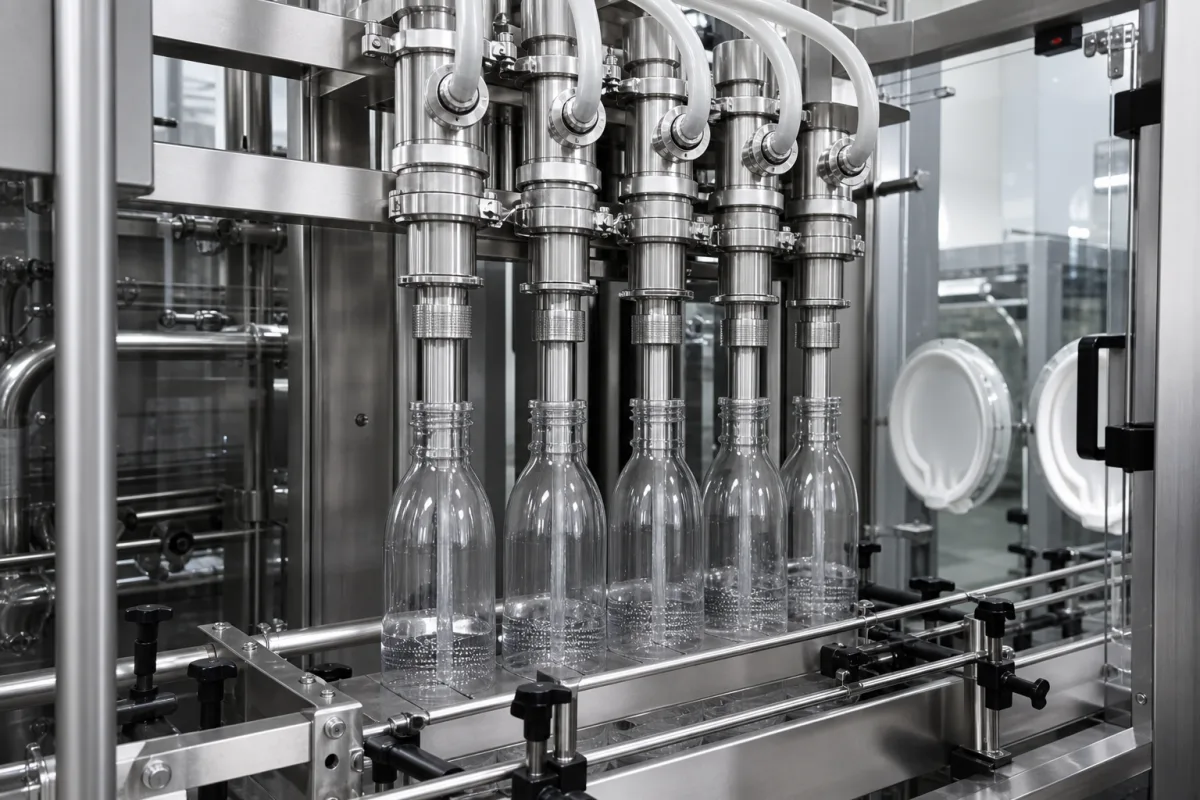
A modular assembly of valves and flow control components designed for sterile filling operations in beverage production.
Product Specifications

Technical details and manufacturing context for Aseptic Filling Valve Block

Definition
The Aseptic Filling Valve Block is a critical component within an Aseptic Cold-Fill Beverage Production System. It is a compact, integrated assembly that houses multiple valves (such as shut-off, divert, and control valves), sensors, and connection ports. Its primary role is to precisely control the flow of sterile beverage product from the holding tank to individual filling nozzles or carousel heads, ensuring a completely sealed and aseptic environment is maintained throughout the filling process to prevent microbial contamination.
Working Principle
The valve block operates by receiving electronic signals from the system's programmable logic controller (PLC). These signals actuate specific pneumatic or electric valves within the block to open, close, or modulate. This directs the sterile liquid product along predetermined pathways. It works in synchronized cycles with the filler's indexing mechanism: valves open to allow product flow into bottles/cans during the fill phase and close during container movement and sealing phases. Integrated pressure and flow sensors provide feedback for precise volumetric control.
Common Materials
Austenitic Stainless Steel (e.g., 316L), Food-Grade Elastomers (e.g., EPDM, Silicone), Polytetrafluoroethylene (PTFE)
Technical Parameters
  • Overall block dimensions (LxWxH) and port connection sizes (e.g., 1.5" Tri-Clamp). (mm) Per Request
Components / BOM
  • Pneumatic Actuator
    Converts air pressure into mechanical motion to open or close the associated valve stem.
    Material: Anodized Aluminum / Stainless Steel
  • Diaphragm Valve Body
    Provides a sterile, crevice-free flow path. A flexible diaphragm isolates the product from the actuator.
    Material: 316L Stainless Steel
  • Valve Seat
    The sealing surface against which the diaphragm closes to stop product flow.
    Material: PTFE or EPDM
  • Proximity Sensor
    Detects the open/closed position of the valve and sends a signal to the control system.
    Material: PPS Plastic / Stainless Steel Housing
Engineering Reasoning
0.5-6.0 bar (50-600 kPa) at 20-80°C
8.5 bar (850 kPa) differential pressure across valve seat at 85°C
Design Rationale: Elastomer seat compression set exceeding 15% permanent deformation due to combined thermal aging (Arrhenius model: k=Ae^(-Ea/RT) with Ea=80 kJ/mol for EPDM) and pressure-induced creep
Risk Mitigation (FMEA)
Trigger Particulate contamination >25 μm in process fluid
Mode: Valve seat scoring leading to 0.1 mm³/s sterile barrier leakage
Strategy: Install 10 μm absolute-rated duplex filters with differential pressure monitoring at 0.3 bar trigger
Trigger Steam sterilization cycle deviation: 121°C for 45 minutes instead of 30 minutes
Mode: PTFE diaphragm embrittlement causing 0.05 mm crack propagation per cycle
Strategy: Integrate temperature-time integrator with 143°C·minute cumulative exposure limit interlock

Industry Taxonomies & Aliases

Commonly used trade names and technical identifiers for Aseptic Filling Valve Block.

Industrial Ecosystem & Supply Chain DNA

Complementary Systems
Downstream Applications
Specialized Tooling

Application Fit & Sizing Matrix

Operational Limits
pressure: 0-10 bar (operating), 0-15 bar (test pressure)
flow rate: 0.5-20 L/min (per valve station)
temperature: 0-150°C (sterilization cycles up to 140°C)
slurry concentration: Up to 40% solids by weight (non-abrasive particulates)
Media Compatibility
✓ Carbonated beverages (pH 2.5-4.5) ✓ High-acidity fruit juices ✓ Sterile water/cleaning solutions (CIP/SIP)
Unsuitable: Highly abrasive slurries with >40% solids or corrosive chemicals (pH <2)
Sizing Data Required
  • Required fill volume per cycle (L)
  • Production line speed (containers/min)
  • Required sterilization method (SIP/CIP frequency)

Reliability & Engineering Risk Analysis

Failure Mode & Root Cause
Seal degradation and leakage
Cause: Chemical attack from cleaning agents (e.g., CIP/SIP chemicals) or product residues, combined with thermal cycling during sterilization cycles, leading to elastomer hardening, cracking, or compression set failure.
Actuator stiction or sluggish operation
Cause: Build-up of dried product, biofilm, or mineral scale in the valve body or on the piston/plunger surfaces, often due to inadequate rinsing after cleaning cycles or poor air/steam quality supplying the actuator.
Maintenance Indicators
  • Visible product drips or seepage at the valve stem, seat, or body connections during or after a fill cycle, indicating seal failure.
  • Audible hissing from the valve area during closed position, or irregular/chattering actuation sounds, suggesting air leakage, pressure issues, or mechanical obstruction.
Engineering Tips
  • Implement a strict preventive maintenance schedule for seal replacement based on cycle count (not just time), using OEM-specified materials compatible with all process fluids and sterilization temperatures.
  • Optimize CIP/SIP parameters (e.g., temperature, concentration, rinse volumes) and ensure utility quality (clean, dry air; pure steam) to minimize residue buildup and corrosion, validated by periodic swab tests or borescope inspections.

Compliance & Manufacturing Standards

Reference Standards
ISO 13408-1: Aseptic processing of health care products ANSI/ASME BPE-2022: Bioprocessing Equipment DIN 11864-1: Aseptic fittings and valves
Manufacturing Precision
  • Surface finish (Ra): ≤ 0.8 μm for product contact surfaces
  • Dimensional tolerance for valve seat mating surfaces: ±0.01 mm
Quality Inspection
  • Sterility test (media fill simulation)
  • Cleanliness validation (particulate matter count)

Factories Producing Aseptic Filling Valve Block

Verified manufacturers with capability to produce this product in China

✓ 95% Supplier Capability Match Found

T Technical Director from Brazil Jan 10, 2026
★★★★★
"Found 20+ suppliers for Aseptic Filling Valve Block on CNFX, but this spec remains the most cost-effective."
Technical Specifications Verified
P Project Engineer from Canada Jan 07, 2026
★★★★☆
"The technical documentation for this Aseptic Filling Valve Block is very thorough, especially regarding technical reliability. (Delivery took slightly longer than expected, but technical support was excellent.)"
Technical Specifications Verified
S Sourcing Manager from United States Jan 04, 2026
★★★★★
"Reliable performance in harsh Beverage Manufacturing environments. No issues with the Aseptic Filling Valve Block so far."
Technical Specifications Verified
Verification Protocol

“Feedback is collected from verified sourcing managers during RFQ (Request for Quote) and factory evaluation processes on CNFX. These reports represent historical performance data and technical audit summaries from our B2B manufacturing network.”

13 sourcing managers are analyzing this specification now. Last inquiry for Aseptic Filling Valve Block from Poland (1h ago).

Supply Chain Compatible Machinery & Devices

Automated Beverage Container Sterilization System

Automated system for sterilizing beverage containers before filling.

Explore Specs →
Automated Beverage Labeling and Coding System

Integrated system for applying labels and printing codes on beverage containers.

Explore Specs →
Automated Beverage Ingredient Dispensing System

Automated system for precise dispensing of beverage ingredients into production lines.

Explore Specs →
Automated Beverage Container Deoxygenation System

Automated system for removing oxygen from beverage containers before filling.

Explore Specs →

Frequently Asked Questions

What materials are used in this aseptic filling valve block to ensure food safety?

The valve block is constructed with Austenitic Stainless Steel (316L) for corrosion resistance, food-grade elastomers like EPDM and Silicone for seals, and PTFE for gaskets, all compliant with beverage industry hygiene standards.

How does this modular valve assembly maintain sterility during beverage filling operations?

Its aseptic design prevents contamination through smooth, crevice-free surfaces, sterile steam or chemical sanitization compatibility, and precise flow control that maintains product integrity throughout the filling process.

What components are included in the standard BOM for this filling valve block?

The standard bill of materials includes Diaphragm Valve Bodies for precise flow control, Pneumatic Actuators for automated operation, Proximity Sensors for position monitoring, and Valve Seats for reliable sealing in sterile environments.

Can I contact factories directly on CNFX?

CNFX is an open directory, not a transaction platform. Each factory profile provides direct contact information and production details to help you initiate direct inquiries with Chinese suppliers.

Get Quote for Aseptic Filling Valve Block

Request technical pricing, lead times, or customized specifications for Aseptic Filling Valve Block directly from verified manufacturing units.

Your business information is encrypted and only shared with verified Aseptic Filling Valve Block suppliers.

Thank you! Your message has been sent. We'll respond within 1–3 business days.

Need to Manufacture Aseptic Filling Valve Block?

Connect with verified factories specializing in this product category

Add Your Factory Contact Us
Previous Product
Aseptic Filling Valve Assembly
Next Product
Aseptic Hot-Fill Beverage Bottling Line