Industry-Verified Manufacturing Data (2026)

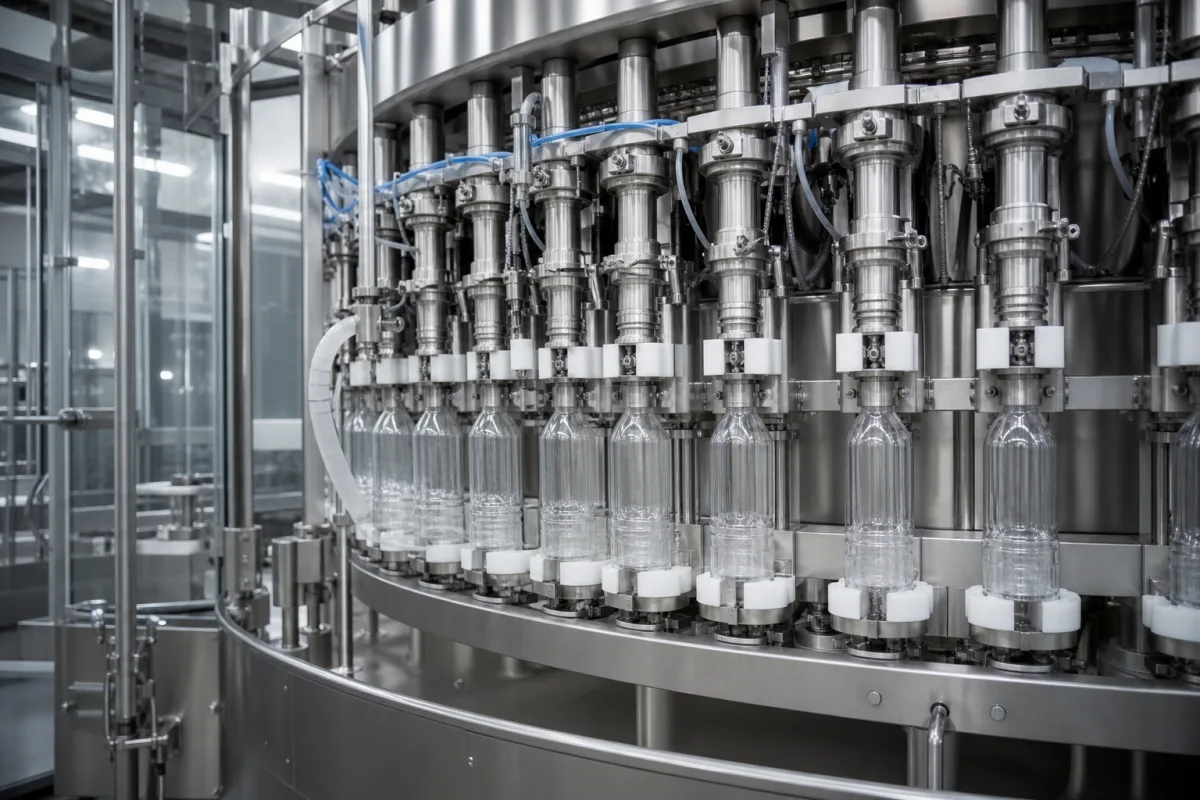
Aseptic Filling Valve Assembly

Based on aggregated insights from multiple verified factory profiles within the CNFX directory, the standard Aseptic Filling Valve Assembly used in the Beverage Manufacturing sector typically supports operational capacities ranging from standard industrial configurations to heavy-duty production requirements.

Technical Definition & Core Assembly

A canonical Aseptic Filling Valve Assembly is characterized by the integration of Valve Body and Valve Stem / Piston. In industrial production environments, manufacturers listed on CNFX commonly emphasize Stainless Steel 316L construction to support stable, high-cycle operation across diverse manufacturing scenarios.

A critical assembly that precisely controls the flow of hot, sterile beverage into bottles while maintaining aseptic conditions during the filling process.

Product Specifications

Technical details and manufacturing context for Aseptic Filling Valve Assembly

Definition
The Aseptic Filling Valve Assembly is a core component of an Aseptic Hot-Fill Beverage Bottling Line. It is responsible for the precise, volumetric dispensing of pasteurized, hot liquid (typically juices, teas, or dairy-based beverages) into pre-sterilized containers. Its primary function is to ensure the transfer occurs without introducing contaminants, thereby preserving product sterility and extending shelf life without refrigeration. The assembly interfaces with the line's sterilization, filling, and capping systems to maintain a continuous aseptic barrier from the product tank to the sealed bottle.
Working Principle
The assembly operates by receiving hot, sterile product under pressure. A pneumatic or servo-actuated mechanism opens the valve stem, allowing product to flow through a sanitized pathway into the bottle. The valve closes precisely at the set fill volume. Many designs incorporate a double-seat or diaphragm mechanism to prevent product drip and ensure a clean cut-off. The entire assembly, including product contact surfaces, is designed for clean-in-place (CIP) and sterilize-in-place (SIP) procedures using hot water or steam.
Common Materials
Stainless Steel 316L, PTFE (Polytetrafluoroethylene), EPDM (Ethylene Propylene Diene Monomer) Seals
Technical Parameters
  • Valve orifice diameter, critical for flow rate and fill accuracy. (mm) Customizable
Components / BOM
  • Valve Body
    Main housing that contains the fluid pathway and provides mounting points.
    Material: Stainless Steel 316L
  • Valve Stem / Piston
    Actuated component that opens and closes the fluid orifice.
    Material: Stainless Steel 316L
  • Seat / Seal Ring
    Creates a leak-tight seal when the valve is closed, preventing drip.
    Material: PTFE or EPDM
  • Actuator (Pneumatic/Servo)
    Provides the mechanical force to open and close the valve precisely and rapidly.
    Material: Aluminum Alloy / Steel
  • Product Nozzle / Spout
    The final outlet that directs product into the bottle; often designed for low turbulence filling.
    Material: Stainless Steel 316L
Engineering Reasoning
0.5-6.0 bar at 85-95°C
7.2 bar differential pressure across valve seat at 98°C
Design Rationale: Cavitation-induced erosion at vapor pressure threshold (0.94 bar absolute at 98°C) combined with thermal expansion mismatch between 316L stainless steel valve body (17.3 μm/m·K) and PTFE seals (135 μm/m·K)
Risk Mitigation (FMEA)
Trigger Particulate contamination exceeding 5 μm in sterile fluid stream
Mode: Seat surface scoring leading to 0.02 mm³/s leakage past Class IV shutoff
Strategy: Dual 0.45 μm absolute filtration with differential pressure monitoring at 0.3 bar threshold
Trigger Thermal cycling between 20°C ambient and 95°C process temperature at 15 cycles/hour
Mode: PTFE seal compression set exceeding 12% of original 3.2 mm cross-section
Strategy: Kalrez 6375 perfluoroelastomer seals with 0.5 mm preload adjustment mechanism

Industry Taxonomies & Aliases

Commonly used trade names and technical identifiers for Aseptic Filling Valve Assembly.

Industrial Ecosystem & Supply Chain DNA

Complementary Systems
Downstream Applications
Specialized Tooling

Application Fit & Sizing Matrix

Operational Limits
pressure: 0.5-6 bar (7-87 psi) operating, up to 10 bar (145 psi) for pressure testing
flow rate: 50-500 L/min (13-132 gal/min) depending on valve size
temperature: 80-95°C (176-203°F) for hot filling, up to 140°C (284°F) for SIP sterilization
sterility hold time: Minimum 30 minutes at 121°C (250°F) for validation
slurry concentration: Up to 15% solids by weight for pulpy beverages
Media Compatibility
✓ High-acid fruit juices (pH <4.6) ✓ UHT-treated dairy beverages ✓ Sterile water for injection (WFI)
Unsuitable: Highly abrasive slurries with >20% solids or corrosive chemicals (pH <2 or >12)
Sizing Data Required
  • Required fill volume per bottle (mL)
  • Production line speed (bottles/hour)
  • Beverage viscosity at filling temperature (cP)

Reliability & Engineering Risk Analysis

Failure Mode & Root Cause
Seal degradation and leakage
Cause: Chemical attack from cleaning agents (CIP/SIP chemicals) and thermal cycling causing elastomer hardening/cracking, leading to loss of aseptic integrity and product contamination risks.
Actuator misalignment and sticking
Cause: Wear in pneumatic or electric actuator components due to particulate contamination, inadequate lubrication, or mechanical stress from repeated high-speed cycling, resulting in incomplete valve closure or erratic operation.
Maintenance Indicators
  • Visible product residue or moisture around valve seals after cleaning cycles, indicating seal failure.
  • Audible hissing or irregular pneumatic sounds during valve actuation, suggesting air leaks or actuator issues.
Engineering Tips
  • Implement a preventive maintenance schedule for seal replacement based on cycle count and chemical exposure, using manufacturer-recommended materials compatible with process fluids and sanitants.
  • Install inline filters in pneumatic supply lines and conduct regular actuator calibration checks to ensure precise positioning and smooth operation, reducing mechanical wear.

Compliance & Manufacturing Standards

Reference Standards
ISO 13485:2016 - Medical devices - Quality management systems ASME BPE-2022 - Bioprocessing Equipment DIN 11864-1 - Aseptic fittings - Part 1: Hygienic connections
Manufacturing Precision
  • Surface Finish: Ra ≤ 0.8 μm (32 μin)
  • Concentricity: ≤ 0.05 mm TIR
Quality Inspection
  • Sterility Assurance Level (SAL) Validation
  • Helium Leak Test (≤ 1×10⁻⁹ mbar·L/s)

Factories Producing Aseptic Filling Valve Assembly

Verified manufacturers with capability to produce this product in China

✓ 93% Supplier Capability Match Found

S Sourcing Manager from Germany Feb 17, 2026
★★★★★
"As a professional in the Beverage Manufacturing sector, I confirm this Aseptic Filling Valve Assembly meets all ISO standards."
Technical Specifications Verified
P Procurement Specialist from Brazil Feb 14, 2026
★★★★☆
"Standard OEM quality for Beverage Manufacturing applications. The Aseptic Filling Valve Assembly arrived with full certification. (Delivery took slightly longer than expected, but technical support was excellent.)"
Technical Specifications Verified
T Technical Director from Canada Feb 11, 2026
★★★★★
"Great transparency on the Aseptic Filling Valve Assembly components. Essential for our Beverage Manufacturing supply chain."
Technical Specifications Verified
Verification Protocol

“Feedback is collected from verified sourcing managers during RFQ (Request for Quote) and factory evaluation processes on CNFX. These reports represent historical performance data and technical audit summaries from our B2B manufacturing network.”

5 sourcing managers are analyzing this specification now. Last inquiry for Aseptic Filling Valve Assembly from Germany (51m ago).

Supply Chain Compatible Machinery & Devices

Automated Beverage Filling and Capping Machine

Automated machine for filling and sealing beverage containers at high speed.

Explore Specs →
Automated Beverage Batch Blending System

Automated system for precise multi-ingredient beverage batch preparation.

Explore Specs →
Automated Beverage Container Sterilization System

Automated system for sterilizing beverage containers before filling.

Explore Specs →
Automated Beverage Labeling and Coding System

Integrated system for applying labels and printing codes on beverage containers.

Explore Specs →

Frequently Asked Questions

What materials are used in this aseptic filling valve assembly and why?

This assembly uses Stainless Steel 316L for corrosion resistance, PTFE for chemical inertness in contact areas, and EPDM seals for high-temperature sterilization compatibility, ensuring aseptic conditions and durability in beverage production.

How does this valve assembly maintain aseptic conditions during filling?

The assembly maintains aseptic conditions through precise control of sterile hot beverage flow, sealed components that prevent contamination, and materials that withstand sterilization processes, ensuring product safety and shelf stability.

What are the key components in the BOM and their functions?

Key components include: Actuator (controls valve operation), Product Nozzle/Spout (directs beverage flow), Seat/Seal Ring (ensures tight closure), Valve Body (main housing), and Valve Stem/Piston (regulates flow). Together they enable precise, contamination-free filling.

Can I contact factories directly on CNFX?

CNFX is an open directory, not a transaction platform. Each factory profile provides direct contact information and production details to help you initiate direct inquiries with Chinese suppliers.

Get Quote for Aseptic Filling Valve Assembly

Request technical pricing, lead times, or customized specifications for Aseptic Filling Valve Assembly directly from verified manufacturing units.

Your business information is encrypted and only shared with verified Aseptic Filling Valve Assembly suppliers.

Thank you! Your message has been sent. We'll respond within 1–3 business days.

Need to Manufacture Aseptic Filling Valve Assembly?

Connect with verified factories specializing in this product category

Add Your Factory Contact Us
Previous Product
Aseptic Cold-Fill Beverage Production System
Next Product
Aseptic Filling Valve Block