Industry-Verified Manufacturing Data (2026)

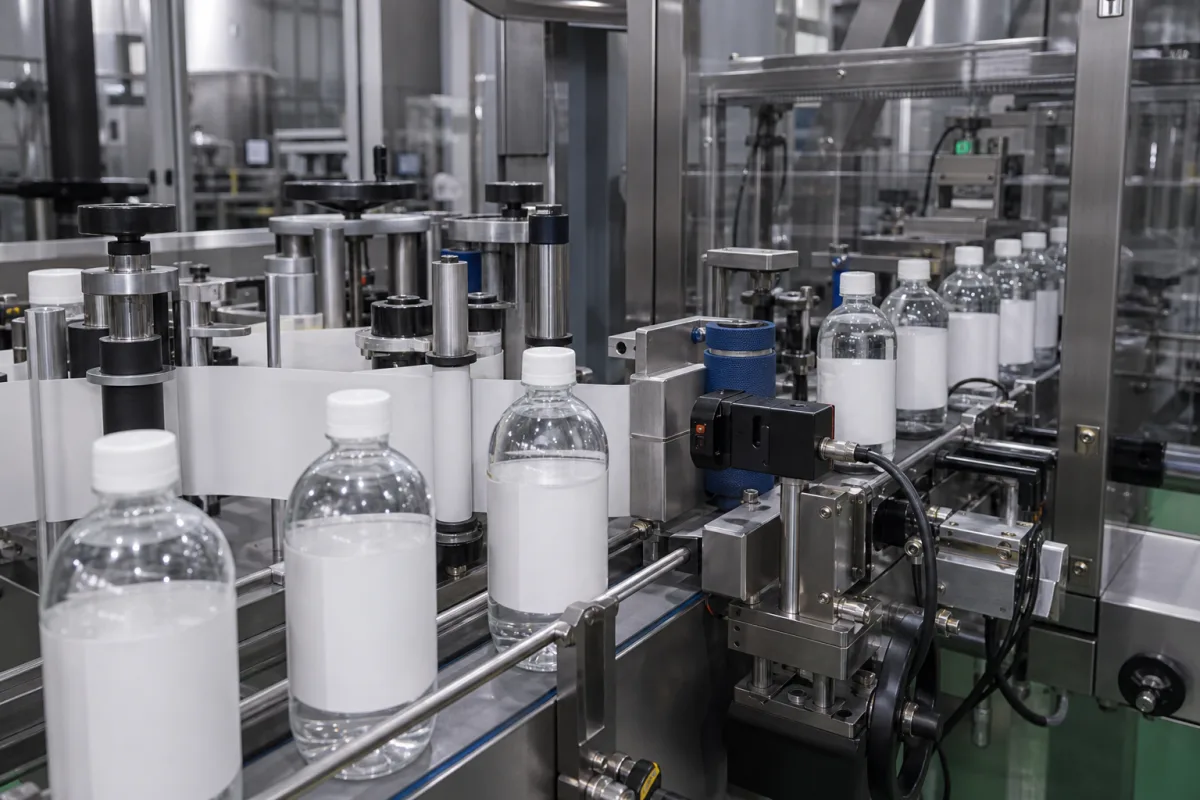
Automated Beverage Labeling and Coding System

Based on aggregated insights from multiple verified factory profiles within the CNFX directory, the standard Automated Beverage Labeling and Coding System used in the Beverage Manufacturing sector typically supports operational capacities ranging from standard industrial configurations to heavy-duty production requirements.

Technical Definition & Core Assembly

A canonical Automated Beverage Labeling and Coding System is characterized by the integration of Conveyor Module and Labeling Unit. In industrial production environments, manufacturers listed on CNFX commonly emphasize stainless steel frame construction to support stable, high-cycle operation across diverse manufacturing scenarios.

Integrated system for applying labels and printing codes on beverage containers.

Product Specifications

Technical details and manufacturing context for Automated Beverage Labeling and Coding System

Definition
An automated production line system designed for the beverage manufacturing industry to apply product labels and print variable information codes (such as batch numbers, expiration dates, and barcodes) onto containers. It integrates labeling, coding, verification, and rejection modules to ensure accurate, high-speed application and traceability. The system is configurable for various container types (bottles, cans, cartons) and production speeds, improving efficiency and reducing manual labor and errors in the packaging process.
Working Principle
Containers are conveyed through the system where sensors detect their position, triggering a labeling unit to apply pre-printed labels and a coding unit (e.g., inkjet or laser) to print variable data, followed by verification sensors to check accuracy and reject faulty items.
Common Materials
stainless steel frame, aluminum conveyor parts, PLC controller, sensors, labeling adhesive, ink or laser module
Technical Parameters
  • Maximum processing speed (containers/min) Customizable
  • Label placement tolerance (mm) Customizable
Components / BOM
  • Conveyor Module
    Transports containers through the system
    Material: Stainless Steel/Aluminum
  • Labeling Unit
    Applies adhesive labels to containers
    Material: Stainless Steel/Plastic
  • Coding Unit
    Prints variable data (e.g., dates, codes)
    Material: Aluminum/Electronics
  • Sensor Array
    Detects container position and triggers operations
    Material: Electronics/Plastic
  • Rejection Mechanism Optional
    Removes containers with labeling/coding errors
    Material: Stainless Steel
Engineering Reasoning
0.5-2.5 bar (label application pressure), 0.1-0.8 bar (inkjet printhead pressure)
Label applicator: 3.0 bar (adhesive shear failure), Printhead: 1.2 bar (nozzle membrane rupture)
Design Rationale: Label applicator: Adhesive viscoelastic breakdown at shear stress > 45 kPa, Printhead: Piezoelectric actuator membrane fatigue at pressure > 1.2 bar
Risk Mitigation (FMEA)
Trigger Condensate accumulation in compressed air line (dew point > 5°C)
Mode: Pneumatic actuator stiction causing 0.5mm label misalignment
Strategy: Integrate refrigerated air dryer with automatic drain (ISO 8573-1 Class 2)
Trigger UV ink viscosity increase due to temperature drop below 18°C
Mode: Incomplete code printing (missing dots > 5% coverage)
Strategy: Install inline ink heater with PID control maintaining 22±1°C

Industry Taxonomies & Aliases

Commonly used trade names and technical identifiers for Automated Beverage Labeling and Coding System.

Industrial Ecosystem & Supply Chain DNA

Complementary Systems
Downstream Applications
Specialized Tooling

Application Fit & Sizing Matrix

Operational Limits
pressure: N/A (non-pressurized labeling/coding process)
line speed: Up to 600 containers per minute
temperature: 5°C to 40°C (operating environment)
container size range: 50ml to 5L capacity
label application accuracy: ±0.5mm positional tolerance
Media Compatibility
✓ PET plastic bottles ✓ Glass beverage containers ✓ Aluminum cans
Unsuitable: High-temperature pasteurization lines (>85°C)
Sizing Data Required
  • Production line speed (containers/minute)
  • Container dimensions and geometry
  • Required labeling/coding throughput (labels/hour)

Reliability & Engineering Risk Analysis

Failure Mode & Root Cause
Printhead Nozzle Clogging
Cause: Ink drying due to extended idle periods, particulate contamination from improper air filtration, or incompatible ink chemistry causing precipitation.
Label Applicator Misalignment
Cause: Mechanical wear in servo motor drives or guide rails, vibration-induced loosening of mounting hardware, or sensor calibration drift from thermal expansion or contamination.
Maintenance Indicators
  • Inconsistent print quality (faded, streaked, or missing codes) indicating imminent printhead failure or ink supply issues
  • Audible grinding or knocking from the label applicator mechanism, signaling bearing wear, misalignment, or impending mechanical seizure
Engineering Tips
  • Implement automated printhead cleaning cycles during idle periods and use high-efficiency particulate air (HEPA) filtration on compressed air supplies to prevent nozzle clogging
  • Establish a precision laser alignment verification protocol for the label applicator and use vibration analysis trending to detect early-stage mechanical wear in drives and bearings

Compliance & Manufacturing Standards

Reference Standards
ISO 22000:2018 - Food safety management systems ANSI/UL 61010-1 - Safety requirements for electrical equipment for measurement, control, and laboratory use CE Marking - Compliance with EU machinery directive 2006/42/EC
Manufacturing Precision
  • Label placement accuracy: +/- 0.5mm
  • Print resolution: 300 dpi minimum with 95% legibility
Quality Inspection
  • Vision system verification - Automated optical inspection of label placement and print quality
  • Functional safety test - Verification of emergency stop circuits and safety interlocks

Factories Producing Automated Beverage Labeling and Coding System

Verified manufacturers with capability to produce this product in China

✓ 93% Supplier Capability Match Found

P Procurement Specialist from Germany Feb 08, 2026
★★★★★
"Reliable performance in harsh Beverage Manufacturing environments. No issues with the Automated Beverage Labeling and Coding System so far."
Technical Specifications Verified
T Technical Director from Brazil Feb 05, 2026
★★★★★
"Testing the Automated Beverage Labeling and Coding System now; the Processing Speed (containers/min) results are within 1% of the laboratory datasheet."
Technical Specifications Verified
P Project Engineer from Canada Feb 02, 2026
★★★★★
"Impressive build quality. Especially the Processing Speed (containers/min) is very stable during long-term operation."
Technical Specifications Verified
Verification Protocol

“Feedback is collected from verified sourcing managers during RFQ (Request for Quote) and factory evaluation processes on CNFX. These reports represent historical performance data and technical audit summaries from our B2B manufacturing network.”

14 sourcing managers are analyzing this specification now. Last inquiry for Automated Beverage Labeling and Coding System from USA (47m ago).

Supply Chain Commonly Integrated Components

Central Control Unit (PLC)

The programmable logic controller that serves as the central processing and control unit for the automated beverage batch blending system.

Explore Specs →
Precision Metering Pump Assembly

A precision fluid handling component designed to accurately measure and dispense specific volumes of liquid ingredients within an automated beverage blending system.

Explore Specs →
Sanitary Flow Meter

A precision instrument designed to measure the volumetric or mass flow rate of liquids in hygienic processing environments, featuring smooth surfaces and cleanable designs to prevent contamination.

Explore Specs →
Ingredient Inlet Valve Manifold

A multi-port valve assembly that controls and directs the flow of liquid ingredients into an automated beverage blending system.

Explore Specs →

Frequently Asked Questions

What types of beverage containers can this system handle?

The system accommodates various container diameters within its specified range (in mm), including bottles, cans, and other beverage packaging formats commonly used in manufacturing.

How does the rejection mechanism work in this labeling system?

The rejection mechanism automatically detects improperly labeled or coded containers using the sensor array and removes them from the production line to maintain quality control standards.

What maintenance is required for the coding unit?

Regular maintenance includes cleaning print heads (for ink systems) or lens maintenance (for laser modules), verifying alignment, and replenishing consumables like ink or labeling adhesive as needed.

Can I contact factories directly on CNFX?

CNFX is an open directory, not a transaction platform. Each factory profile provides direct contact information and production details to help you initiate direct inquiries with Chinese suppliers.

Get Quote for Automated Beverage Labeling and Coding System

Request technical pricing, lead times, or customized specifications for Automated Beverage Labeling and Coding System directly from verified manufacturing units.

Your business information is encrypted and only shared with verified Automated Beverage Labeling and Coding System suppliers.

Thank you! Your message has been sent. We'll respond within 1–3 business days.

Need to Manufacture Automated Beverage Labeling and Coding System?

Connect with verified factories specializing in this product category

Add Your Factory Contact Us
Previous Product
Automated Beverage Ingredient Dispensing System
Next Product
Automated Bottle Capping Machine