Industry-Verified Manufacturing Data (2026)

Rotating Lobe Assembly

Based on aggregated insights from multiple verified factory profiles within the CNFX directory, the standard Rotating Lobe Assembly used in the Beverage Manufacturing sector typically supports operational capacities ranging from standard industrial configurations to heavy-duty production requirements.

Technical Definition & Core Assembly

A canonical Rotating Lobe Assembly is characterized by the integration of Lobe Rotor and Drive Shaft. In industrial production environments, manufacturers listed on CNFX commonly emphasize Stainless Steel (e.g., 316L) construction to support stable, high-cycle operation across diverse manufacturing scenarios.

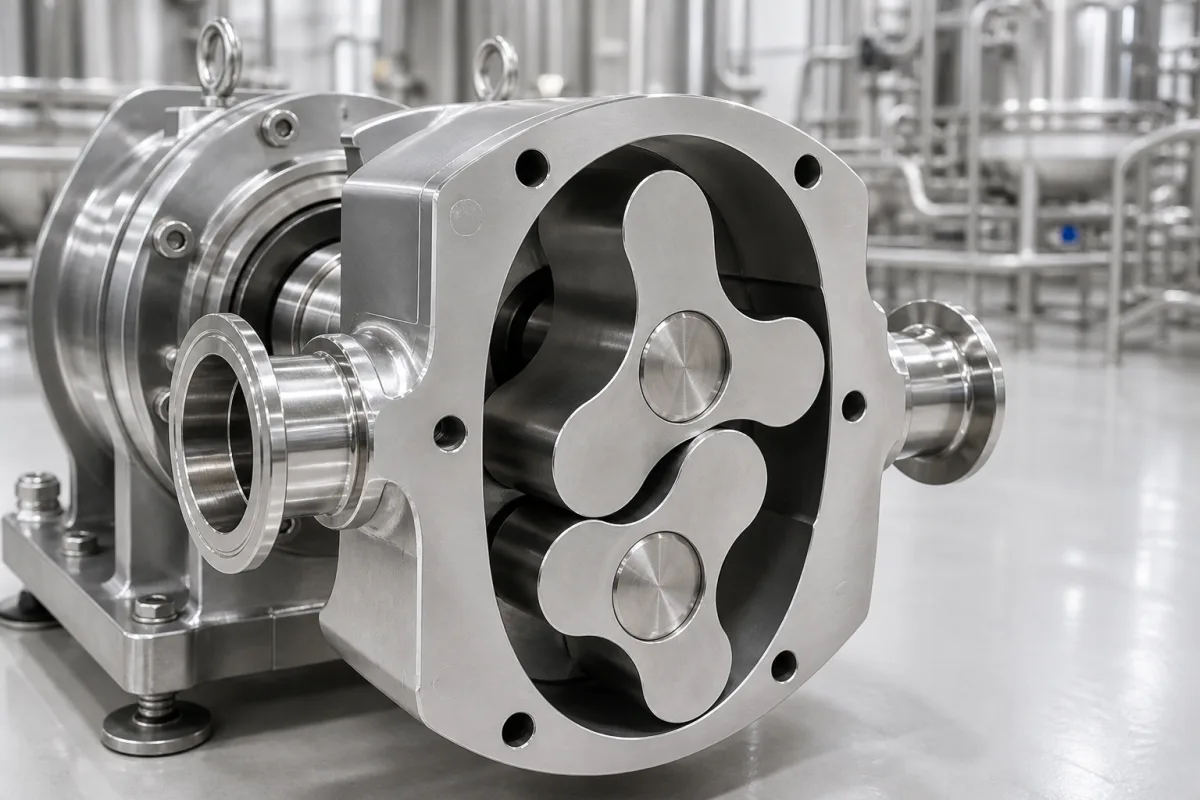
A precision assembly of rotating lobes that forms the core metering mechanism within a beverage pump head.
Product Specifications

Technical details and manufacturing context for Rotating Lobe Assembly

Definition
The Rotating Lobe Assembly is the critical internal component of a Precision Beverage Flow Metering Pump Head. It consists of precisely engineered lobes that rotate within a housing to create chambers that trap, transport, and discharge liquid with high volumetric accuracy. Its primary role is to provide the positive displacement action necessary for consistent, non-pulsing flow measurement and transfer of beverages.
Working Principle
The assembly operates on the principle of positive displacement. Two or more precisely machined lobes, mounted on parallel shafts, rotate in synchronized opposition within a closely fitted housing. As they rotate, the lobes mesh without contact, creating expanding cavities on the suction side to draw in fluid. The fluid is then trapped in the cavities formed between the lobes and the housing wall, transported around the pump chamber, and expelled on the discharge side as the lobes re-mesh, minimizing shear and pulsation.
Common Materials
Stainless Steel (e.g., 316L), Food-Grade Engineering Plastic (e.g., PEEK, PTFE)
Technical Parameters
  • Lobe diameter and profile geometry, critical for defining chamber volume and flow rate per revolution. (mm) Standard Spec
Components / BOM
  • Lobe Rotor
    The primary rotating element that creates the pumping chambers. Its profile determines the pump's displacement volume.
    Material: Stainless Steel or Food-Grade Plastic
  • Drive Shaft
    Transmits torque from the motor to the lobe rotor, ensuring precise rotation.
    Material: Stainless Steel
  • Timing Gears (External)
    Mounted on the shafts outside the pumping chamber to synchronize the rotation of the lobes, preventing contact.
    Material: Stainless Steel or Plastic
  • Shaft Seals / Bearings
    Seals the shaft where it exits the pump housing to prevent leakage and support rotational movement.
    Material: Ceramic, Carbon, PTFE, Elastomers
Engineering Reasoning
0.5-12 bar differential pressure, 50-2000 rpm rotational speed, -10°C to 80°C fluid temperature
Lobe tip clearance exceeds 0.025 mm, lobe surface roughness exceeds Ra 0.4 μm, shaft deflection exceeds 0.05 mm at 12 bar
Design Rationale: Cavitation-induced pitting at vapor pressure <0.024 bar absolute, adhesive wear from boundary lubrication breakdown at Stribeck parameter <0.001, torsional fatigue at alternating stress >345 MPa (SAE 4140 yield strength)
Risk Mitigation (FMEA)
Trigger Abrasive particle ingress >15 μm diameter at concentration >100 ppm
Mode: Progressive lobe surface scoring leading to clearance loss >0.025 mm
Strategy: Install 10 μm absolute filtration with differential pressure monitoring at 0.3 bar
Trigger Thermal expansion mismatch between 316 stainless steel lobes (17.3 μm/m·°C) and carbon steel housing (11.7 μm/m·°C)
Mode: Binding seizure at temperature differential >40°C across assembly
Strategy: Implement active thermal management maintaining ΔT <15°C with Peltier cooling

Industry Taxonomies & Aliases

Commonly used trade names and technical identifiers for Rotating Lobe Assembly.

Industrial Ecosystem & Supply Chain DNA

Complementary Systems
Downstream Applications
Specialized Tooling

Application Fit & Sizing Matrix

Operational Limits
pressure: Up to 10 bar
flow rate: 0.5-50 L/min
temperature: -10°C to 120°C
slurry concentration: Up to 15% solids by weight
Media Compatibility
✓ Carbonated beverages ✓ Syrups and concentrates ✓ Food-grade oils
Unsuitable: Abrasive slurries with high particulate content
Sizing Data Required
  • Required flow rate (L/min)
  • Fluid viscosity (cP)
  • System pressure differential (bar)

Reliability & Engineering Risk Analysis

Failure Mode & Root Cause
Lobe wear and scoring
Cause: Insufficient lubrication or contamination in the pumped media leading to metal-to-metal contact and abrasive damage between rotating lobes and casing.
Shaft seal failure
Cause: Excessive pressure differentials, thermal cycling, or chemical attack on elastomers causing leakage and potential bearing contamination.
Maintenance Indicators
  • Unusual metallic grinding or knocking sounds during operation indicating lobe contact or bearing issues
  • Visible leakage around shaft seals or casing joints with pressure drops in system performance
Engineering Tips
  • Implement strict filtration standards for pumped media and maintain proper lubrication intervals with compatible fluids to prevent abrasive wear
  • Install pressure relief valves and temperature monitoring to prevent overpressure conditions and thermal stress on seals and lobes

Compliance & Manufacturing Standards

Reference Standards
ISO 1940-1:2003 - Mechanical vibration - Balance quality requirements for rotors in a constant (rigid) state ANSI/AGMA 2000-A88 - Gear Classification and Inspection Handbook DIN 3960:1987 - Tolerances for cylindrical gear teeth
Manufacturing Precision
  • Bore diameter tolerance: +/-0.02 mm
  • Lobe profile tolerance: 0.05 mm total deviation
Quality Inspection
  • Dye Penetrant Testing for surface defects
  • Coordinate Measuring Machine (CMM) verification of lobe geometry

Factories Producing Rotating Lobe Assembly

Verified manufacturers with capability to produce this product in China

✓ 98% Supplier Capability Match Found

P Project Engineer from Singapore Jan 05, 2026
★★★★★
"The technical documentation for this Rotating Lobe Assembly is very thorough, especially regarding technical reliability."
Technical Specifications Verified
S Sourcing Manager from Germany Jan 02, 2026
★★★★★
"Reliable performance in harsh Beverage Manufacturing environments. No issues with the Rotating Lobe Assembly so far."
Technical Specifications Verified
P Procurement Specialist from Brazil Dec 30, 2025
★★★★★
"Testing the Rotating Lobe Assembly now; the technical reliability results are within 1% of the laboratory datasheet."
Technical Specifications Verified
Verification Protocol

“Feedback is collected from verified sourcing managers during RFQ (Request for Quote) and factory evaluation processes on CNFX. These reports represent historical performance data and technical audit summaries from our B2B manufacturing network.”

18 sourcing managers are analyzing this specification now. Last inquiry for Rotating Lobe Assembly from Brazil (22m ago).

Supply Chain Compatible Machinery & Devices

Automated Beverage Batch Blending System

Automated system for precise multi-ingredient beverage batch preparation.

Explore Specs →
Automated Beverage Container Sterilization System

Automated system for sterilizing beverage containers before filling.

Explore Specs →
Automated Beverage Labeling and Coding System

Integrated system for applying labels and printing codes on beverage containers.

Explore Specs →
Automated Beverage Ingredient Dispensing System

Automated system for precise dispensing of beverage ingredients into production lines.

Explore Specs →

Frequently Asked Questions

What materials are used in your rotating lobe assemblies for beverage applications?

Our assemblies use 316L stainless steel for corrosion resistance and food-grade engineering plastics like PEEK and PTFE for components requiring chemical inertness and low friction in beverage processing environments.

How does the rotating lobe assembly ensure accurate metering in beverage pumps?

The precision-machined lobes rotate in synchronized opposition within the pump head, creating consistent cavities that displace exact volumes of liquid with each revolution, providing reliable metering for beverage production.

What maintenance is required for rotating lobe assemblies in beverage manufacturing?

Regular inspection of shaft seals and bearings is recommended, along with periodic lubrication of timing gears. The stainless steel and food-grade plastic materials provide excellent durability with proper cleaning using approved beverage industry sanitizers.

Can I contact factories directly on CNFX?

CNFX is an open directory, not a transaction platform. Each factory profile provides direct contact information and production details to help you initiate direct inquiries with Chinese suppliers.

Get Quote for Rotating Lobe Assembly

Request technical pricing, lead times, or customized specifications for Rotating Lobe Assembly directly from verified manufacturing units.

Your business information is encrypted and only shared with verified Rotating Lobe Assembly suppliers.

Thank you! Your message has been sent. We'll respond within 1–3 business days.

Need to Manufacture Rotating Lobe Assembly?

Connect with verified factories specializing in this product category

Add Your Factory Contact Us
Previous Product
Rotating Carousel
Next Product
Sanitary Ball Valve Assembly