Industry-Verified Manufacturing Data (2026)

Industrial Grade Polyurethane Foam Catalyst

Based on aggregated insights from multiple verified factory profiles within the CNFX directory, the standard Industrial Grade Polyurethane Foam Catalyst used in the Chemical Manufacturing sector typically supports operational capacities ranging from standard industrial configurations to heavy-duty production requirements.

Technical Definition & Core Assembly

A canonical Industrial Grade Polyurethane Foam Catalyst is characterized by the integration of Active catalytic compound and Carrier fluid. In industrial production environments, manufacturers listed on CNFX commonly emphasize Tertiary amine compounds construction to support stable, high-cycle operation across diverse manufacturing scenarios.

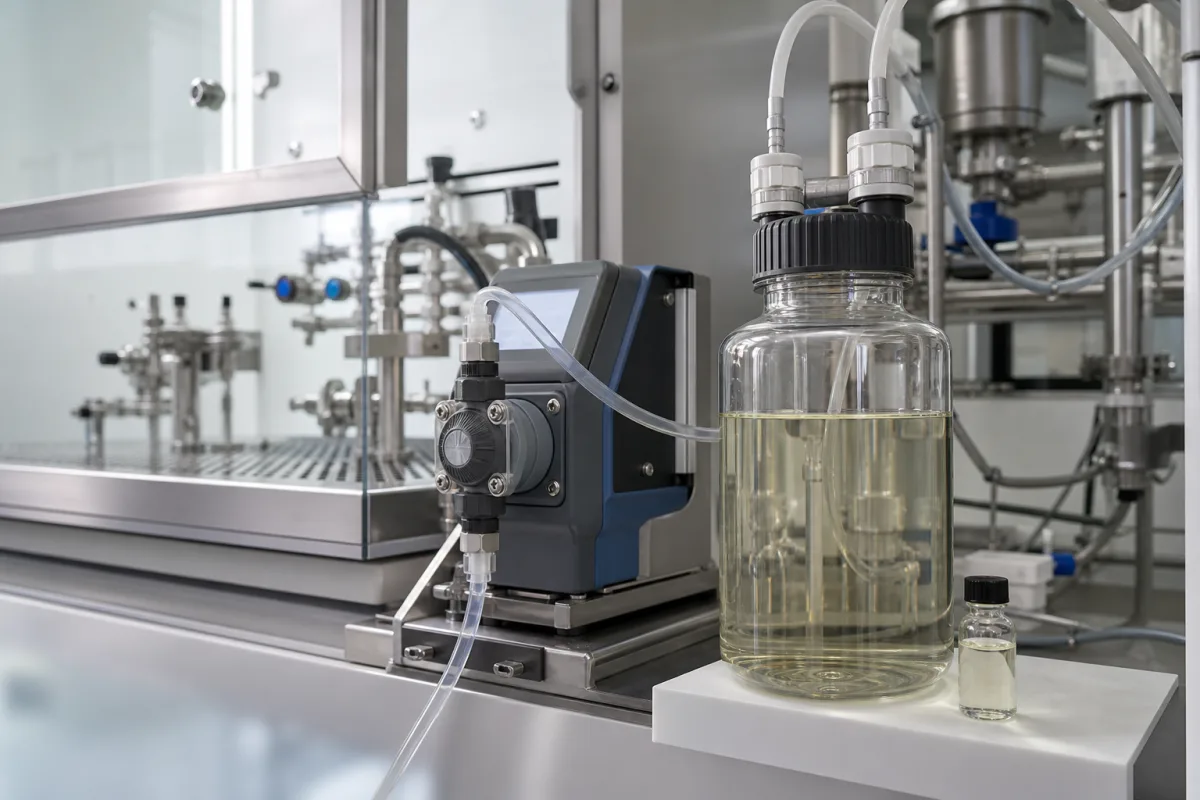
Specialized chemical catalyst for controlling polyurethane foam reaction kinetics in industrial manufacturing.
Product Specifications

Technical details and manufacturing context for Industrial Grade Polyurethane Foam Catalyst

Definition
An industrial-grade chemical catalyst specifically formulated to regulate the polymerization and blowing reactions in polyurethane foam production. This material serves as a critical additive in B2B supply chains for manufacturers of insulation panels, automotive seating, furniture cushioning, and packaging materials. It enables precise control over foam density, cell structure, and curing times during continuous production processes. The catalyst's consistent performance ensures repeatable quality in high-volume manufacturing environments where reaction kinetics directly impact product specifications and production efficiency.
Working Principle
Functions as a reaction accelerator by lowering activation energy for urethane formation and gas generation reactions, controlling the balance between polymerization and blowing phases through selective catalytic activity.
Common Materials
Tertiary amine compounds, Organometallic complexes, Stabilizing additives
Technical Parameters
  • Active catalyst concentration in carrier fluid (wt%) Per Request
  • Recommended processing temperature range (°C) Per Request
Components / BOM
  • Active catalytic compound
    Primary reaction accelerator for urethane formation
    Material: Tertiary amine or organometallic complex
  • Carrier fluid
    Diluent for precise metering and distribution
    Material: Polyether polyol or inert solvent
  • Stabilizer package Optional
    Prevents degradation and maintains shelf stability
    Material: Antioxidants and UV stabilizers
Engineering Reasoning
0.1-2.0 wt% catalyst concentration in polyol premix, 20-80°C reaction temperature, 0.5-5.0 bar mixing pressure
Catalyst concentration <0.05 wt% causes incomplete polymerization (gel time >300s), >2.5 wt% causes runaway exotherm (>150°C peak temperature), temperature >85°C initiates thermal decomposition
Design Rationale: Arrhenius kinetics failure: At low concentrations, insufficient active sites reduce reaction rate below critical threshold (k<0.01 s⁻¹). At high concentrations, autocatalytic acceleration exceeds heat dissipation capacity (Q_gen>Q_diss at ΔT>65K), causing thermal runaway via Trommsdorff-Norrish effect.
Risk Mitigation (FMEA)
Trigger Moisture contamination >500 ppm H₂O in polyol stream
Mode: Premature gelation in mixing head, foam density deviation >±15% from specification
Strategy: Integrated desiccant dryer with dew point monitoring <-40°C, moisture sensors with 10 ppm resolution in all feed lines
Trigger Catalyst feed pump pulsation >±5% of setpoint flow rate
Mode: Non-uniform cell structure (cell size variation >50%), foam shrinkage >3% volumetric
Strategy: Positive displacement pumps with servo control (0.1% accuracy), dampened accumulator vessels with 0.1 bar pressure regulation

Industry Taxonomies & Aliases

Commonly used trade names and technical identifiers for Industrial Grade Polyurethane Foam Catalyst.

Industrial Ecosystem & Supply Chain DNA

Complementary Systems
Downstream Applications
Specialized Tooling

Application Fit & Sizing Matrix

Operational Limits
pressure: Atmospheric to 5 bar (max)
flow rate: 0.1-10 L/min (metered injection)
temperature: 15-40°C (operating), -10 to 50°C (storage)
slurry concentration: Up to 30% solids by weight
Media Compatibility
✓ Polyol blends (polyether/polyester) ✓ Isocyanate systems (MDI/TDI) ✓ Industrial water-based foam systems
Unsuitable: Strong oxidizing acids (e.g., nitric acid, perchloric acid)
Sizing Data Required
  • Required foam rise time (seconds)
  • Target foam density (kg/m³)
  • Production throughput (kg/hour)

Reliability & Engineering Risk Analysis

Failure Mode & Root Cause
Catalyst Deactivation
Cause: Thermal degradation from excessive exothermic reaction temperatures or contamination by moisture, oils, or incompatible chemicals that poison active sites.
Inconsistent Foam Formation
Cause: Improper mixing ratios or inadequate dispersion due to mechanical agitation failure, leading to uneven catalysis and poor foam cell structure.
Maintenance Indicators
  • Visible color change or darkening of the catalyst, indicating thermal breakdown or contamination.
  • Audible hissing or irregular foaming sounds during application, signaling improper mixing or catalyst failure.
Engineering Tips
  • Implement strict temperature control during storage and application, using insulated containers and monitoring systems to prevent thermal degradation.
  • Use precision metering and mixing equipment with regular calibration to ensure consistent catalyst-to-resin ratios and thorough dispersion.

Compliance & Manufacturing Standards

Reference Standards
ISO 9001:2015 - Quality Management Systems ASTM D3574-17 - Standard Test Methods for Flexible Cellular Materials CE EN 45545-2:2020 - Railway Applications - Fire Protection on Railway Vehicles
Manufacturing Precision
  • Density: +/- 2% of specified value
  • Catalyst concentration in formulation: +/- 0.5% by weight
Quality Inspection
  • Foam Rise Time and Gel Time Measurement
  • Fourier Transform Infrared Spectroscopy (FTIR) for chemical composition verification

Factories Producing Industrial Grade Polyurethane Foam Catalyst

Verified manufacturers with capability to produce this product in China

✓ 93% Supplier Capability Match Found

S Sourcing Manager from Germany Feb 10, 2026
★★★★★
"Testing the Industrial Grade Polyurethane Foam Catalyst now; the Catalytic Activity Index (relative units) results are within 1% of the laboratory datasheet."
Technical Specifications Verified
P Procurement Specialist from Brazil Feb 07, 2026
★★★★☆
"Impressive build quality. Especially the Catalytic Activity Index (relative units) is very stable during long-term operation. (Delivery took slightly longer than expected, but technical support was excellent.)"
Technical Specifications Verified
T Technical Director from Canada Feb 04, 2026
★★★★★
"As a professional in the Chemical Manufacturing sector, I confirm this Industrial Grade Polyurethane Foam Catalyst meets all ISO standards."
Technical Specifications Verified
Verification Protocol

“Feedback is collected from verified sourcing managers during RFQ (Request for Quote) and factory evaluation processes on CNFX. These reports represent historical performance data and technical audit summaries from our B2B manufacturing network.”

14 sourcing managers are analyzing this specification now. Last inquiry for Industrial Grade Polyurethane Foam Catalyst from USA (1h ago).

Supply Chain Commonly Integrated Components

Process Analytics

Real-time monitoring and analysis system for pharmaceutical manufacturing processes

Explore Specs →
Dust Containment System

A safety and environmental control system designed to capture, contain, and prevent the escape of airborne pharmaceutical powder particles during blending operations.

Explore Specs →
Feed Tank & Pump

A combined unit consisting of a storage tank and pump for feeding solvent into an automated recovery and purification system.

Explore Specs →
Pre-Filtration Unit

A filtration component that removes coarse particulates and contaminants from solvents prior to main purification processes

Explore Specs →

Frequently Asked Questions

How does this catalyst control polyurethane foam reaction kinetics?

The catalyst uses tertiary amine compounds and organometallic complexes to precisely regulate gel time, tack-free time, and foam density by accelerating or moderating the polymerization reaction during industrial manufacturing processes.

What are the key specifications for optimal performance?

Critical specifications include Catalytic Activity Index (relative units), Gel Time (seconds), Tack-Free Time (seconds), Density Range (kg/m³), Viscosity (cP), and Flash Point (°C) for safe handling and consistent foam quality.

How should this industrial catalyst be stored and handled?

Store in sealed containers away from moisture and heat sources. Follow SDS guidelines for handling organometallic complexes and tertiary amines. Use appropriate PPE and ensure proper ventilation during application in foam manufacturing.

Can I contact factories directly on CNFX?

CNFX is an open directory, not a transaction platform. Each factory profile provides direct contact information and production details to help you initiate direct inquiries with Chinese suppliers.

Get Quote for Industrial Grade Polyurethane Foam Catalyst

Request technical pricing, lead times, or customized specifications for Industrial Grade Polyurethane Foam Catalyst directly from verified manufacturing units.

Your business information is encrypted and only shared with verified Industrial Grade Polyurethane Foam Catalyst suppliers.

Thank you! Your message has been sent. We'll respond within 1–3 business days.

Need to Manufacture Industrial Grade Polyurethane Foam Catalyst?

Connect with verified factories specializing in this product category

Add Your Factory Contact Us
Previous Product
Industrial Grade Polyethylene Glycol Plasticizer
Next Product
Industrial Grade Polyvinyl Alcohol Binder Powder