Industry-Verified Manufacturing Data (2026)

Prilling Head / Bucket

Based on aggregated insights from multiple verified factory profiles within the CNFX directory, the standard Prilling Head / Bucket used in the Chemical Manufacturing sector typically supports operational capacities ranging from standard industrial configurations to heavy-duty production requirements.

Technical Definition & Core Assembly

A canonical Prilling Head / Bucket is characterized by the integration of Distribution Plate and Nozzle Array. In industrial production environments, manufacturers listed on CNFX commonly emphasize Stainless steel (316L/304) construction to support stable, high-cycle operation across diverse manufacturing scenarios.

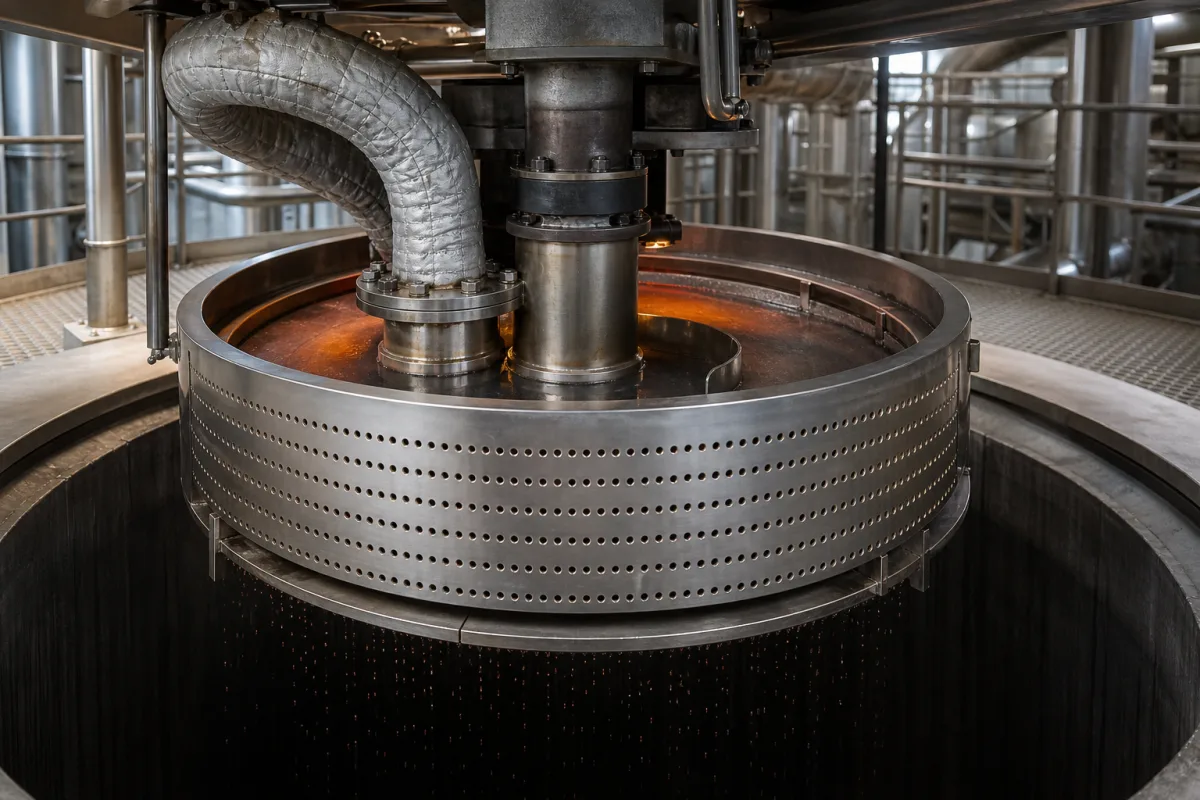
The component of a prilling tower that distributes molten material into droplets for solidification.
Product Specifications

Technical details and manufacturing context for Prilling Head / Bucket

Definition
A prilling head or bucket is a critical component in a prilling tower system used primarily in chemical manufacturing. It receives molten material (such as urea, ammonium nitrate, or other chemicals) and distributes it through multiple nozzles or perforations to form uniform droplets. These droplets then fall through the tower's cooling chamber, solidifying into spherical granules or prills through controlled cooling and solidification processes.
Working Principle
The prilling head operates by receiving pressurized molten material from the feed system. The material flows through distribution channels within the head to multiple nozzles or perforated plates. As the material exits through these openings, surface tension causes it to form droplets of consistent size. These droplets fall freely through the tower, undergoing cooling and solidification to form uniform prills.
Common Materials
Stainless steel (316L/304), Special alloy steels, Corrosion-resistant coatings
Technical Parameters
  • Nozzle diameter or perforation size determining droplet size and prill diameter (mm) Per Request
Components / BOM
  • Distribution Plate
    Evenly distributes molten material to all nozzles
    Material: Stainless steel
  • Nozzle Array
    Forms droplets of consistent size from molten material
    Material: Hardened steel or ceramic
  • Heating Jacket
    Maintains material temperature to prevent solidification in the head
    Material: Stainless steel with insulation
  • Mounting Flange
    Secures the prilling head to the tower structure
    Material: Carbon steel or stainless steel
Engineering Reasoning
0.5-3.0 bar pressure, 200-350°C temperature, 0.1-5.0 mm orifice diameter
Material yield strength exceeded at 450°C (316L SS: 170 MPa at 450°C), cavitation occurs at vapor pressure <0.1 bar, thermal fatigue at ΔT>150°C
Design Rationale: Thermal fatigue from cyclic heating/cooling (ΔT>150°C induces >0.2% strain), cavitation erosion at vapor pressure threshold, stress corrosion cracking in chloride environments (>50 ppm Cl⁻ at >60°C)
Risk Mitigation (FMEA)
Trigger Molten material solidification in orifices (viscosity >10 Pa·s at <200°C)
Mode: Orifice blockage causing uneven droplet distribution (>15% flow variation)
Strategy: Integrated electrical heating elements maintaining >220°C, purge system with 2.0 bar nitrogen backflush
Trigger High-velocity fluid erosion (flow velocity >15 m/s through 0.5 mm orifices)
Mode: Orifice diameter enlargement (>10% increase) causing droplet size variation (>±20%)
Strategy: Tungsten carbide orifice inserts (hardness >1500 HV), flow velocity limitation to <12 m/s

Industry Taxonomies & Aliases

Commonly used trade names and technical identifiers for Prilling Head / Bucket.

Applied To / Applications

This component is essential for the following industrial systems and equipment:

Industrial Ecosystem & Supply Chain DNA

Complementary Systems
Downstream Applications
Specialized Tooling

Application Fit & Sizing Matrix

Operational Limits
pressure: 0.1-0.5 bar (low pressure, primarily for flow distribution)
flow rate: 5-100 m³/h (depending on tower capacity and droplet size requirements)
temperature: 150-350°C (typical for molten urea, ammonium nitrate, etc.)
slurry concentration: Not applicable (handles pure molten materials; slurries cause nozzle clogging)
Media Compatibility
✓ Molten urea ✓ Molten ammonium nitrate ✓ Molten sulfur
Unsuitable: Abrasive or corrosive slurries with solid particles
Sizing Data Required
  • Required droplet size (mm)
  • Total molten material flow rate (m³/h)
  • Number of nozzles or holes per head

Reliability & Engineering Risk Analysis

Failure Mode & Root Cause
Abrasive erosion
Cause: Continuous exposure to high-velocity molten material flow containing solid particles, leading to material degradation and thinning of critical surfaces.
Thermal fatigue cracking
Cause: Cyclic thermal stresses from repeated heating and cooling cycles during operation, causing crack initiation and propagation in the prilling head/bucket material.
Maintenance Indicators
  • Irregular or non-uniform droplet formation patterns during operation
  • Unusual vibration or audible knocking sounds from the prilling head assembly
Engineering Tips
  • Implement regular thermal imaging inspections to detect hot spots and uneven temperature distribution before failure occurs
  • Establish a preventive maintenance schedule for nozzle inspection and replacement based on material throughput rather than time intervals

Compliance & Manufacturing Standards

Reference Standards
ISO 9001:2015 - Quality Management Systems ASTM A240/A240M - Standard Specification for Chromium and Chromium-Nickel Stainless Steel Plate, Sheet, and Strip for Pressure Vessels and for General Applications CE Marking - Directive 2014/68/EU (Pressure Equipment Directive)
Manufacturing Precision
  • Bore Diameter: +/-0.05mm
  • Surface Flatness: 0.1mm per 100mm
Quality Inspection
  • Dye Penetrant Test (PT) for surface defect detection
  • Ultrasonic Testing (UT) for internal flaw detection

Factories Producing Prilling Head / Bucket

Verified manufacturers with capability to produce this product in China

✓ 98% Supplier Capability Match Found

P Procurement Specialist from Singapore Jan 19, 2026
★★★★★
"Found 51+ suppliers for Prilling Head / Bucket on CNFX, but this spec remains the most cost-effective."
Technical Specifications Verified
T Technical Director from Germany Jan 16, 2026
★★★★★
"The technical documentation for this Prilling Head / Bucket is very thorough, especially regarding technical reliability."
Technical Specifications Verified
P Project Engineer from Brazil Jan 13, 2026
★★★★★
"Reliable performance in harsh Chemical Manufacturing environments. No issues with the Prilling Head / Bucket so far."
Technical Specifications Verified
Verification Protocol

“Feedback is collected from verified sourcing managers during RFQ (Request for Quote) and factory evaluation processes on CNFX. These reports represent historical performance data and technical audit summaries from our B2B manufacturing network.”

19 sourcing managers are analyzing this specification now. Last inquiry for Prilling Head / Bucket from USA (1h ago).

Supply Chain Compatible Machinery & Devices

Automated Batch Crystallization System

Automated system for controlled crystallization of chemical compounds in batch processes.

Explore Specs →
Automated pH Monitoring and Dosing System

Automated system for continuous pH monitoring and chemical dosing in process streams.

Explore Specs →
Automated Powder Dispensing and Blending System

Automated system for precise dispensing and homogeneous blending of powdered chemicals.

Explore Specs →
Automated Solvent Recovery and Purification System

Automated system for recovering and purifying industrial solvents.

Explore Specs →

Frequently Asked Questions

What materials are used in prilling heads for chemical manufacturing?

Prilling heads are typically constructed from stainless steel (316L/304), special alloy steels, and feature corrosion-resistant coatings to withstand harsh chemical environments and high temperatures.

What are the main components of a prilling head/bucket?

Key components include a distribution plate, heating jacket, mounting flange, and nozzle array, which work together to evenly distribute molten material into droplets for solidification in prilling towers.

How does a prilling head improve chemical manufacturing processes?

A prilling head ensures uniform droplet formation from molten materials, leading to consistent particle size, improved product quality, and efficient solidification in prilling towers for chemical production.

Can I contact factories directly on CNFX?

CNFX is an open directory, not a transaction platform. Each factory profile provides direct contact information and production details to help you initiate direct inquiries with Chinese suppliers.

Get Quote for Prilling Head / Bucket

Request technical pricing, lead times, or customized specifications for Prilling Head / Bucket directly from verified manufacturing units.

Your business information is encrypted and only shared with verified Prilling Head / Bucket suppliers.

Thank you! Your message has been sent. We'll respond within 1–3 business days.

Need to Manufacture Prilling Head / Bucket?

Connect with verified factories specializing in this product category

Add Your Factory Contact Us
Previous Product
Pressure Vessel Shell
Next Product
Prilling Tower