Automated Optical Inspection Unit
View system integration details
This page explains how Camera Array is classified within Computer, Electronic and Optical Product Manufacturing. Technical values and manufacturer relationships are research references; confirm the current specification and supplier evidence for each order.
A multi-camera system integrated into an Automated Optical Inspection (AOI) unit for simultaneous high-resolution image capture of products or components from multiple angles.
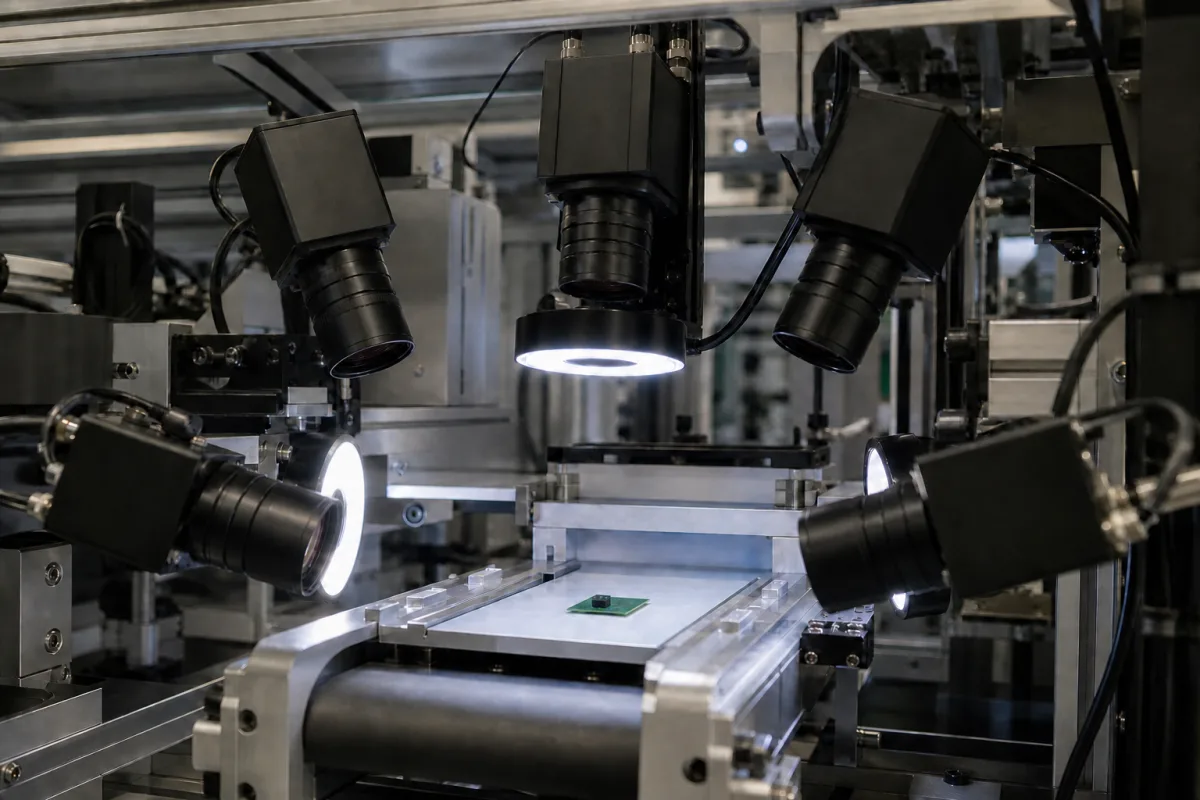
Technical details and manufacturing context for Camera Array
| Parameter | Typical range | Notes & selection driver |
|---|---|---|
| Number of Cameras | 4–16 pcs | Determines coverage and resolution trade-off |
| Resolution per Camera | 5–20 MP | Higher resolution for finer defects |
| Field of View | 50–200 mm | Adjustable via lens selection |
| Frame Rate | 30–120 fps | Higher for high-speed production lines |
| Pixel Accuracy | ±0.02–±0.05 mm | Critical for defect detection |
| Operating Temperature | 0–50 °C | Outside range may affect sensor performance |
| Humidity Range | 20–80 % RH | Non-condensing |
| Ingress Protection | IP54–IP65 | Higher for dusty or wet environmentsIEC 60529 |
| Supply Voltage | 24 ±10% V DC | Stable power required for consistent imaging |
| Power Consumption | 50–200 W | Depends on number of cameras and lighting |
| Interface | GigE–USB3 | GigE for longer distances, USB3 for higher speed |
| Weight | 5–20 kg | Affects mounting and handling |
Ranges are indicative industry figures for RFQ preparation, not a supplier commitment. Confirm every value and standard with the legal manufacturer before ordering.
| pressure: | Atmospheric (sealed enclosure for dust/particle protection) |
| other spec: | Vibration tolerance: ≤ 0.5G at 10-500 Hz, illumination intensity: 5000-10000 lux adjustable |
| temperature: | 0°C to 50°C (operating), -10°C to 60°C (storage) |
Indicative industry ranges for design and RFQ preparation. Confirm the exact figures and applicable standard with the manufacturer before specifying.
Quoted from the published standard.
A practical evidence checklist for RFQ preparation and supplier evaluation.
Compare the published product scope and source details, then include your specifications and quantity in an enquiry.
Manufacturer profiles associated with Camera Array.
Explore company information and manufacturing capabilities, then discuss the scope of your project with a relevant supplier.
Ask for use case, specification boundaries, supplier type, and RFQ preparation information for this product.
The number of cameras in a Camera Array typically ranges from 4 to 16, depending on the inspection requirements and the complexity of the product geometry. The exact number should be confirmed with the manufacturer for the specific AOI system model.
Key specifications include the number of cameras, resolution per camera (5-20 MP), field of view (50-200 mm), frame rate (30-120 fps), pixel accuracy (±0.02-±0.05 mm), operating temperature (0-50 °C), humidity range (20-80% RH), ingress protection (IP54-IP65), supply voltage (24 V DC ±10%), power consumption (50-200 W), interface (GigE or USB3), and weight (5-20 kg). Always verify these values with the manufacturer for the specific model.
The Camera Array typically interfaces with the AOI control unit via GigE or USB3 connections. GigE is suitable for longer distances, while USB3 offers higher speed. The interface choice affects data transfer rates and system architecture.
Signs of potential issues include inconsistent image quality, calibration drift, synchronization errors, or failure to meet specified accuracy. Regular maintenance should include checking lens cleanliness, verifying calibration, and monitoring operating conditions such as temperature and humidity to ensure they remain within specified ranges.
This component is essential for the following industrial systems and equipment:
Editorial classification, named public sources where available, and source-reviewed manufacturer records.
Compare manufacturer profiles with relevant product and process capability.