Sensor Unit
View system integration details
This page explains how Sensor Head is classified within Computer, Electronic and Optical Product Manufacturing. Technical values and manufacturer relationships are research references; confirm the current specification and supplier evidence for each order.
The front-end sensing element of a sensor unit that directly interacts with the measured environment or object.
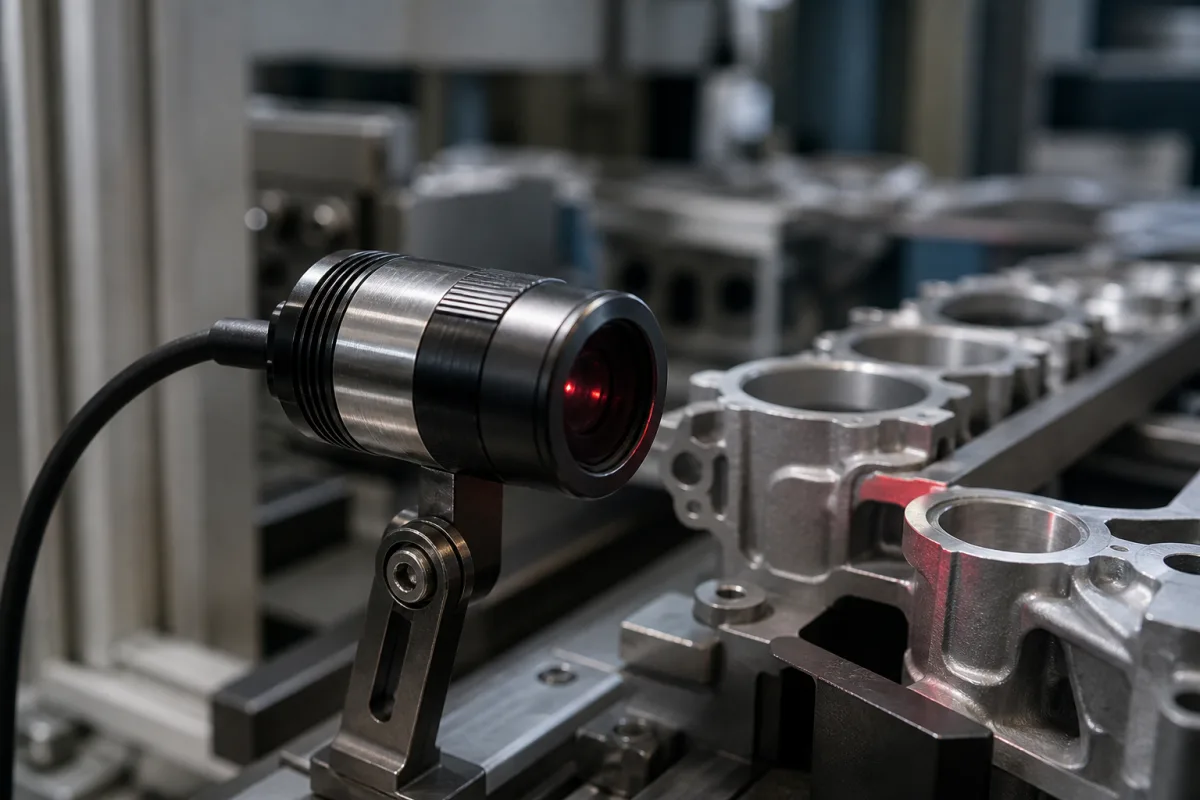
Technical details and manufacturing context for Sensor Head
| Parameter | Typical range | Notes & selection driver |
|---|---|---|
| Measurement Range | 0–100 mm | Typical for inductive sensors |
| Resolution | 0.01 mm | Higher resolution for precision applications |
| Accuracy | ±0.05 mm | Includes linearity and hysteresis |
| Output Signal | 4–20 mA | Analog current loop |
| Supply Voltage | 9–36 V DC | Reverse polarity protected |
| Operating Temperature | -40–85 °C | Extended range available on request |
| Ingress Protection | IP54–IP65 | IP65 for dusty/wet environmentsIEC 60529 |
| Housing Material | 316L SS | Corrosion resistantASTM A240 |
| Weight | 50–150 g | Depends on cable length |
| Cable Length | 1–10 m | Custom lengths available |
Ranges are indicative industry figures for RFQ preparation, not a supplier commitment. Confirm every value and standard with the legal manufacturer before ordering.
| pressure: | 0 to 100 bar |
| flow rate: | 0 to 10 m/s |
| temperature: | -40°C to 150°C |
| slurry concentration: | 0 to 30% solids by weight |
Indicative industry ranges for design and RFQ preparation. Confirm the exact figures and applicable standard with the manufacturer before specifying.
Quoted from the published standard.
A practical evidence checklist for RFQ preparation and supplier evaluation.
Compare the published product scope and source details, then include your specifications and quantity in an enquiry.
Manufacturer profiles associated with Sensor Head.
Explore company information and manufacturing capabilities, then discuss the scope of your project with a relevant supplier.
Ask for use case, specification boundaries, supplier type, and RFQ preparation information for this product.
A sensor head is the front-end component of a sensor unit that directly interacts with the measured environment. It contains the sensitive element (transducer) that converts a physical, chemical, or biological stimulus into a measurable signal.
Common materials include stainless steel (e.g., 316L), ceramic, silicon, and specialized polymers. The choice depends on factors like corrosion resistance, temperature tolerance, and mechanical strength.
Typical parameters include measurement range (e.g., 0–100 mm), resolution (e.g., 0.01 mm), accuracy (e.g., ±0.05 mm), output signal (e.g., 4–20 mA), supply voltage (e.g., 9–36 V DC), operating temperature (e.g., -40 to 85 °C), ingress protection (e.g., IP54–IP65), housing material (e.g., 316L SS), weight (e.g., 50–150 g), and cable length (e.g., 1–10 m). These are reference ranges; confirm with the manufacturer.
Check the sensor head's specifications against your application's requirements, including measurement range, environmental conditions (temperature, humidity, dust), and signal output. Always verify model-specific values and standards with the legal manufacturer or supplier.
This component is essential for the following industrial systems and equipment:
Editorial classification, named public sources where available, and source-reviewed manufacturer records.
Compare manufacturer profiles with relevant product and process capability.