Industry-Verified Manufacturing Data (2026)

Heat Dissipation System

Based on aggregated insights from multiple verified factory profiles within the CNFX directory, the standard Heat Dissipation System used in the Electrical Equipment Manufacturing sector typically supports operational capacities ranging from standard industrial configurations to heavy-duty production requirements.

Technical Definition & Core Assembly

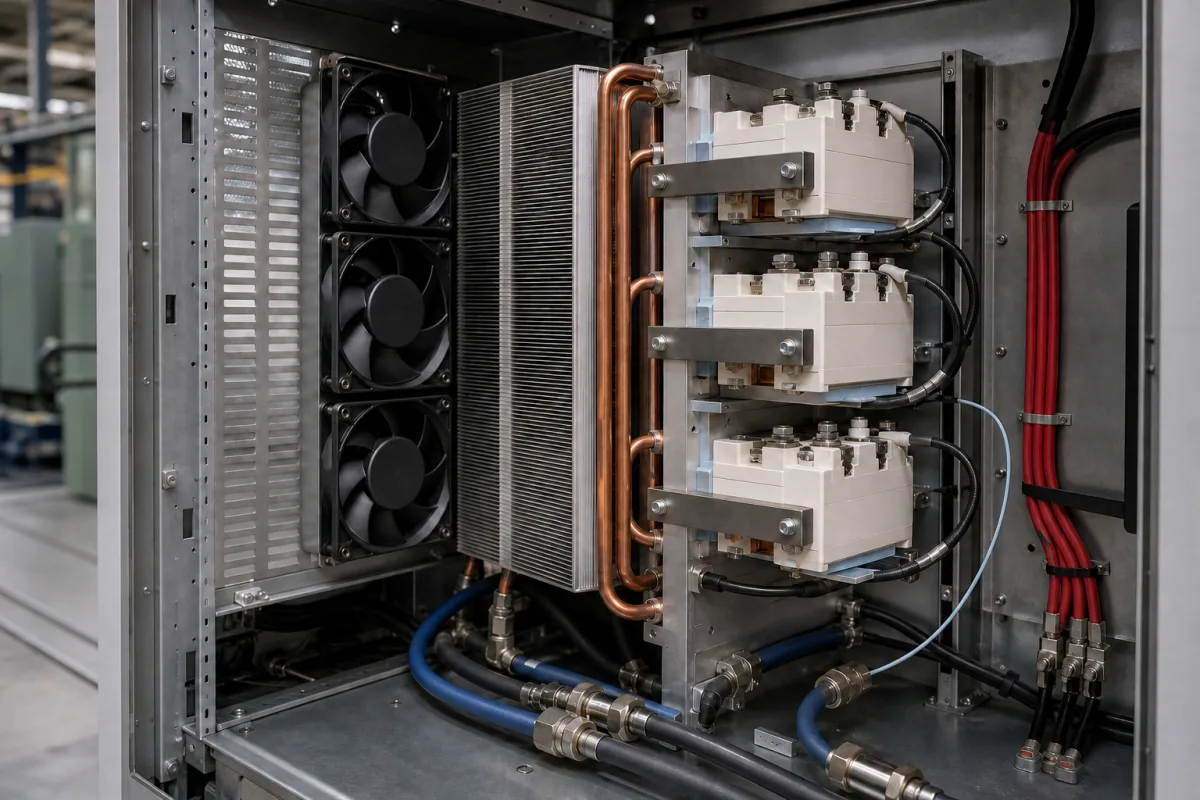
A canonical Heat Dissipation System is characterized by the integration of Heatsink and Cooling Fan. In industrial production environments, manufacturers listed on CNFX commonly emphasize Aluminum alloy construction to support stable, high-cycle operation across diverse manufacturing scenarios.

A system designed to transfer and dissipate excess heat generated by electronic components within a control circuit or power regulator to maintain optimal operating temperatures.
Product Specifications

Technical details and manufacturing context for Heat Dissipation System

Definition
The Heat Dissipation System is a critical sub-assembly within a Control Circuit or Power Regulator. Its primary function is to manage thermal energy produced by power semiconductors, resistors, and other heat-generating components. By efficiently transferring heat away from sensitive electronics, it prevents overheating, ensures circuit stability, prolongs component lifespan, and maintains the regulator's specified performance and safety margins.
Working Principle
The system operates primarily on the principles of conduction, convection, and sometimes radiation. Heat generated by components is conducted through thermal interface materials (like thermal paste or pads) to a heatsink (often made of aluminum or copper with fins). The heatsink's large surface area then facilitates convective heat transfer to the surrounding air, which is often assisted by forced airflow from a fan. In some designs, heat pipes or liquid cooling loops may be used for more efficient heat transport to a remote radiator.
Common Materials
Aluminum alloy, Copper, Thermal interface material (e.g., thermal paste, pad), Plastic (for fan housing/blades)
Technical Parameters
  • Thermal Design Power (TDP) or maximum heat dissipation capacity, indicating the amount of heat energy the system can effectively transfer under defined conditions. (W) Per Request
Components / BOM
  • Heatsink
    Primary structure that absorbs and dissipates heat through its extended surface area (fins).
    Material: Aluminum alloy or Copper
  • Cooling Fan
    Generates forced airflow across the heatsink to enhance convective heat transfer.
    Material: Plastic (housing/blades), Copper (motor windings)
  • Thermal Interface Material (TIM)
    Fills microscopic gaps between the heat-generating component and the heatsink to improve thermal conductivity.
    Material: Silicone-based paste, phase-change material, or graphite pad
Engineering Reasoning
0-150°C heat sink surface temperature, 0-500 W thermal dissipation capacity
Heat sink temperature exceeds 175°C, causing thermal runaway in adjacent semiconductor junctions
Design Rationale: Thermal conductivity degradation of aluminum heat sink material beyond 175°C, following Fourier's Law of heat conduction breakdown
Risk Mitigation (FMEA)
Trigger Thermal interface material dry-out with 0.5 W/m·K conductivity loss
Mode: Junction temperature rise to 200°C in IGBT modules, exceeding Tjmax rating
Strategy: Phase-change thermal interface material with 8.0 W/m·K conductivity and 10-year stability
Trigger Fan bearing wear causing 40% reduction in 2.5 m³/min airflow
Mode: Convective heat transfer coefficient drops below 25 W/m²·K, violating Newton's Law of Cooling
Strategy: Dual ball-bearing fans with MTBF 100,000 hours at 70°C ambient

Industry Taxonomies & Aliases

Commonly used trade names and technical identifiers for Heat Dissipation System.

Applied To / Applications

This component is essential for the following industrial systems and equipment:

Industrial Ecosystem & Supply Chain DNA

Complementary Systems
Downstream Applications
Specialized Tooling

Application Fit & Sizing Matrix

Operational Limits
pressure: 0 to 10 bar (145 psi) maximum system pressure
flow rate: 0.5 to 20 L/min per cooling circuit
temperature: -40°C to 150°C operational, -60°C to 200°C storage
slurry concentration: Not applicable - designed for clean fluids only
Media Compatibility
✓ Deionized water with corrosion inhibitors ✓ Propylene glycol/water mixtures (up to 50%) ✓ Dielectric cooling fluids (e.g., Fluorinert, Novec)
Unsuitable: Abrasive slurry environments or particulate-laden fluids
Sizing Data Required
  • Maximum heat load (Watts)
  • Available coolant flow rate (L/min)
  • Allowable temperature rise (ΔT in °C)

Reliability & Engineering Risk Analysis

Failure Mode & Root Cause
Fouling and Scaling
Cause: Accumulation of mineral deposits, biological growth, or particulate matter on heat transfer surfaces, reducing thermal efficiency and increasing pressure drop due to poor water quality, inadequate filtration, or improper chemical treatment.
Corrosion and Leakage
Cause: Degradation of metal components (e.g., tubes, fins, or seals) from chemical attack, galvanic action, or erosion-corrosion, leading to coolant leaks and system failure, often due to incompatible materials, improper pH control, or high fluid velocity.
Maintenance Indicators
  • Unusual temperature rise in the system or at the heat exchanger outlet, indicating reduced heat transfer efficiency.
  • Audible gurgling, hissing, or knocking noises from the cooling circuit, suggesting air entrapment, cavitation, or flow restriction.
Engineering Tips
  • Implement a proactive water treatment program with regular monitoring of pH, conductivity, and biocide levels to prevent scaling, corrosion, and biological fouling.
  • Conduct periodic thermal imaging or infrared surveys to detect hot spots and uneven cooling, allowing early intervention before performance degradation leads to failure.

Compliance & Manufacturing Standards

Reference Standards
ISO 13732-1:2006 Ergonomics of the thermal environment ANSI/ASHRAE 55-2020 Thermal Environmental Conditions for Human Occupancy DIN EN 442-2:2014 Radiators and convectors - Part 2: Test methods and rating
Manufacturing Precision
  • Flatness: +/-0.1mm per 300mm length
  • Surface roughness: Ra ≤ 1.6μm for contact surfaces
Quality Inspection
  • Thermal imaging test for heat distribution uniformity
  • Pressure decay test for leak detection in liquid cooling systems

Factories Producing Heat Dissipation System

Verified manufacturers with capability to produce this product in China

✓ 94% Supplier Capability Match Found

T Technical Director from United Arab Emirates Feb 15, 2026
★★★★★
"Standard OEM quality for Electrical Equipment Manufacturing applications. The Heat Dissipation System arrived with full certification."
Technical Specifications Verified
P Project Engineer from Australia Feb 12, 2026
★★★★☆
"Great transparency on the Heat Dissipation System components. Essential for our Electrical Equipment Manufacturing supply chain. (Delivery took slightly longer than expected, but technical support was excellent.)"
Technical Specifications Verified
S Sourcing Manager from Singapore Feb 09, 2026
★★★★★
"The Heat Dissipation System we sourced perfectly fits our Electrical Equipment Manufacturing production line requirements."
Technical Specifications Verified
Verification Protocol

“Feedback is collected from verified sourcing managers during RFQ (Request for Quote) and factory evaluation processes on CNFX. These reports represent historical performance data and technical audit summaries from our B2B manufacturing network.”

10 sourcing managers are analyzing this specification now. Last inquiry for Heat Dissipation System from India (1h ago).

Supply Chain Compatible Machinery & Devices

Circuit Breaker Arc Chute

Electrical component that extinguishes arcs in circuit breakers

Explore Specs →
Medium Voltage Switchgear Assembly Line

Automated production system for assembling medium voltage electrical switchgear.

Explore Specs →
Motor Terminal Block

Electrical connection interface for motor windings

Explore Specs →
PLC Control System

A digital industrial computer control system that monitors inputs, makes decisions based on a custom program, and controls outputs to automate industrial processes.

Explore Specs →

Frequently Asked Questions

What are the main components of this heat dissipation system?

The system consists of three primary components: a heatsink (typically aluminum alloy or copper), a cooling fan (with plastic housing/blades), and thermal interface material (TIM) such as thermal paste or pads to ensure efficient heat transfer.

How does this system maintain optimal operating temperatures in electrical equipment?

The system transfers excess heat from electronic components through the thermal interface material to the heatsink, where the cooling fan actively dissipates the heat into the surrounding environment, preventing overheating and ensuring reliable operation.

What types of electrical equipment benefit from this heat dissipation system?

This system is specifically designed for control circuits and power regulators in electrical manufacturing, where maintaining stable temperatures is critical for performance, safety, and longevity of electronic components.

Can I contact factories directly on CNFX?

CNFX is an open directory, not a transaction platform. Each factory profile provides direct contact information and production details to help you initiate direct inquiries with Chinese suppliers.

Get Quote for Heat Dissipation System

Request technical pricing, lead times, or customized specifications for Heat Dissipation System directly from verified manufacturing units.

Your business information is encrypted and only shared with verified Heat Dissipation System suppliers.

Thank you! Your message has been sent. We'll respond within 1–3 business days.

Need to Manufacture Heat Dissipation System?

Connect with verified factories specializing in this product category

Add Your Factory Contact Us
Previous Product
Grounding Verification Sensor
Next Product
Heat Management System