Industry-Verified Manufacturing Data (2026)

Control Circuit/Power Regulator

Based on aggregated insights from multiple verified factory profiles within the CNFX directory, the standard Control Circuit/Power Regulator used in the Machinery and Equipment Manufacturing sector typically supports operational capacities ranging from standard industrial configurations to heavy-duty production requirements.

Technical Definition & Core Assembly

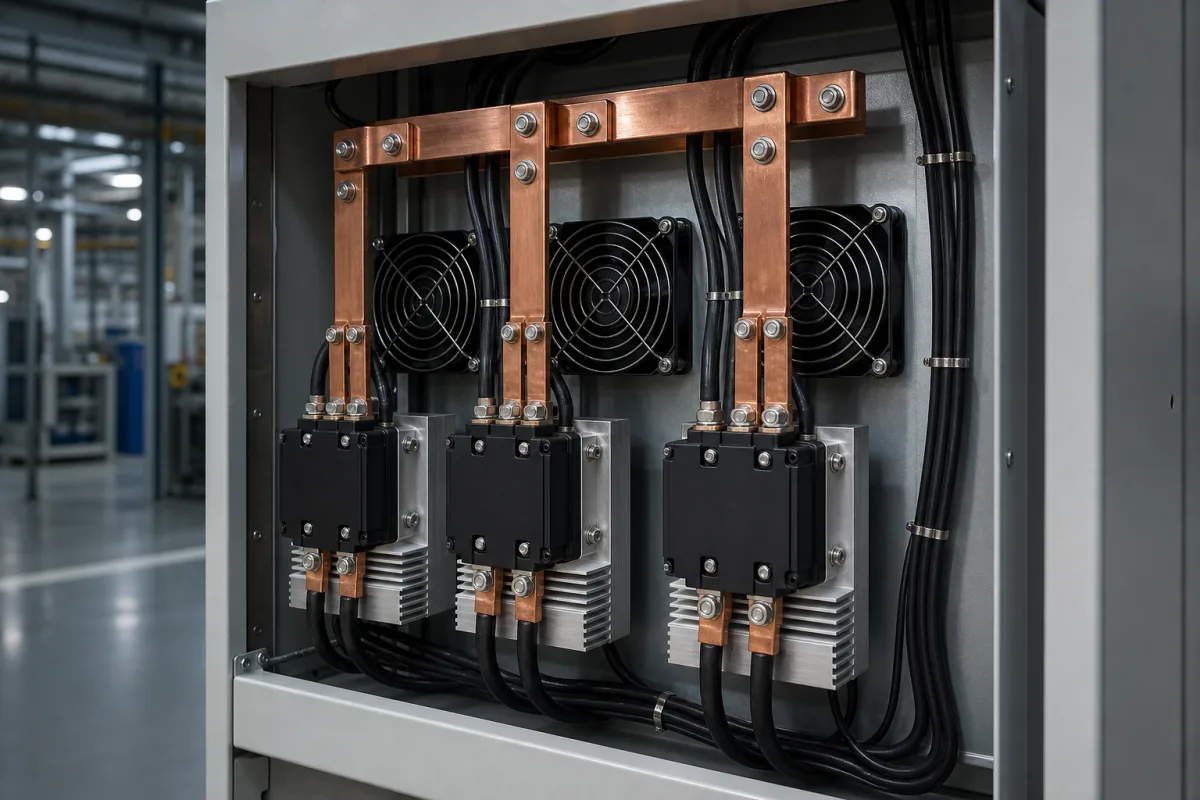
A canonical Control Circuit/Power Regulator is characterized by the integration of Power Semiconductor Module and Control Logic Board. In industrial production environments, manufacturers listed on CNFX commonly emphasize Printed Circuit Board (PCB) construction to support stable, high-cycle operation across diverse manufacturing scenarios.

Electronic component that manages and regulates electrical power delivery to heating elements within a heating zone.
Product Specifications

Technical details and manufacturing context for Control Circuit/Power Regulator

Definition
A specialized control circuit and power regulation device that precisely controls the electrical power supplied to heating elements in industrial heating zones, ensuring accurate temperature maintenance and energy efficiency through modulation of voltage, current, or power factor.
Working Principle
Monitors temperature feedback from sensors and adjusts power output to heating elements using pulse-width modulation (PWM), phase-angle control, or variable frequency drive (VFD) techniques to maintain setpoint temperatures within the heating zone.
Common Materials
Printed Circuit Board (PCB), Semiconductor components (MOSFETs/IGBTs), Heat sinks, Copper conductors
Technical Parameters
  • Maximum power regulation capacity (kW) Per Request
Components / BOM
  • Power Semiconductor Module
    Switches and regulates electrical power to heating elements
    Material: Silicon/Gallium Nitride semiconductor
  • Control Logic Board
    Processes temperature signals and generates control signals
    Material: FR4 PCB with microcontroller
  • Heat Dissipation System
    Removes heat generated by power components
    Material: Aluminum alloy with thermal interface material
Engineering Reasoning
24-48 VDC, 0.5-15 A continuous current, 0-100% PWM duty cycle
Thermal shutdown at 125°C junction temperature, voltage breakdown at 60 VDC, current limit at 20 A peak
Design Rationale: Joule heating (P=I²R) exceeding thermal dissipation capacity, dielectric breakdown at 60 VDC due to semiconductor junction limitations, electromigration at current densities exceeding 10⁶ A/cm²
Risk Mitigation (FMEA)
Trigger Transient voltage spike exceeding 60 VDC from inductive load switching
Mode: Gate oxide breakdown in MOSFET switching elements
Strategy: TVS diode clamping at 55 VDC with 1 ns response time, snubber circuit with 100 Ω/0.1 μF RC network
Trigger Continuous operation at 15 A exceeding 100°C ambient temperature
Mode: Thermal runaway due to positive temperature coefficient in semiconductor junctions
Strategy: Thermal derating curve limiting current to 10 A at 85°C ambient, heatsink with 2.5°C/W thermal resistance, temperature sensor with shutdown at 115°C

Industry Taxonomies & Aliases

Commonly used trade names and technical identifiers for Control Circuit/Power Regulator.

Applied To / Applications

This component is essential for the following industrial systems and equipment:

Industrial Ecosystem & Supply Chain DNA

Complementary Systems
Downstream Applications
Specialized Tooling

Application Fit & Sizing Matrix

Operational Limits
pressure: Atmospheric pressure operation, not rated for pressurized environments
other spec: Input voltage: 100-240V AC ±10%, Output power: 0-5kW continuous, Protection class: IP20
temperature: Ambient to 85°C (operating), -40°C to 125°C (storage)
Media Compatibility
✓ Resistive heating elements (nichrome, kanthal) ✓ Ceramic heating elements ✓ Industrial ovens/furnaces with clean air environments
Unsuitable: Corrosive or conductive atmospheres (e.g., chlorine gas, salt spray, metal dust)
Sizing Data Required
  • Maximum heating element power requirement (kW)
  • Control signal type and voltage (e.g., 4-20mA, 0-10V DC)
  • Required regulation accuracy (±% of setpoint)

Reliability & Engineering Risk Analysis

Failure Mode & Root Cause
Overheating and thermal degradation
Cause: Excessive current load, poor ventilation, or ambient temperature extremes leading to component stress and insulation breakdown.
Contact arcing and welding
Cause: Dust accumulation, moisture ingress, or mechanical wear causing poor electrical contact and sparking during operation.
Maintenance Indicators
  • Audible buzzing, humming, or crackling sounds from the regulator enclosure
  • Visible discoloration, scorch marks, or melted insulation on components or wiring
Engineering Tips
  • Implement regular infrared thermography scans to detect abnormal heat patterns before failure occurs
  • Establish a preventive cleaning schedule using compressed air or non-conductive vacuums to remove dust and contaminants from internal components

Compliance & Manufacturing Standards

Reference Standards
ISO 9001:2015 - Quality Management Systems IEC 61010-1:2010 - Safety requirements for electrical equipment for measurement, control, and laboratory use EN 60204-1:2018 - Safety of machinery - Electrical equipment of machines
Manufacturing Precision
  • Voltage Regulation: +/- 2% of nominal output
  • Temperature Stability: +/- 1°C across operating range
Quality Inspection
  • Insulation Resistance Test (minimum 100 MΩ at 500 VDC)
  • Load Regulation Test (verifying stability under varying load conditions)

Factories Producing Control Circuit/Power Regulator

Verified manufacturers with capability to produce this product in China

✓ 95% Supplier Capability Match Found

T Technical Director from Brazil Feb 15, 2026
★★★★★
"Found 24+ suppliers for Control Circuit/Power Regulator on CNFX, but this spec remains the most cost-effective."
Technical Specifications Verified
P Project Engineer from Canada Feb 12, 2026
★★★★☆
"The technical documentation for this Control Circuit/Power Regulator is very thorough, especially regarding technical reliability. (Delivery took slightly longer than expected, but technical support was excellent.)"
Technical Specifications Verified
S Sourcing Manager from United States Feb 09, 2026
★★★★★
"Reliable performance in harsh Machinery and Equipment Manufacturing environments. No issues with the Control Circuit/Power Regulator so far."
Technical Specifications Verified
Verification Protocol

“Feedback is collected from verified sourcing managers during RFQ (Request for Quote) and factory evaluation processes on CNFX. These reports represent historical performance data and technical audit summaries from our B2B manufacturing network.”

7 sourcing managers are analyzing this specification now. Last inquiry for Control Circuit/Power Regulator from India (35m ago).

Supply Chain Compatible Machinery & Devices

Automated Assembly Line System

Integrated production system for sequential component assembly operations

Explore Specs →
Automated Powder Coating System

Integrated industrial system for applying dry powder coatings to metal substrates.

Explore Specs →
Centrifugal Pump Impeller

Rotating component that transfers energy to fluid in centrifugal pumps.

Explore Specs →
High-Precision CNC Laser Cutting Machine

Computer-controlled industrial machine using focused laser beams to cut sheet metal with micron-level accuracy.

Explore Specs →

Frequently Asked Questions

What is the primary function of this control circuit/power regulator?

This electronic component manages and regulates electrical power delivery to heating elements within a heating zone in machinery and equipment, ensuring precise temperature control and efficient energy usage.

What materials are used in the construction of this power regulator?

The regulator is built using a Printed Circuit Board (PCB) as the base, semiconductor components like MOSFETs or IGBTs for switching, heat sinks for thermal management, and copper conductors for efficient power transmission.

How does the heat dissipation system work in this component?

The heat dissipation system, typically consisting of aluminum or copper heat sinks, efficiently transfers heat away from power semiconductor modules (MOSFETs/IGBTs) to prevent overheating and ensure stable, long-term operation in industrial environments.

Can I contact factories directly on CNFX?

CNFX is an open directory, not a transaction platform. Each factory profile provides direct contact information and production details to help you initiate direct inquiries with Chinese suppliers.

Get Quote for Control Circuit/Power Regulator

Request technical pricing, lead times, or customized specifications for Control Circuit/Power Regulator directly from verified manufacturing units.

Your business information is encrypted and only shared with verified Control Circuit/Power Regulator suppliers.

Thank you! Your message has been sent. We'll respond within 1–3 business days.

Need to Manufacture Control Circuit/Power Regulator?

Connect with verified factories specializing in this product category

Add Your Factory Contact Us
Previous Product
Control Cabling/Hose Carrier
Next Product
Control Console