Editorial Technical Reference

High Voltage Test Module

This page explains how High Voltage Test Module is classified within Electrical Equipment Manufacturing. Technical values and manufacturer relationships are research references; confirm the current specification and supplier evidence for each order.

Technical Definition & Core Assembly

A component of an Electrical Testing Station that generates, applies, and measures high voltage for insulation and dielectric testing.
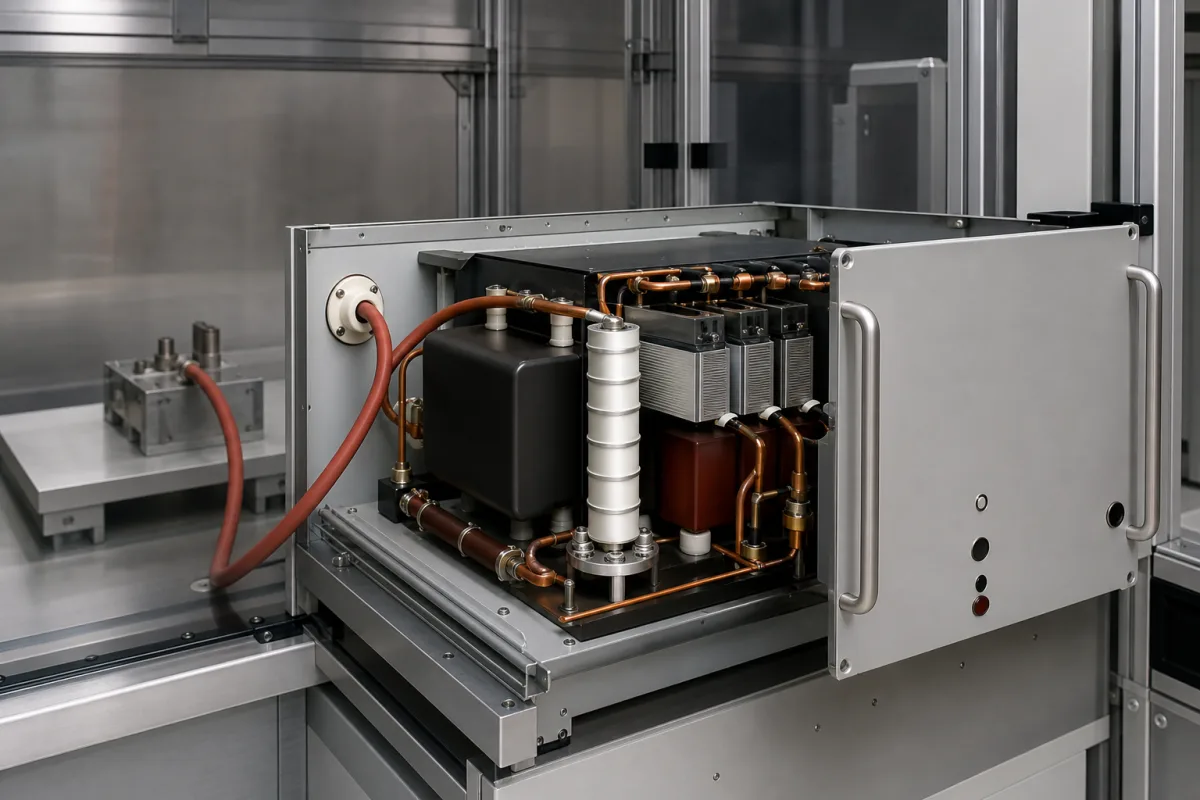
Representative product image. Confirm appearance and specifications with the manufacturer.

Product Specifications

Technical details and manufacturing context for High Voltage Test Module

Definition
The High Voltage Test Module is a component used within an Electrical Testing Station to perform high-voltage electrical tests on equipment such as cables, transformers, insulators, and electronic assemblies. It generates controlled high-voltage outputs, typically from 1 kV to 100 kV AC or DC, applies this voltage to test specimens, and measures parameters including breakdown voltage, leakage current, and insulation resistance. The module's primary function is to verify that electrical products can withstand specified voltage levels without failure, supporting safety, reliability, and compliance with international standards such as IEC, UL, and IEEE. The module typically includes a high-voltage transformer or resonant circuit to step up a low-voltage input, a control system to regulate output voltage and monitor current, and safety interlocks and grounding mechanisms. It is designed for use in laboratory or industrial testing environments, with an operating temperature range of -10°C to 50°C and relative humidity of 20% to 80% (non-condensing). Key specifications include an output voltage range of 0–100 kV AC, output voltage accuracy of ±1%, output frequency of 50–60 Hz, rated power of 5–50 kVA, leakage current measurement range of 0.1–100 mA with accuracy ±0.5%, insulation resistance of ≥100 MΩ at 500 V DC, and dielectric withstand voltage of 1.5 times rated voltage for 1 minute. The enclosure is rated IP54–IP65, and the module weighs between 50 and 200 kg, with typical dimensions of 600×800×1000 mm (W×H×D). Materials include high-voltage insulated copper windings, epoxy resin or silicone insulation, stainless steel or aluminum enclosure, and ceramic or polymer bushings. These specifications are reference ranges; actual values must be confirmed with the manufacturer for specific models and applications. Standards listed (e.g., IEC 60060-1, IEC 60243-1) are for verification and procurement reference only, not proof of certification.
Working Principle
The module operates by using a high-voltage transformer or resonant circuit to step up a low-voltage AC or DC input to the required test level. A control system regulates the output voltage and monitors current flow. During testing, voltage is gradually increased (ramp test) or held at a set level (withstand test) while sensors detect insulation breakdown (indicated by a sudden current surge) or measure leakage current. Safety interlocks and grounding mechanisms protect operators and equipment.
Common Materials
High-voltage insulated copper windings, Epoxy resin or silicone insulation, Stainless steel or aluminum enclosure, Ceramic or polymer bushings/terminals
Technical Parameters
ParameterTypical rangeNotes & selection driver
Output Voltage Range0–100 kV ACCovers insulation testing up to 100 kVIEC 60060-1
Output Voltage Accuracy±1 %Ensures reliable test resultsIEC 60060-2
Output Frequency50–60 HzMains frequency for AC testingIEC 60060-3
Rated Power5–50 kVADetermines maximum test load
Leakage Current Measurement Range0.1–100 mAFor insulation leakage monitoringIEC 60243-1
Leakage Current Accuracy±0.5 %High precision for safety complianceIEC 60243-1
Operating Temperature Range-10–50 °COutside this range performance may degradeIEC 60068-2-1
Relative Humidity Range20–80 % RHNon-condensing; high humidity may cause flashoverIEC 60068-2-78
Ingress Protection RatingIP54–IP65Protects against dust and water jetsIEC 60529
Insulation Resistance≥100 Minimum at 500 V DCIEC 60243-1
Dielectric Withstand Voltage1.5× rated kVApplied for 1 minute without breakdownIEC 60243-1
Weight50–200 kgDepends on power rating and enclosure
Dimensions (W×H×D)600×800×1000 mmTypical for 50 kVA unit

Ranges are indicative industry figures for RFQ preparation, not a supplier commitment. Confirm every value and standard with the legal manufacturer before ordering.

Components / BOM
  • High-Voltage Transformer
    Steps up input voltage to the required high-voltage test level using insulated windings.
    Material: Laminated silicon steel core, enameled copper wire, insulating oil or epoxy
  • Voltage Regulator/Controller
    Electronically controls and stabilizes the output voltage, often with feedback from measurement circuits.
    Material: Printed circuit board (PCB) with semiconductors, resistors, capacitors
  • Measurement Circuit (Voltmeter & Ammeter)
    Measures applied high voltage and leakage current with high precision and isolation.
    Material: Precision resistors, analog/digital converters, isolation amplifiers
  • Output Terminals/Bushings Part
    Provide insulated connections to attach test leads or electrodes to the device under test.
    Material: Ceramic, polymer, or silicone rubber with metal conductors
  • Safety Interlock System
    Prevents operation unless doors are closed and grounds are connected, protecting operators.
    Material: Limit switches, relays, PLC components, emergency stop buttons
  • Grounding Mechanism
    Grounds the test object and the enclosure before anyone can open it.
  • Resonant Circuit Optional
    Raises the test voltage by series resonance instead of by a step-up transformer, on resonant-type sets.

Applied To / Applications

This component is essential for the following industrial systems and equipment:

Industrial Ecosystem & Supply Chain Structure

Complementary Systems
Downstream Applications
Specialized Tooling

Application Fit & Sizing Matrix

Operational Limits
pressure: Atmospheric (sealed enclosure, not pressure-rated)
other spec: Humidity: 20% to 80% non-condensing, Altitude: ≤2000m, Input Voltage: 100-240V AC, 50/60Hz
temperature: 0°C to 40°C (operating), -20°C to 70°C (storage)
Media Compatibility
✓ Dry air or nitrogen-filled test chambers ✓ Mineral oil (for oil-immersed testing) ✓ SF6 gas (for gas-insulated equipment testing)
Unsuitable: Conductive or corrosive environments (e.g., salt spray, conductive dust)
Sizing Data Required
  • Maximum test voltage required (kV)
  • Test object capacitance (nF/pF) for energy calculation
  • Required safety standards (e.g., IEC 61010, IEEE 4)

Reliability & Engineering Risk Analysis

Failure Mode & Root Cause
Insulation breakdown
Cause: Thermal degradation from prolonged high voltage operation, leading to dielectric failure and arcing.
Connector corrosion
Cause: Environmental exposure to moisture or contaminants, causing increased resistance and potential short circuits.
Maintenance Indicators
  • Audible buzzing or crackling sounds indicating arcing or loose connections.
  • Visible discoloration or charring on insulation surfaces, suggesting overheating.
Engineering Tips
  • Implement regular thermographic inspections to detect early-stage thermal anomalies before insulation failure.
  • Maintain strict environmental controls, including humidity regulation and dust prevention, to minimize contamination risks.

Indicative industry ranges for design and RFQ preparation. Confirm the exact figures and applicable standard with the manufacturer before specifying.

Compliance & Manufacturing Standards

Applicable Standards
IEC 60060-1: High-voltage test techniques - Part 1: General definitions and test requirements ANSI/IEEE C37.09: Standard Test Procedure for AC High-Voltage Circuit Breakers Rated on a Symmetrical Current Basis DIN EN 50178: Electronic equipment for use in power installations

Quoted from the published standard.

Manufacturing Precision
  • Voltage output accuracy: +/-1% of full scale
  • Insulation resistance: >1000 MΩ at 5000 VDC
Quality Inspection
  • Partial Discharge Test (per IEC 60270)
  • High-Potential (Hi-Pot) Dielectric Withstand Test

Manufacturers of High Voltage Test Module

Manufacturer profiles associated with High Voltage Test Module.

Sourcing High Voltage Test Module from China?
Tell us your specification and target quantity — we will match it against manufacturer records and come back with the factories that fit.
Request manufacturers We manufacture this

Manufacturer listings support early research and capability understanding. They are not certification, ranking, or transaction guarantees.

Technical documentation
Request current drawings, revision history, and a signed specification sheet.
Manufacturing capability
Verify equipment lists, process limits, capacity, and representative production evidence.
Inspection readiness
Confirm test methods, calibrated equipment, sampling plans, and traceable reports.
Supplier transparency
Check the legal entity, factory address, ownership, certifications, and direct contacts.

CNFX does not score or rank suppliers. Buyers must verify all claims and documents with the legal manufacturer before ordering.

Supply Chain Compatible Machinery & Devices

Circuit Breaker Arc Chute

The Circuit Breaker Arc Chute is a critical safety component in electrical circuit breakers, designed to rapidly extinguish electric arcs that form during circuit interruption.

Explore Specs →
Medium Voltage Switchgear Assembly Line

Automated production system for assembling medium voltage electrical switchgear.

Explore Specs →
Motor Terminal Block

A motor terminal block is a standardized electrical component that provides secure, insulated connection points for motor winding leads.

Explore Specs →
PLC Control System

A digital industrial computer control system that monitors inputs, makes decisions based on a custom program, and controls outputs to automate industrial processes.

Explore Specs →

Frequently Asked Questions

What is the typical output voltage range of a High Voltage Test Module?

The output voltage range is typically 0–100 kV AC, as listed in the reference specifications. However, the exact range depends on the specific model and configuration, so it must be confirmed with the manufacturer.

What standards are relevant for high voltage testing?

Relevant standards include IEC 60060-1 for voltage testing, IEC 60060-2 for measurement systems, IEC 60060-3 for test methods, and IEC 60243-1 for dielectric strength. These are reference standards; compliance should be verified with the manufacturer.

How does the module ensure operator safety?

The module includes safety interlocks and grounding mechanisms to protect operators and equipment. These are integral to the design, but specific safety features should be reviewed in the product documentation.

What maintenance signals indicate potential issues?

Signals such as unexpected current surges, inaccurate voltage readings, or insulation resistance below specified levels may indicate problems. Regular calibration and inspection are recommended, and any issues should be addressed by qualified personnel.

Data Basis

Editorial classification, named public sources where available, and source-reviewed manufacturer records.

Preliminary Technical Classification
This page supports structured research, RFQ preparation, and supplier evaluation. It does not replace buyer-led supplier qualification, standards review, or technical approval.
Buyer enquiry

Request manufacturing insight for High Voltage Test Module

Ask for use case, specification boundaries, supplier type, and RFQ preparation information for this product.

Where it goes
Straight to the CNFX editorial desk, and to the manufacturer if this product is linked to a claimed profile. Nothing is broadcast to a supplier list.
Your details stay here
We do not sell or rent enquiry data, and we do not add you to a mailing list. Used only to answer this request.
No commission, no middleman
CNFX is a directory. We take no cut of any order and never negotiate on a supplier's behalf.
What we don't claim
A listing is not an endorsement. Qualify every supplier and verify every figure yourself before ordering.

Your business information is used only to process this request.

Thank you! Your message has been sent. We'll respond within 1–3 business days.
Sorry, we couldn't send your message. Please try again, or email us at contact@cnfx.com.

Need to Manufacture High Voltage Test Module?

Compare manufacturer profiles with relevant product and process capability.

Previous Product
Wire Tensioning System
Last Product
Get QuotesChat