Editorial Technical Reference

High-Voltage Transformer

This page explains how High-Voltage Transformer is classified within Electrical Equipment Manufacturing. Technical values and manufacturer relationships are research references; confirm the current specification and supplier evidence for each order.

Technical Definition & Core Assembly

Electrical device that steps up or steps down voltage levels within a voltage control system
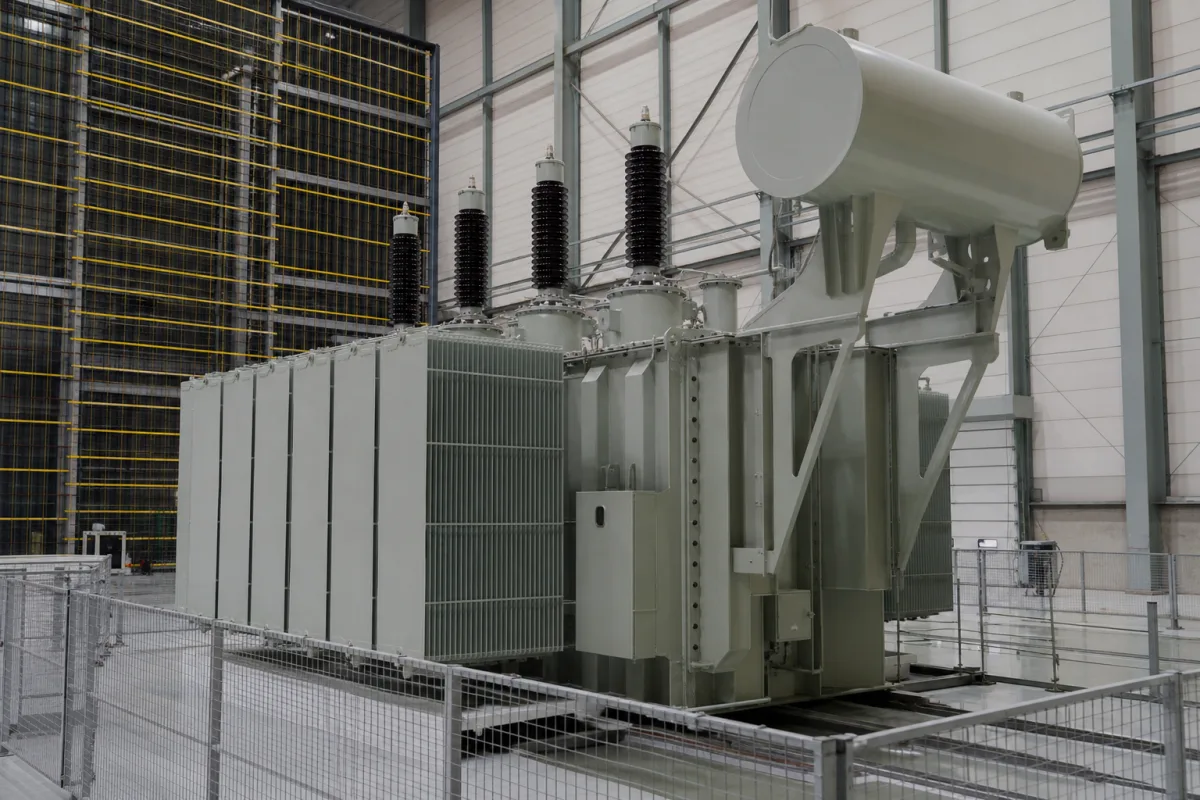
Representative product image. Confirm appearance and specifications with the manufacturer.

Product Specifications

Technical details and manufacturing context for High-Voltage Transformer

Definition
A high-voltage transformer is a specialized electrical component designed to handle elevated voltage levels, serving as a critical part of a Voltage Control Unit. Its primary function is to regulate and convert electrical voltage for power distribution, industrial equipment, or transmission systems. Operating on the principle of electromagnetic induction, the transformer uses alternating current in the primary winding to create a changing magnetic field, which induces a voltage in the secondary winding. The voltage ratio is determined by the turns ratio between the windings. This component is essential for stepping up voltage for long-distance transmission or stepping down voltage for safe utilization in industrial and commercial applications. The transformer is constructed with silicon steel laminations to minimize core losses, copper windings for efficient current conduction, insulating oil for dielectric strength and cooling, and porcelain bushings for high-voltage insulation and mechanical support. Key parameters, as per IEC 60076, include rated power (50–2500 kVA), primary voltage (6–35 kV), secondary voltage (0.4–10 kV), impedance voltage (4–10%), no-load loss (0.1–10 kW), load loss (0.5–50 kW), efficiency (97–99.5%), temperature rise (60–100 K), cooling method (ONAN–OFAF), and ambient temperature range (-25–40 °C). Insulation class is H (max hot-spot temperature 180 °C) per IEC 60085, and degree of protection ranges from IP20 to IP54 per IEC 60529. Weight varies from 500 to 20000 kg depending on power and voltage. These values are reference ranges; actual model-specific data must be verified with the manufacturer or supplier. The transformer is selected based on load demand, input/output voltage requirements, and environmental conditions. Proper installation, maintenance, and monitoring are crucial for reliable operation and longevity.
Working Principle
The high-voltage transformer operates on electromagnetic induction. When alternating current flows through the primary winding, it generates a changing magnetic field in the core. This field links with the secondary winding, inducing an electromotive force. The ratio of input to output voltage is equal to the ratio of turns in the primary to secondary windings. By adjusting the turns ratio, the transformer steps voltage up or down. The core, made of silicon steel laminations, confines the magnetic flux and reduces eddy current losses. Copper windings carry the current, and insulating oil provides both electrical insulation and heat dissipation. The design ensures efficient voltage conversion with minimal losses, as indicated by efficiency values of 97–99.5% at full load.
Common Materials
Silicon steel laminations, Copper windings, Insulating oil, Porcelain bushings
Technical Parameters
ParameterTypical rangeNotes & selection driver
Rated Power50–2500 kVASelect based on load demandIEC 60076
Primary Voltage6–35 kVInput voltage levelIEC 60076
Secondary Voltage0.4–10 kVOutput voltage levelIEC 60076
Impedance Voltage4–10 %Affects short-circuit currentIEC 60076
No-Load Loss0.1–10 kWLower is more efficientIEC 60076
Load Loss0.5–50 kWAt rated currentIEC 60076
Efficiency97–99.5 %At full loadIEC 60076
Insulation ClassHMax hot-spot temperature 180°CIEC 60085
Temperature Rise60–100 KAbove ambientIEC 60076
Cooling MethodONAN–OFAFONAN natural, OFAF forcedIEC 60076
Degree of ProtectionIP20–IP54Higher for outdoorIEC 60529
Ambient Temperature-25–40 °COperating rangeIEC 60076
Weight500–20000 kgDepends on power and voltage

Ranges are indicative industry figures for RFQ preparation, not a supplier commitment. Confirm every value and standard with the legal manufacturer before ordering.

Components / BOM
  • Core Part
    Provides a low-reluctance path for magnetic flux
    Material: Silicon steel
  • Primary Winding Part
    Receives input voltage and creates magnetic field
    Material: Copper
  • Secondary Winding Part
    Outputs transformed voltage through electromagnetic induction
    Material: Copper
  • Insulation System Part
    Prevents electrical breakdown between windings and to ground
    Material: Oil-impregnated paper or synthetic insulation

Applied To / Applications

This component is essential for the following industrial systems and equipment:

Industrial Ecosystem & Supply Chain Structure

Complementary Systems
Downstream Applications
Specialized Tooling

Application Fit & Sizing Matrix

Operational Limits
pressure: Atmospheric to 2 bar (sealed unit pressure rating)
other spec: Voltage range: 1kV to 500kV, Frequency: 50/60 Hz ±5%, Humidity: 0-95% non-condensing
temperature: -40°C to +150°C (ambient operating range)
Media Compatibility
✓ Mineral oil insulation ✓ SF6 gas insulation ✓ Dry-type (air/vacuum) environments
Unsuitable: Saltwater immersion or highly corrosive chemical atmospheres
Sizing Data Required
  • Required voltage transformation ratio (input/output kV)
  • Maximum continuous power rating (MVA)
  • Short-circuit withstand capability (kA)

Reliability & Engineering Risk Analysis

Failure Mode & Root Cause
Insulation breakdown
Cause: Thermal aging, moisture ingress, or electrical overstress degrading dielectric materials, leading to partial discharge or short circuits.
Winding deformation
Cause: Mechanical stress from through-fault currents, thermal cycling, or poor manufacturing, causing displacement or distortion of windings.
Maintenance Indicators
  • Audible humming or buzzing with increased intensity, indicating loose components or electrical arcing.
  • Visible oil leaks or discoloration in the insulating oil, suggesting seal failure or internal overheating.
Engineering Tips
  • Implement regular dissolved gas analysis (DGA) on insulating oil to detect early signs of thermal or electrical faults.
  • Use infrared thermography during operation to identify hot spots on bushings, connections, and tank surfaces, indicating potential failures.

Indicative industry ranges for design and RFQ preparation. Confirm the exact figures and applicable standard with the manufacturer before specifying.

Compliance & Manufacturing Standards

Applicable Standards
IEC 60076-1:2011 - Power transformers - General ANSI C57.12.00-2015 - Standard for general requirements for liquid-immersed distribution, power, and regulating transformers EN 60076-2:2011 - Power transformers - Temperature rise

Quoted from the published standard.

Manufacturing Precision
  • Winding resistance: +/- 0.5% of calculated value
  • Insulation resistance: Minimum 1000 MΩ at 20°C
Quality Inspection
  • Partial Discharge Test
  • Dielectric Withstand Test (High-Potential Test)

Manufacturers of High-Voltage Transformer

1 company lists this product among what they make. Company figures are quoted from each company's own website; every card states where the relationship came from.

ZHIYUE GROUP CO. LTD
Zhejiang, CN
Founded 19916800 square meters
ISO9001 CCC CE TSE
Listed on the company's own website · profile compiled by CNFX from public sources

Manufacturer listings support early research and capability understanding. They are not certification, ranking, or transaction guarantees.

Technical documentation
Request current drawings, revision history, and a signed specification sheet.
Manufacturing capability
Verify equipment lists, process limits, capacity, and representative production evidence.
Inspection readiness
Confirm test methods, calibrated equipment, sampling plans, and traceable reports.
Supplier transparency
Check the legal entity, factory address, ownership, certifications, and direct contacts.

CNFX does not score or rank suppliers. Buyers must verify all claims and documents with the legal manufacturer before ordering.

Supply Chain Compatible Machinery & Devices

Motor Terminal Block

A motor terminal block is a standardized electrical component that provides secure, insulated connection points for motor winding leads.

Explore Specs →
PLC Control System

A digital industrial computer control system that monitors inputs, makes decisions based on a custom program, and controls outputs to automate industrial processes.

Explore Specs →
Control Panel

A centralized interface for monitoring and controlling industrial equipment and processes

Explore Specs →
PLC Control Panel

A centralized interface unit housing the programmable logic controller and associated control components for industrial automation systems.

Explore Specs →

Frequently Asked Questions

What is the typical voltage range for a high-voltage transformer?

According to IEC 60076, the primary voltage typically ranges from 6 to 35 kV, and the secondary voltage from 0.4 to 10 kV. These are reference ranges; the exact values depend on the specific model and application.

How is the efficiency of a high-voltage transformer defined?

Efficiency is the ratio of output power to input power, typically expressed as a percentage. For these transformers, efficiency at full load is between 97% and 99.5%, as per IEC 60076. Lower losses result in higher efficiency.

What cooling methods are available for high-voltage transformers?

Cooling methods range from ONAN (Oil Natural Air Natural) to OFAF (Oil Forced Air Forced). The choice depends on the transformer's size and cooling requirements. The cooling method is specified in IEC 60076.

What insulation class is used in high-voltage transformers?

The insulation class is H, which allows a maximum hot-spot temperature of 180°C, as per IEC 60085. This ensures safe operation under high thermal stress.

Data Basis

Editorial classification, named public sources where available, and source-reviewed manufacturer records.

Preliminary Technical Classification
This page supports structured research, RFQ preparation, and supplier evaluation. It does not replace buyer-led supplier qualification, standards review, or technical approval.
Buyer enquiry

Request manufacturing insight for High-Voltage Transformer

Ask for use case, specification boundaries, supplier type, and RFQ preparation information for this product.

Where it goes
Straight to the CNFX editorial desk, and to the manufacturer if this product is linked to a claimed profile. Nothing is broadcast to a supplier list.
Your details stay here
We do not sell or rent enquiry data, and we do not add you to a mailing list. Used only to answer this request.
No commission, no middleman
CNFX is a directory. We take no cut of any order and never negotiate on a supplier's behalf.
What we don't claim
A listing is not an endorsement. Qualify every supplier and verify every figure yourself before ordering.

Your business information is used only to process this request.

Thank you! Your message has been sent. We'll respond within 1–3 business days.
Sorry, we couldn't send your message. Please try again, or email us at contact@cnfx.com.

Need to Manufacture High-Voltage Transformer?

Compare manufacturer profiles with relevant product and process capability.

Previous Product
Wire Tensioning System
Last Product
Get QuotesChat