Industry-Verified Manufacturing Data (2026)

Lithium-Ion Battery Electrolyte Additive Package

Based on aggregated insights from multiple verified factory profiles within the CNFX directory, the standard Lithium-Ion Battery Electrolyte Additive Package used in the Electrical Equipment Manufacturing sector typically supports operational capacities ranging from standard industrial configurations to heavy-duty production requirements.

Technical Definition & Core Assembly

A canonical Lithium-Ion Battery Electrolyte Additive Package is characterized by the integration of SEI-forming additive and Cathode protection additive. In industrial production environments, manufacturers listed on CNFX commonly emphasize Vinylene Carbonate construction to support stable, high-cycle operation across diverse manufacturing scenarios.

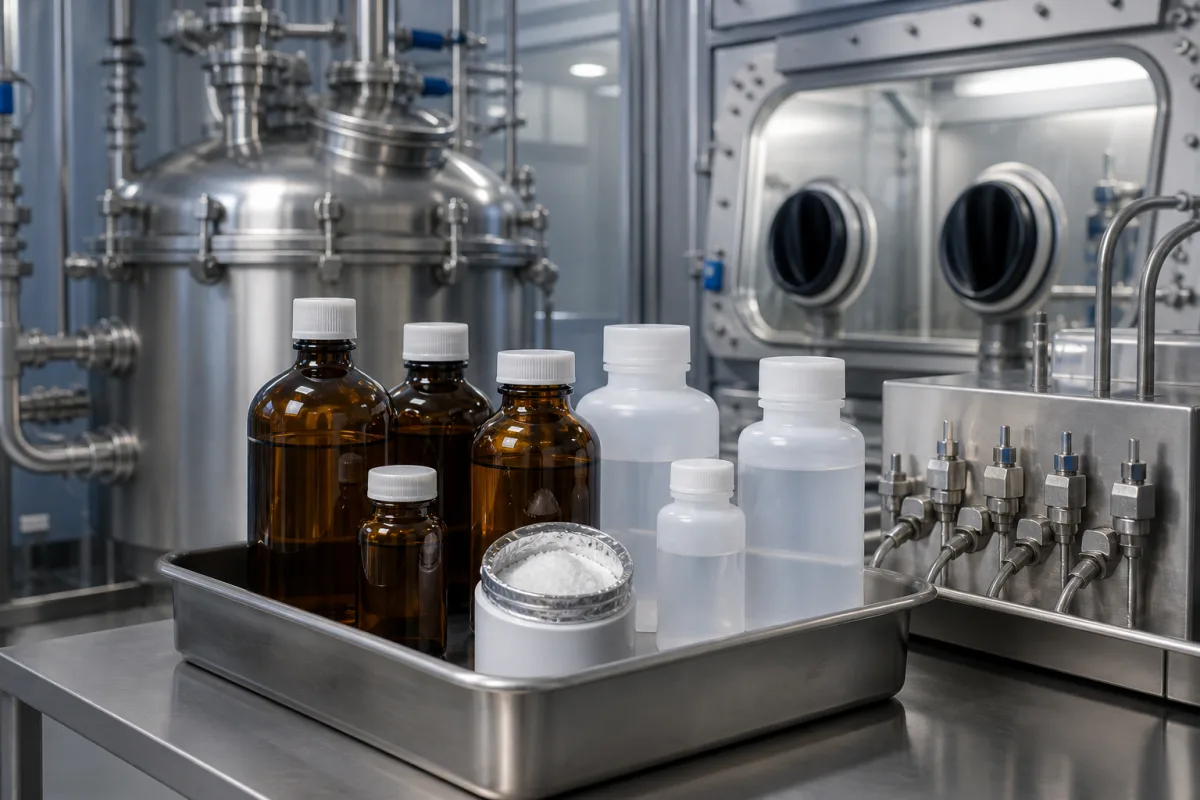
Chemical additive blend for enhancing lithium-ion battery electrolyte performance and safety.
Product Specifications

Technical details and manufacturing context for Lithium-Ion Battery Electrolyte Additive Package

Definition
A specialized chemical formulation comprising multiple functional additives designed to be mixed with base electrolytes in lithium-ion battery manufacturing. This material package improves battery cycle life, thermal stability, and safety characteristics by modifying electrode-electrolyte interfaces and suppressing unwanted side reactions. It serves as a critical performance-enhancing component in B2B supply chains for battery producers seeking to meet specific application requirements. Industrial purchasers typically procure these additive packages in bulk quantities for integration into their electrolyte production processes.
Working Principle
Chemical compounds in the additive package selectively adsorb onto electrode surfaces, form protective solid-electrolyte interphase (SEI) layers, scavenge harmful impurities, and improve ionic conductivity to enhance overall battery performance.
Common Materials
Vinylene Carbonate, Fluoroethylene Carbonate, Lithium Difluoro(oxalato)borate, Succinonitrile
Technical Parameters
  • Recommended concentration in final electrolyte (wt%) Standard Spec
  • Maximum moisture content (ppm) Standard Spec
Components / BOM
  • SEI-forming additive
    Forms stable solid-electrolyte interphase on anode surface
    Material: Organic carbonate compounds
  • Cathode protection additive
    Protects cathode from electrolyte decomposition and metal dissolution
    Material: Lithium salts and organic compounds
  • Flame retardant additive Optional
    Improves thermal stability and reduces flammability
    Material: Phosphorus or fluorine compounds
  • Conductivity enhancer Optional
    Improves ionic conductivity of electrolyte
    Material: Lithium salts or nitrile compounds
Engineering Reasoning
0.5-4.5 V vs Li/Li⁺ electrochemical window, -40°C to 85°C temperature range, 1.0-1.5 g/cm³ density
Electrochemical decomposition at >4.5 V vs Li/Li⁺, thermal runaway initiation at >130°C, solid electrolyte interphase (SEI) breakdown at <0.5 V vs Li/Li⁺
Design Rationale: Electrolyte oxidation at high potentials (HOMO-LUMO gap ~4.7 eV), Arrhenius-type thermal decomposition kinetics (activation energy ~120 kJ/mol), lithium plating dendrite penetration at low potentials
Risk Mitigation (FMEA)
Trigger Electrolyte additive depletion below 0.5 wt% concentration
Mode: Gas evolution (CO₂, C₂H₄) exceeding 5 mL/Ah causing cell swelling
Strategy: Redox shuttle additives (e.g., 2,5-di-tert-butyl-1,4-dimethoxybenzene) with 3.5-4.0 V vs Li/Li⁺ redox potential
Trigger Vinylene carbonate additive polymerization at >60°C
Mode: Electrolyte viscosity increase >50 mPa·s causing ionic conductivity drop below 1 mS/cm
Strategy: Fluoroethylene carbonate co-additive (10-15 wt%) with decomposition temperature >150°C

Industry Taxonomies & Aliases

Commonly used trade names and technical identifiers for Lithium-Ion Battery Electrolyte Additive Package.

Industrial Ecosystem & Supply Chain DNA

Complementary Systems
Downstream Applications
Specialized Tooling

Application Fit & Sizing Matrix

Operational Limits
pressure: Atmospheric to 5 bar (max handling pressure)
other spec: Slurry concentration: 0.1-5.0 wt% in electrolyte, Flow rate: 0.1-10 mL/min per cell
temperature: -20°C to 60°C (operational), -40°C to 80°C (storage)
Media Compatibility
✓ Lithium hexafluorophosphate (LiPF6) based electrolytes ✓ Carbonate solvent blends (EC/DMC/EMC) ✓ NMC/NCA cathode materials
Unsuitable: Aqueous or protic solvent environments
Sizing Data Required
  • Total electrolyte volume (L)
  • Target additive concentration (wt%)
  • Battery cell configuration (e.g., 18650, pouch, prismatic)

Reliability & Engineering Risk Analysis

Failure Mode & Root Cause
Electrolyte Decomposition
Cause: Additive degradation due to high voltage operation or elevated temperatures, leading to gas generation and capacity loss
Solid Electrolyte Interphase (SEI) Instability
Cause: Inadequate additive formulation causing uneven SEI formation, resulting in lithium plating and internal short circuits
Maintenance Indicators
  • Visible electrolyte leakage or swelling of battery casing
  • Abnormal heat generation during charging/discharging cycles
Engineering Tips
  • Implement strict voltage and temperature monitoring during operation to prevent additive breakdown
  • Use controlled formation cycles during initial battery activation to ensure stable SEI layer development

Compliance & Manufacturing Standards

Reference Standards
ISO 12405-4:2018 (Electrochemical performance testing) ASTM E3061-17 (Thermal stability testing) UN 38.3 (Transport safety testing)
Manufacturing Precision
  • Purity: ≥99.95% by mass
  • Moisture content: ≤20 ppm
Quality Inspection
  • Gas Chromatography-Mass Spectrometry (GC-MS) for composition analysis
  • Karl Fischer titration for moisture determination

Factories Producing Lithium-Ion Battery Electrolyte Additive Package

Verified manufacturers with capability to produce this product in China

✓ 95% Supplier Capability Match Found

T Technical Director from Brazil Jan 15, 2026
★★★★★
"The technical documentation for this Lithium-Ion Battery Electrolyte Additive Package is very thorough, especially regarding Recommended Concentration (wt%)."
Technical Specifications Verified
P Project Engineer from Canada Jan 12, 2026
★★★★☆
"Reliable performance in harsh Electrical Equipment Manufacturing environments. No issues with the Lithium-Ion Battery Electrolyte Additive Package so far. (Delivery took slightly longer than expected, but technical support was excellent.)"
Technical Specifications Verified
S Sourcing Manager from United States Jan 09, 2026
★★★★★
"Testing the Lithium-Ion Battery Electrolyte Additive Package now; the Recommended Concentration (wt%) results are within 1% of the laboratory datasheet."
Technical Specifications Verified
Verification Protocol

“Feedback is collected from verified sourcing managers during RFQ (Request for Quote) and factory evaluation processes on CNFX. These reports represent historical performance data and technical audit summaries from our B2B manufacturing network.”

12 sourcing managers are analyzing this specification now. Last inquiry for Lithium-Ion Battery Electrolyte Additive Package from Turkey (1h ago).

Supply Chain Commonly Integrated Components

Rotor Assembly

The rotating component of an actuator motor that converts electrical energy into mechanical motion

Explore Specs →
Stator Assembly

The stationary component of an electric motor that generates a rotating magnetic field when energized.

Explore Specs →
Wire Tensioner

A device that applies and maintains precise tension on electrical wire during the winding process of transformers.

Explore Specs →
Wire Guide System

A precision mechanical system that guides and positions wire during the winding process on a transformer winding machine.

Explore Specs →

Frequently Asked Questions

What are the main benefits of this electrolyte additive package?

This additive package improves battery safety through flame retardant properties, enhances cycle life by forming stable SEI layers, increases conductivity for better performance, and protects cathode materials from degradation.

How should this additive package be stored and handled?

Store in a cool, dry place at recommended temperature, keep containers tightly sealed to prevent moisture absorption, and handle in well-ventilated areas with appropriate personal protective equipment due to chemical nature.

What is the recommended concentration for this additive in electrolyte formulations?

The optimal concentration varies by application but typically ranges between 1-5 wt% of total electrolyte composition. Consult technical datasheets for specific battery chemistry recommendations.

Can I contact factories directly on CNFX?

CNFX is an open directory, not a transaction platform. Each factory profile provides direct contact information and production details to help you initiate direct inquiries with Chinese suppliers.

Get Quote for Lithium-Ion Battery Electrolyte Additive Package

Request technical pricing, lead times, or customized specifications for Lithium-Ion Battery Electrolyte Additive Package directly from verified manufacturing units.

Your business information is encrypted and only shared with verified Lithium-Ion Battery Electrolyte Additive Package suppliers.

Thank you! Your message has been sent. We'll respond within 1–3 business days.

Need to Manufacture Lithium-Ion Battery Electrolyte Additive Package?

Connect with verified factories specializing in this product category

Add Your Factory Contact Us
Previous Product
Lithium-Ion Battery Electrode Coating Machine
Next Product
Lithium-Ion Battery Module Assembly and Testing System