Editorial Technical Reference

Main Transformer / Inverter

This page explains how Main Transformer / Inverter is classified within Electrical Equipment Manufacturing. Technical values and manufacturer relationships are research references; confirm the current specification and supplier evidence for each order.

Technical Definition & Core Assembly

Core electrical component within a plasma power supply that transforms and inverts electrical power to generate and regulate the high-voltage, high-frequency output required for plasma generation.
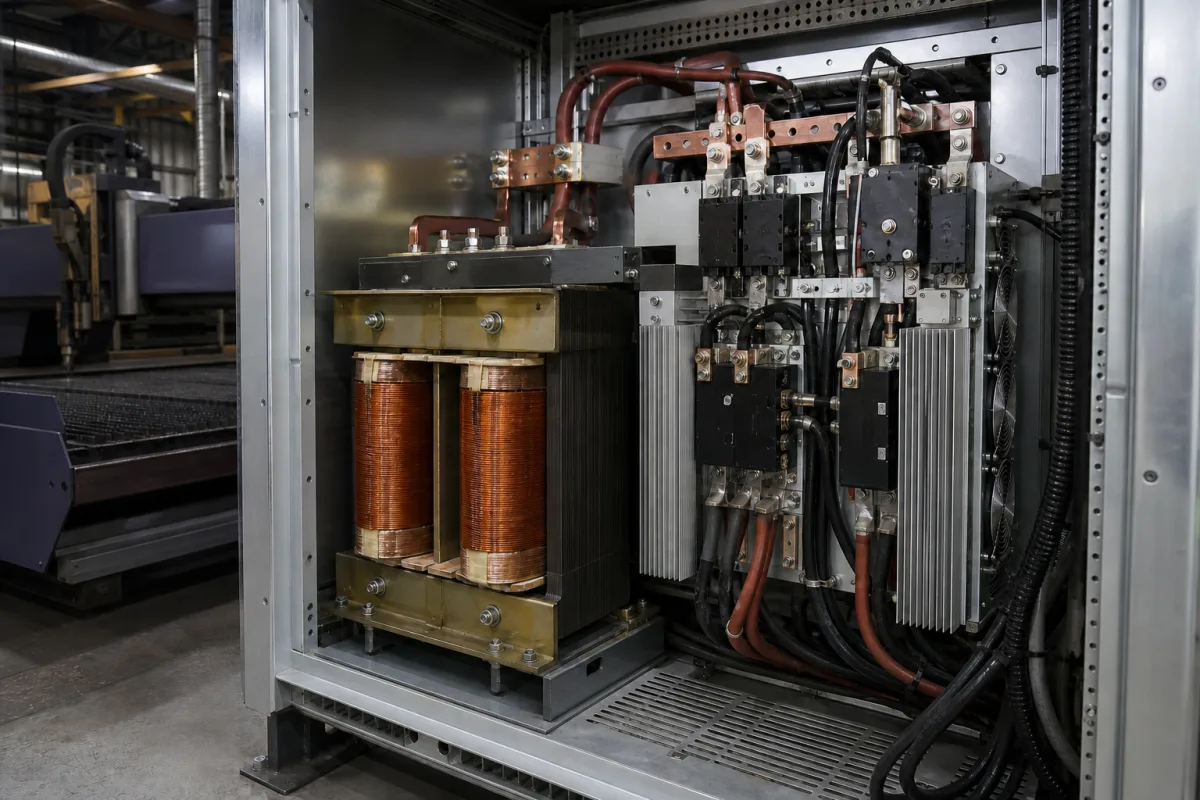
Representative product image. Confirm appearance and specifications with the manufacturer.

Product Specifications

Technical details and manufacturing context for Main Transformer / Inverter

Definition
The Main Transformer / Inverter is the critical electrical conversion unit within a Plasma Power Supply system. Its primary function is to receive input power (typically AC mains), transform it to the required voltage level via the transformer section, and then invert the DC or rectified AC into a precisely controlled, high-frequency AC output. This output is essential for initiating and sustaining the plasma discharge in applications such as plasma cutting, welding, surface treatment, and semiconductor manufacturing. It acts as the heart of the power supply, determining the stability, efficiency, and controllability of the plasma process.

This component integrates a transformer and an inverter in a single assembly. The transformer section typically uses electrical steel laminations and high-purity copper windings to handle the input voltage, while the inverter section employs semiconductor switches such as IGBTs or MOSFETs to produce high-frequency output. The design includes high-voltage insulation materials like Nomex, Mylar, or epoxy, and ferrite or powdered iron cores for high-frequency sections. Aluminum heat sinks provide thermal management.

Key parameters for selection include rated power (5–50 kVA), input voltage (380–480 V AC, three-phase, 50/60 Hz per IEC 60038), output voltage (100–1000 V DC), output frequency (20–100 kHz), efficiency (90–95% at full load), operating temperature (-10 to 50°C, derate above 40°C), cooling method (forced air, AF per IEC 60034-6), insulation class (H, 180°C per IEC 60085), protection rating (IP54–IP65 per IEC 60529), weight (50–200 kg), dimensions (600×400×300 to 1200×800×600 mm), and harmonic distortion (<5% THD per IEC 61000-3-2). These values are reference ranges; verify model-specific data with the manufacturer.

This component is a part-level item, not a standalone product. It is used within a larger plasma power supply system. When selecting or replacing this component, confirm compatibility with the specific plasma process and power supply design. Always verify the actual specifications and standards compliance with the legal manufacturer or supplier before procurement.
Working Principle
The component operates in two integrated stages. First, the transformer section steps up (or occasionally steps down) the input AC voltage to a higher level suitable for plasma ignition. Second, the inverter section, typically using semiconductor switches like IGBTs or MOSFETs, converts this transformed power into a high-frequency (kHz to MHz range) alternating current. This high-frequency AC is then delivered to the plasma torch or chamber. Advanced units incorporate feedback control loops to adjust output parameters (voltage, current, frequency) in real-time based on process requirements.
Common Materials
Electrical Steel (Silicon Steel) Laminations, High-Purity Copper Windings, High-Voltage Insulation Materials (e.g., Nomex, Mylar, Epoxy), Ferrite or Powdered Iron Cores (for high-frequency sections), Aluminum Heat Sinks
Technical Parameters
ParameterTypical rangeNotes & selection driver
Rated Power5–50 kVADetermines plasma output capacity
Input Voltage380–480 V ACThree-phase, 50/60 HzIEC 60038
Output Voltage100–1000 V DCRegulated for plasma stability
Output Frequency20–100 kHzHigh frequency for plasma generation
Efficiency90–95 %At full load
Operating Temperature-10–50 °CAmbient, derate above 40°C
Cooling MethodAFForced air coolingIEC 60034-6
Insulation ClassH180°C thermal classIEC 60085
Protection RatingIP54–IP65Dust and water protectionIEC 60529
Weight50–200 kgDepends on power rating
Dimensions (L×W×H)600×400×300–1200×800×600 mmVaries with power
Harmonic Distortion<5 %Total harmonic distortion (THD)IEC 61000-3-2

Ranges are indicative industry figures for RFQ preparation, not a supplier commitment. Confirm every value and standard with the legal manufacturer before ordering.

Components / BOM
  • Power Transformer Core Part
    Provides magnetic flux path for voltage transformation; minimizes eddy current and hysteresis losses.
    Material: Grain-oriented electrical steel laminations
  • Primary & Secondary Windings Part
    Conduct current to create and receive magnetic flux, enabling voltage step-up/step-down.
    Material: Enamel-coated copper wire or foil
  • Inverter Bridge (IGBT/MOSFET Module)
    Switches DC or rectified AC at high frequency to generate the AC output waveform.
    Material: Semiconductor silicon (IGBT/MOSFET dies), copper baseplate
  • Gate Drive Circuit
    Provides precise, isolated switching signals to control the inverter semiconductor switches.
    Material: PCB with integrated circuits, optocouplers
  • Heat Sink & Cooling System
    Dissipates heat generated by transformer losses and semiconductor switching to maintain operating temperature.
    Material: Aluminum alloy, with optional fans or liquid cooling channels
  • High-Voltage Insulation Part
    Electrically isolates windings and live parts to prevent short circuits and ensure operator safety.
    Material: Nomex paper, epoxy potting compound, ceramic spacers
  • Feedback Control Loop Optional
    Measures the output and trims voltage, current and frequency while the arc is running, on units that have it.

Applied To / Applications

This component is essential for the following industrial systems and equipment:

Industrial Ecosystem & Supply Chain Structure

Complementary Systems
Downstream Applications
Specialized Tooling

Application Fit & Sizing Matrix

Operational Limits
pressure: Atmospheric to 1.5 bar (sealed enclosure rating)
other spec: Cooling: Forced air (min 200 CFM) or liquid cooling (flow rate > 2 GPM), Humidity: 0-95% non-condensing, Altitude: 0-3000m
temperature: -10°C to +50°C
Media Compatibility
✓ Industrial air (clean, dry) ✓ Nitrogen atmosphere (inert gas) ✓ SF6 insulation gas (high-voltage applications)
Unsuitable: Corrosive/conductive atmospheres (chlorine, salt spray, metal dust)
Sizing Data Required
  • Input voltage and frequency (e.g., 480VAC, 60Hz)
  • Required output power (kW) and plasma load impedance (Ω)
  • Duty cycle and cooling method (continuous vs. pulsed operation)

Reliability & Engineering Risk Analysis

Failure Mode & Root Cause
Insulation breakdown
Cause: Thermal aging from prolonged overheating, moisture ingress, or electrical stress exceeding dielectric strength, leading to short circuits or arcing.
Winding deformation or failure
Cause: Mechanical stress from short-circuit forces, thermal cycling causing expansion/contraction, or loose connections resulting in hotspots and eventual open or short circuits.
Maintenance Indicators
  • Audible humming, buzzing, or crackling sounds indicating loose components, arcing, or magnetic core issues
  • Visible oil leaks (in oil-filled transformers) or discoloration/burning on casing, signaling overheating or insulation degradation
Engineering Tips
  • Implement regular infrared thermography scans to detect hotspots in windings, connections, and bushings before failure occurs
  • Maintain strict control of cooling systems (fans, radiators, oil levels) and environment (cleanliness, ventilation) to prevent thermal overload and contamination

Indicative industry ranges for design and RFQ preparation. Confirm the exact figures and applicable standard with the manufacturer before specifying.

Compliance & Manufacturing Standards

Applicable Standards
IEC 60076 - Power Transformers EN 50178 - Electronic Equipment for Use in Power Installations

Quoted from the published standard.

Manufacturing Precision
  • Winding Resistance: +/- 2% of rated value
  • Insulation Resistance: Minimum 1000 MΩ at 25°C
Quality Inspection
  • Partial Discharge Test (IEC 60270)
  • Temperature Rise Test (IEC 60076-2)

Manufacturers of Main Transformer / Inverter

Manufacturer profiles associated with Main Transformer / Inverter.

Sourcing Main Transformer / Inverter from China?
Tell us your specification and target quantity — we will match it against manufacturer records and come back with the factories that fit.
Request manufacturers We manufacture this

Manufacturer listings support early research and capability understanding. They are not certification, ranking, or transaction guarantees.

Technical documentation
Request current drawings, revision history, and a signed specification sheet.
Manufacturing capability
Verify equipment lists, process limits, capacity, and representative production evidence.
Inspection readiness
Confirm test methods, calibrated equipment, sampling plans, and traceable reports.
Supplier transparency
Check the legal entity, factory address, ownership, certifications, and direct contacts.

CNFX does not score or rank suppliers. Buyers must verify all claims and documents with the legal manufacturer before ordering.

Supply Chain Compatible Machinery & Devices

Medium Voltage Switchgear Assembly Line

Automated production system for assembling medium voltage electrical switchgear.

Explore Specs →
Motor Terminal Block

A motor terminal block is a standardized electrical component that provides secure, insulated connection points for motor winding leads.

Explore Specs →
PLC Control System

A digital industrial computer control system that monitors inputs, makes decisions based on a custom program, and controls outputs to automate industrial processes.

Explore Specs →
Control Panel

A centralized interface for monitoring and controlling industrial equipment and processes

Explore Specs →

Frequently Asked Questions

What is the role of the Main Transformer / Inverter in a plasma power supply?

It converts input AC power to a high-voltage, high-frequency AC output that is essential for initiating and sustaining a plasma discharge. It also regulates output parameters for process stability.

What are the typical input voltage and frequency requirements?

The input voltage is typically 380–480 V AC, three-phase, at 50/60 Hz, per IEC 60038. Always verify the exact requirements for your specific model.

How do I select the correct Main Transformer / Inverter for my application?

Consider the required rated power (5–50 kVA), output voltage (100–1000 V DC), output frequency (20–100 kHz), and efficiency (90–95%). Also check cooling, insulation, protection rating, and dimensions. Confirm with the manufacturer.

What maintenance or verification is needed for this component?

Regularly check for overheating, unusual noise, or insulation degradation. Verify that cooling fans operate correctly and that protection ratings are maintained. Always follow manufacturer guidelines.

Data Basis

Editorial classification, named public sources where available, and source-reviewed manufacturer records.

Preliminary Technical Classification
This page supports structured research, RFQ preparation, and supplier evaluation. It does not replace buyer-led supplier qualification, standards review, or technical approval.
Buyer enquiry

Request manufacturing insight for Main Transformer / Inverter

Ask for use case, specification boundaries, supplier type, and RFQ preparation information for this product.

Where it goes
Straight to the CNFX editorial desk, and to the manufacturer if this product is linked to a claimed profile. Nothing is broadcast to a supplier list.
Your details stay here
We do not sell or rent enquiry data, and we do not add you to a mailing list. Used only to answer this request.
No commission, no middleman
CNFX is a directory. We take no cut of any order and never negotiate on a supplier's behalf.
What we don't claim
A listing is not an endorsement. Qualify every supplier and verify every figure yourself before ordering.

Your business information is used only to process this request.

Thank you! Your message has been sent. We'll respond within 1–3 business days.
Sorry, we couldn't send your message. Please try again, or email us at contact@cnfx.com.

Need to Manufacture Main Transformer / Inverter?

Compare manufacturer profiles with relevant product and process capability.

Previous Product
Main Power Contactor
Next Product
Medium Voltage Current Transformer Core Assembly
Get QuotesChat