Industry-Verified Manufacturing Data (2026)

Thermocouple / RTD Sensor

Based on aggregated insights from multiple verified factory profiles within the CNFX directory, the standard Thermocouple / RTD Sensor used in the Electrical Equipment Manufacturing sector typically supports operational capacities ranging from standard industrial configurations to heavy-duty production requirements.

Technical Definition & Core Assembly

A canonical Thermocouple / RTD Sensor is characterized by the integration of Sensing Element and Protective Sheath. In industrial production environments, manufacturers listed on CNFX commonly emphasize Nickel-Chromium/Nickel-Aluminum (Type K) construction to support stable, high-cycle operation across diverse manufacturing scenarios.

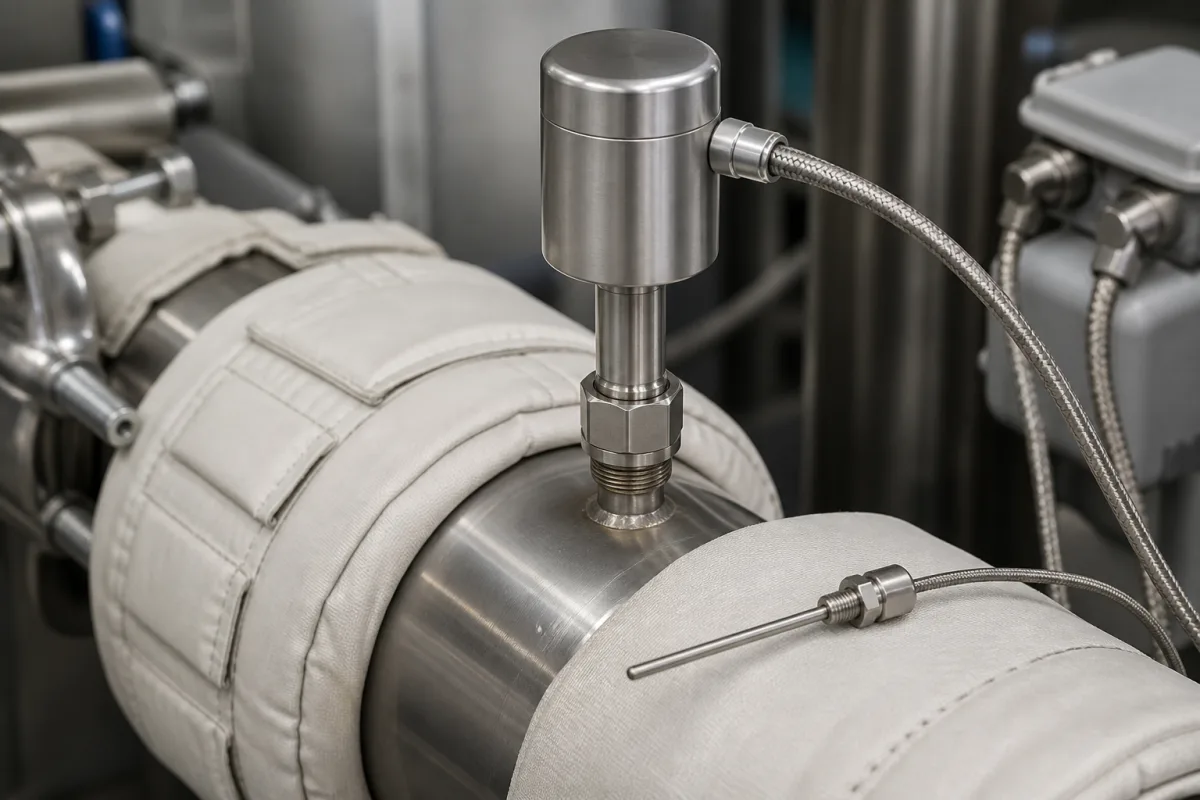
Temperature sensing device used in electric heating systems to measure and monitor thermal conditions.
Product Specifications

Technical details and manufacturing context for Thermocouple / RTD Sensor

Definition
A critical temperature measurement component within electric heating systems that converts thermal energy into electrical signals for precise temperature monitoring and control. Thermocouples generate voltage based on temperature differences between two dissimilar metals, while RTDs (Resistance Temperature Detectors) measure temperature through changes in electrical resistance of pure metals like platinum.
Working Principle
Thermocouples operate on the Seebeck effect where temperature differences between two dissimilar metal junctions produce a measurable voltage. RTDs function on the principle that electrical resistance of pure metals changes predictably with temperature, typically using platinum wire wound around a ceramic or glass core.
Common Materials
Nickel-Chromium/Nickel-Aluminum (Type K), Platinum (Pt100, Pt1000), Stainless Steel Sheath, Ceramic Insulation
Technical Parameters
  • Temperature measurement range and accuracy specifications (°C) Standard Spec
Components / BOM
  • Sensing Element
    Primary temperature detection component (thermocouple junction or RTD wire)
    Material: Nickel alloys or Platinum
  • Protective Sheath
    Protects sensing element from environmental damage and contamination
    Material: Stainless Steel
  • Insulation Material
    Electrical insulation between sensing element and sheath
    Material: Ceramic or Magnesium Oxide
  • Connection Head
    Terminal connection point for wiring to control system
    Material: Aluminum or Plastic
  • Lead Wires
    Transmit electrical signals from sensor to measurement device
    Material: Copper with insulation
Engineering Reasoning
-200°C to 850°C for Type K thermocouples, -200°C to 600°C for Pt100 RTDs
Thermocouple: 1372°C (Type K upper limit), RTD: 660°C (Pt100 continuous use limit)
Design Rationale: Thermocouple: Seebeck coefficient degradation beyond Curie temperature (770°C for Type K), RTD: Platinum wire oxidation above 660°C forming PtO₂
Risk Mitigation (FMEA)
Trigger Galvanic corrosion at junction due to moisture ingress
Mode: Open circuit failure with >1000Ω resistance
Strategy: Hermetic sealing with MgO powder insulation and Inconel 600 sheath
Trigger Thermal cycling fatigue at 10⁴ cycles between 20°C and 500°C
Mode: Wire fracture at strain relief point with 0.5mm displacement
Strategy: Spring-loaded tension design with 316L stainless steel compression fitting

Industry Taxonomies & Aliases

Commonly used trade names and technical identifiers for Thermocouple / RTD Sensor.

Applied To / Applications

This component is essential for the following industrial systems and equipment:

Industrial Ecosystem & Supply Chain DNA

Complementary Systems
Downstream Applications
Specialized Tooling

Application Fit & Sizing Matrix

Operational Limits
pressure: Typically up to 1000 bar (depends on sheath material and design)
other spec: Response time: 0.5-10 seconds (depends on sheath diameter and construction)
temperature: -200°C to 1800°C (depending on thermocouple type) or -200°C to 850°C (for RTD)
Media Compatibility
✓ Water/glycol mixtures in HVAC systems ✓ Industrial process gases (air, nitrogen, inert gases) ✓ Non-corrosive oils and thermal fluids
Unsuitable: Highly corrosive environments with strong acids or bases without proper protective sheath
Sizing Data Required
  • Required temperature measurement range
  • Process connection type and insertion length
  • Required response time and accuracy

Reliability & Engineering Risk Analysis

Failure Mode & Root Cause
Drift or Calibration Shift
Cause: Thermal aging, contamination, or mechanical stress altering the sensor's electrical properties over time, leading to inaccurate temperature readings.
Open Circuit or Signal Loss
Cause: Wire breakage due to vibration, thermal cycling fatigue, or corrosion at connection points, resulting in no output signal.
Maintenance Indicators
  • Erratic or fluctuating temperature readings inconsistent with process conditions
  • Complete loss of signal or out-of-range readings on the control system display
Engineering Tips
  • Implement regular calibration checks and drift monitoring programs to detect and correct accuracy issues before they impact process control.
  • Use proper vibration-resistant mounting, strain relief on wiring, and protective thermowells in harsh environments to minimize mechanical stress and contamination.

Compliance & Manufacturing Standards

Reference Standards
IEC 60584-1:2013 (Thermocouples - Part 1: EMF specifications and tolerances) ASTM E1137/E1137M-20 (Standard Specification for Industrial Platinum Resistance Thermometers) EN 60751:2008 (Industrial platinum resistance thermometers and platinum temperature sensors)
Manufacturing Precision
  • Wire diameter tolerance: +/- 0.02mm for RTD elements
  • Temperature measurement accuracy: Class A +/- (0.15 + 0.002|t|)°C for RTDs
Quality Inspection
  • Calibration verification against NIST-traceable standards
  • Insulation resistance test at 500V DC (minimum 100 MΩ at 25°C)

Factories Producing Thermocouple / RTD Sensor

Verified manufacturers with capability to produce this product in China

✓ 95% Supplier Capability Match Found

S Sourcing Manager from Brazil Feb 13, 2026
★★★★★
"Impressive build quality. Especially the technical reliability is very stable during long-term operation."
Technical Specifications Verified
P Procurement Specialist from Canada Feb 10, 2026
★★★★☆
"As a professional in the Electrical Equipment Manufacturing sector, I confirm this Thermocouple / RTD Sensor meets all ISO standards. (Delivery took slightly longer than expected, but technical support was excellent.)"
Technical Specifications Verified
T Technical Director from United States Feb 07, 2026
★★★★★
"Standard OEM quality for Electrical Equipment Manufacturing applications. The Thermocouple / RTD Sensor arrived with full certification."
Technical Specifications Verified
Verification Protocol

“Feedback is collected from verified sourcing managers during RFQ (Request for Quote) and factory evaluation processes on CNFX. These reports represent historical performance data and technical audit summaries from our B2B manufacturing network.”

12 sourcing managers are analyzing this specification now. Last inquiry for Thermocouple / RTD Sensor from Vietnam (1h ago).

Supply Chain Compatible Machinery & Devices

Circuit Breaker Trip Unit

Protective control module for electrical circuit breakers

Explore Specs →
Circuit Breaker Arc Chute

Electrical component that extinguishes arcs in circuit breakers

Explore Specs →
Medium Voltage Switchgear Assembly Line

Automated production system for assembling medium voltage electrical switchgear.

Explore Specs →
Motor Terminal Block

Electrical connection interface for motor windings

Explore Specs →

Frequently Asked Questions

What is the difference between thermocouple and RTD sensors for electrical heating applications?

Thermocouples use two dissimilar metals to generate voltage proportional to temperature, offering wider ranges and faster response. RTDs use platinum resistance elements for higher accuracy and stability in consistent temperature monitoring of electric heating systems.

How do I choose between Type K thermocouple and Pt100 RTD for my electrical equipment?

Choose Type K thermocouples for higher temperature ranges (up to 1260°C) and rugged environments. Select Pt100 RTDs for applications requiring higher accuracy (±0.1°C) and stability in moderate temperature ranges for precise electric heating control.

What maintenance is required for thermocouple/RTD sensors in electrical manufacturing?

Regular calibration checks every 6-12 months, inspection of stainless steel sheaths for corrosion, verification of ceramic insulation integrity, and testing of connection heads for secure electrical contacts ensure reliable temperature monitoring in heating systems.

Can I contact factories directly on CNFX?

CNFX is an open directory, not a transaction platform. Each factory profile provides direct contact information and production details to help you initiate direct inquiries with Chinese suppliers.

Get Quote for Thermocouple / RTD Sensor

Request technical pricing, lead times, or customized specifications for Thermocouple / RTD Sensor directly from verified manufacturing units.

Your business information is encrypted and only shared with verified Thermocouple / RTD Sensor suppliers.

Thank you! Your message has been sent. We'll respond within 1–3 business days.

Need to Manufacture Thermocouple / RTD Sensor?

Connect with verified factories specializing in this product category

Add Your Factory Contact Us
Previous Product
Thermal Sensor
Next Product
Three-Phase Induction Motor Winding Machine