Electrostatic Powder Booth
View system integration details
This page explains how Booth Structure is classified within Fabricated Metal Product Manufacturing. Technical values and manufacturer relationships are research references; confirm the current specification and supplier evidence for each order.
The booth structure is the main physical housing of an electrostatic powder coating system, providing containment for the powder application process, supporting ventilation and filtration systems, and ensuring operator safety and environmental compliance by preventing powder escape.
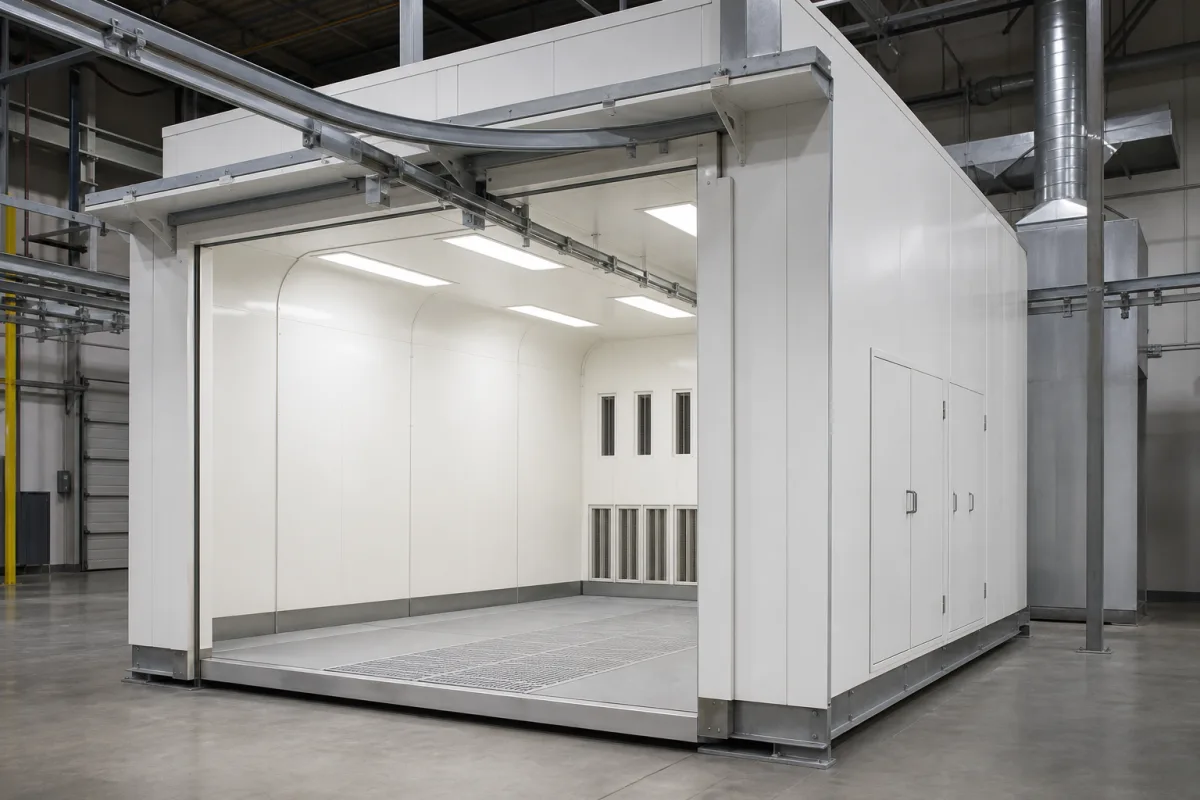
Technical details and manufacturing context for Booth Structure
| Parameter | Typical range | Notes & selection driver |
|---|---|---|
| Working Pressure | 1.0–1.6 MPa | |
| Air Flow Rate | 12000–24000 m³/h | Determines powder containment and overspray capture |
| Filter Efficiency | 99.5–99.9 % | Higher efficiency reduces emissions and powder lossISO 16890 |
| Operating Temperature | -10–50 °C | Outside range may affect powder fluidization and filter life |
| Relative Humidity | 40–70 % RH | High humidity causes powder agglomeration; low causes static issues |
| Electrical Supply | 380–480 V AC | Three-phase, 50/60 Hz; voltage tolerance ±10%IEC 60038 |
| Power Consumption | 5.5–15 kW | Includes fans, conveyor, and controls |
| Ingress Protection | IP54–IP65 | Protects against dust and water jetsIEC 60529 |
| Material Thickness | 1.5–3.0 mm | Thicker steel for structural rigidity; stainless for corrosion resistance |
| Overall Dimensions | 3000–12000 mm | Length varies with conveyor speed and part size |
| Weight | 800–5000 kg | Depends on size and material; affects installation and floor loading |
Ranges are indicative industry figures for RFQ preparation, not a supplier commitment. Confirm every value and standard with the legal manufacturer before ordering.
This component is essential for the following industrial systems and equipment:
| pressure: | Atmospheric to 0.5 kPa differential (typical booth pressure drop) |
| temperature: | Ambient to 50°C (operating), -20°C to 80°C (material limits) |
| air flow rate: | 500-10,000 CFM (varies by booth size and application) |
| powder concentration: | Up to 50 g/m³ in air stream (explosion limit safety threshold) |
Indicative industry ranges for design and RFQ preparation. Confirm the exact figures and applicable standard with the manufacturer before specifying.
Quoted from the published standard.
Manufacturer profiles associated with Booth Structure.
Manufacturer listings support early research and capability understanding. They are not certification, ranking, or transaction guarantees.
A practical evidence checklist for RFQ preparation and supplier evaluation.
CNFX does not score or rank suppliers. Buyers must verify all claims and documents with the legal manufacturer before ordering.
The booth structure is typically made from powder-coated steel, stainless steel, or aluminum. Material thickness ranges from 1.5 to 3.0 mm, depending on structural rigidity and corrosion resistance requirements. The choice depends on the application environment and cleaning agents.
The airflow rate is typically in the range of 12,000 to 24,000 m³/h, depending on booth size and part configuration. This airflow is necessary to contain powder and carry overspray to the recovery system. The exact value must be verified for the specific model and application.
The filter efficiency is typically 99.5% to 99.9% as per ISO 16890. Higher efficiency reduces emissions and powder loss. However, the actual filter class must be confirmed with the manufacturer for the specific booth model.
The booth structure typically requires a three-phase electrical supply of 380–480 V AC, 50/60 Hz, with a voltage tolerance of ±10%, as per IEC 60038. Power consumption ranges from 5.5 to 15 kW, including fans, conveyor, and controls. Verify with the manufacturer for your installation.
Editorial classification, named public sources where available, and source-reviewed manufacturer records.
Ask for use case, specification boundaries, supplier type, and RFQ preparation information for this product.
Compare manufacturer profiles with relevant product and process capability.