Industry-Verified Manufacturing Data (2026)

Panel Joint System

Based on aggregated insights from multiple verified factory profiles within the CNFX directory, the standard Panel Joint System used in the Fabricated Metal Product Manufacturing sector typically supports operational capacities ranging from standard industrial configurations to heavy-duty production requirements.

Technical Definition & Core Assembly

A canonical Panel Joint System is characterized by the integration of Interlocking Profile and Compression Gasket. In industrial production environments, manufacturers listed on CNFX commonly emphasize Galvanized steel construction to support stable, high-cycle operation across diverse manufacturing scenarios.

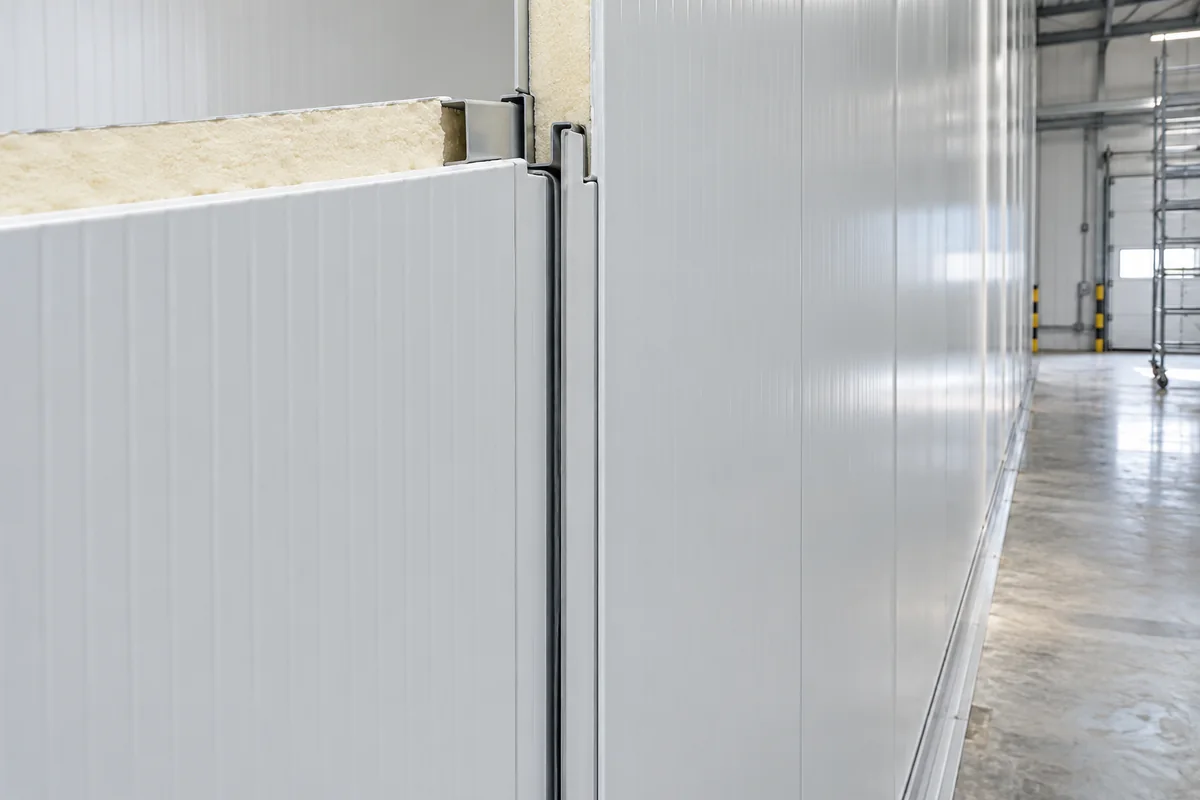
A mechanical system designed to securely connect and seal adjacent insulated wall panels while maintaining thermal and structural integrity.
Product Specifications

Technical details and manufacturing context for Panel Joint System

Definition
The Panel Joint System is a critical component within Insulated Wall Panels that provides the interface between individual panels. It ensures proper alignment, load transfer, weatherproofing, and thermal continuity across panel boundaries. This system typically includes interlocking mechanisms, gaskets, and fasteners that work together to create a seamless, energy-efficient building envelope while accommodating thermal expansion and structural movements.
Working Principle
The system operates through mechanical interlocking of panel edges combined with compression seals. When panels are joined, the interlocking profiles engage to provide structural connection, while elastomeric gaskets compress to create air and water barriers. Fasteners secure the connection while allowing for thermal movement. The design ensures continuous insulation across the joint while maintaining the panel's load-bearing capabilities.
Common Materials
Galvanized steel, Aluminum, EPDM rubber, Polyurethane foam
Technical Parameters
  • Joint width typically ranges from 20-50mm depending on panel thickness and thermal movement requirements (mm) Customizable
Components / BOM
  • Interlocking Profile
    Provides structural connection and alignment between panels
    Material: galvanized steel
  • Compression Gasket
    Creates air and water tight seal between panels
    Material: EPDM rubber
  • Fastener System
    Secures panels together while allowing for movement
    Material: stainless steel
  • Thermal Break
    Prevents thermal bridging across the joint
    Material: polyurethane or polyisocyanurate
Engineering Reasoning
0.5-2.5 MPa clamping pressure, -40°C to +80°C ambient temperature, 0.1-3.0 mm joint gap tolerance
Clamping pressure <0.3 MPa causes joint separation, >3.0 MPa causes panel deformation; temperature differential >120°C across joint causes thermal stress failure; joint gap >3.5 mm exceeds sealant elastic limit
Design Rationale: Differential thermal expansion (coefficient mismatch: aluminum frame 23.1×10⁻⁶/°C vs. steel fastener 11.7×10⁻⁶/°C) creates cyclic stress exceeding yield strength; sealant compression set exceeding 25% permanent deformation; fastener fatigue at stress concentration factor Kt=2.8
Risk Mitigation (FMEA)
Trigger Insufficient torque application (30% below 45 N·m specification)
Mode: Joint loosening under vibration (amplitude >0.5 mm at 50-200 Hz)
Strategy: Torque-angle monitoring with 5% tolerance limit and thread-locking compound application
Trigger Moisture ingress exceeding 15 g/m²/day through sealant degradation
Mode: Corrosion-induced fastener strength reduction (40% loss after 1000 hours at 85% RH)
Strategy: Closed-cell EPDM gasket with 0.02 W/m·K thermal conductivity and 70 durometer hardness

Industry Taxonomies & Aliases

Commonly used trade names and technical identifiers for Panel Joint System.

Applied To / Applications

This component is essential for the following industrial systems and equipment:

Industrial Ecosystem & Supply Chain DNA

Complementary Systems
Downstream Applications
Specialized Tooling

Application Fit & Sizing Matrix

Operational Limits
pressure: Up to 1500 Pa wind load, 500 Pa differential pressure
other spec: Panel thickness range: 40-200 mm, Joint movement capacity: ±15 mm thermal expansion
temperature: -40°C to +80°C continuous, -50°C to +100°C intermittent
Media Compatibility
✓ Insulated metal composite panels (MCP) ✓ Polyisocyanurate foam core panels ✓ Fiberglass reinforced plastic (FRP) panels
Unsuitable: Continuous immersion in corrosive chemical environments (e.g., acid processing facilities)
Sizing Data Required
  • Panel thickness (mm)
  • Maximum expected wind load (Pa)
  • Thermal expansion differential between panels (mm)

Reliability & Engineering Risk Analysis

Failure Mode & Root Cause
Fastener Loosening
Cause: Vibration-induced fatigue, thermal cycling, or improper torque during installation leading to loss of clamping force and joint integrity.
Seal/Gasket Degradation
Cause: Exposure to environmental contaminants (moisture, chemicals), UV radiation, or temperature extremes causing hardening, cracking, or compression set.
Maintenance Indicators
  • Visible gaps or misalignment between panel joints, indicating fastener failure or structural movement.
  • Audible rattling or creaking noises during operation, suggesting loose components or worn interfaces.
Engineering Tips
  • Implement a torque audit program using calibrated tools and follow manufacturer specifications for fastener installation to ensure consistent clamping force.
  • Apply protective coatings or sealants compatible with the operating environment to shield joints from corrosion, UV damage, and fluid ingress.

Compliance & Manufacturing Standards

Reference Standards
ISO 9001:2015 - Quality Management Systems ASTM E84 - Standard Test Method for Surface Burning Characteristics of Building Materials CE Marking - EU Regulation for Construction Products (CPR 305/2011/EU)
Manufacturing Precision
  • Panel Flatness: +/- 0.5mm per meter
  • Joint Gap Tolerance: +/- 0.2mm
Quality Inspection
  • Dimensional Verification with Laser Scanning
  • Load Testing for Structural Integrity

Factories Producing Panel Joint System

Verified manufacturers with capability to produce this product in China

✓ 94% Supplier Capability Match Found

T Technical Director from United Arab Emirates Jan 06, 2026
★★★★★
"As a professional in the Fabricated Metal Product Manufacturing sector, I confirm this Panel Joint System meets all ISO standards."
Technical Specifications Verified
P Project Engineer from Australia Jan 03, 2026
★★★★☆
"Standard OEM quality for Fabricated Metal Product Manufacturing applications. The Panel Joint System arrived with full certification. (Delivery took slightly longer than expected, but technical support was excellent.)"
Technical Specifications Verified
S Sourcing Manager from Singapore Dec 31, 2025
★★★★★
"Great transparency on the Panel Joint System components. Essential for our Fabricated Metal Product Manufacturing supply chain."
Technical Specifications Verified
Verification Protocol

“Feedback is collected from verified sourcing managers during RFQ (Request for Quote) and factory evaluation processes on CNFX. These reports represent historical performance data and technical audit summaries from our B2B manufacturing network.”

19 sourcing managers are analyzing this specification now. Last inquiry for Panel Joint System from India (1h ago).

Supply Chain Compatible Machinery & Devices

Hydraulic Press Brake

Industrial machine for bending sheet metal using hydraulic force.

Explore Specs →
Sheet Metal Guillotine Shear

Industrial machine for straight-line cutting of sheet metal

Explore Specs →
Metal Plate Rolling Machine

Industrial machine for bending metal plates into cylindrical or conical shapes

Explore Specs →
Hydraulic Cylinder Piston Rod

Precision-machined rod that transmits force in hydraulic cylinders.

Explore Specs →

Frequently Asked Questions

How does the Panel Joint System maintain thermal integrity in insulated wall panels?

The system incorporates polyurethane foam thermal breaks and compression gaskets that create continuous insulation barriers, preventing thermal bridging while maintaining structural connections between panels.

What materials are used in the Panel Joint System for corrosion resistance?

Primary structural components are made from galvanized steel and aluminum for excellent corrosion resistance, combined with EPDM rubber gaskets that withstand UV exposure and temperature extremes.

Can the Panel Joint System accommodate building movement and expansion?

Yes, the interlocking profile design with compression gaskets allows for controlled movement while maintaining weather-tight seals, accommodating thermal expansion and structural settling without compromising performance.

Can I contact factories directly on CNFX?

CNFX is an open directory, not a transaction platform. Each factory profile provides direct contact information and production details to help you initiate direct inquiries with Chinese suppliers.

Get Quote for Panel Joint System

Request technical pricing, lead times, or customized specifications for Panel Joint System directly from verified manufacturing units.

Your business information is encrypted and only shared with verified Panel Joint System suppliers.

Thank you! Your message has been sent. We'll respond within 1–3 business days.

Need to Manufacture Panel Joint System?

Connect with verified factories specializing in this product category

Add Your Factory Contact Us
Previous Product
Nozzle
Next Product
Perforated/Slotted Plate