Industry-Verified Manufacturing Data (2026)

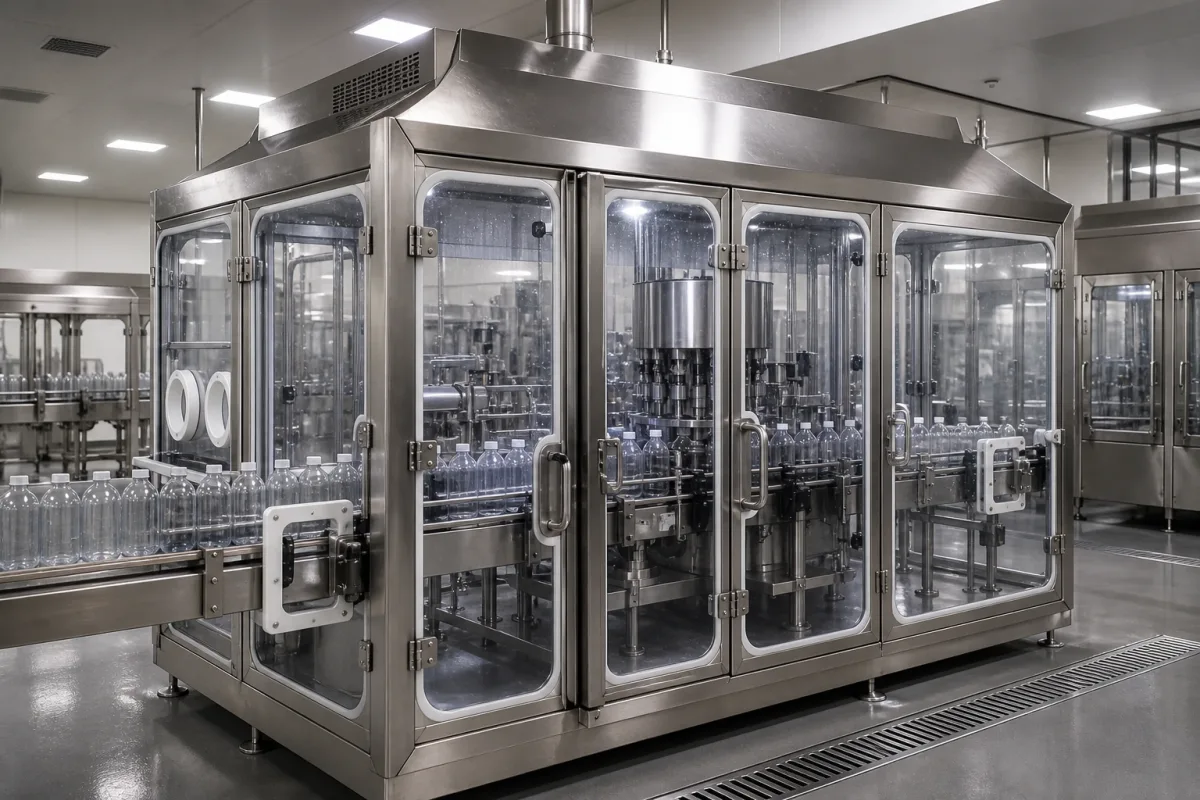
Aseptic Chamber Enclosure

Based on aggregated insights from multiple verified factory profiles within the CNFX directory, the standard Aseptic Chamber Enclosure used in the Food Manufacturing sector typically supports operational capacities ranging from standard industrial configurations to heavy-duty production requirements.

Technical Definition & Core Assembly

A canonical Aseptic Chamber Enclosure is characterized by the integration of HEPA Filter Housing and Access Port Seals. In industrial production environments, manufacturers listed on CNFX commonly emphasize Stainless steel 316L construction to support stable, high-cycle operation across diverse manufacturing scenarios.

The protective housing that creates and maintains a sterile environment within an aseptic capping unit.
Product Specifications

Technical details and manufacturing context for Aseptic Chamber Enclosure

Definition
A specialized enclosure that forms the physical barrier of the aseptic chamber in an aseptic capping unit, designed to prevent microbial contamination during the capping process by maintaining positive pressure with HEPA-filtered air and providing a sealed environment for sterile operations.
Working Principle
Creates a controlled sterile environment through physical isolation, positive air pressure maintained by HEPA filtration systems, and integrated sealing mechanisms to prevent external contamination while allowing controlled access for capping operations.
Common Materials
Stainless steel 316L, Polycarbonate viewing panels, Silicone gaskets
Technical Parameters
  • Overall dimensions of the enclosure including height, width, and depth (mm) Standard Spec
Components / BOM
  • HEPA Filter Housing
    Secures and seals the HEPA filter that provides sterile air to the chamber
    Material: Stainless steel
  • Access Port Seals
    Provides airtight sealing around glove ports or access openings
    Material: Silicone
  • Viewing Window Frame
    Holds transparent panels for visual monitoring of internal operations
    Material: Stainless steel
Engineering Reasoning
0.5-2.0 bar positive pressure differential
0.3 bar positive pressure differential (below which sterility cannot be maintained)
Design Rationale: Bernoulli's principle violation causing turbulent airflow reversal at pressure differential <0.3 bar, allowing particulate ingress >ISO 14644-1 Class 5 limits
Risk Mitigation (FMEA)
Trigger H14 HEPA filter loading exceeding 250 Pa pressure drop
Mode: Laminar airflow velocity reduction below 0.45 m/s
Strategy: Differential pressure sensors with 0.1 Pa resolution triggering automatic filter bypass at 200 Pa
Trigger 304L stainless steel surface temperature cycling between 20°C and 121°C during SIP cycles
Mode: Thermal fatigue cracking at weld joints after 5000 cycles
Strategy: 316L stainless steel construction with controlled cooling rate of 1.5°C/min during sterilization

Industry Taxonomies & Aliases

Commonly used trade names and technical identifiers for Aseptic Chamber Enclosure.

Applied To / Applications

This component is essential for the following industrial systems and equipment:

Industrial Ecosystem & Supply Chain DNA

Complementary Systems
Downstream Applications
Specialized Tooling

Application Fit & Sizing Matrix

Operational Limits
pressure: 0-0.5 bar (positive pressure differential)
other spec: Particle-free airflow: 0.45 m/s ±20%, HEPA filtration: ISO Class 5 (Class 100), Slurry concentration: ≤5% solids by volume
temperature: 15-30°C (operating), 5-40°C (storage)
Media Compatibility
✓ Pharmaceutical sterile liquids (vials/ampoules) ✓ Biotech cell culture media ✓ Medical device sterile packaging
Unsuitable: Corrosive chemical processing with acidic/alkaline aerosols
Sizing Data Required
  • Maximum container dimensions (height × diameter)
  • Required throughput (units per minute)
  • Cleanroom classification (ISO Class 5/7/8)

Reliability & Engineering Risk Analysis

Failure Mode & Root Cause
Seal degradation and microbial ingress
Cause: Chemical attack from cleaning agents (e.g., hydrogen peroxide, peracetic acid) and thermal cycling compromising elastomeric seals, leading to loss of sterility integrity.
Airflow imbalance and particulate contamination
Cause: Filter clogging from environmental particulates, improper filter maintenance, or fan/motor failure disrupting laminar airflow, compromising the aseptic environment.
Maintenance Indicators
  • Visible condensation, fogging, or moisture accumulation on interior surfaces indicating seal failure or humidity control issues.
  • Audible changes in fan noise (e.g., grinding, whining, or reduced airflow sound) signaling motor bearing wear or filter obstruction.
Engineering Tips
  • Implement a predictive maintenance program using particle counters and airflow velocity sensors to monitor HEPA/ULPA filter performance and airflow patterns, enabling proactive filter changes before failure.
  • Use compatible, manufacturer-recommended seal materials resistant to sterilization agents, and establish regular seal integrity testing (e.g., pressure decay tests) to detect degradation early.

Compliance & Manufacturing Standards

Reference Standards
ISO 14644-1:2015 Cleanrooms and associated controlled environments ANSI/ASHRAE Standard 170-2021 Ventilation of Health Care Facilities DIN EN 1822-1:2019 High efficiency air filters (EPA, HEPA and ULPA)
Manufacturing Precision
  • Air leakage: ≤0.25% of chamber volume per hour at 250 Pa test pressure
  • Surface flatness: ≤1.0 mm per meter for all sealing surfaces
Quality Inspection
  • HEPA filter integrity testing (DOP/PAO challenge test)
  • Particle count verification per ISO 14644-1 Class 5 (ISO Class 5) requirements

Factories Producing Aseptic Chamber Enclosure

Verified manufacturers with capability to produce this product in China

✓ 93% Supplier Capability Match Found

P Procurement Specialist from Germany Feb 28, 2026
★★★★★
"Great transparency on the Aseptic Chamber Enclosure components. Essential for our Food Manufacturing supply chain."
Technical Specifications Verified
T Technical Director from Brazil Feb 25, 2026
★★★★★
"The Aseptic Chamber Enclosure we sourced perfectly fits our Food Manufacturing production line requirements."
Technical Specifications Verified
P Project Engineer from Canada Feb 22, 2026
★★★★★
"Found 11+ suppliers for Aseptic Chamber Enclosure on CNFX, but this spec remains the most cost-effective."
Technical Specifications Verified
Verification Protocol

“Feedback is collected from verified sourcing managers during RFQ (Request for Quote) and factory evaluation processes on CNFX. These reports represent historical performance data and technical audit summaries from our B2B manufacturing network.”

9 sourcing managers are analyzing this specification now. Last inquiry for Aseptic Chamber Enclosure from USA (42m ago).

Supply Chain Compatible Machinery & Devices

Automated Food Packaging Integrity Tester

Automated system for non-destructive testing of food package seals and integrity.

Explore Specs →
Automated Food Moisture Analyzer

Automated system for precise moisture content measurement in food products

Explore Specs →
Automated Food Color Consistency Analyzer

Automated inline system for real-time color measurement and consistency control in food processing.

Explore Specs →
Control Panel

A centralized interface for monitoring and controlling industrial equipment and processes

Explore Specs →

Frequently Asked Questions

What materials are used in this aseptic chamber enclosure?

Constructed with corrosion-resistant stainless steel 316L, durable polycarbonate viewing panels for visibility, and silicone gaskets for airtight sealing.

How does this enclosure maintain a sterile environment?

The enclosure creates a controlled sterile zone through HEPA filtration, airtight seals, and materials that resist microbial growth, ensuring product safety in aseptic capping operations.

What are the key components included in this aseptic enclosure?

Includes access port seals for contamination-free entry, HEPA filter housing for air purification, and viewing window frames for operational monitoring while maintaining sterility.

Can I contact factories directly on CNFX?

CNFX is an open directory, not a transaction platform. Each factory profile provides direct contact information and production details to help you initiate direct inquiries with Chinese suppliers.

Get Quote for Aseptic Chamber Enclosure

Request technical pricing, lead times, or customized specifications for Aseptic Chamber Enclosure directly from verified manufacturing units.

Your business information is encrypted and only shared with verified Aseptic Chamber Enclosure suppliers.

Thank you! Your message has been sent. We'll respond within 1–3 business days.

Need to Manufacture Aseptic Chamber Enclosure?

Connect with verified factories specializing in this product category

Add Your Factory Contact Us
Previous Product
Apex Valve
Next Product
Aseptic Filling Machine