Industry-Verified Manufacturing Data (2026)

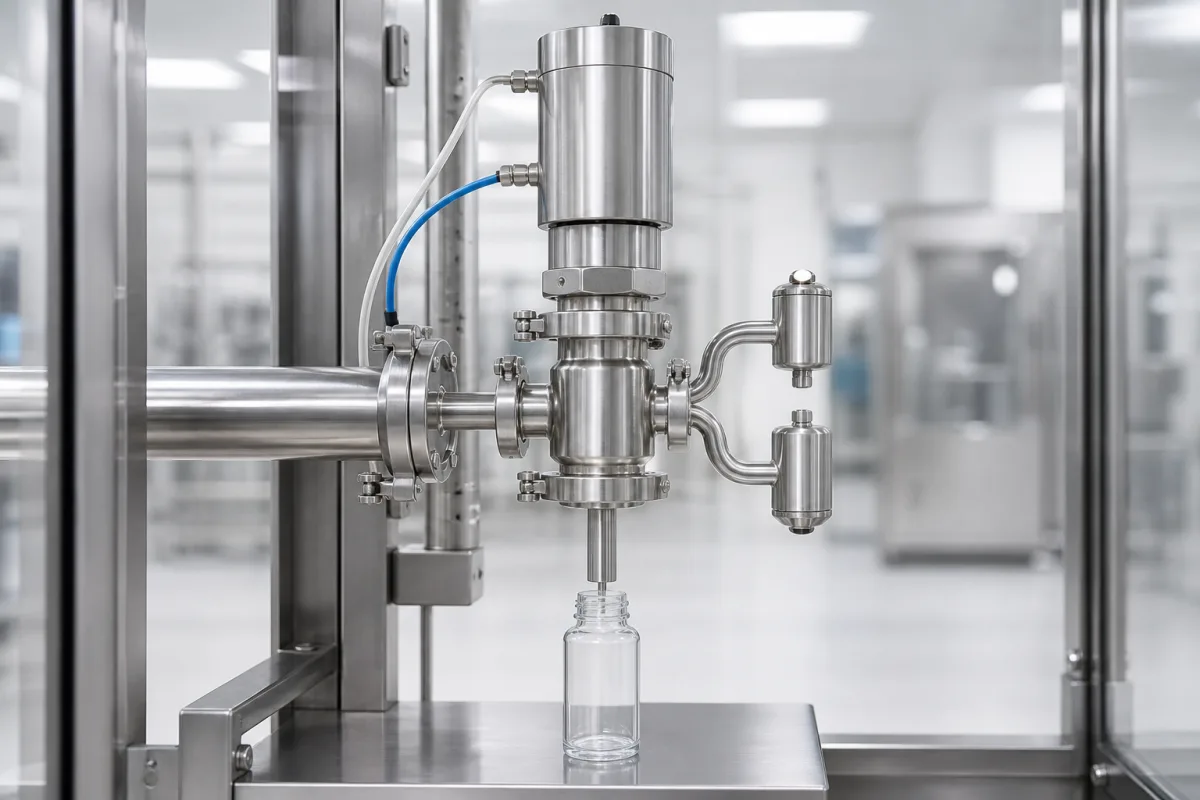
Aseptic Filling Valve

Based on aggregated insights from multiple verified factory profiles within the CNFX directory, the standard Aseptic Filling Valve used in the Food Manufacturing sector typically supports operational capacities ranging from standard industrial configurations to heavy-duty production requirements.

Technical Definition & Core Assembly

A canonical Aseptic Filling Valve is characterized by the integration of Valve Body and Actuator (Pneumatic/Electric). In industrial production environments, manufacturers listed on CNFX commonly emphasize Stainless Steel 316L construction to support stable, high-cycle operation across diverse manufacturing scenarios.

A precision valve designed to dispense sterile processed fruit or vegetable products into containers without contamination.

Product Specifications

Technical details and manufacturing context for Aseptic Filling Valve

Definition
A critical component within an Integrated Aseptic Fruit and Vegetable Processing Line, the Aseptic Filling Valve is responsible for the final, sterile transfer of processed purees, juices, or diced products from the holding tank into pre-sterilized packaging (e.g., bags, cartons, bottles). It operates within a sterile zone, maintaining aseptic conditions to prevent microbial recontamination and ensure extended shelf-life of the final product.
Working Principle
The valve operates via pneumatic or servo-electric actuation. It opens to allow the sterile product to flow from a pressurized sterile holding vessel through a sterile nozzle into the container. The valve seat and sealing mechanism are designed for clean-in-place (CIP) and sterilize-in-place (SIP) procedures. It often features a positive shut-off to prevent dripping and may include features for volumetric or weight-based filling control.
Common Materials
Stainless Steel 316L, PTFE (Polytetrafluoroethylene), EPDM (Ethylene Propylene Diene Monomer) seals
Technical Parameters
  • Nominal port size (e.g., 1", 1.5", 2") for product inlet/outlet connections. (mm) Per Request
Components / BOM
  • Valve Body
    The main housing that contains the fluid pathway and provides connection points.
    Material: Stainless Steel 316L
  • Actuator (Pneumatic/Electric)
    Provides the mechanical force to open and close the valve stem.
    Material: Stainless Steel / Aluminum Alloy
  • Valve Stem and Seat
    The moving part (stem) and its mating surface (seat) that create a seal to stop flow.
    Material: Stainless Steel 316L / PTFE-coated
  • Diaphragm or Seal
    Prevents product from entering the actuator chamber and ensures a sterile barrier.
    Material: EPDM or PTFE
  • Nozzle
    The outlet spout that directs product flow into the container.
    Material: Stainless Steel 316L
Engineering Reasoning
0.5-6.0 bar
7.2 bar differential pressure across valve seat
Design Rationale: Seat material (316L stainless steel) plastic deformation exceeding 0.2% yield strength at 205 MPa
Risk Mitigation (FMEA)
Trigger Particulate contamination > 50 μm in sterile media
Mode: Seat surface scoring leading to 0.1 mm³/s leakage
Strategy: Install 10 μm absolute filtration upstream with differential pressure monitoring
Trigger Thermal cycling between 4°C product and 121°C SIP temperatures
Mode: Actuator bellows fatigue cracking at 10⁵ cycles
Strategy: Integrate expansion compensator with Inconel 625 bellows rated for 10⁶ cycles

Industry Taxonomies & Aliases

Commonly used trade names and technical identifiers for Aseptic Filling Valve.

Industrial Ecosystem & Supply Chain DNA

Complementary Systems
Downstream Applications
Specialized Tooling

Application Fit & Sizing Matrix

Operational Limits
pressure: 0 to 6 bar (max operating pressure), 0 to 10 bar (CIP/SIP pressure)
flow rate: 0.5 to 20 L/min (depending on valve size and product viscosity)
temperature: 0°C to 150°C (sterilization up to 150°C, operation typically 4°C to 90°C)
slurry concentration: Up to 60% solids by weight (depending on particle size and rheology)
Media Compatibility
✓ Fruit purees (e.g., apple, mango) ✓ Vegetable sauces (e.g., tomato paste) ✓ Dairy-based fruit blends
Unsuitable: Highly abrasive slurries with large, hard particulates (>3mm) or corrosive chemical solutions
Sizing Data Required
  • Required flow rate (L/min)
  • Product viscosity and particle size distribution
  • Container size and fill accuracy requirements

Reliability & Engineering Risk Analysis

Failure Mode & Root Cause
Seat wear and leakage
Cause: Repeated mechanical cycling and abrasive particles in the sterile media causing gradual erosion of the valve seat, compromising the sterile barrier.
Actuator failure (pneumatic or electric)
Cause: Moisture ingress, contamination, or mechanical fatigue in the actuator assembly leading to loss of precise positional control during filling cycles.
Maintenance Indicators
  • Visible product drips or leaks around the valve stem or seat during or after the filling cycle, indicating seal failure.
  • Audible hissing or irregular pneumatic exhaust sounds from the actuator, suggesting air leaks or pressure irregularities affecting valve timing.
Engineering Tips
  • Implement a routine preventive maintenance schedule for seat inspection and replacement based on cycle counts, using manufacturer-recommended materials resistant to sterilization processes.
  • Install and maintain proper air filtration and drying systems for pneumatic actuators, and ensure regular calibration of positional feedback sensors to maintain precise valve operation.

Compliance & Manufacturing Standards

Reference Standards
ISO 13408-6:2021 Aseptic processing of health care products - Part 6: Isolator systems ANSI/ASME BPE-2022 Bioprocessing Equipment DIN 11864-1:2014-10 Aseptic fittings - Part 1: Stainless steel tube connections
Manufacturing Precision
  • Sealing surface flatness: 0.05mm maximum deviation
  • Valve seat concentricity: 0.02mm total indicator reading
Quality Inspection
  • Sterility assurance testing (bacterial challenge test)
  • Surface finish verification (Ra ≤ 0.4μm per ASME BPE SF-4)

Factories Producing Aseptic Filling Valve

Verified manufacturers with capability to produce this product in China

✓ 94% Supplier Capability Match Found

P Project Engineer from United Arab Emirates Jan 13, 2026
★★★★★
"Standard OEM quality for Food Manufacturing applications. The Aseptic Filling Valve arrived with full certification."
Technical Specifications Verified
S Sourcing Manager from Australia Jan 10, 2026
★★★★★
"Great transparency on the Aseptic Filling Valve components. Essential for our Food Manufacturing supply chain."
Technical Specifications Verified
P Procurement Specialist from Singapore Jan 07, 2026
★★★★★
"The Aseptic Filling Valve we sourced perfectly fits our Food Manufacturing production line requirements."
Technical Specifications Verified
Verification Protocol

“Feedback is collected from verified sourcing managers during RFQ (Request for Quote) and factory evaluation processes on CNFX. These reports represent historical performance data and technical audit summaries from our B2B manufacturing network.”

10 sourcing managers are analyzing this specification now. Last inquiry for Aseptic Filling Valve from Turkey (1h ago).

Supply Chain Compatible Machinery & Devices

Automated Food Moisture Analyzer

Automated system for precise moisture content measurement in food products

Explore Specs →
Automated Food Color Consistency Analyzer

Automated inline system for real-time color measurement and consistency control in food processing.

Explore Specs →
Control Panel

A centralized interface for monitoring and controlling industrial equipment and processes

Explore Specs →
Industrial Vacuum Tumbler

Industrial machine for massaging and marinating meat under vacuum to enhance texture and flavor.

Explore Specs →

Frequently Asked Questions

What makes this aseptic filling valve suitable for fruit and vegetable products?

The valve uses 316L stainless steel for corrosion resistance, PTFE for chemical inertness, and EPDM seals for high-temperature sterilization, ensuring no contamination during sterile product dispensing.

Can this valve handle both pneumatic and electric actuation?

Yes, the BOM includes options for both pneumatic and electric actuators, allowing flexibility based on your food manufacturing line's existing automation systems.

How does the diaphragm/seal design prevent contamination in aseptic filling?

The diaphragm or seal creates a sterile barrier between the valve mechanism and the product stream, while the valve stem and seat design ensures tight shut-off to maintain sterility during container filling.

Can I contact factories directly on CNFX?

CNFX is an open directory, not a transaction platform. Each factory profile provides direct contact information and production details to help you initiate direct inquiries with Chinese suppliers.

Get Quote for Aseptic Filling Valve

Request technical pricing, lead times, or customized specifications for Aseptic Filling Valve directly from verified manufacturing units.

Your business information is encrypted and only shared with verified Aseptic Filling Valve suppliers.

Thank you! Your message has been sent. We'll respond within 1–3 business days.

Need to Manufacture Aseptic Filling Valve?

Connect with verified factories specializing in this product category

Add Your Factory Contact Us
Previous Product
Aseptic Filling Machine
Next Product
Aseptic Surge Tank