Industry-Verified Manufacturing Data (2026)

Filling Nozzle/Probe

Based on aggregated insights from multiple verified factory profiles within the CNFX directory, the standard Filling Nozzle/Probe used in the Food Manufacturing sector typically supports operational capacities ranging from standard industrial configurations to heavy-duty production requirements.

Technical Definition & Core Assembly

A canonical Filling Nozzle/Probe is characterized by the integration of Nozzle Body/Tip and Seal/Gasket. In industrial production environments, manufacturers listed on CNFX commonly emphasize Stainless Steel (e.g., 316L) construction to support stable, high-cycle operation across diverse manufacturing scenarios.

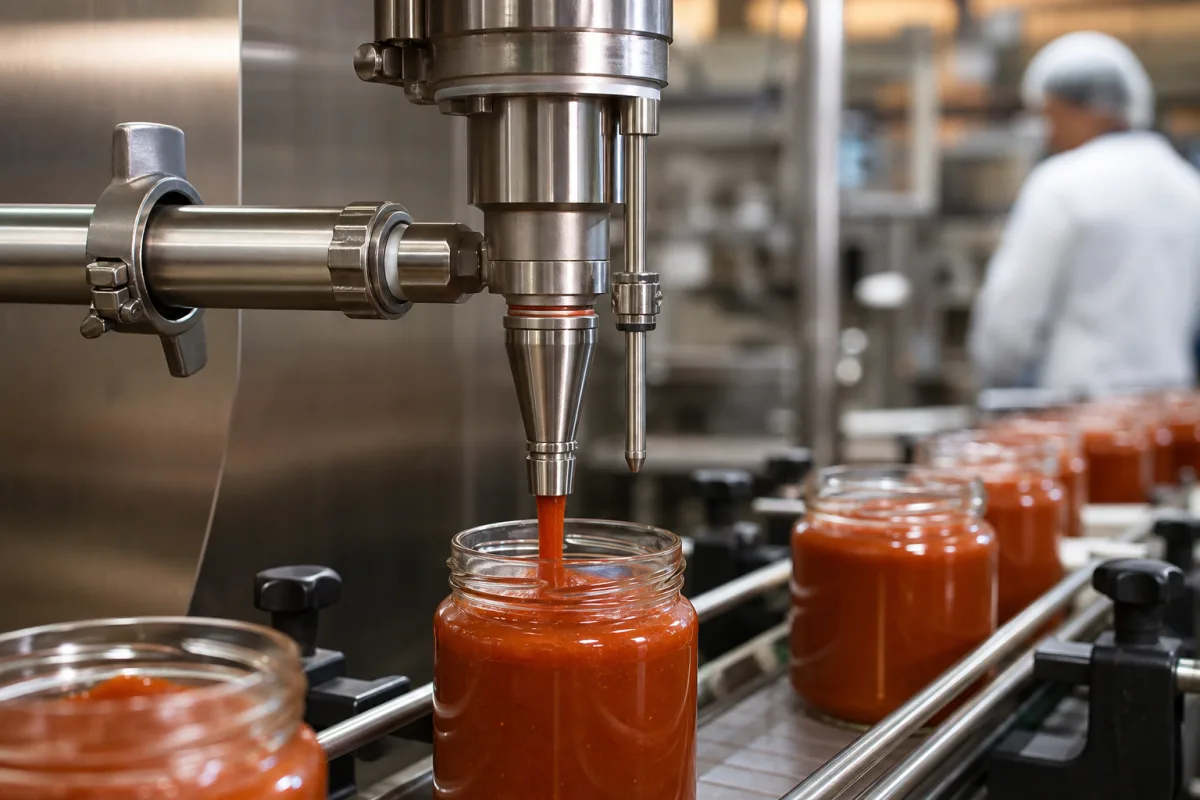
A precision component of a filling head that directly interfaces with containers to dispense or measure liquid/semi-liquid products.
Product Specifications

Technical details and manufacturing context for Filling Nozzle/Probe

Definition
The Filling Nozzle/Probe is the terminal component of a Precision Filling Head, responsible for the controlled delivery of product into containers. It ensures accurate volumetric or weight-based filling, prevents drips and contamination, and may incorporate features for level sensing, vacuum-assisted filling, or aseptic processing depending on the application.
Working Principle
The nozzle/probe is positioned at the filling station. During operation, product is forced through it via pump, gravity, or pressure. It opens to allow flow into the container and closes precisely to end the fill cycle. Probes may also sense container presence or product level to control the fill process.
Common Materials
Stainless Steel (e.g., 316L), Food-Grade Plastic (e.g., PTFE, PEEK)
Technical Parameters
  • Orifice Diameter - Critical for flow rate and droplet formation. (mm) Standard Spec
Components / BOM
  • Nozzle Body/Tip
    Forms the main structure and defines the final flow path and orifice.
    Material: Stainless Steel or Plastic
  • Seal/Gasket
    Ensures a leak-proof connection between the nozzle and the filling head or valve.
    Material: Silicone, EPDM, or PTFE
  • Internal Flow Path
    The machined or molded channel inside the nozzle that guides the product.
    Material: Polished Stainless Steel or Smooth Plastic
Engineering Reasoning
0.5-6.0 bar (7.25-87.0 psi) at 20°C with viscosity ≤100 cP
Material yield stress of 316L stainless steel (205 MPa) exceeded at 8.2 bar differential pressure with 25°C thermal gradient
Design Rationale: Cavitation-induced pitting erosion when local pressure drops below vapor pressure (0.023 bar at 20°C) during rapid valve closure, combined with stress corrosion cracking from chloride ion concentration >25 ppm at crevice geometries
Risk Mitigation (FMEA)
Trigger Particulate contamination ≥15 μm in product stream
Mode: Seal seat scoring leading to 0.1 mL/s leakage rate exceeding Class III limits
Strategy: Install 10 μm absolute-rated duplex filter with differential pressure monitoring at 0.3 bar trigger
Trigger Cyclic thermal stress from 5°C/min temperature fluctuations during CIP/SIP cycles
Mode: Thermal fatigue cracking at brazed nozzle-tube joint after 5,000 cycles
Strategy: Redesign with monoblock construction using vacuum brazing at 1040°C with BAu-4 filler metal

Industry Taxonomies & Aliases

Commonly used trade names and technical identifiers for Filling Nozzle/Probe.

Applied To / Applications

This component is essential for the following industrial systems and equipment:

Industrial Ecosystem & Supply Chain DNA

Complementary Systems
Downstream Applications
Specialized Tooling

Application Fit & Sizing Matrix

Operational Limits
pressure: 0 to 10 bar
flow rate: 0.1 to 100 L/min
temperature: -20°C to 150°C
slurry concentration: Up to 40% solids by weight
Media Compatibility
✓ Pharmaceutical solutions ✓ Food-grade liquids (e.g., sauces, oils) ✓ Cosmetic creams/gels
Unsuitable: Highly abrasive slurries with >40% solids or corrosive acids (e.g., concentrated sulfuric acid)
Sizing Data Required
  • Container neck inner diameter (mm)
  • Required fill accuracy (% tolerance)
  • Product viscosity (cP)

Reliability & Engineering Risk Analysis

Failure Mode & Root Cause
Abrasive erosion
Cause: Prolonged exposure to particulate-laden fluids, causing gradual material loss and dimensional changes at critical sealing surfaces.
Cavitation damage
Cause: Rapid pressure drops during fluid flow leading to vapor bubble formation and implosion, causing pitting and fatigue fractures in nozzle/probe components.
Maintenance Indicators
  • Irregular spray pattern or flow deviation beyond ±5% of specification
  • Audible hissing or whistling during operation indicating seal failure or internal obstruction
Engineering Tips
  • Implement real-time particle monitoring upstream with automatic diversion valves when contamination exceeds 15 microns
  • Maintain fluid temperature within ±3°C of design specification and install pulsation dampeners to prevent pressure fluctuation-induced cavitation

Compliance & Manufacturing Standards

Reference Standards
ISO 9001:2015 Quality Management Systems ANSI B16.5 Pipe Flanges and Flanged Fittings DIN 11850 Stainless Steel Tubes for Food, Chemical and Pharmaceutical Industry
Manufacturing Precision
  • Bore Diameter: +/-0.01mm
  • Surface Roughness: Ra 0.8μm max
Quality Inspection
  • Pressure Test (Leak Testing)
  • Material Verification (PMI - Positive Material Identification)

Factories Producing Filling Nozzle/Probe

Verified manufacturers with capability to produce this product in China

✓ 92% Supplier Capability Match Found

T Technical Director from United States Jan 02, 2026
★★★★★
"Great transparency on the Filling Nozzle/Probe components. Essential for our Food Manufacturing supply chain."
Technical Specifications Verified
P Project Engineer from United Arab Emirates Dec 30, 2025
★★★★☆
"The Filling Nozzle/Probe we sourced perfectly fits our Food Manufacturing production line requirements. (Delivery took slightly longer than expected, but technical support was excellent.)"
Technical Specifications Verified
S Sourcing Manager from Australia Dec 27, 2025
★★★★★
"Found 18+ suppliers for Filling Nozzle/Probe on CNFX, but this spec remains the most cost-effective."
Technical Specifications Verified
Verification Protocol

“Feedback is collected from verified sourcing managers during RFQ (Request for Quote) and factory evaluation processes on CNFX. These reports represent historical performance data and technical audit summaries from our B2B manufacturing network.”

11 sourcing managers are analyzing this specification now. Last inquiry for Filling Nozzle/Probe from Mexico (1h ago).

Supply Chain Compatible Machinery & Devices

Automated Food Packaging Integrity Tester

Automated system for non-destructive testing of food package seals and integrity.

Explore Specs →
Automated Food Moisture Analyzer

Automated system for precise moisture content measurement in food products

Explore Specs →
Automated Food Color Consistency Analyzer

Automated inline system for real-time color measurement and consistency control in food processing.

Explore Specs →
Control Panel

A centralized interface for monitoring and controlling industrial equipment and processes

Explore Specs →

Frequently Asked Questions

What materials are recommended for food-grade filling nozzles?

For food manufacturing, we recommend stainless steel (316L) for durability and corrosion resistance, or food-grade plastics like PTFE and PEEK for chemical compatibility and non-stick properties.

How do I maintain and clean a filling nozzle for food applications?

Regular cleaning with food-safe sanitizers is essential. Disassemble according to manufacturer instructions, clean all components (nozzle body, seals, flow path), and inspect seals regularly for wear to prevent contamination.

What factors affect the accuracy of a filling nozzle?

Accuracy depends on nozzle design, material compatibility with the product, proper seal maintenance, consistent pressure/viscosity of the product, and correct alignment with containers during operation.

Can I contact factories directly on CNFX?

CNFX is an open directory, not a transaction platform. Each factory profile provides direct contact information and production details to help you initiate direct inquiries with Chinese suppliers.

Get Quote for Filling Nozzle/Probe

Request technical pricing, lead times, or customized specifications for Filling Nozzle/Probe directly from verified manufacturing units.

Your business information is encrypted and only shared with verified Filling Nozzle/Probe suppliers.

Thank you! Your message has been sent. We'll respond within 1–3 business days.

Need to Manufacture Filling Nozzle/Probe?

Connect with verified factories specializing in this product category

Add Your Factory Contact Us
Previous Product
Extrusion Screw
Next Product
Filling Nozzles