Editorial Technical Reference

CNC Woodworking Router

This page explains how CNC Woodworking Router is classified within Wooden Furniture. Technical values and manufacturer relationships are research references; confirm the current specification and supplier evidence for each order.

Technical Definition & Core Assembly

A CNC woodworking router is an industrial machine that uses computer numerical control to automate the cutting, carving, and shaping of wooden components for furniture manufacturing.
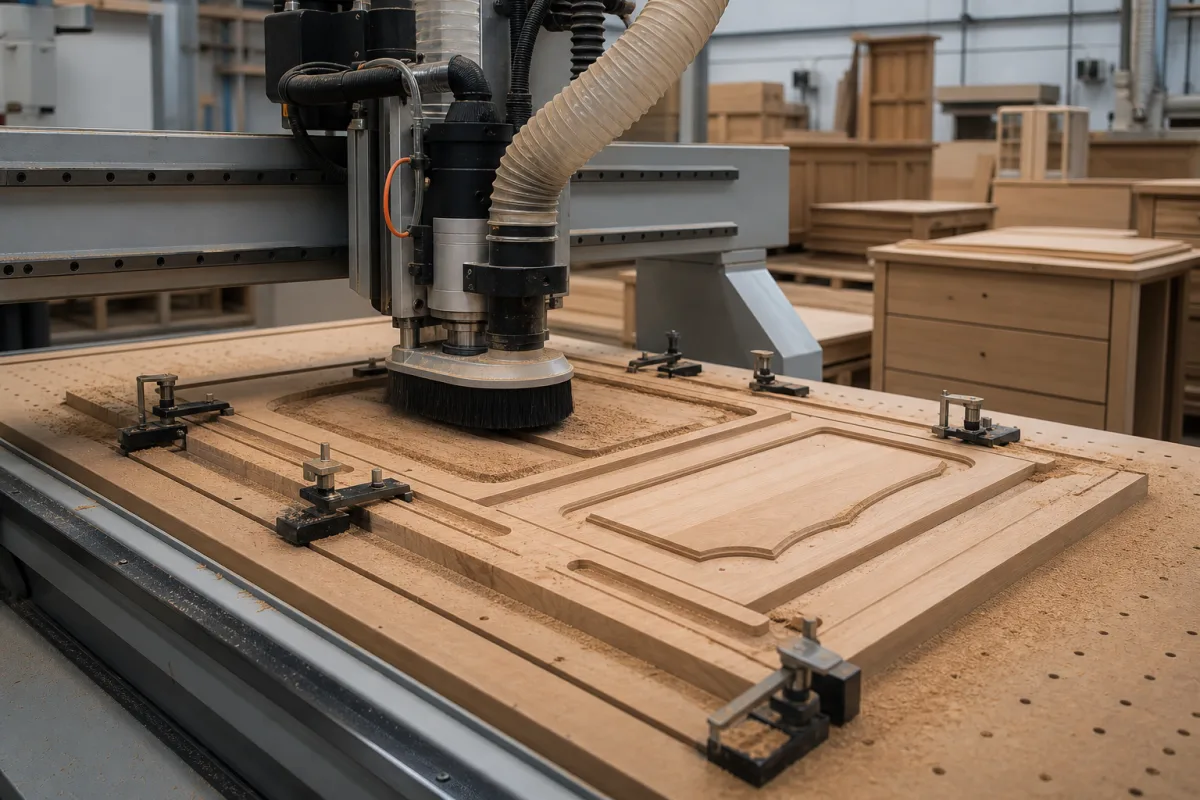
CNC Woodworking Router in a manufacturing environment
Representative product image. Confirm appearance and specifications with the manufacturer.

Product Specifications

Technical details and manufacturing context for CNC Woodworking Router

Definition
A CNC woodworking router is an industrial machine that uses computer numerical control to automate the cutting, carving, and shaping of wooden components for furniture manufacturing. It translates digital designs into precise physical cuts via a rotating spindle, enabling high-volume production of complex parts like chair legs, table inlays, cabinet doors, and decorative panels. This machine is essential in modern furniture factories for achieving consistent quality, reducing manual labor, and accelerating production cycles within B2B supply chains. The machine typically features a gantry system that moves the spindle along X, Y, and Z axes, with a working area of 1300×2500 mm, spindle power ranging from 3.5 to 9.0 kW, and spindle speeds from 6000 to 24000 rpm. Positioning accuracy is ±0.05 mm, and rapid traverse rates are 15–30 m/min. The control system is DSP A11, and the machine is available with 3 axes as standard, with 4 axes optional. Maximum cutting depth is 200 mm, and the spindle taper is ISO 30. Electrical requirements include 380 V ±10% at 50 Hz (220 V optional, 60 Hz on request). Total power consumption is 9.5–15 kW, and machine weight ranges from 1800 to 2500 kg. Operating humidity should be 30–80% RH (non-condensing). The machine is constructed with cast iron, steel, and aluminum alloy components. For procurement, verify model-specific values and standards with the legal manufacturer or supplier.
Working Principle
A computer-controlled gantry system moves a high-speed rotating spindle with cutting tools along X, Y, and Z axes, following programmed paths to remove material from wooden workpieces. The CNC controller interprets digital design files and converts them into precise motor commands, ensuring accurate tool positioning. The spindle, driven by a motor with adjustable speed, rotates at high RPM to cut, carve, or shape wood. The workpiece is typically held in place by a vacuum table or clamps. The system operates within specified parameters such as working area, spindle power, and feed rates, which must be set according to the material and desired outcome. Safety features and proper maintenance are essential for reliable operation.
Common Materials
Cast Iron, Steel, Aluminum Alloy
Technical Parameters
ParameterTypical rangeNotes & selection driver
Working Area (X × Y)Required1300×2500 mmMaximum dimensions of the workpiece that can be processed
Spindle PowerRequired3.5–9.0 kWPower output of the main cutting spindle motor
Spindle SpeedRequired6000–24000 rpmMaximum rotational speed of the cutting spindle
Positioning AccuracyRequired±0.05 mmPrecision of tool positioning along axes
Rapid Traverse RateRequired15–30 m/minMaximum speed of non-cutting axis movement
Control SystemDSP A11 textType of CNC controller software/hardware
Number of Axes33-axis standard; 4-axis optional
Max Cutting Depth200 mmDepth per pass depends on material
Spindle TaperISO30Tool holder compatibilityISO 30
Voltage380 ±10% V3-phase; 220V optional
Frequency50 Hz60Hz on request
Total Power Consumption9.5–15 kWIncludes spindle, drives, vacuum
Machine Weight1800–2500 kgHeavier for stability
Operating Humidity30–80 %RHNon-condensing

Ranges are indicative industry figures for RFQ preparation, not a supplier commitment. Confirm every value and standard with the legal manufacturer before ordering.

Components / BOM
  • CNC Controller
    Processes G-code instructions and drives motor movements
    Material: Electronics/Plastic Housing
  • Main Spindle
    Rotates cutting tools at high speeds for material removal
    Material: Steel/Precision Bearings
  • Linear Guide Rails
    Provide smooth, precise movement along X, Y, and Z axes
    Material: Hardened Steel
  • Vacuum Table Optional
    Secures workpiece during machining using suction
    Material: Aluminum/Plastic
  • Gantry
    Carries the spindle and moves it along the X, Y and Z axes under CNC control.

Industry Taxonomies & Aliases

Commonly used trade names and technical identifiers for CNC Woodworking Router.

Industrial Ecosystem & Supply Chain Structure

Complementary Systems
Downstream Applications
Specialized Tooling

Application Fit & Sizing Matrix

Operational Limits
pressure: N/A (non-fluid system)
other spec: Max Spindle Speed: 18,000-24,000 RPM, Cutting Feed Rate: 0-20 m/min, Positioning Accuracy: ±0.02-0.05 mm
temperature: 15-35°C (operating environment)
Media Compatibility
✓ Hardwoods (oak, maple, walnut) ✓ Softwoods (pine, cedar) ✓ Engineered Wood Products (MDF, plywood, particle board)
Unsuitable: Metals or abrasive composites (excessive tool wear, machine not designed for metal cutting forces)
Sizing Data Required
  • Maximum Workpiece Dimensions (X, Y, Z travel)
  • Material Hardness/Density (affects spindle power requirement: 3-15 kW typical)
  • Required Production Speed/Throughput (influences feed rate and automation needs)

Reliability & Engineering Risk Analysis

Failure Mode & Root Cause
Spindle Bearing Degradation
Cause: Contamination from wood dust and resin buildup, inadequate lubrication, or excessive axial/radial loads from improper tooling or feed rates.
Linear Guide and Ball Screw Wear
Cause: Accumulation of abrasive wood particles leading to scoring and pitting, misalignment from thermal expansion or mechanical shock, or lack of proper cleaning and lubrication.
Maintenance Indicators
  • Unusual high-pitched whining or grinding noises from the spindle during operation, indicating bearing distress or imbalance.
  • Visible vibration or chatter marks on machined wood surfaces, suggesting worn linear guides, loose components, or spindle runout.
Engineering Tips
  • Implement a rigorous preventive maintenance schedule: daily blow-down with clean, dry compressed air to remove wood dust from critical components (spindle, guides, screws), and weekly lubrication with manufacturer-specified greases or oils.
  • Use high-quality, sharp cutting tools and optimize feed/speed parameters to reduce reactive loads on the spindle and mechanical drives, minimizing wear and heat generation.

Indicative industry ranges for design and RFQ preparation. Confirm the exact figures and applicable standard with the manufacturer before specifying.

Compliance & Manufacturing Standards

Applicable Standards
ISO 12100:2010 - Safety of machinery ANSI B11.21 - Safety requirements for machine tools CE Marking - Machinery Directive 2006/42/EC

Quoted from the published standard.

Manufacturing Precision
  • Positional Accuracy: +/-0.02mm
  • Surface Flatness: 0.1mm/m
Quality Inspection
  • Laser Interferometer Calibration
  • Vibration Analysis Test

Manufacturers of CNC Woodworking Router

Manufacturer profiles associated with CNC Woodworking Router.

Sourcing CNC Woodworking Router from China?
Tell us your specification and target quantity — we will match it against manufacturer records and come back with the factories that fit.
Request manufacturers We manufacture this

Manufacturer listings support early research and capability understanding. They are not certification, ranking, or transaction guarantees.

Share this page
Technical documentation
Request current drawings, revision history, and a signed specification sheet.
Manufacturing capability
Verify equipment lists, process limits, capacity, and representative production evidence.
Inspection readiness
Confirm test methods, calibrated equipment, sampling plans, and traceable reports.
Supplier transparency
Check the legal entity, factory address, ownership, certifications, and direct contacts.

CNFX does not score or rank suppliers. Buyers must verify all claims and documents with the legal manufacturer before ordering.

Frequently Asked Questions

What materials can this CNC woodworking router process?

The machine is designed for wood and wood-based materials commonly used in furniture manufacturing. The specific materials on file include cast iron, steel, and aluminum alloy for the machine structure, but the workpiece materials are typically wood, plywood, MDF, and similar composites. Always confirm material compatibility with the manufacturer.

What is the maximum workpiece size it can handle?

The working area is 1300×2500 mm in the X and Y axes, which defines the maximum dimensions of the workpiece that can be processed. However, the actual usable size may be affected by the clamping method and tooling. Verify with the supplier for your specific application.

What is the positioning accuracy and how does it affect quality?

The positioning accuracy is ±0.05 mm, which indicates the precision of tool positioning along the axes. This level of accuracy ensures consistent and repeatable cuts, which is critical for producing complex furniture parts with tight tolerances. Actual results depend on machine setup, tool condition, and material properties.

What are the electrical requirements for installation?

The standard electrical supply is 380 V ±10% at 50 Hz, with 220 V optional and 60 Hz available on request. Total power consumption ranges from 9.5 to 15 kW. Ensure your facility's electrical system meets these requirements and consult a qualified electrician for installation.

Data Basis

Editorial classification, named public sources where available, and source-reviewed manufacturer records.

Preliminary Technical Classification
This page supports structured research, RFQ preparation, and supplier evaluation. It does not replace buyer-led supplier qualification, standards review, or technical approval.
Buyer enquiry

Request manufacturing insight for CNC Woodworking Router

Ask for use case, specification boundaries, supplier type, and RFQ preparation information for this product.

Where it goes
Straight to the CNFX editorial desk, and to the manufacturer if this product is linked to a claimed profile. Nothing is broadcast to a supplier list.
Your details stay here
We do not sell or rent enquiry data, and we do not add you to a mailing list. Used only to answer this request.
No commission, no middleman
CNFX is a directory. We take no cut of any order and never negotiate on a supplier's behalf.
What we don't claim
A listing is not an endorsement. Qualify every supplier and verify every figure yourself before ordering.

Your business information is used only to process this request.

Thank you! Your message has been sent. We'll respond within 1–3 business days.
Sorry, we couldn't send your message. Please try again, or email us at [email protected].

Need to Manufacture CNC Woodworking Router?

Compare manufacturer profiles with relevant product and process capability.

Previous Product
Ergonomic Office Chair
Last Product
Get QuotesChat