Cutting Gantry
View system integration details
This page explains how Linear Guide Rails is classified within Wood Product Manufacturing. Technical values and manufacturer relationships are research references; confirm the current specification and supplier evidence for each order.
Precision linear motion components that provide smooth, accurate guidance for moving parts along a straight path.
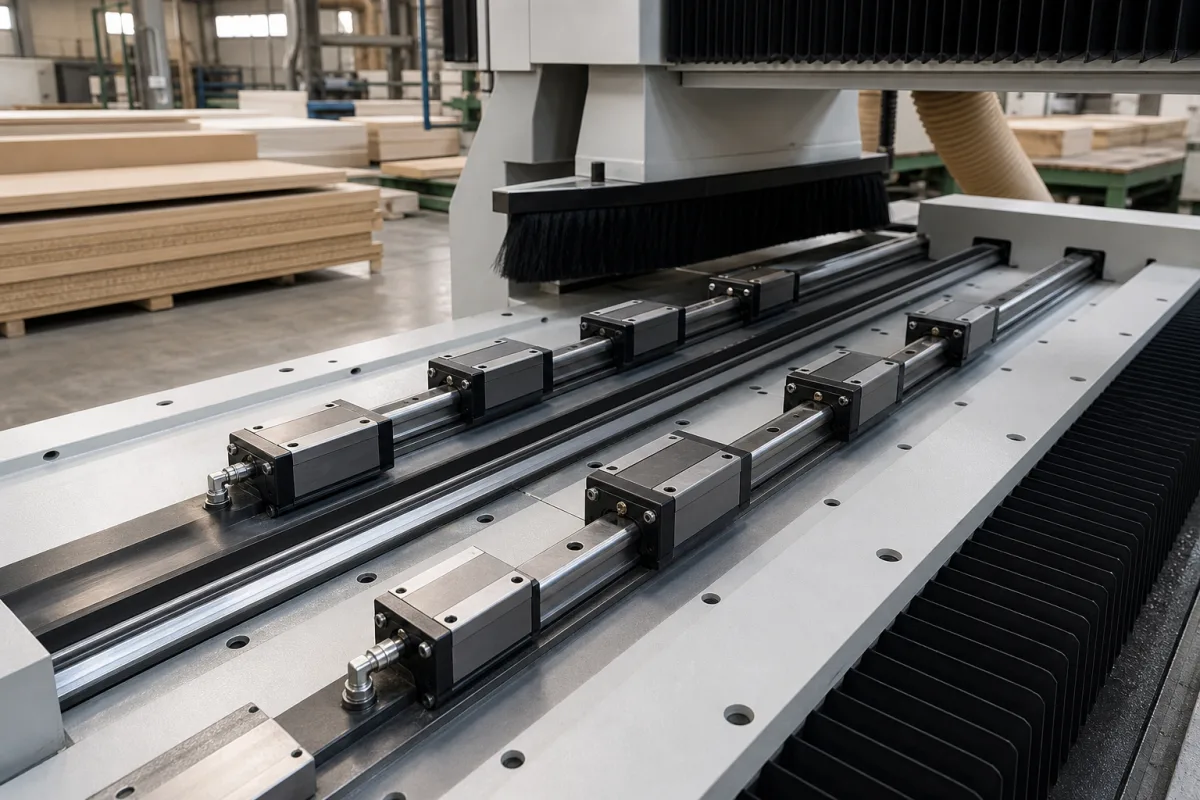
Technical details and manufacturing context for Linear Guide Rails
What to specify in your RFQ
These are the quantities to specify to the manufacturer when sizing or requesting a quote. The manufacturer's own documentation governs the exact figures and applicable standard.
| speed: | Up to 5 m/s (depending on lubrication and precision grade) |
| accuracy: | Precision grades: Normal (C), High (H), Precision (P), Ultra-precision (UP) |
| pressure: | N/A (mechanical component, not fluid pressure) |
| temperature: | -20°C to +80°C (standard), -40°C to +120°C (special variants) |
| load capacity: | Dynamic load rating: 1-100 kN depending on size and type |
Indicative industry ranges for design and RFQ preparation. Confirm the exact figures and applicable standard with the manufacturer before specifying.
Quoted from the published standard.
A practical evidence checklist for RFQ preparation and supplier evaluation.
Compare the published product scope and source details, then include your specifications and quantity in an enquiry.
Manufacturer profiles associated with Linear Guide Rails.
Explore company information and manufacturing capabilities, then discuss the scope of your project with a relevant supplier.
Ask for use case, specification boundaries, supplier type, and RFQ preparation information for this product.
According to the directory, linear guide rails can be made from hardened steel (typically 52100 or equivalent), stainless steel for corrosion resistance, or aluminum alloy for lightweight applications. The specific material choice depends on the application requirements.
Selection involves considering the required load capacity, travel length, mounting configuration, and environmental factors. The rail width and height dimensions (in mm) determine load capacity and rigidity. Always verify model-specific values with the manufacturer or supplier.
Regular lubrication and inspection for wear are recommended. Sealing systems help protect against wood dust and debris. Signs of failure include increased friction, noise, or loss of positioning accuracy, indicating the need for adjustment or replacement.
The directory does not list specific standards for this product. It is important to verify any applicable standards or certifications with the legal manufacturer or supplier for your specific model and application.
This component is essential for the following industrial systems and equipment:
Editorial classification, named public sources where available, and source-reviewed manufacturer records.
Compare manufacturer profiles with relevant product and process capability.