Industry-Verified Manufacturing Data (2026)

Backwash Pump

Based on aggregated insights from multiple verified factory profiles within the CNFX directory, the standard Backwash Pump used in the Machinery and Equipment Manufacturing sector typically supports operational capacities ranging from standard industrial configurations to heavy-duty production requirements.

Technical Definition & Core Assembly

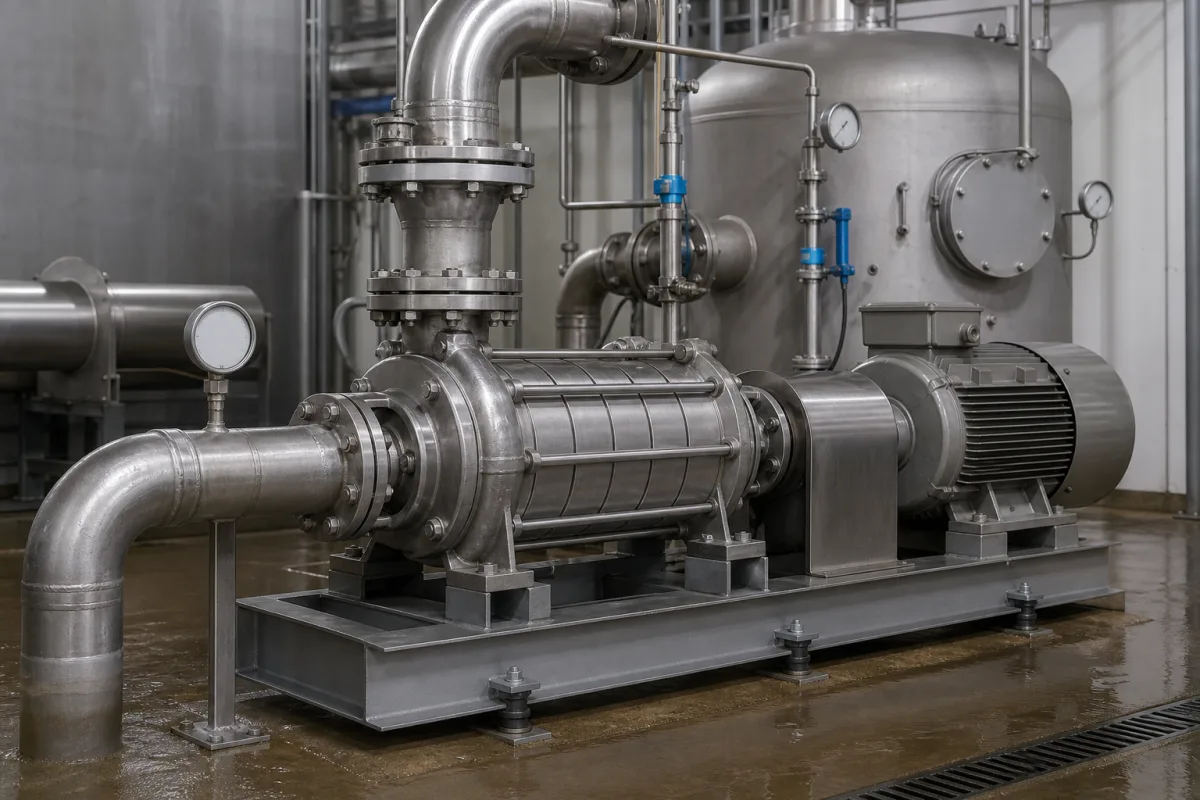
A canonical Backwash Pump is characterized by the integration of Impeller and Casing/Volute. In industrial production environments, manufacturers listed on CNFX commonly emphasize Cast Iron construction to support stable, high-cycle operation across diverse manufacturing scenarios.

A pump specifically designed to provide high-pressure water flow for cleaning and regenerating filtration media in backwash systems.

Product Specifications

Technical details and manufacturing context for Backwash Pump

Definition
The Backwash Pump is a critical component within the Backwash System that generates the necessary hydraulic pressure and flow rate to reverse the flow direction through filtration units. Its primary function is to dislodge accumulated contaminants, debris, and particulates from filter media (such as sand, activated carbon, or membrane surfaces) by forcing clean water backwards through the system. This process restores filtration efficiency, prevents clogging, and extends the operational lifespan of the filtration equipment.
Working Principle
The pump operates by converting mechanical energy (typically from an electric motor) into hydraulic energy. It draws clean water from a storage tank or supply line and pressurizes it to create a high-velocity reverse flow through the filtration vessel. This turbulent flow fluidizes the filter media, scrubbing away trapped impurities which are then discharged to waste. Operation is typically controlled by automated timers, pressure differential sensors, or manual initiation as part of the system's maintenance cycle.
Common Materials
Cast Iron, Stainless Steel (304/316), Bronze, EPDM/ Viton Seals
Technical Parameters
  • Inlet and outlet connection sizes (e.g., DN50, DN80, 2", 3") (mm) Per Request
Components / BOM
  • Impeller
    Rotates to impart kinetic energy to the water, creating flow and pressure.
    Material: Stainless Steel or Bronze
  • Casing/Volute
    Houses the impeller and converts kinetic energy into pressure by gradually expanding the flow path.
    Material: Cast Iron or Stainless Steel
  • Shaft
    Transmits torque from the motor to the impeller.
    Material: Stainless Steel
  • Mechanical Seal
    Prevents leakage along the shaft where it exits the pump casing.
    Material: Ceramic/Carbon faces with EPDM/Viton elastomers
  • Motor
    Provides the rotational mechanical power to drive the pump.
    Material: Copper windings, steel laminations, aluminum/iron housing
Engineering Reasoning
2.5-8.0 bar (36-116 psi) at 15-60 L/min flow rate
Cavitation occurs at NPSHa < 3.2 m H₂O (NPSHr + 0.5 m safety margin), mechanical seal fails at shaft deflection > 0.05 mm, bearing temperature exceeds 95°C
Design Rationale: Cavitation-induced pitting from vapor bubble collapse at pump impeller (Bernoulli principle), mechanical seal degradation from abrasive particle ingress exceeding 15 μm size, bearing lubrication breakdown at 95°C (ASTM D97 pour point exceeded)
Risk Mitigation (FMEA)
Trigger Insufficient NPSHa (Net Positive Suction Head available) below 3.2 m H₂O
Mode: Cavitation damage to impeller and volute, reducing efficiency by 40% within 200 operating hours
Strategy: Install booster pump maintaining NPSHa > 4.0 m H₂O, implement suction strainer with 100 μm mesh
Trigger Abrasive silica particles > 15 μm concentration exceeding 50 mg/L in feed water
Mode: Mechanical seal wear rate of 0.1 mm/1000 hours, leading to seal failure and 5 L/min leakage
Strategy: Install multi-cyclone pre-filter removing 98% of particles > 20 μm, specify silicon carbide seal faces with 9.5 Mohs hardness

Industry Taxonomies & Aliases

Commonly used trade names and technical identifiers for Backwash Pump.

Applied To / Applications

This component is essential for the following industrial systems and equipment:

Industrial Ecosystem & Supply Chain DNA

Complementary Systems
Downstream Applications
Specialized Tooling

Application Fit & Sizing Matrix

Operational Limits
pressure: Up to 10 bar (145 psi) discharge pressure
flow rate: 10-200 m³/h (44-880 gpm)
temperature: 0°C to 80°C (32°F to 176°F)
slurry concentration: Up to 5% solids by weight
Media Compatibility
✓ Sand filtration media ✓ Anthracite filtration media ✓ Garnet filtration media
Unsuitable: Highly corrosive chemical environments (e.g., strong acids, chlorinated solvents)
Sizing Data Required
  • Required backwash flow rate (m³/h or gpm)
  • System pressure drop during backwash (bar or psi)
  • Filtration media type and bed depth

Reliability & Engineering Risk Analysis

Failure Mode & Root Cause
Cavitation
Cause: Insufficient net positive suction head (NPSH) due to clogged inlet strainers, high fluid temperature reducing vapor pressure, or excessive pump speed causing pressure drop below fluid vapor pressure at impeller eye.
Mechanical seal failure
Cause: Dry running without fluid lubrication, abrasive particles in fluid causing seal face wear, misalignment creating uneven loading, or thermal stress from rapid temperature changes leading to seal face distortion.
Maintenance Indicators
  • Unusual high-frequency vibration or knocking sounds from pump casing indicating cavitation or bearing issues
  • Visible fluid leakage around seal area or significant drop in discharge pressure despite normal operation
Engineering Tips
  • Maintain proper NPSH margin by ensuring clean inlet strainers, adequate submergence, and avoiding excessive pump speeds; install NPSH monitoring with automatic shutdown
  • Implement condition-based maintenance with vibration analysis and thermal imaging to detect early bearing wear and misalignment before catastrophic failure

Compliance & Manufacturing Standards

Reference Standards
ISO 5199:2016 - Technical specifications for centrifugal pumps ANSI/HI 1.1-1.6 - Rotodynamic Centrifugal Pumps for Nomenclature and Definitions EN 809:1998+A1:2009 - Pumps and pump units for liquids - Common safety requirements
Manufacturing Precision
  • Impeller Diameter: +/-0.05mm
  • Shaft Runout: 0.03mm maximum
Quality Inspection
  • Hydrostatic Pressure Test
  • Vibration Analysis Test

Factories Producing Backwash Pump

Verified manufacturers with capability to produce this product in China

✓ 97% Supplier Capability Match Found

P Project Engineer from Canada Jan 25, 2026
★★★★★
"Testing the Backwash Pump now; the technical reliability results are within 1% of the laboratory datasheet."
Technical Specifications Verified
S Sourcing Manager from United States Jan 22, 2026
★★★★★
"Impressive build quality. Especially the technical reliability is very stable during long-term operation."
Technical Specifications Verified
P Procurement Specialist from United Arab Emirates Jan 19, 2026
★★★★★
"As a professional in the Machinery and Equipment Manufacturing sector, I confirm this Backwash Pump meets all ISO standards."
Technical Specifications Verified
Verification Protocol

“Feedback is collected from verified sourcing managers during RFQ (Request for Quote) and factory evaluation processes on CNFX. These reports represent historical performance data and technical audit summaries from our B2B manufacturing network.”

15 sourcing managers are analyzing this specification now. Last inquiry for Backwash Pump from Brazil (45m ago).

Supply Chain Compatible Machinery & Devices

Automated Assembly Line System

Integrated production system for sequential component assembly operations

Explore Specs →
Automated Powder Coating System

Integrated industrial system for applying dry powder coatings to metal substrates.

Explore Specs →
Centrifugal Pump Impeller

Rotating component that transfers energy to fluid in centrifugal pumps.

Explore Specs →
High-Precision CNC Laser Cutting Machine

Computer-controlled industrial machine using focused laser beams to cut sheet metal with micron-level accuracy.

Explore Specs →

Frequently Asked Questions

What materials are used in this backwash pump for corrosion resistance?

This backwash pump is constructed with corrosion-resistant materials including cast iron casing, stainless steel (304/316) components, bronze fittings, and EPDM or Viton seals for maximum durability in industrial environments.

What are the main components in the backwash pump BOM?

The bill of materials includes: casing/volute, impeller, mechanical seal, motor, and shaft. These components work together to provide high-pressure water flow for effective filtration media cleaning.

How does this pump improve filtration system maintenance?

This backwash pump delivers high-pressure water flow specifically designed to clean and regenerate filtration media efficiently, reducing downtime and extending the life of filtration systems in industrial applications.

Can I contact factories directly on CNFX?

CNFX is an open directory, not a transaction platform. Each factory profile provides direct contact information and production details to help you initiate direct inquiries with Chinese suppliers.

Get Quote for Backwash Pump

Request technical pricing, lead times, or customized specifications for Backwash Pump directly from verified manufacturing units.

Your business information is encrypted and only shared with verified Backwash Pump suppliers.

Thank you! Your message has been sent. We'll respond within 1–3 business days.

Need to Manufacture Backwash Pump?

Connect with verified factories specializing in this product category

Add Your Factory Contact Us
Previous Product
Backwash Control Module
Next Product
Backwash Valve Assembly