Editorial Technical Reference

Motor

This page explains how Motor is classified within Machinery and Equipment Manufacturing. Technical values and manufacturer relationships are research references; confirm the current specification and supplier evidence for each order.

Technical Definition & Core Assembly

An electromechanical device that converts electrical energy into mechanical energy to drive the fan impeller of a combustion air blower.
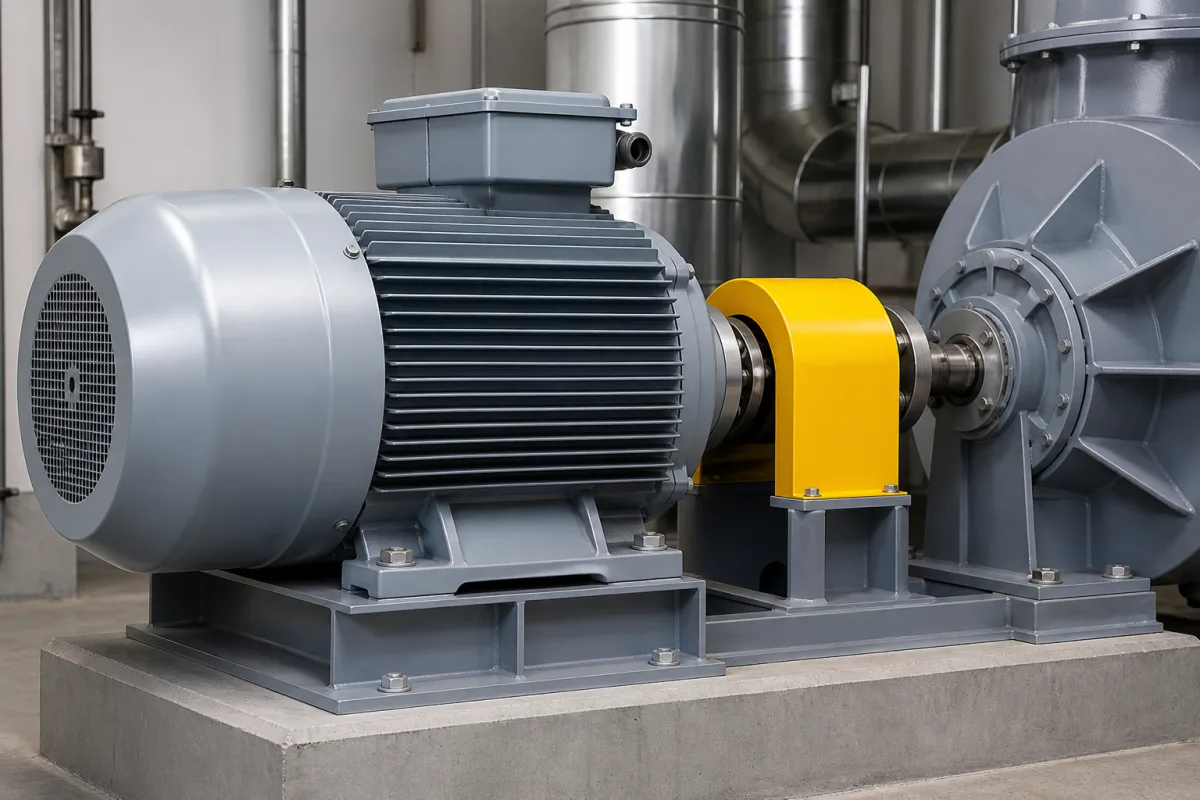
Representative product image. Confirm appearance and specifications with the manufacturer.

Product Specifications

Technical details and manufacturing context for Motor

Definition
The motor is the primary power source for a combustion air blower, responsible for rotating the fan impeller to generate the airflow required for combustion processes. It is a critical component that determines the blower's performance, efficiency, and reliability in industrial applications. This motor is designed for integration into combustion air blowers used in machinery and equipment manufacturing. It operates on electromagnetic principles, converting electrical energy into rotational mechanical energy. The motor's rated power ranges from 0.75 to 7.5 kW, with rated voltages from 220 to 480 V AC (three-phase, 50/60 Hz). Rated speeds are 1450–2900 rpm, depending on the supply frequency. Efficiency classes IE3–IE4 are available, with insulation classes F–H. Protection degrees range from IP54 to IP65, suitable for dusty or washdown environments. The motor is designed for ambient temperatures from -20°C to 40°C, with derating above 40°C. Shaft diameters range from 19 to 48 mm, and mounting types include IM B3 (foot-mounted) and IM B5 (flange-mounted). Weight varies from 15 to 120 kg, depending on power and frame size. Materials used include electrical steel laminations, copper windings, aluminum housing/rotor, and insulation materials. The motor is intended for use in industrial blower applications, and selection should be based on fan load and duty cycle. All parameters are reference ranges and must be verified with the legal manufacturer or supplier for the specific model. Standards such as IEC 60034-1, IEC 60038, IEC 60034-30-1, IEC 60085, IEC 60529, ISO 775, and IEC 60034-7 are referenced for procurement and verification, but do not imply certification or compliance. For proper integration, confirm the motor's shaft diameter matches the fan hub bore, and ensure the mounting type is compatible with the blower housing. Regular maintenance includes checking insulation resistance, bearing condition, and vibration levels. Failure indicators include overheating, unusual noise, or reduced speed. Always consult the manufacturer's documentation for installation, operation, and maintenance guidelines.
Working Principle
The motor operates on electromagnetic principles. When electrical current flows through its windings, it creates a rotating magnetic field. This field interacts with the rotor (either through induction in AC induction motors or permanent magnets in other types), causing it to turn and transfer rotational force to the blower's shaft and impeller. The motor's speed is determined by the frequency of the supply voltage and the number of poles. For three-phase induction motors, the synchronous speed is calculated based on the supply frequency and pole pairs, with actual speed slightly lower due to slip. The motor's torque is proportional to the current and magnetic field strength, and it must be selected to match the fan's load characteristics. The motor's efficiency class indicates its energy performance, with IE4 offering higher efficiency than IE3. The insulation class defines the maximum allowable temperature rise, and the protection degree indicates the level of protection against dust and water ingress. Proper selection and installation ensure reliable operation and long service life.
Common Materials
Electrical steel (laminations), Copper (windings), Aluminum (housing/rotor), Insulation materials
Technical Parameters
ParameterTypical rangeNotes & selection driver
Rated Power0.75–7.5 kWSelect based on fan load and duty cycle.IEC 60034-1
Rated Voltage220–480 V ACThree-phase, 50/60 Hz.IEC 60038
Rated Speed1450–2900 rpmFor 50 Hz and 60 Hz respectively.IEC 60034-1
Efficiency ClassIE3–IE4IE4 for premium efficiency.IEC 60034-30-1
Insulation ClassF–HClass H for higher thermal margin.IEC 60085
Protection DegreeIP54–IP65IP65 for dusty or washdown environments.IEC 60529
Ambient Temperature-20–40 °CDerate above 40°C.IEC 60034-1
Shaft Diameter19–48 mmMatch fan hub bore.ISO 775
Mounting TypeIM B3–IM B5B5 flange for direct mounting.IEC 60034-7
Weight15–120 kgVaries with power and frame size.

Ranges are indicative industry figures for RFQ preparation, not a supplier commitment. Confirm every value and standard with the legal manufacturer before ordering.

Components / BOM
  • Stator
    Stationary part containing windings that create the rotating magnetic field
    Material: Electrical steel laminations with copper windings
  • Rotor Part
    Rotating part that converts electromagnetic force into mechanical rotation
    Material: Electrical steel with aluminum/copper conductors or permanent magnets
  • Bearings Part
    Support the rotor shaft and reduce friction during rotation
    Material: Steel with lubricated surfaces
  • Housing Part
    Protects internal components and provides structural support
    Material: Cast iron or aluminum alloy
  • Cooling Fan
    Dissipates heat generated during motor operation
    Material: Plastic or aluminum

Applied To / Applications

This component is essential for the following industrial systems and equipment:

Industrial Ecosystem & Supply Chain Structure

Complementary Systems
Downstream Applications
Specialized Tooling

Application Fit & Sizing Matrix

Operational Limits
pressure: Atmospheric to 1.5 bar (typical for combustion air blower applications)
other spec: Flow Rate: 500-50,000 CFM (depending on blower design), Motor Speed: 1,800-3,600 RPM (standard induction motors), Power Range: 0.5-500 HP
temperature: -20°C to 150°C (ambient and motor surface)
Media Compatibility
✓ Clean combustion air (ambient atmosphere) ✓ Industrial plant air (filtered) ✓ HVAC system air
Unsuitable: Explosive or flammable gas environments (unless specifically rated for hazardous locations)
Sizing Data Required
  • Required air flow rate (CFM or m³/h)
  • Static pressure of the blower system (inches H₂O or Pa)
  • Motor power supply characteristics (voltage, phase, frequency)

Reliability & Engineering Risk Analysis

Failure Mode & Root Cause
Bearing failure
Cause: Inadequate lubrication, contamination, misalignment, or excessive loading leading to wear, overheating, or seizure.
Insulation breakdown
Cause: Thermal aging from overheating, moisture ingress, voltage spikes, or contamination causing short circuits or ground faults.
Maintenance Indicators
  • Unusual audible noise (e.g., grinding, screeching, or humming) indicating bearing wear or electrical issues
  • Excessive vibration or overheating detected by touch or thermal imaging, signaling imbalance or friction
Engineering Tips
  • Implement predictive maintenance with vibration analysis and infrared thermography to detect early-stage faults before catastrophic failure
  • Ensure proper alignment, balanced loads, and clean, dry operating conditions with scheduled lubrication using manufacturer-specified greases

Indicative industry ranges for design and RFQ preparation. Confirm the exact figures and applicable standard with the manufacturer before specifying.

Compliance & Manufacturing Standards

Applicable Standards
IEC 60034-1:2022 - Rotating electrical machines CE Marking - EU conformity for safety and electromagnetic compatibility

Quoted from the published standard.

Manufacturing Precision
  • Shaft runout: +/-0.01mm
  • Housing bore diameter: +/-0.02mm
Quality Inspection
  • Vibration analysis test
  • Insulation resistance test

Manufacturers of Motor

Manufacturer profiles associated with Motor.

Sourcing Motor from China?
Tell us your specification and target quantity — we will match it against manufacturer records and come back with the factories that fit.
Request manufacturers We manufacture this

Manufacturer listings support early research and capability understanding. They are not certification, ranking, or transaction guarantees.

Technical documentation
Request current drawings, revision history, and a signed specification sheet.
Manufacturing capability
Verify equipment lists, process limits, capacity, and representative production evidence.
Inspection readiness
Confirm test methods, calibrated equipment, sampling plans, and traceable reports.
Supplier transparency
Check the legal entity, factory address, ownership, certifications, and direct contacts.

CNFX does not score or rank suppliers. Buyers must verify all claims and documents with the legal manufacturer before ordering.

Supply Chain Compatible Machinery & Devices

Automated Powder Coating System

Integrated industrial system for applying dry powder coatings to metal substrates.

Explore Specs →
Centrifugal Pump Impeller

The centrifugal pump impeller is a critical rotating component that converts mechanical energy from the motor into kinetic energy in fluid systems.

Explore Specs →
High-Precision CNC Laser Cutting Machine

Computer-controlled industrial machine using focused laser beams to cut sheet metal with micron-level accuracy.

Explore Specs →
Industrial-Grade Hydraulic Cylinder Piston Rod

This industrial-grade piston rod is a precision-ground cylindrical component designed for use in hydraulic cylinders.

Explore Specs →

Frequently Asked Questions

What are the available power ratings for this motor?

The motor is available in a rated power range of 0.75 to 7.5 kW, as per IEC 60034-1. The specific power rating should be selected based on the fan load and duty cycle. Always confirm the exact rating with the manufacturer for your application.

What voltage and frequency options are supported?

The motor supports three-phase supply voltages from 220 to 480 V AC, at frequencies of 50 Hz or 60 Hz, in accordance with IEC 60038. The rated speed varies accordingly: 1450 rpm at 50 Hz and 2900 rpm at 60 Hz. Verify the voltage and frequency compatibility with your power supply.

What efficiency and insulation classes are available?

The motor is available in efficiency classes IE3 and IE4, as per IEC 60034-30-1. Insulation classes F and H are offered, with class H providing a higher thermal margin, per IEC 60085. These classes indicate the motor's energy performance and thermal endurance, but actual compliance must be verified with the manufacturer.

What protection degree and mounting options are offered?

The motor offers protection degrees from IP54 to IP65, suitable for dusty or washdown environments, per IEC 60529. Mounting types include IM B3 (foot-mounted) and IM B5 (flange-mounted), per IEC 60034-7. Choose the appropriate protection and mounting based on the installation environment and blower design.

Data Basis

Editorial classification, named public sources where available, and source-reviewed manufacturer records.

Preliminary Technical Classification
This page supports structured research, RFQ preparation, and supplier evaluation. It does not replace buyer-led supplier qualification, standards review, or technical approval.
Buyer enquiry

Request manufacturing insight for Motor

Ask for use case, specification boundaries, supplier type, and RFQ preparation information for this product.

Where it goes
Straight to the CNFX editorial desk, and to the manufacturer if this product is linked to a claimed profile. Nothing is broadcast to a supplier list.
Your details stay here
We do not sell or rent enquiry data, and we do not add you to a mailing list. Used only to answer this request.
No commission, no middleman
CNFX is a directory. We take no cut of any order and never negotiate on a supplier's behalf.
What we don't claim
A listing is not an endorsement. Qualify every supplier and verify every figure yourself before ordering.

Your business information is used only to process this request.

Thank you! Your message has been sent. We'll respond within 1–3 business days.
Sorry, we couldn't send your message. Please try again, or email us at contact@cnfx.com.

Need to Manufacture Motor?

Compare manufacturer profiles with relevant product and process capability.

Previous Product
Motion System
Next Product
Motor & Drive Assembly
Get QuotesChat