Industry-Verified Manufacturing Data (2026)

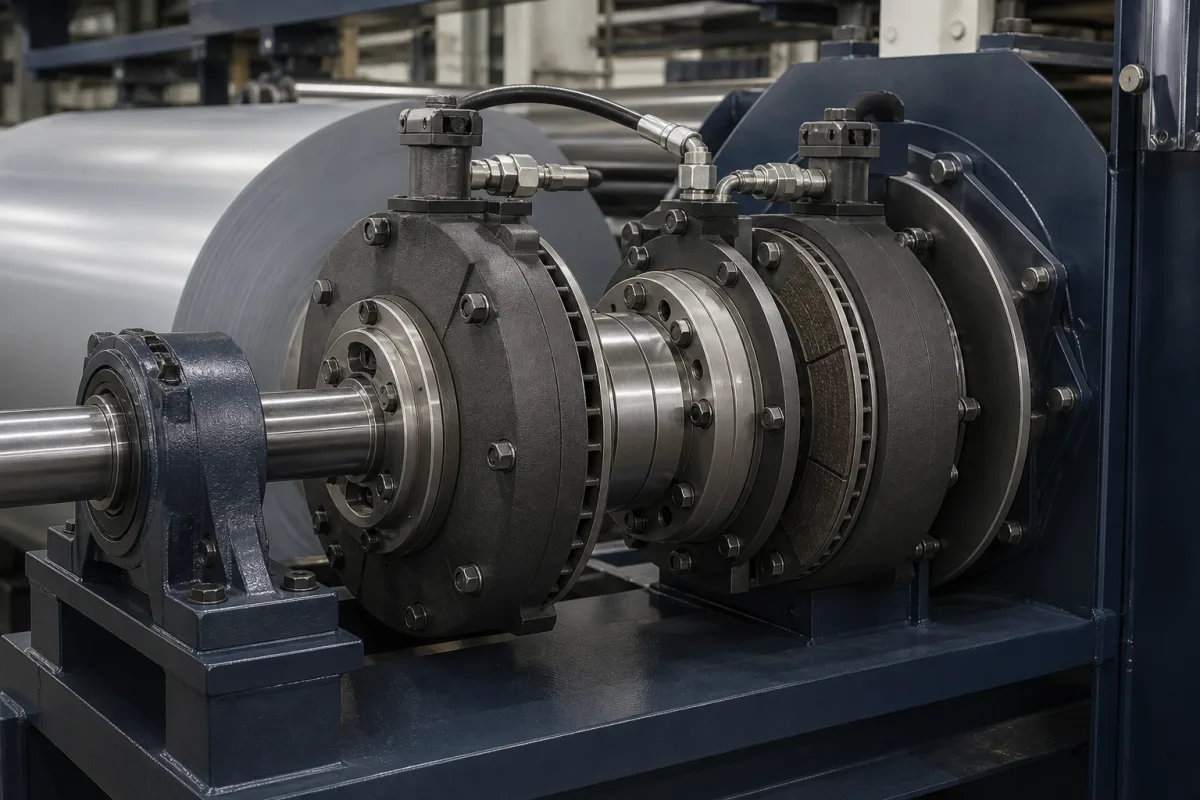
Brake/Clutch Assembly

Based on aggregated insights from multiple verified factory profiles within the CNFX directory, the standard Brake/Clutch Assembly used in the Machinery and Equipment Manufacturing sector typically supports operational capacities ranging from standard industrial configurations to heavy-duty production requirements.

Technical Definition & Core Assembly

A canonical Brake/Clutch Assembly is characterized by the integration of Friction Discs/Plates and Pressure Plate. In industrial production environments, manufacturers listed on CNFX commonly emphasize Friction Material (e.g., Sintered Metal, Ceramic, Organic) construction to support stable, high-cycle operation across diverse manufacturing scenarios.

A combined mechanical assembly that provides both braking and clutching functions within a tension control system.
Product Specifications

Technical details and manufacturing context for Brake/Clutch Assembly

Definition
The Brake/Clutch Assembly is a critical component of a Tension Control System, responsible for precisely regulating the tension of moving materials (such as webs, wires, or filaments) by engaging and disengaging the drive mechanism. It combines braking functionality to stop or slow down material movement with clutching functionality to connect or disconnect the power transmission, allowing for controlled acceleration, deceleration, and tension maintenance during processing operations.
Working Principle
The assembly operates by using friction surfaces (discs or pads) that are engaged or disengaged via mechanical, pneumatic, hydraulic, or electromagnetic actuation. When the clutch is engaged, it transmits torque from the drive to the material handling components. When the brake is applied, it creates resistance to slow or stop the material. In tension control applications, these actions are precisely modulated by a control system based on feedback from tension sensors to maintain a consistent, preset tension level.
Common Materials
Friction Material (e.g., Sintered Metal, Ceramic, Organic), Steel (Housing & Plates), Aluminum (for lightweight components), Springs (for return mechanisms)
Technical Parameters
  • Rated Torque Capacity - The maximum torque the assembly can transmit (clutch) or absorb (brake) without failure. (Nm) Standard Spec
Components / BOM
  • Friction Discs/Plates
    Create the necessary friction for torque transmission (clutch) or absorption (brake).
    Material: Sintered Metal/Ceramic/Organic Composite
  • Pressure Plate
    Applies axial force to engage the friction discs against the reaction plate.
    Material: Steel
  • Reaction Plate/Housing
    Provides a stationary surface against which the friction discs react; houses internal components.
    Material: Cast Iron or Steel
  • Actuator (e.g., Solenoid, Pneumatic Piston)
    Converts control signals (electrical/air pressure) into mechanical force to engage/disengage the assembly.
    Material: Steel, Aluminum, Copper Windings
  • Return Spring
    Disengages the assembly when actuating force is removed.
    Material: Spring Steel
Engineering Reasoning
0.5-3.5 MPa (5-35 bar) hydraulic pressure, 0-120°C operating temperature, 0-2500 N·m torque capacity
Hydraulic pressure exceeding 4.2 MPa (42 bar) causes seal extrusion failure, temperature exceeding 150°C initiates thermal degradation of friction materials, torque exceeding 2800 N·m induces shear failure in spline connections
Design Rationale: Coulomb friction principle governs torque transmission, Pascal's law governs hydraulic actuation, Arrhenius equation describes thermal degradation rate of organic friction materials (activation energy ~80 kJ/mol)
Risk Mitigation (FMEA)
Trigger Hydraulic fluid contamination with 15+ μm particulate matter exceeding ISO 4406 18/16/13 cleanliness level
Mode: Seal abrasion leading to hydraulic pressure loss below 0.3 MPa (3 bar) minimum actuation threshold
Strategy: Install dual 10 μm absolute filtration with differential pressure monitoring at 0.15 MPa (1.5 bar) trigger
Trigger Continuous slip operation exceeding 120 seconds at 1000+ N·m torque loading
Mode: Friction surface temperature rise to 300+°C causing coefficient of friction reduction from 0.35 to 0.15
Strategy: Implement thermal modeling with embedded RTD sensors triggering disengagement at 130°C surface temperature

Industry Taxonomies & Aliases

Commonly used trade names and technical identifiers for Brake/Clutch Assembly.

Applied To / Applications

This component is essential for the following industrial systems and equipment:

Industrial Ecosystem & Supply Chain DNA

Complementary Systems
Downstream Applications
Specialized Tooling

Application Fit & Sizing Matrix

Operational Limits
pressure: 0-10 bar (max operating)
other spec: Max torque: 500 Nm, Response time: <100ms, Duty cycle: Continuous
temperature: -20°C to 120°C
Media Compatibility
✓ Hydraulic oil (ISO VG 32-68) ✓ Compressed air (dry, filtered) ✓ Industrial water (non-corrosive, filtered)
Unsuitable: Abrasive slurries or corrosive chemicals
Sizing Data Required
  • Required torque capacity (Nm)
  • System pressure (bar)
  • Shaft speed (RPM)

Reliability & Engineering Risk Analysis

Failure Mode & Root Cause
Friction Material Degradation
Cause: Excessive heat generation from prolonged slipping or overloading, leading to glazing, cracking, or delamination of brake pads/clutch discs, reducing friction coefficient and torque transmission.
Hydraulic System Failure
Cause: Contamination (moisture, debris) or seal degradation in hydraulic actuation systems, causing fluid leaks, pressure loss, or corrosion that prevents proper engagement/disengagement of brakes or clutch.
Maintenance Indicators
  • Audible high-pitched squealing or grinding noises during operation, indicating worn friction surfaces or metal-to-metal contact.
  • Visual inspection reveals fluid leaks around hydraulic lines or actuators, or excessive brake dust/clutch debris accumulation beyond normal wear patterns.
Engineering Tips
  • Implement regular thermal monitoring using infrared cameras or temperature sensors to detect abnormal heat buildup during operation, allowing for adjustment of duty cycles or cooling before material degradation occurs.
  • Establish a proactive contamination control program for hydraulic systems, including scheduled fluid analysis, use of desiccant breathers on reservoirs, and strict cleanliness protocols during maintenance to prevent seal and component wear.

Compliance & Manufacturing Standards

Reference Standards
ISO 15484:2008 (Road vehicles - Brake lining assemblies) ANSI/SAE J431 (Automotive Gray Iron Castings) DIN 15434 (Clutch assemblies for motor vehicles)
Manufacturing Precision
  • Bore diameter: +/-0.025 mm
  • Parallelism of friction surfaces: 0.08 mm
Quality Inspection
  • Hardness testing (Rockwell C scale)
  • Dimensional verification with CMM (Coordinate Measuring Machine)

Factories Producing Brake/Clutch Assembly

Verified manufacturers with capability to produce this product in China

✓ 95% Supplier Capability Match Found

S Sourcing Manager from Brazil Jan 20, 2026
★★★★★
"The technical documentation for this Brake/Clutch Assembly is very thorough, especially regarding technical reliability."
Technical Specifications Verified
P Procurement Specialist from Canada Jan 17, 2026
★★★★☆
"Reliable performance in harsh Machinery and Equipment Manufacturing environments. No issues with the Brake/Clutch Assembly so far. (Delivery took slightly longer than expected, but technical support was excellent.)"
Technical Specifications Verified
T Technical Director from United States Jan 14, 2026
★★★★★
"Testing the Brake/Clutch Assembly now; the technical reliability results are within 1% of the laboratory datasheet."
Technical Specifications Verified
Verification Protocol

“Feedback is collected from verified sourcing managers during RFQ (Request for Quote) and factory evaluation processes on CNFX. These reports represent historical performance data and technical audit summaries from our B2B manufacturing network.”

6 sourcing managers are analyzing this specification now. Last inquiry for Brake/Clutch Assembly from Poland (43m ago).

Supply Chain Compatible Machinery & Devices

Heavy-Duty CNC Plasma Cutting Machine

Industrial machine for precision metal cutting using plasma arc technology

Explore Specs →
Automated Assembly Line System

Integrated production system for sequential component assembly operations

Explore Specs →
Automated Powder Coating System

Integrated industrial system for applying dry powder coatings to metal substrates.

Explore Specs →
Centrifugal Pump Impeller

Rotating component that transfers energy to fluid in centrifugal pumps.

Explore Specs →

Frequently Asked Questions

What are the main applications for this brake/clutch assembly?

This assembly is designed for tension control systems in machinery manufacturing, including web handling equipment, converting machinery, textile machines, and packaging systems where precise tension management is critical.

What friction materials are available for different operating conditions?

We offer sintered metal for high-temperature durability, ceramic for extreme wear resistance, and organic materials for smooth engagement in standard applications. Material selection depends on torque requirements, operating temperatures, and duty cycles.

How does the actuator system work in this assembly?

The assembly can be equipped with either solenoid or pneumatic piston actuators. These provide precise control over engagement pressure, allowing for adjustable torque transmission and rapid response times in tension control applications.

Can I contact factories directly on CNFX?

CNFX is an open directory, not a transaction platform. Each factory profile provides direct contact information and production details to help you initiate direct inquiries with Chinese suppliers.

Get Quote for Brake/Clutch Assembly

Request technical pricing, lead times, or customized specifications for Brake/Clutch Assembly directly from verified manufacturing units.

Your business information is encrypted and only shared with verified Brake/Clutch Assembly suppliers.

Thank you! Your message has been sent. We'll respond within 1–3 business days.

Need to Manufacture Brake/Clutch Assembly?

Connect with verified factories specializing in this product category

Add Your Factory Contact Us
Previous Product
Brake
Next Product
Brake/Drag Unit