Industry-Verified Manufacturing Data (2026)

Burner

Based on aggregated insights from multiple verified factory profiles within the CNFX directory, the standard Burner used in the Machinery and Equipment Manufacturing sector typically supports operational capacities ranging from standard industrial configurations to heavy-duty production requirements.

Technical Definition & Core Assembly

A canonical Burner is characterized by the integration of Nozzle and Air Register / Damper. In industrial production environments, manufacturers listed on CNFX commonly emphasize Stainless Steel construction to support stable, high-cycle operation across diverse manufacturing scenarios.

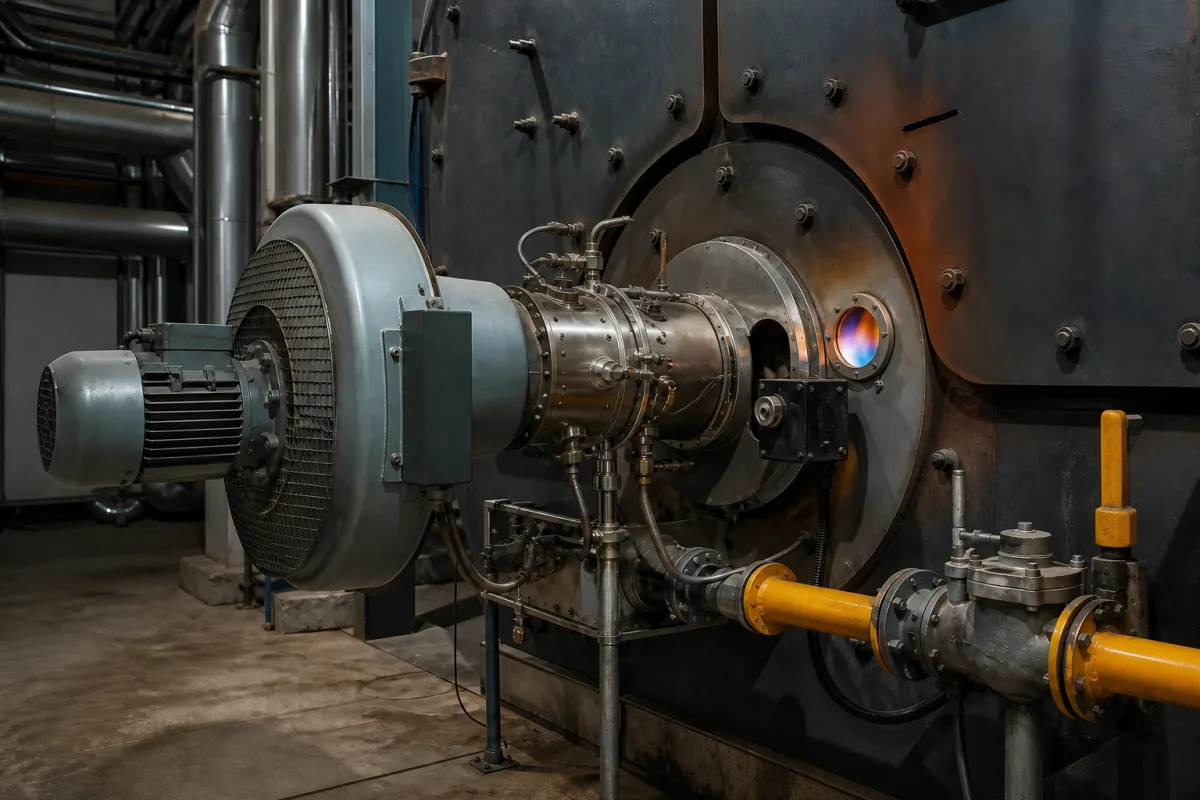
A device that mixes fuel with air and ignites it to produce a controlled flame for heating or combustion processes.
Product Specifications

Technical details and manufacturing context for Burner

Definition
A burner is a critical component within a combustion system responsible for the controlled mixing of fuel (gas, oil, or other combustibles) with an oxidizer (typically air) and the subsequent ignition of this mixture to generate a stable, directed flame. It serves as the primary interface where chemical energy in the fuel is converted into thermal energy, providing the heat source for industrial furnaces, boilers, kilns, and other thermal processing equipment.
Working Principle
Fuel is delivered under pressure to the burner nozzle. Simultaneously, air (primary and/or secondary) is introduced, often via a blower or natural draft. The burner head is designed to create turbulence, ensuring thorough mixing of fuel and air. An ignition system (spark, pilot flame, or hot surface) initiates combustion at the nozzle. The flame shape, stability, and temperature are controlled by adjusting the fuel-to-air ratio, fuel pressure, and the design of the burner head and flame retention device.
Common Materials
Stainless Steel, Cast Iron, Ceramic, High-Temperature Alloys
Technical Parameters
  • Thermal output or heat release capacity of the burner. (kW or Btu/hr) Customizable
Components / BOM
  • Nozzle
    Atomizes liquid fuel or directs gaseous fuel into the combustion chamber.
    Material: Stainless Steel or Ceramic
  • Air Register / Damper
    Controls the volume and sometimes the swirl of combustion air entering the burner.
    Material: Steel
  • Ignition Electrode
    Generates a spark to ignite the fuel-air mixture.
    Material: High-Temperature Ceramic, Metal Alloy
  • Flame Scanner / Detector
    Optical or UV sensor that confirms the presence of a flame for safety interlocks.
    Material: Stainless Steel Housing, Quartz Lens
  • Burner Head / Quarl
    Shapes and stabilizes the flame, often refractory-lined to withstand high temperatures.
    Material: Cast Iron, Refractory Ceramic
Engineering Reasoning
0.5-2.0 bar fuel pressure, 0.1-0.3 bar combustion air pressure, 800-1200°C flame temperature
Fuel pressure below 0.3 bar causes flame instability; combustion air pressure below 0.05 bar leads to incomplete combustion; flame temperature exceeding 1300°C causes refractory lining degradation
Design Rationale: Thermal fatigue from cyclic heating/cooling (ΔT > 400°C) causes crack propagation in burner nozzle; carbon deposition (C > 2% by mass) from incomplete combustion obstructs fuel-air mixing; material creep at sustained temperatures >1150°C
Risk Mitigation (FMEA)
Trigger Fuel-air ratio deviation beyond stoichiometric ±15% (λ=0.85-1.15)
Mode: Flame instability leading to pulsation combustion at 5-20 Hz frequency
Strategy: Closed-loop control with zirconia oxygen sensor and piezoelectric fuel valve with 0.1s response time
Trigger Thermal shock from water ingress (≥50 ml/min) during operation
Mode: Quenching-induced microcracking in ceramic burner tile (crack propagation >0.1 mm/cycle)
Strategy: Steam-curtain purge system activated at burner temperature <600°C with 2.0 bar steam pressure

Industry Taxonomies & Aliases

Commonly used trade names and technical identifiers for Burner.

Applied To / Applications

This component is essential for the following industrial systems and equipment:

Industrial Ecosystem & Supply Chain DNA

Complementary Systems
Downstream Applications
Specialized Tooling

Application Fit & Sizing Matrix

Operational Limits
pressure: Up to 10 bar (fuel supply), up to 2 bar (combustion air)
flow rate: 0.5-5000 m³/h (fuel gas), 1-10000 m³/h (combustion air)
temperature: Up to 2000°C (flame temperature), ambient to 800°C (operating environment)
slurry concentration: Not applicable (typically for liquid/gaseous fuels only)
Media Compatibility
✓ Natural gas ✓ Propane ✓ Light fuel oil
Unsuitable: High particulate solid fuels (e.g., coal dust without specialized design)
Sizing Data Required
  • Fuel type and heating value (MJ/kg or MJ/m³)
  • Required heat output (kW or BTU/hr)
  • Available combustion air pressure (bar or inH₂O)

Reliability & Engineering Risk Analysis

Failure Mode & Root Cause
Flame instability or flameout
Cause: Insufficient fuel pressure, clogged fuel nozzles, improper air-fuel ratio, or combustion air supply disruption.
Burner head or nozzle overheating/distortion
Cause: Inadequate cooling, excessive firing rates, poor combustion efficiency leading to localized hot spots, or refractory lining failure.
Maintenance Indicators
  • Irregular, flickering, or yellow-tipped flame (instead of steady blue flame)
  • Unusual noises such as rumbling, popping, or whistling during operation
Engineering Tips
  • Implement routine combustion analysis and tuning to maintain optimal air-fuel ratio, preventing incomplete combustion and reducing thermal stress.
  • Establish a preventive maintenance schedule for cleaning fuel nozzles, checking igniters, and inspecting refractory/insulation to avoid blockages and heat damage.

Compliance & Manufacturing Standards

Reference Standards
ISO 23553-1: Safety and control devices for oil burners and oil-burning appliances ANSI Z21.17/CSA 6.10: Domestic Gas Conversion Burners EN 267: Automatic forced draught burners for liquid fuels
Manufacturing Precision
  • Nozzle alignment: +/-0.5° angular deviation
  • Flame retention ring clearance: +/-0.25mm
Quality Inspection
  • Combustion efficiency test (CO/CO2 ratio measurement)
  • Leak pressure test (fuel and air supply systems)

Factories Producing Burner

Verified manufacturers with capability to produce this product in China

✓ 95% Supplier Capability Match Found

P Project Engineer from Brazil Feb 14, 2026
★★★★★
"The Burner we sourced perfectly fits our Machinery and Equipment Manufacturing production line requirements."
Technical Specifications Verified
S Sourcing Manager from Canada Feb 11, 2026
★★★★★
"Found 15+ suppliers for Burner on CNFX, but this spec remains the most cost-effective."
Technical Specifications Verified
P Procurement Specialist from United States Feb 08, 2026
★★★★★
"The technical documentation for this Burner is very thorough, especially regarding technical reliability."
Technical Specifications Verified
Verification Protocol

“Feedback is collected from verified sourcing managers during RFQ (Request for Quote) and factory evaluation processes on CNFX. These reports represent historical performance data and technical audit summaries from our B2B manufacturing network.”

9 sourcing managers are analyzing this specification now. Last inquiry for Burner from Brazil (14m ago).

Supply Chain Compatible Machinery & Devices

Hydraulic Press

Industrial machine using hydraulic pressure to compress, form, or assemble materials

Explore Specs →
Heavy-Duty CNC Plasma Cutting Machine

Industrial machine for precision metal cutting using plasma arc technology

Explore Specs →
Automated Assembly Line System

Integrated production system for sequential component assembly operations

Explore Specs →
Automated Powder Coating System

Integrated industrial system for applying dry powder coatings to metal substrates.

Explore Specs →

Frequently Asked Questions

What materials are best for high-temperature industrial burner applications?

Stainless steel and high-temperature alloys offer optimal durability and heat resistance for industrial burners, while cast iron provides cost-effective strength and ceramic components enhance thermal efficiency in specific configurations.

How does a flame scanner/detector improve burner safety?

Flame scanners continuously monitor burner ignition and flame presence, automatically shutting off fuel supply if flame failure is detected, preventing dangerous fuel accumulation and ensuring safe operation in industrial settings.

What maintenance do industrial burner nozzles require?

Regular inspection and cleaning of burner nozzles is essential to prevent clogging from fuel impurities, ensure proper fuel-air mixture, maintain flame stability, and optimize combustion efficiency in machinery applications.

Can I contact factories directly on CNFX?

CNFX is an open directory, not a transaction platform. Each factory profile provides direct contact information and production details to help you initiate direct inquiries with Chinese suppliers.

Get Quote for Burner

Request technical pricing, lead times, or customized specifications for Burner directly from verified manufacturing units.

Your business information is encrypted and only shared with verified Burner suppliers.

Thank you! Your message has been sent. We'll respond within 1–3 business days.

Need to Manufacture Burner?

Connect with verified factories specializing in this product category

Add Your Factory Contact Us
Previous Product
Bullet Seating and Crimping Press
Next Product
Burner Head