Industry-Verified Manufacturing Data (2026)

Circulation Fans

Based on aggregated insights from multiple verified factory profiles within the CNFX directory, the standard Circulation Fans used in the Machinery and Equipment Manufacturing sector typically supports operational capacities ranging from standard industrial configurations to heavy-duty production requirements.

Technical Definition & Core Assembly

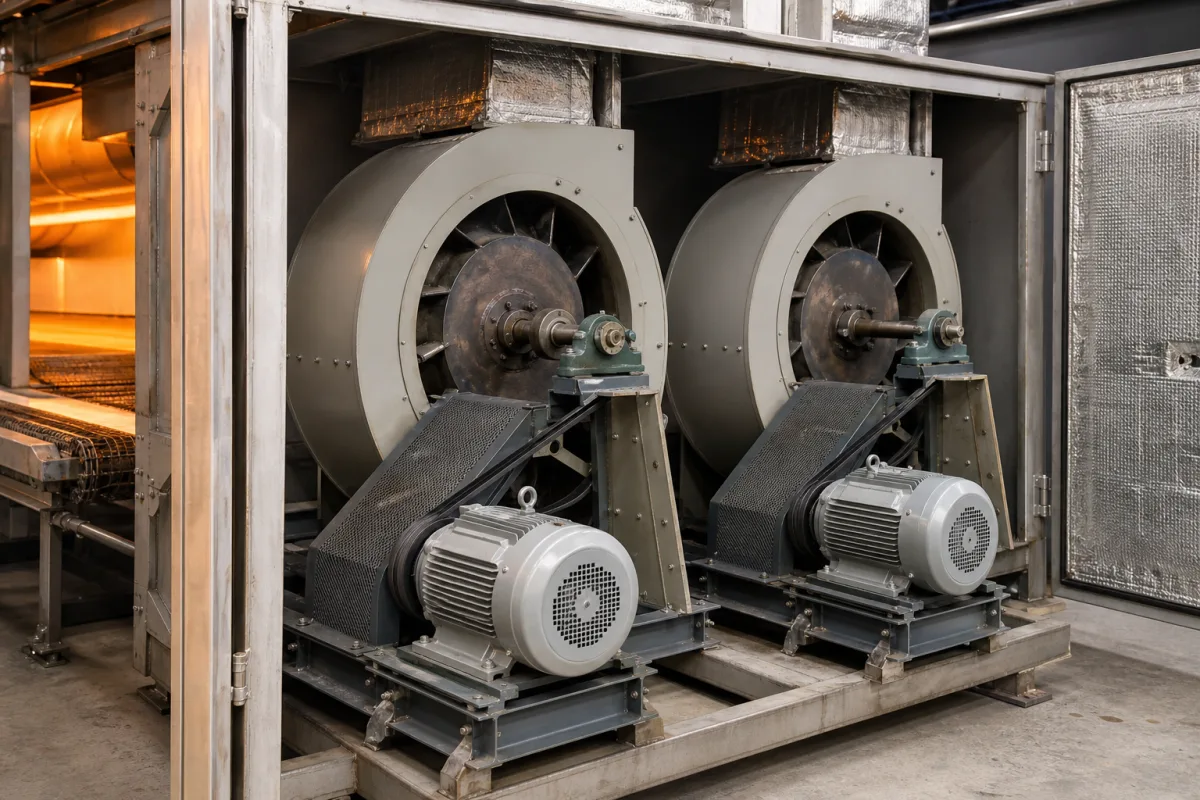
A canonical Circulation Fans is characterized by the integration of Fan Blades and Motor. In industrial production environments, manufacturers listed on CNFX commonly emphasize Stainless steel construction to support stable, high-cycle operation across diverse manufacturing scenarios.

Mechanical devices within drying ovens that circulate hot air to ensure uniform temperature distribution and efficient moisture removal.
Product Specifications

Technical details and manufacturing context for Circulation Fans

Definition
Circulation fans are critical components of drying ovens that actively move heated air throughout the chamber. They create consistent airflow patterns that prevent temperature stratification, eliminate hot/cold spots, and accelerate the evaporation process by continuously exposing materials to dry air. This ensures uniform drying results across all product surfaces and optimizes energy efficiency.
Working Principle
Electric motors drive fan blades that push heated air in controlled patterns throughout the oven chamber. The fans create turbulent or laminar airflow (depending on design) that continuously exchanges air at the material surface, carrying away moisture vapor while maintaining consistent temperature distribution. They work in coordination with heating elements and control systems to maintain optimal drying conditions.
Common Materials
Stainless steel, Aluminum alloy, Heat-resistant polymers
Technical Parameters
  • Fan diameter and blade dimensions that determine airflow capacity (mm) Customizable
Components / BOM
  • Fan Blades
    Create airflow by displacing air when rotating
    Material: Stainless steel or aluminum
  • Motor
    Provides rotational power to drive the fan blades
    Material: Copper windings, steel housing
  • Motor Housing
    Protects motor from heat and contaminants
    Material: Heat-resistant steel or aluminum
  • Shaft
    Transmits torque from motor to fan blades
    Material: Stainless steel
  • Bearings
    Support rotation with minimal friction
    Material: Ceramic or high-temperature steel
Engineering Reasoning
0.5-2.5 m/s air velocity at 50-250°C, 0.1-1.0 kPa static pressure
Bearing temperature exceeding 120°C, blade tip deflection >3 mm, motor winding insulation breakdown at 180°C
Design Rationale: Thermal expansion mismatch between aluminum blades (23.1 μm/m·K) and steel shaft (11.8 μm/m·K) causing bearing seizure; aerodynamic flutter at Reynolds numbers >10^5 leading to resonant vibration
Risk Mitigation (FMEA)
Trigger Voltage unbalance exceeding 2% between phases
Mode: Asymmetric magnetic flux inducing 120 Hz vibration in motor stator
Strategy: Three-phase voltage monitoring relay with 1% sensitivity cutoff
Trigger Particulate accumulation >150 g/m² on fan blades
Mode: Mass imbalance generating 8× centrifugal force at 1800 RPM
Strategy: Hydrophobic nanocoatings with 15° contact angle reducing adhesion by 70%

Industry Taxonomies & Aliases

Commonly used trade names and technical identifiers for Circulation Fans.

Applied To / Applications

This component is essential for the following industrial systems and equipment:

Industrial Ecosystem & Supply Chain DNA

Complementary Systems
Downstream Applications
Specialized Tooling

Application Fit & Sizing Matrix

Operational Limits
pressure: Atmospheric to 1.5 bar gauge (22 psi) for standard industrial ovens; low-pressure operation only
flow rate: 500-50,000 CFM depending on oven volume and air exchange requirements
temperature: Typically 50-300°C (122-572°F), with high-temp variants up to 500°C (932°F) for specialized ovens
slurry concentration: Not applicable - designed for clean air/gas only; particulate concentration <5 mg/m³
Media Compatibility
✓ Hot air (dry process gases) ✓ Nitrogen/inert atmosphere ✓ Low-humidity exhaust air
Unsuitable: Corrosive or abrasive particulate-laden environments (e.g., chemical fume, sand blasting exhaust)
Sizing Data Required
  • Oven chamber volume (m³ or ft³)
  • Required air changes per hour (ACH)
  • Maximum operating temperature (°C or °F)

Reliability & Engineering Risk Analysis

Failure Mode & Root Cause
Bearing failure
Cause: Inadequate lubrication, contamination, misalignment, or excessive vibration leading to wear, overheating, and eventual seizure or fatigue spalling.
Imbalance and vibration
Cause: Accumulation of debris on fan blades, corrosion, blade damage, or improper installation causing uneven mass distribution, leading to increased stress on bearings and structural components.
Maintenance Indicators
  • Excessive vibration or unusual audible noise (e.g., grinding, rattling) indicating bearing wear or imbalance.
  • Overheating of motor or housing, often accompanied by burning smells or thermal discoloration, signaling lubrication failure or electrical issues.
Engineering Tips
  • Implement a regular lubrication schedule using manufacturer-recommended grease/oil, and monitor bearing temperatures and vibration levels with predictive maintenance tools (e.g., vibration analysis).
  • Conduct periodic cleaning and inspection of fan blades and housing to prevent debris buildup, ensure proper alignment during installation, and balance blades dynamically after any maintenance or damage repair.

Compliance & Manufacturing Standards

Reference Standards
ISO 5801:2017 - Industrial fans - Performance testing using standardized airways ANSI/AMCA 210-16 - Laboratory Methods of Testing Fans for Certified Aerodynamic Performance Rating CE EN 60335-2-80:2015 - Household and similar electrical appliances - Safety - Particular requirements for fans
Manufacturing Precision
  • Blade balance: +/- 0.5 g at each blade tip
  • Motor shaft runout: ≤ 0.05 mm TIR
Quality Inspection
  • Vibration analysis test (ISO 10816-3)
  • Electrical safety test (dielectric strength and insulation resistance)

Factories Producing Circulation Fans

Verified manufacturers with capability to produce this product in China

✓ 98% Supplier Capability Match Found

S Sourcing Manager from Singapore Feb 05, 2026
★★★★★
"Reliable performance in harsh Machinery and Equipment Manufacturing environments. No issues with the Circulation Fans so far."
Technical Specifications Verified
P Procurement Specialist from Germany Feb 02, 2026
★★★★☆
"Testing the Circulation Fans now; the technical reliability results are within 1% of the laboratory datasheet. (Delivery took slightly longer than expected, but technical support was excellent.)"
Technical Specifications Verified
T Technical Director from Brazil Jan 30, 2026
★★★★★
"Impressive build quality. Especially the technical reliability is very stable during long-term operation."
Technical Specifications Verified
Verification Protocol

“Feedback is collected from verified sourcing managers during RFQ (Request for Quote) and factory evaluation processes on CNFX. These reports represent historical performance data and technical audit summaries from our B2B manufacturing network.”

17 sourcing managers are analyzing this specification now. Last inquiry for Circulation Fans from India (1h ago).

Supply Chain Compatible Machinery & Devices

Hydraulic Press

Industrial machine using hydraulic pressure to compress, form, or assemble materials

Explore Specs →
Heavy-Duty CNC Plasma Cutting Machine

Industrial machine for precision metal cutting using plasma arc technology

Explore Specs →
Automated Assembly Line System

Integrated production system for sequential component assembly operations

Explore Specs →
Automated Powder Coating System

Integrated industrial system for applying dry powder coatings to metal substrates.

Explore Specs →

Frequently Asked Questions

What materials are used in industrial circulation fans for high-temperature applications?

Our circulation fans are constructed from durable materials including stainless steel for corrosion resistance, aluminum alloy for lightweight strength, and heat-resistant polymers that maintain integrity in continuous high-temperature drying oven environments.

How do circulation fans improve drying oven efficiency?

Circulation fans ensure uniform air distribution throughout the drying chamber, eliminating hot/cold spots and promoting consistent moisture removal. This reduces drying times, improves product quality, and lowers energy consumption compared to ovens without proper air circulation.

What maintenance is required for industrial oven circulation fans?

Regular maintenance includes bearing lubrication, inspection of fan blades for wear or buildup, motor performance checks, and cleaning of components to prevent contamination. Proper maintenance extends service life and maintains optimal airflow performance in demanding industrial environments.

Can I contact factories directly on CNFX?

CNFX is an open directory, not a transaction platform. Each factory profile provides direct contact information and production details to help you initiate direct inquiries with Chinese suppliers.

Get Quote for Circulation Fans

Request technical pricing, lead times, or customized specifications for Circulation Fans directly from verified manufacturing units.

Your business information is encrypted and only shared with verified Circulation Fans suppliers.

Thank you! Your message has been sent. We'll respond within 1–3 business days.

Need to Manufacture Circulation Fans?

Connect with verified factories specializing in this product category

Add Your Factory Contact Us
Previous Product
Circulation Fan
Next Product
Clamping Arm