Industry-Verified Manufacturing Data (2026)

Drive System

Based on aggregated insights from multiple verified factory profiles within the CNFX directory, the standard Drive System used in the Machinery and Equipment Manufacturing sector typically supports operational capacities ranging from standard industrial configurations to heavy-duty production requirements.

Technical Definition & Core Assembly

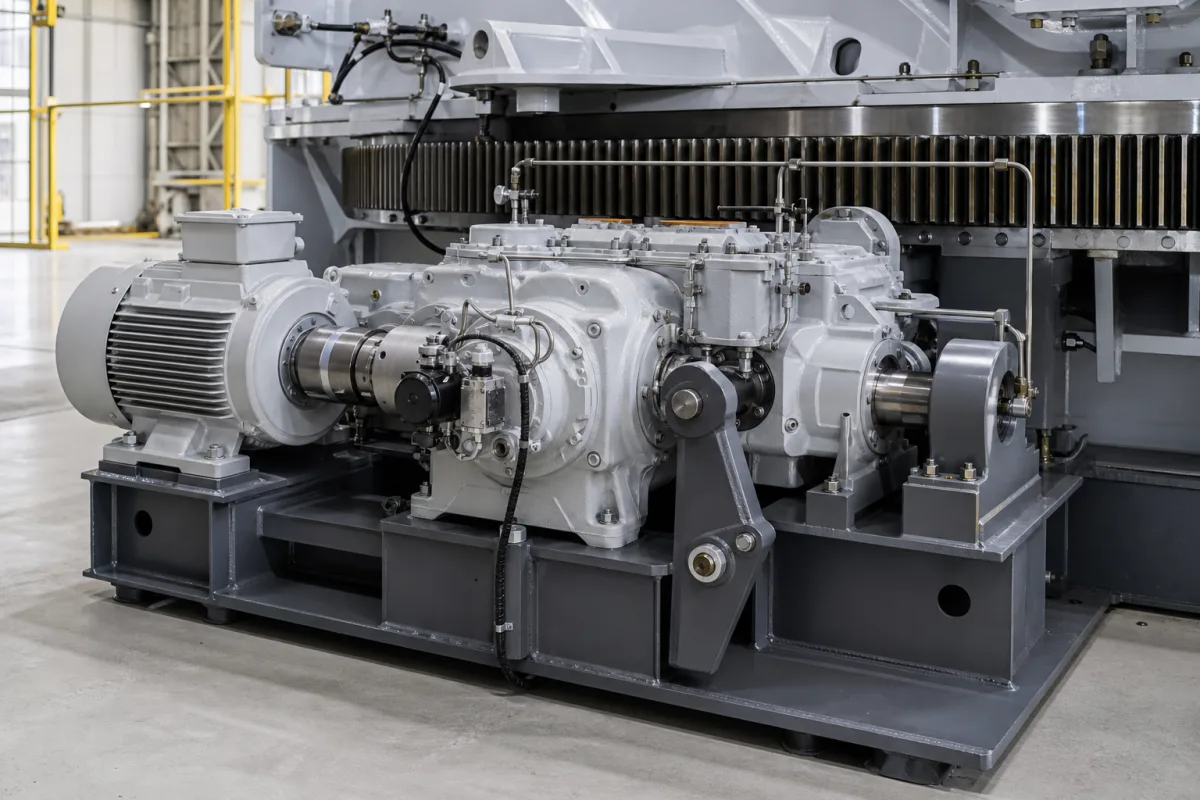
A canonical Drive System is characterized by the integration of Drive Motor and Gearbox/Transmission. In industrial production environments, manufacturers listed on CNFX commonly emphasize Alloy Steel construction to support stable, high-cycle operation across diverse manufacturing scenarios.

The propulsion mechanism that provides controlled movement to the molten metal transfer car along its designated track or path.
Product Specifications

Technical details and manufacturing context for Drive System

Definition
A specialized mechanical system designed to propel and control the movement of a molten metal transfer car within industrial foundry or metal processing environments. This system enables precise positioning of the car for loading, transfer, and unloading of molten metal between furnaces, ladles, and casting stations while ensuring operational safety and reliability under extreme thermal conditions.
Working Principle
Typically consists of an electric motor or hydraulic system that transmits torque through a gearbox or transmission to drive wheels or tracks. The system includes speed control mechanisms, braking systems, and often position feedback sensors to enable precise movement control along fixed or flexible paths within the facility.
Common Materials
Alloy Steel, Heat-Resistant Cast Iron, High-Temperature Lubricants
Technical Parameters
  • Motor power rating for propulsion under full load conditions (kW) Standard Spec
Components / BOM
  • Drive Motor
    Provides rotational power to the transmission system
    Material: Insulated copper windings, steel housing
  • Gearbox/Transmission
    Converts motor speed to appropriate torque for wheel rotation
    Material: Hardened alloy steel gears, cast iron housing
  • Drive Wheels
    Transfer rotational motion to linear movement along tracks
    Material: Heat-treated steel with high-temperature resistant tread
  • Braking System
    Provides controlled stopping and holding capability
    Material: Friction materials, steel calipers/drums
  • Electric Motor
    Provides primary rotational power to the system
    Material: Steel/Copper
  • Gearbox
    Reduces motor speed and increases torque output
    Material: Cast Iron/Steel
  • Drive Shaft
    Transmits rotational motion from gearbox to pan drum
    Material: Alloy Steel
  • Coupling
    Connects drive shaft to pan drum while allowing for minor misalignment
    Material: Steel/Rubber
  • Speed Controller
    Regulates and adjusts the rotational speed of the system
    Material: Electronic Components/Plastic
Engineering Reasoning
0.5-2.5 m/s linear velocity, 50-1500 N·m torque output
Exceeding 3.0 m/s linear velocity or 1800 N·m torque for >30 seconds
Design Rationale: Bearing seizure due to lubricant film breakdown at 120°C, exceeding SAE 30 oil's flash point of 204°C but causing viscosity drop to <10 cSt
Risk Mitigation (FMEA)
Trigger Track misalignment exceeding 2 mm/m over 5 m span
Mode: Gear tooth pitting at pitch line due to edge loading
Strategy: Laser-aligned track installation with 0.5 mm/m tolerance and crowned gear teeth (0.02 mm/mm crowning)
Trigger Ambient temperature cycling from 20°C to 80°C daily
Mode: Thermal expansion mismatch causing motor coupling misalignment of 0.3 mm
Strategy: Bimetallic expansion compensator with 17 ppm/°C Invar alloy element

Industry Taxonomies & Aliases

Commonly used trade names and technical identifiers for Drive System.

Applied To / Applications

This component is essential for the following industrial systems and equipment:

Industrial Ecosystem & Supply Chain DNA

Complementary Systems
Downstream Applications
Specialized Tooling

Application Fit & Sizing Matrix

Operational Limits
pressure: Not applicable (drive system operates in atmospheric conditions)
other spec: Track load capacity: 50-500 tons, Speed range: 0-30 m/min, Ingress protection: IP65 minimum, Duty cycle: Continuous operation with 100% start-stop frequency capability
temperature: Ambient to 150°C (302°F) continuous operation, with peak tolerance up to 200°C (392°F) for short durations
Media Compatibility
✓ Molten aluminum transfer (700-750°C) ✓ Steel ladle car operations (ambient to 1600°C with thermal shielding) ✓ Continuous casting machine transfer systems
Unsuitable: Submerged or direct contact with molten slag (highly corrosive/abrasive particulate environment)
Sizing Data Required
  • Total loaded car weight (including molten metal payload)
  • Required travel speed and acceleration/deceleration profile
  • Track configuration (straight/curved sections, gradients, rail type)

Reliability & Engineering Risk Analysis

Failure Mode & Root Cause
Bearing fatigue failure
Cause: Cyclic loading exceeding material endurance limit, often due to misalignment, improper lubrication, or contamination leading to subsurface cracking and spalling
Gear tooth pitting and wear
Cause: Surface fatigue from repeated Hertzian contact stresses, exacerbated by inadequate lubrication film thickness, overloading, or manufacturing defects in tooth profile
Maintenance Indicators
  • High-frequency vibration accompanied by audible whining or grinding noises from drive housing
  • Rapid temperature rise (>20°C above ambient) detected via thermal imaging on bearing housings or gearboxes
Engineering Tips
  • Implement laser shaft alignment during installation and re-alignment after major maintenance, maintaining angular misalignment below 0.1 mm/100 mm and parallel offset within 0.05 mm
  • Establish condition-based lubrication program using oil analysis to monitor viscosity, particle count, and water content, replenishing with filtered oil when degradation thresholds are exceeded

Compliance & Manufacturing Standards

Reference Standards
ISO 1940-1:2003 (Balance quality requirements for rotors) ANSI/AGMA 2000-A88 (Gear Classification and Inspection Handbook) DIN 5480-1:2006 (Involute splines based on reference diameters)
Manufacturing Precision
  • Shaft concentricity: +/-0.01mm
  • Gear tooth profile deviation: +/-0.005mm
Quality Inspection
  • Hardness testing (Rockwell C scale)
  • Vibration analysis for imbalance detection

Factories Producing Drive System

Verified manufacturers with capability to produce this product in China

✓ 96% Supplier Capability Match Found

P Project Engineer from Australia Jan 29, 2026
★★★★★
"Impressive build quality. Especially the Maximum Speed (m/min) is very stable during long-term operation."
Technical Specifications Verified
S Sourcing Manager from Singapore Jan 26, 2026
★★★★★
"As a professional in the Machinery and Equipment Manufacturing sector, I confirm this Drive System meets all ISO standards."
Technical Specifications Verified
P Procurement Specialist from Germany Jan 23, 2026
★★★★★
"Standard OEM quality for Machinery and Equipment Manufacturing applications. The Drive System arrived with full certification."
Technical Specifications Verified
Verification Protocol

“Feedback is collected from verified sourcing managers during RFQ (Request for Quote) and factory evaluation processes on CNFX. These reports represent historical performance data and technical audit summaries from our B2B manufacturing network.”

9 sourcing managers are analyzing this specification now. Last inquiry for Drive System from USA (21m ago).

Supply Chain Compatible Machinery & Devices

Heavy-Duty CNC Plasma Cutting Machine

Industrial machine for precision metal cutting using plasma arc technology

Explore Specs →
Automated Assembly Line System

Integrated production system for sequential component assembly operations

Explore Specs →
Automated Powder Coating System

Integrated industrial system for applying dry powder coatings to metal substrates.

Explore Specs →
Centrifugal Pump Impeller

Rotating component that transfers energy to fluid in centrifugal pumps.

Explore Specs →

Frequently Asked Questions

What materials make this drive system suitable for high-temperature environments?

This drive system utilizes alloy steel and heat-resistant cast iron components, combined with specialized high-temperature lubricants to ensure reliable operation in molten metal transfer applications.

What is the typical load capacity for this drive system?

The system is engineered for industrial-scale operations with rated load capacities measured in tons, designed to handle the weight of molten metal transfer cars and their contents.

How does the braking system integrate with the drive mechanism?

The braking system works in coordination with the drive motor, gearbox, and drive wheels to provide controlled stopping and positioning of the transfer car along its track, ensuring safety and precision.

Can I contact factories directly on CNFX?

CNFX is an open directory, not a transaction platform. Each factory profile provides direct contact information and production details to help you initiate direct inquiries with Chinese suppliers.

Get Quote for Drive System

Request technical pricing, lead times, or customized specifications for Drive System directly from verified manufacturing units.

Your business information is encrypted and only shared with verified Drive System suppliers.

Thank you! Your message has been sent. We'll respond within 1–3 business days.

Need to Manufacture Drive System?

Connect with verified factories specializing in this product category

Add Your Factory Contact Us
Previous Product
Drive Sprocket
Next Product
Drive System (Gear/Motor)