Editorial Technical Reference

Container Handling System

This page explains how Container Handling System is classified within Machinery and Equipment Manufacturing. Technical values and manufacturer relationships are research references; confirm the current specification and supplier evidence for each order.

Technical Definition & Core Assembly

A subsystem within an aseptic filling machine responsible for the automated movement, positioning, and transfer of sterile containers through the filling process.
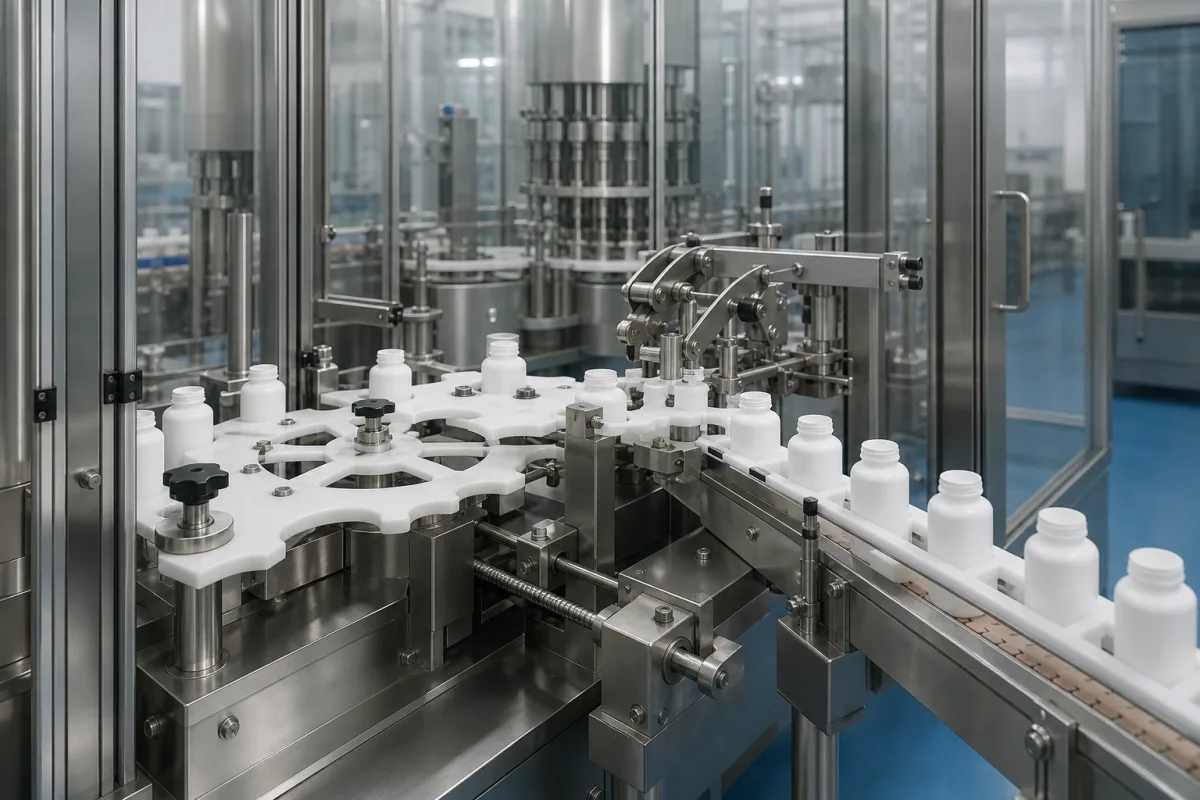
Representative product image. Confirm appearance and specifications with the manufacturer.

Product Specifications

Technical details and manufacturing context for Container Handling System

Definition
The Container Handling System is a critical component of an Aseptic Filling Machine. It manages the precise, automated conveyance of pre-sterilized containers (such as bottles, vials, or pouches) from the infeed area, through the various stations of the filling machine (including filling, stoppering/capping, and sealing zones), and finally to the outfeed for packaging. Its primary role is to maintain the sterility and integrity of the containers while ensuring accurate positioning for each processing step, directly contributing to the machine's overall efficiency and product safety. This system is designed for integration into aseptic filling lines where container dimensions, throughput, and environmental conditions must be matched to the specific application. The directory lists reference ranges for container diameter (20–120 mm), height (30–250 mm), throughput (6,000–24,000 containers per hour), positioning accuracy (±0.05 mm), repeatability (±0.02 mm), operating pressure (1.0–1.6 MPa), operating temperature (10–40 °C), relative humidity (30–70%), ingress protection (IP54–IP65 per IEC 60529), material grade (316L per ASTM A240), weight (150–350 kg), and power consumption (1.5–4.0 kW). These values are indicative and must be verified with the legal manufacturer for the actual model. Typical materials of construction include stainless steel (AISI 316L), food-grade plastics, and ceramic coatings. The system is intended for use in sterile environments and requires careful validation of sterility and cleaning procedures. Buyers should confirm compatibility with their container formats, line speed, and existing control systems. Verification questions include: What is the exact container size range for the model? What is the maximum throughput under sterile conditions? What are the utility requirements (power, compressed air, etc.)? What cleaning and sterilization methods are supported? What is the maintenance schedule for grippers and starwheels? Failure boundaries include loss of positioning accuracy, increased vibration, or contamination events, which require immediate inspection and recalibration.
Working Principle
The system typically employs a combination of conveyors (e.g., starwheels, linear conveyors), grippers, elevators, and indexing mechanisms. Containers are fed into the system, where sensors detect their presence and orientation. The handling mechanisms then precisely transfer and position each container at predetermined stations (filling, capping, etc.) with synchronized timing. The entire process is controlled by a programmable logic controller (PLC) to ensure smooth, continuous, and contamination-free movement within the sterile environment of the filling machine.
Common Materials
Stainless Steel (AISI 316L), Food-grade Plastics, Ceramic Coatings
Technical Parameters
ParameterTypical rangeNotes & selection driver
Container Diameter Range20–120 mmDetermines the size of grippers and star wheels
Container Height Range30–250 mmAffects infeed and discharge timing
Throughput Rate6000–24000 containers/hHigher rates require faster servo drives
Positioning Accuracy±0.05 mmCritical for filling nozzle alignment
Repeatability±0.02 mmEnsures consistent transfer to downstream modules
Operating Pressure1.0–1.6 MPa
Operating Temperature10–40 °COutside range may affect servo performance
Relative Humidity30–70 %Higher humidity can cause condensation on sterile surfaces
Ingress ProtectionIP54–IP65IP65 required for washdown areasIEC 60529
Material Grade316LCorrosion-resistant for sterile environmentsASTM A240
Weight150–350 kgAffects machine frame design and installation
Power Consumption1.5–4.0 kWIncludes servo drives and control system

Ranges are indicative industry figures for RFQ preparation, not a supplier commitment. Confirm every value and standard with the legal manufacturer before ordering.

Components / BOM
  • Infeed Starwheel
    Receives containers from the external conveyor and transfers them into the main handling system with precise timing and orientation.
    Material: Stainless Steel
  • Linear Conveyor Track
    Provides a guided path for containers to move between processing stations within the sterile zone.
    Material: Stainless Steel with low-friction coating
  • Container Gripper/Lifter
    Mechanism that securely holds and lifts/transfers containers between different elevation levels or conveyor lines.
    Material: Stainless Steel, Food-grade silicone
  • Indexing Mechanism
    Steps containers one station at a time in sync with the filling cycle.
  • Container Sensors
    Detect each container's presence and orientation before the handling mechanisms act.

Applied To / Applications

This component is essential for the following industrial systems and equipment:

Industrial Ecosystem & Supply Chain Structure

Complementary Systems
Downstream Applications
Specialized Tooling

Application Fit & Sizing Matrix

Operational Limits
pressure: Atmospheric to 0.5 bar overpressure for sterile barrier maintenance
other spec: Container throughput: 100-1000 units/min, positioning accuracy: ±0.5mm, cleanroom class: ISO 5 (Class 100) or better
temperature: Ambient to 60°C (sterilization cycles up to 121°C for short durations)
Media Compatibility
✓ Sterile glass vials ✓ Pre-sterilized plastic containers (PET, PP) ✓ Aseptic ready-to-fill bags
Unsuitable: Corrosive chemical environments or abrasive particulate slurries
Sizing Data Required
  • Container dimensions and weight
  • Required throughput (containers per minute)
  • Filling line layout and transfer distances

Reliability & Engineering Risk Analysis

Failure Mode & Root Cause
Structural fatigue cracking
Cause: Cyclic loading from repeated container lifts and drops, combined with stress concentrations at weld joints and structural connections, leading to crack initiation and propagation.
Hydraulic system contamination
Cause: Ingress of particulate matter, moisture, or air into hydraulic fluid due to inadequate filtration, seal degradation, or improper maintenance procedures, resulting in component wear, valve sticking, and reduced system efficiency.
Maintenance Indicators
  • Unusual grinding or screeching noises from gearboxes or bearings during operation
  • Hydraulic fluid leaks with visible drips or puddles under cylinders, hoses, or valves
Engineering Tips
  • Implement a predictive maintenance program using vibration analysis and thermography to detect early signs of bearing wear, misalignment, and electrical faults before catastrophic failure.
  • Establish strict contamination control protocols for hydraulic systems, including regular fluid analysis, proper filtration maintenance, and use of desiccant breathers on reservoirs to extend component life.

Indicative industry ranges for design and RFQ preparation. Confirm the exact figures and applicable standard with the manufacturer before specifying.

Compliance & Manufacturing Standards

Applicable Standards
ISO 3874:2017 - Series 1 freight containers - Handling and securing ANSI MH5.1.2-2016 - Safety Requirements for Intermodal Container Handling Equipment CE Marking - Machinery Directive 2006/42/EC for safety of machinery

Quoted from the published standard.

Manufacturing Precision
  • Lifting attachment alignment: +/- 1.5mm
  • Frame squareness: 0.5mm per meter
Quality Inspection
  • Load Testing - 125% rated capacity verification
  • Non-Destructive Testing (NDT) - Ultrasonic testing of critical welds

Manufacturers of Container Handling System

Manufacturer profiles associated with Container Handling System.

Sourcing Container Handling System from China?
Tell us your specification and target quantity — we will match it against manufacturer records and come back with the factories that fit.
Request manufacturers We manufacture this

Manufacturer listings support early research and capability understanding. They are not certification, ranking, or transaction guarantees.

Technical documentation
Request current drawings, revision history, and a signed specification sheet.
Manufacturing capability
Verify equipment lists, process limits, capacity, and representative production evidence.
Inspection readiness
Confirm test methods, calibrated equipment, sampling plans, and traceable reports.
Supplier transparency
Check the legal entity, factory address, ownership, certifications, and direct contacts.

CNFX does not score or rank suppliers. Buyers must verify all claims and documents with the legal manufacturer before ordering.

Supply Chain Compatible Machinery & Devices

Hydraulic Press

Industrial machine using hydraulic pressure to compress, form, or assemble materials

Explore Specs →
Heavy-Duty CNC Plasma Cutting Machine

The Heavy-Duty CNC Plasma Cutting Machine is a standalone industrial device designed for cutting conductive metals such as steel, stainless steel, aluminum, and copper alloys.

Explore Specs →
Automated Powder Coating System

Integrated industrial system for applying dry powder coatings to metal substrates.

Explore Specs →
Centrifugal Pump Impeller

The centrifugal pump impeller is a critical rotating component that converts mechanical energy from the motor into kinetic energy in fluid systems.

Explore Specs →

Frequently Asked Questions

What is the typical container diameter range for this system?

The directory lists a reference range of 20–120 mm. However, the exact range depends on the specific model and configuration. You must verify the actual diameter range with the legal manufacturer or supplier for your application.

What materials are commonly used in the construction?

Common materials include stainless steel (AISI 316L), food-grade plastics, and ceramic coatings. These are reference materials; the final selection depends on the model and the manufacturer's specifications.

What is the positioning accuracy and repeatability?

The directory lists positioning accuracy of ±0.05 mm and repeatability of ±0.02 mm. These are reference values and must be confirmed for the actual model, as they affect filling nozzle alignment and transfer consistency.

What standards are referenced for operating pressure and ingress protection?

Operating pressure is referenced to and ingress protection to IEC 60529. These standards are procurement references; they do not imply certification. Always verify compliance with the manufacturer.

Data Basis

Editorial classification, named public sources where available, and source-reviewed manufacturer records.

Preliminary Technical Classification
This page supports structured research, RFQ preparation, and supplier evaluation. It does not replace buyer-led supplier qualification, standards review, or technical approval.
Buyer enquiry

Request manufacturing insight for Container Handling System

Ask for use case, specification boundaries, supplier type, and RFQ preparation information for this product.

Where it goes
Straight to the CNFX editorial desk, and to the manufacturer if this product is linked to a claimed profile. Nothing is broadcast to a supplier list.
Your details stay here
We do not sell or rent enquiry data, and we do not add you to a mailing list. Used only to answer this request.
No commission, no middleman
CNFX is a directory. We take no cut of any order and never negotiate on a supplier's behalf.
What we don't claim
A listing is not an endorsement. Qualify every supplier and verify every figure yourself before ordering.

Your business information is used only to process this request.

Thank you! Your message has been sent. We'll respond within 1–3 business days.
Sorry, we couldn't send your message. Please try again, or email us at contact@cnfx.com.

Need to Manufacture Container Handling System?

Compare manufacturer profiles with relevant product and process capability.

Previous Product
Z-axis Ram/Spindle
Last Product
Get QuotesChat