Industry-Verified Manufacturing Data (2026)

Conveyor Belt/Roller Bed

Based on aggregated insights from multiple verified factory profiles within the CNFX directory, the standard Conveyor Belt/Roller Bed used in the Machinery and Equipment Manufacturing sector typically supports operational capacities ranging from standard industrial configurations to heavy-duty production requirements.

Technical Definition & Core Assembly

A canonical Conveyor Belt/Roller Bed is characterized by the integration of Belt Surface and Rollers. In industrial production environments, manufacturers listed on CNFX commonly emphasize Rubber construction to support stable, high-cycle operation across diverse manufacturing scenarios.

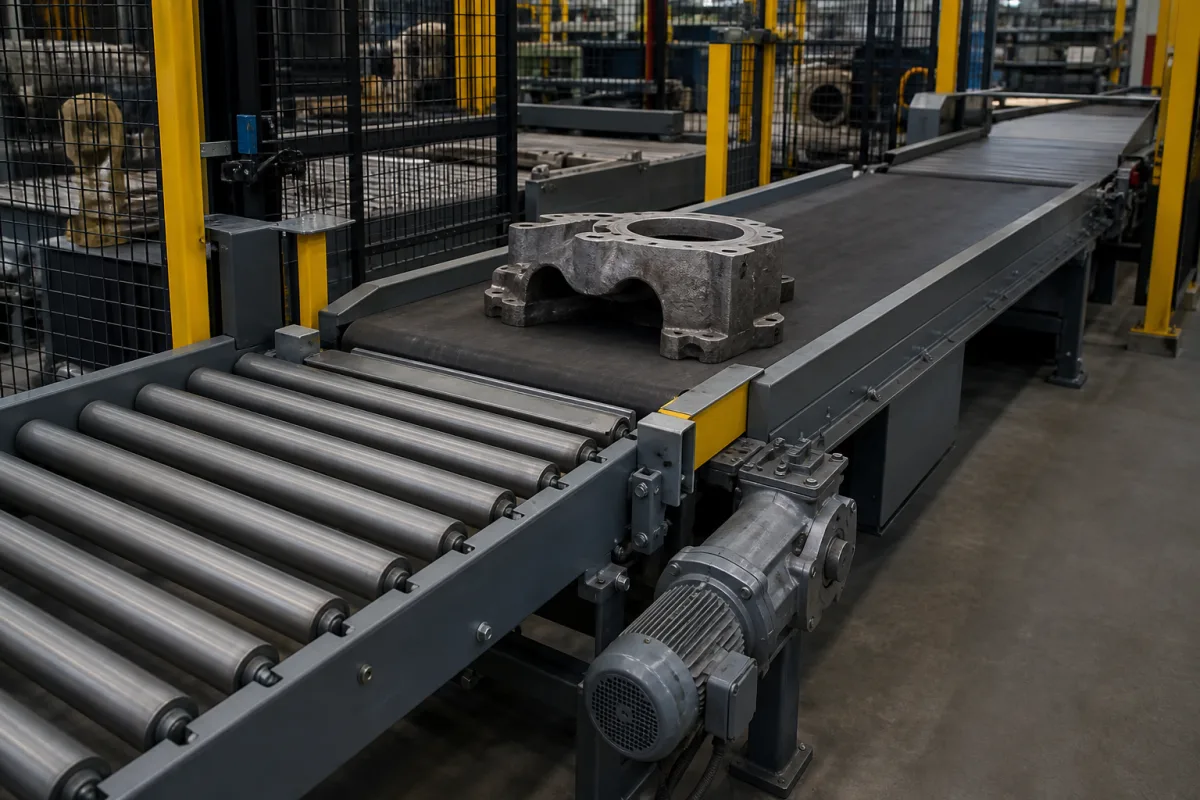
The load-bearing surface of an infeed conveyor that transports materials into processing systems.
Product Specifications

Technical details and manufacturing context for Conveyor Belt/Roller Bed

Definition
The conveyor belt/roller bed is the critical interface component of an infeed conveyor system that physically supports and moves materials from the entry point into downstream processing equipment. It consists of either a continuous belt surface or a series of rotating rollers that provide the mechanical means for material transport, ensuring controlled feeding and proper alignment of items entering the production line.
Working Principle
The conveyor belt operates through continuous loop motion driven by pulleys, while the roller bed functions through individual rollers that rotate to move materials. Both systems transfer mechanical energy from drive mechanisms to create controlled linear movement of materials along the conveyor path, with speed and direction regulated to match infeed requirements.
Common Materials
Rubber, Steel, Polyurethane, Stainless Steel
Technical Parameters
  • Width of the conveyor belt or roller bed surface that determines maximum material size capacity (mm) Per Request
Components / BOM
  • Belt Surface
    Continuous load-bearing surface for material transport
    Material: Rubber or Polyurethane
  • Rollers
    Rotating cylindrical elements that support and move materials
    Material: Steel or Stainless Steel
  • Support Frame
    Structural framework that holds the belt or rollers in position
    Material: Steel
  • Drive Mechanism
    Motor and transmission system that powers movement
    Material: Steel and Electrical Components
Engineering Reasoning
0.5-3.0 m/s belt speed, 0-1000 kg/m² load density, -20°C to +80°C ambient temperature
Belt tensile strength exceeds 25 MPa (N/mm²) for standard rubber-polyester belts, roller bearing L10 life < 1000 hours at 500 rpm
Design Rationale: Viscoelastic hysteresis heating in belt carcass exceeding 70°C causes ply separation; roller bearing fatigue spalling occurs when contact stress > 1.1 GPa exceeds material endurance limit
Risk Mitigation (FMEA)
Trigger Material impact energy exceeding 50 Joules from falling objects
Mode: Belt carcass ply delamination and cover gouging
Strategy: Install impact beds with 6 mm thick rubber cushioning at 150 mm intervals
Trigger Roller bearing contamination exceeding ISO 4406 18/16/13 cleanliness level
Mode: Abrasive wear and premature bearing cage fracture
Strategy: Integrate labyrinth seals with 0.5 mm radial clearance and positive pressure purge at 0.1 bar

Industry Taxonomies & Aliases

Commonly used trade names and technical identifiers for Conveyor Belt/Roller Bed.

Applied To / Applications

This component is essential for the following industrial systems and equipment:

Industrial Ecosystem & Supply Chain DNA

Complementary Systems
Downstream Applications
Specialized Tooling

Application Fit & Sizing Matrix

Operational Limits
pressure: Max 5 bar (roller bed), Max 2 bar (belt surface pressure)
flow rate: Up to 500 tons/hour (dependent on belt width and speed)
temperature: -20°C to 120°C (standard), up to 200°C with specialized materials
slurry concentration: Up to 60% solids by weight (with proper drainage design)
Media Compatibility
✓ Packaged goods (boxes, bags) ✓ Bulk granular materials (grains, pellets) ✓ Industrial parts (metal components, assemblies)
Unsuitable: Highly corrosive chemical slurries without specialized belt material
Sizing Data Required
  • Material flow rate (tons/hour)
  • Maximum product dimensions (length x width x height)
  • Required conveyor incline angle (degrees)

Reliability & Engineering Risk Analysis

Failure Mode & Root Cause
Belt misalignment
Cause: Improper tensioning, worn or damaged rollers, or structural misalignment of the frame causing the belt to track off-center, leading to edge wear, material spillage, and potential belt damage.
Roller bearing failure
Cause: Contamination from dust, debris, or moisture; inadequate lubrication; or excessive loading leading to increased friction, overheating, and eventual seizure or catastrophic failure of the bearing.
Maintenance Indicators
  • Audible grinding or squealing noises from rollers or bearings indicating lack of lubrication or imminent failure
  • Visible belt edge fraying, cracking, or material buildup on rollers suggesting misalignment or excessive wear
Engineering Tips
  • Implement regular laser alignment checks and automated tension monitoring systems to ensure proper belt tracking and tension, preventing premature wear and misalignment.
  • Establish a proactive lubrication schedule using sealed or self-lubricating bearings where possible, and install protective covers or seals to prevent contamination of roller bearings.

Compliance & Manufacturing Standards

Reference Standards
ISO 14890:2013 - Conveyor belts - Specification for rubber or plastics covered conveyor belts of textile construction for general use ANSI/CEMA 401-2003 - Belt Conveyors DIN 22101:2011 - Continuous conveyors - Belt conveyors for loose bulk materials - Basics for calculation and dimensioning
Manufacturing Precision
  • Bore diameter: +/-0.02mm
  • Roller concentricity: 0.1mm TIR (Total Indicator Runout)
Quality Inspection
  • Dye Penetrant Test for surface cracks in rollers and welds
  • Spectrographic Analysis for material composition verification

Factories Producing Conveyor Belt/Roller Bed

Verified manufacturers with capability to produce this product in China

✓ 92% Supplier Capability Match Found

P Project Engineer from United States Feb 18, 2026
★★★★★
"Testing the Conveyor Belt/Roller Bed now; the technical reliability results are within 1% of the laboratory datasheet."
Technical Specifications Verified
S Sourcing Manager from United Arab Emirates Feb 15, 2026
★★★★★
"Impressive build quality. Especially the technical reliability is very stable during long-term operation."
Technical Specifications Verified
P Procurement Specialist from Australia Feb 12, 2026
★★★★★
"As a professional in the Machinery and Equipment Manufacturing sector, I confirm this Conveyor Belt/Roller Bed meets all ISO standards."
Technical Specifications Verified
Verification Protocol

“Feedback is collected from verified sourcing managers during RFQ (Request for Quote) and factory evaluation processes on CNFX. These reports represent historical performance data and technical audit summaries from our B2B manufacturing network.”

19 sourcing managers are analyzing this specification now. Last inquiry for Conveyor Belt/Roller Bed from USA (33m ago).

Supply Chain Compatible Machinery & Devices

Automated Assembly Line System

Integrated production system for sequential component assembly operations

Explore Specs →
Automated Powder Coating System

Integrated industrial system for applying dry powder coatings to metal substrates.

Explore Specs →
Centrifugal Pump Impeller

Rotating component that transfers energy to fluid in centrifugal pumps.

Explore Specs →
High-Precision CNC Laser Cutting Machine

Computer-controlled industrial machine using focused laser beams to cut sheet metal with micron-level accuracy.

Explore Specs →

Frequently Asked Questions

What materials are best for conveyor belt surfaces in harsh manufacturing environments?

For harsh environments, polyurethane offers excellent abrasion resistance, stainless steel provides corrosion resistance, and rubber provides flexibility and grip. Material selection depends on specific application requirements.

How do I maintain the drive mechanism on a roller bed conveyor?

Regular maintenance includes checking belt tension, lubricating bearings, inspecting drive motors and gearboxes, and ensuring proper alignment. Follow manufacturer guidelines for specific maintenance schedules.

What factors determine the appropriate roller spacing for a conveyor bed?

Roller spacing depends on material weight, belt type, load distribution, and required support. Closer spacing provides better support for heavy or flexible materials, while wider spacing may be sufficient for rigid items.

Can I contact factories directly on CNFX?

CNFX is an open directory, not a transaction platform. Each factory profile provides direct contact information and production details to help you initiate direct inquiries with Chinese suppliers.

Get Quote for Conveyor Belt/Roller Bed

Request technical pricing, lead times, or customized specifications for Conveyor Belt/Roller Bed directly from verified manufacturing units.

Your business information is encrypted and only shared with verified Conveyor Belt/Roller Bed suppliers.

Thank you! Your message has been sent. We'll respond within 1–3 business days.

Need to Manufacture Conveyor Belt/Roller Bed?

Connect with verified factories specializing in this product category

Add Your Factory Contact Us
Previous Product
Conveyor Belt/Roller Assembly
Next Product
Conveyor Belt/Rollers