Industry-Verified Manufacturing Data (2026)

Coolant Reservoir

Based on aggregated insights from multiple verified factory profiles within the CNFX directory, the standard Coolant Reservoir used in the Machinery and Equipment Manufacturing sector typically supports operational capacities ranging from standard industrial configurations to heavy-duty production requirements.

Technical Definition & Core Assembly

A canonical Coolant Reservoir is characterized by the integration of Reservoir Body and Filler Cap. In industrial production environments, manufacturers listed on CNFX commonly emphasize Polypropylene construction to support stable, high-cycle operation across diverse manufacturing scenarios.

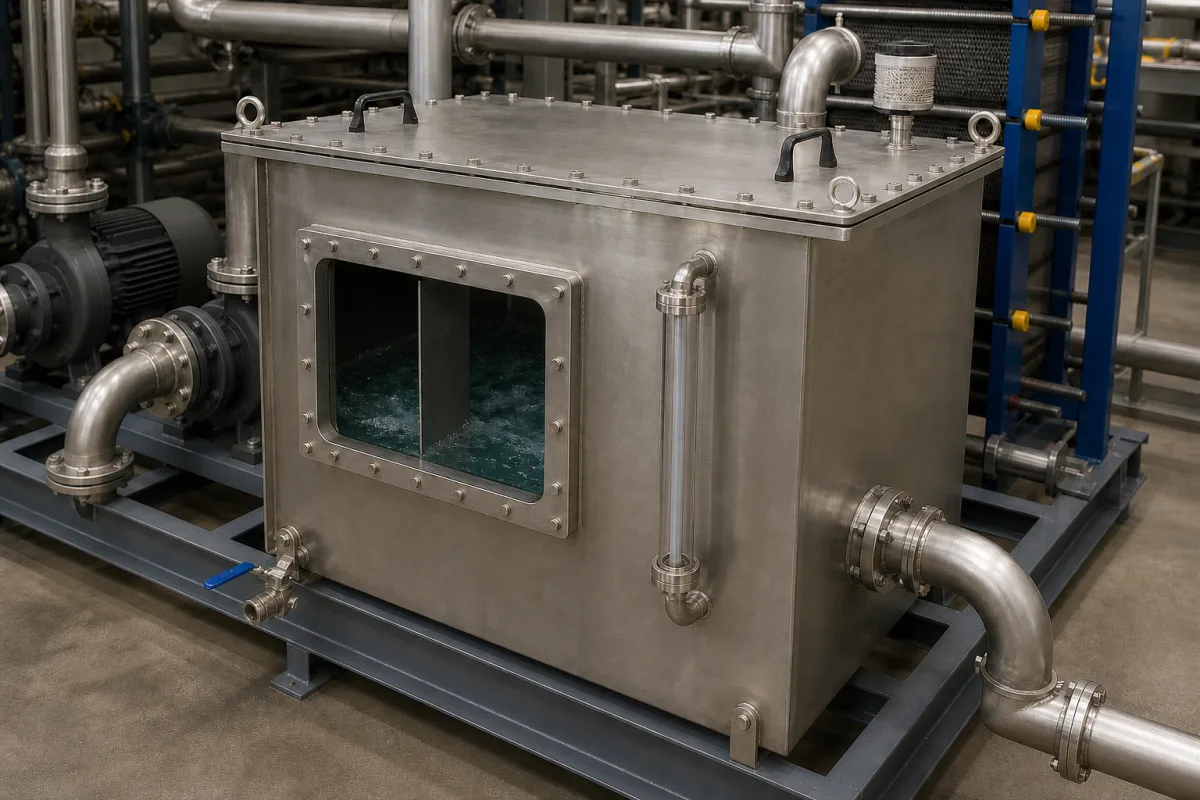
A container that stores and supplies coolant fluid within a water cooling system.
Product Specifications

Technical details and manufacturing context for Coolant Reservoir

Definition
The coolant reservoir is a critical component of water cooling systems that maintains proper coolant levels, accommodates thermal expansion and contraction of the fluid, provides a fill point for adding coolant, and helps remove air bubbles from the system to ensure efficient heat transfer and prevent cavitation in pumps.
Working Principle
The reservoir holds excess coolant that expands when heated and contracts when cooled. It maintains a constant pressure head to the pump inlet, prevents air from entering the system, and allows for easy visual monitoring of coolant levels. As the system operates, coolant expands into the reservoir when temperatures rise and returns to the system when temperatures drop.
Common Materials
Polypropylene, Polyethylene, Stainless Steel, Aluminum
Technical Parameters
  • Capacity of the reservoir to hold coolant (L) Customizable
Components / BOM
  • Reservoir Body
    Main container that holds the coolant fluid
    Material: Polypropylene or Stainless Steel
  • Filler Cap
    Sealed access point for adding coolant and maintaining system pressure
    Material: Plastic or Metal
  • Inlet Port
    Connection point for coolant return from the system
    Material: Same as body material
  • Outlet Port
    Connection point for coolant supply to the pump
    Material: Same as body material
  • Sight Glass/Level Indicator
    Visual indicator for monitoring coolant level
    Material: Transparent Plastic or Glass
  • Mounting Brackets
    Attachment points for securing the reservoir to the system
    Material: Steel or Aluminum
Engineering Reasoning
0.1-3.0 bar (gauge pressure)
4.2 bar internal pressure at 95°C coolant temperature
Design Rationale: Polypropylene polymer chain scission at 4.2 bar/95°C causing microcrack initiation and propagation through brittle fracture mechanics (stress intensity factor K_IC = 3.5 MPa·m^0.5)
Risk Mitigation (FMEA)
Trigger Ethylene glycol degradation to glycolic acid at 120°C coolant temperature
Mode: Polypropylene hydrolysis reducing tensile strength from 35 MPa to 18 MPa
Strategy: Coolant temperature sensor with PID controller maintaining 60-80°C range
Trigger Cavitation bubble collapse at pump discharge pressure of 0.8 bar
Mode: Surface pitting erosion at 0.5 mm/year material loss rate
Strategy: Reservoir baffle plate design maintaining 1.2 bar minimum internal pressure

Industry Taxonomies & Aliases

Commonly used trade names and technical identifiers for Coolant Reservoir.

Applied To / Applications

This component is essential for the following industrial systems and equipment:

Industrial Ecosystem & Supply Chain DNA

Complementary Systems
Downstream Applications
Specialized Tooling

Application Fit & Sizing Matrix

Operational Limits
pressure: 0 to 2 bar (gauge)
flow rate: Up to 50 L/min
temperature: -20°C to 120°C
slurry concentration: Not applicable for slurries; designed for clean coolant fluids only
Media Compatibility
✓ Ethylene glycol/water mixtures ✓ Propylene glycol/water mixtures ✓ Deionized water with corrosion inhibitors
Unsuitable: Hydrochloric acid or other strong corrosive chemicals
Sizing Data Required
  • Total system coolant volume (L)
  • Required reserve capacity for thermal expansion (%)
  • Maximum operating temperature differential (°C)

Reliability & Engineering Risk Analysis

Failure Mode & Root Cause
Corrosion and pitting
Cause: Chemical degradation from coolant additives, pH imbalance, or contaminants leading to material breakdown, especially in seams, welds, or low-flow areas.
Crack propagation from thermal stress
Cause: Repeated thermal cycling (heating/cooling) causing expansion/contraction stresses, particularly at mounting points or material transitions, leading to fatigue cracks.
Maintenance Indicators
  • Visible coolant leaks or persistent wet spots around the reservoir, indicating seal failure or cracks.
  • Audible gurgling or sloshing sounds during operation, suggesting air entrainment, low coolant level, or internal baffle damage.
Engineering Tips
  • Implement routine coolant analysis (pH, conductivity, inhibitor levels) and filtration to maintain chemical stability and prevent corrosive or abrasive damage.
  • Install vibration-isolating mounts and ensure proper reservoir support to minimize mechanical and thermal stress concentrations at connection points.

Compliance & Manufacturing Standards

Reference Standards
ISO 9001:2015 - Quality Management Systems ASTM D3306 - Standard Specification for Glycol Base Engine Coolant for Automobile and Light-Duty Service DIN 72779 - Coolant expansion tanks for motor vehicles
Manufacturing Precision
  • Volume capacity: +/- 2% of nominal specification
  • Thread dimensions: +/- 0.1mm for sealing interfaces
Quality Inspection
  • Pressure test: 1.5x operating pressure for 5 minutes without leakage
  • Material verification: FTIR analysis to confirm polymer composition

Factories Producing Coolant Reservoir

Verified manufacturers with capability to produce this product in China

✓ 92% Supplier Capability Match Found

P Project Engineer from United States Jan 21, 2026
★★★★★
"Reliable performance in harsh Machinery and Equipment Manufacturing environments. No issues with the Coolant Reservoir so far."
Technical Specifications Verified
S Sourcing Manager from United Arab Emirates Jan 18, 2026
★★★★★
"Testing the Coolant Reservoir now; the technical reliability results are within 1% of the laboratory datasheet."
Technical Specifications Verified
P Procurement Specialist from Australia Jan 15, 2026
★★★★★
"Impressive build quality. Especially the technical reliability is very stable during long-term operation."
Technical Specifications Verified
Verification Protocol

“Feedback is collected from verified sourcing managers during RFQ (Request for Quote) and factory evaluation processes on CNFX. These reports represent historical performance data and technical audit summaries from our B2B manufacturing network.”

17 sourcing managers are analyzing this specification now. Last inquiry for Coolant Reservoir from Thailand (42m ago).

Supply Chain Compatible Machinery & Devices

Hydraulic Press

Industrial machine using hydraulic pressure to compress, form, or assemble materials

Explore Specs →
Heavy-Duty CNC Plasma Cutting Machine

Industrial machine for precision metal cutting using plasma arc technology

Explore Specs →
Automated Assembly Line System

Integrated production system for sequential component assembly operations

Explore Specs →
Automated Powder Coating System

Integrated industrial system for applying dry powder coatings to metal substrates.

Explore Specs →

Frequently Asked Questions

What materials are best for coolant reservoirs in industrial machinery?

Polypropylene and polyethylene offer chemical resistance and cost-effectiveness for most applications, while stainless steel and aluminum provide superior durability for high-temperature or corrosive environments in machinery manufacturing.

How do I maintain proper coolant levels in my machinery reservoir?

Use the integrated sight glass or level indicator to monitor coolant levels regularly. Ensure the filler cap seals properly and check inlet/outlet ports for leaks during routine machinery maintenance schedules.

Can I replace just the mounting brackets on my existing coolant reservoir?

Yes, most industrial coolant reservoirs have replaceable mounting brackets. Ensure compatibility with your machinery's mounting points and follow manufacturer specifications for secure installation and vibration resistance.

Can I contact factories directly on CNFX?

CNFX is an open directory, not a transaction platform. Each factory profile provides direct contact information and production details to help you initiate direct inquiries with Chinese suppliers.

Get Quote for Coolant Reservoir

Request technical pricing, lead times, or customized specifications for Coolant Reservoir directly from verified manufacturing units.

Your business information is encrypted and only shared with verified Coolant Reservoir suppliers.

Thank you! Your message has been sent. We'll respond within 1–3 business days.

Need to Manufacture Coolant Reservoir?

Connect with verified factories specializing in this product category

Add Your Factory Contact Us
Previous Product
Coolant Pump
Next Product
Coolant Spray Nozzles