Industry-Verified Manufacturing Data (2026)

Cooling Pump

Based on aggregated insights from multiple verified factory profiles within the CNFX directory, the standard Cooling Pump used in the Machinery and Equipment Manufacturing sector typically supports operational capacities ranging from standard industrial configurations to heavy-duty production requirements.

Technical Definition & Core Assembly

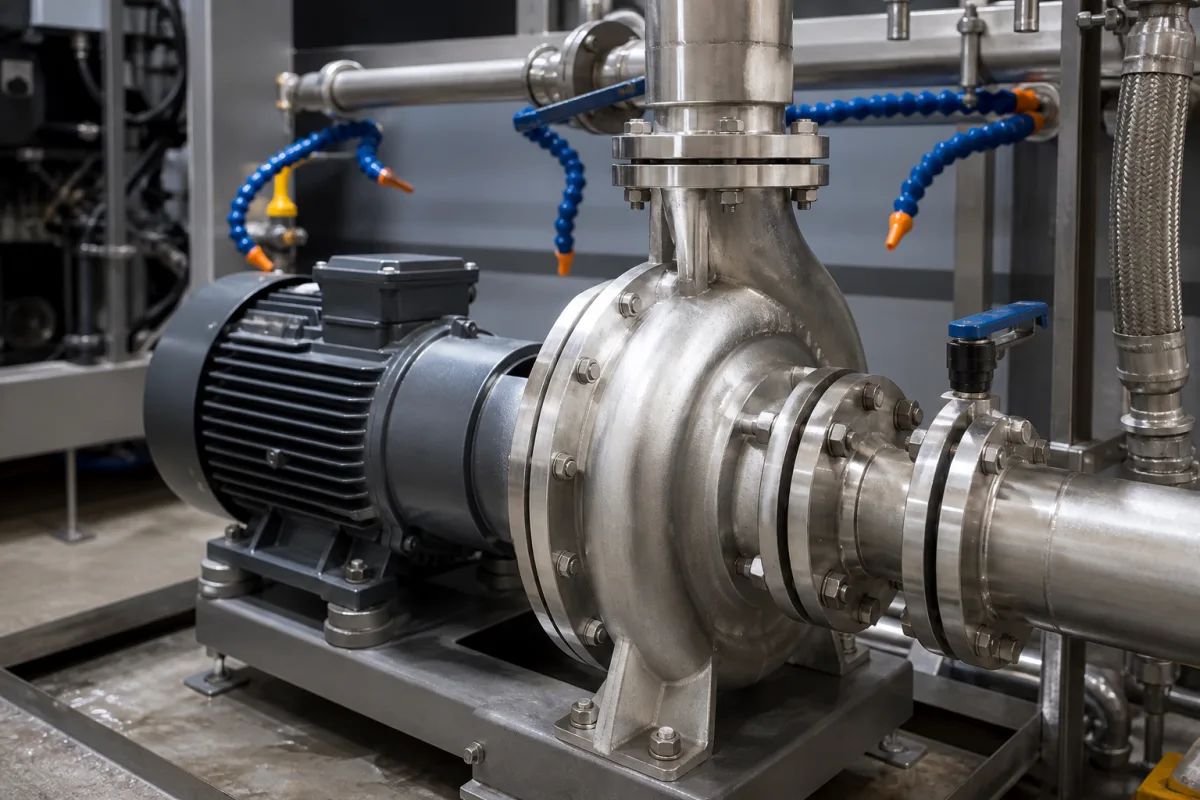
A canonical Cooling Pump is characterized by the integration of Impeller and Casing. In industrial production environments, manufacturers listed on CNFX commonly emphasize Cast Iron construction to support stable, high-cycle operation across diverse manufacturing scenarios.

A mechanical device that circulates coolant fluid within a cooling system to transfer heat away from equipment or processes.

Product Specifications

Technical details and manufacturing context for Cooling Pump

Definition
A cooling pump is a critical component of a cooling system responsible for creating flow and pressure to circulate coolant (typically water, glycol mixtures, or specialized fluids) through heat exchangers, radiators, or cooling jackets. It ensures continuous heat transfer from heat-generating equipment to cooling media, maintaining optimal operating temperatures and preventing overheating in industrial machinery, engines, HVAC systems, and process equipment.
Working Principle
The cooling pump operates by converting rotational mechanical energy (from an electric motor, engine, or other power source) into hydraulic energy. An impeller rotates within a volute casing, creating centrifugal force that draws coolant into the pump inlet and discharges it at higher pressure through the outlet. This pressurized flow circulates through the cooling circuit, absorbing heat at heat sources and releasing it at heat exchangers or cooling towers.
Common Materials
Cast Iron, Stainless Steel, Bronze, Engineering Plastics
Technical Parameters
  • Inlet and outlet connection sizes (e.g., DN25, DN40, 1", 1.5") (mm) Customizable
Components / BOM
  • Impeller
    Rotating component that transfers energy to the fluid, creating flow and pressure
    Material: Stainless Steel
  • Casing
    Houses the impeller and converts velocity energy to pressure energy
    Material: Cast Iron
  • Shaft
    Transmits torque from the motor to the impeller
    Material: Stainless Steel
  • Seal
    Prevents leakage between rotating shaft and stationary casing
    Material: Carbon/Ceramic
  • Bearing
    Supports the rotating shaft and reduces friction
    Material: Steel
Engineering Reasoning
1.5-8.0 bar differential pressure, 5-95°C coolant temperature, 0.5-15.0 m³/h flow rate
Seal failure at 120°C coolant temperature, bearing seizure at 0.1 mm shaft deflection, impeller erosion at 3.0 m/s fluid velocity
Design Rationale: Cavitation occurs when NPSHa < NPSHr + 0.5 m, thermal fatigue from ΔT > 50°C thermal cycling, mechanical seal failure at PV > 15 MPa·m/s
Risk Mitigation (FMEA)
Trigger Coolant contamination with 15% glycol concentration drop
Mode: Cavitation-induced impeller pitting and 40% efficiency loss
Strategy: Install conductivity sensors with 5 μS/cm sensitivity and automatic makeup system
Trigger Bearing lubrication failure at 10,000-hour service interval
Mode: Shaft vibration exceeding 4.5 mm/s RMS leading to mechanical seal rupture
Strategy: Implement condition monitoring with 2.0 mm/s vibration threshold and automatic shutdown

Industry Taxonomies & Aliases

Commonly used trade names and technical identifiers for Cooling Pump.

Applied To / Applications

This component is essential for the following industrial systems and equipment:

Industrial Ecosystem & Supply Chain DNA

Complementary Systems
Downstream Applications
Specialized Tooling

Application Fit & Sizing Matrix

Operational Limits
pressure: 0 to 10 bar
flow rate: Up to 500 L/min
temperature: -20°C to 120°C
slurry concentration: Up to 20% solids by weight
Media Compatibility
✓ Water-glycol mixtures ✓ Mineral oils ✓ Corrosion-inhibited water
Unsuitable: Highly abrasive slurries with sharp particles
Sizing Data Required
  • Required flow rate (L/min)
  • System pressure drop (bar)
  • Coolant viscosity at operating temperature (cP)

Reliability & Engineering Risk Analysis

Failure Mode & Root Cause
Cavitation
Cause: Insufficient net positive suction head (NPSH) due to low inlet pressure, high fluid temperature, or excessive pump speed causing vapor bubble formation and implosion on impeller surfaces.
Bearing failure
Cause: Lubrication breakdown from contamination, improper grease type/quantity, or misalignment creating excessive radial/axial loads leading to overheating and premature wear.
Maintenance Indicators
  • High-pitched whining or grinding noises from pump housing indicating cavitation or bearing degradation
  • Excessive vibration (>0.15 in/sec RMS) or visible shaft wobble suggesting imbalance, misalignment, or worn components
Engineering Tips
  • Maintain NPSH margin ≥1.3x required NPSH through proper suction piping design, maintaining fluid temperature below vapor pressure threshold, and avoiding operation at extreme flow rates
  • Implement precision laser alignment during installation/reassembly and establish quarterly vibration analysis with trending to detect early-stage bearing wear before catastrophic failure

Compliance & Manufacturing Standards

Reference Standards
ISO 5199:2016 (Centrifugal pumps - Technical specifications) ANSI/HI 1.1-1.5 (Hydraulic Institute Standards for centrifugal pumps) EN 809:1998+A1:2009 (Pumps and pump units for liquids - Common safety requirements)
Manufacturing Precision
  • Shaft runout: ≤0.05mm at coupling end
  • Impeller clearance: ±0.15mm from design specification
Quality Inspection
  • Hydrostatic pressure test (1.5x maximum working pressure)
  • Vibration analysis per ISO 10816-7 standards

Factories Producing Cooling Pump

Verified manufacturers with capability to produce this product in China

✓ 93% Supplier Capability Match Found

P Procurement Specialist from Germany Jan 27, 2026
★★★★★
"The Cooling Pump we sourced perfectly fits our Machinery and Equipment Manufacturing production line requirements."
Technical Specifications Verified
T Technical Director from Brazil Jan 24, 2026
★★★★★
"Found 13+ suppliers for Cooling Pump on CNFX, but this spec remains the most cost-effective."
Technical Specifications Verified
P Project Engineer from Canada Jan 21, 2026
★★★★★
"The technical documentation for this Cooling Pump is very thorough, especially regarding technical reliability."
Technical Specifications Verified
Verification Protocol

“Feedback is collected from verified sourcing managers during RFQ (Request for Quote) and factory evaluation processes on CNFX. These reports represent historical performance data and technical audit summaries from our B2B manufacturing network.”

11 sourcing managers are analyzing this specification now. Last inquiry for Cooling Pump from UAE (33m ago).

Supply Chain Compatible Machinery & Devices

Hydraulic Press

Industrial machine using hydraulic pressure to compress, form, or assemble materials

Explore Specs →
Heavy-Duty CNC Plasma Cutting Machine

Industrial machine for precision metal cutting using plasma arc technology

Explore Specs →
Automated Assembly Line System

Integrated production system for sequential component assembly operations

Explore Specs →
Automated Powder Coating System

Integrated industrial system for applying dry powder coatings to metal substrates.

Explore Specs →

Frequently Asked Questions

What materials are used in your cooling pumps for corrosion resistance?

Our cooling pumps are constructed with corrosion-resistant materials including stainless steel, bronze, and engineering plastics, making them suitable for various industrial fluids and environments.

How does this cooling pump maintain efficient heat transfer in industrial equipment?

The pump circulates coolant fluid through a system with precision-engineered impellers and seals, ensuring consistent flow to effectively transfer heat away from machinery and processes.

What maintenance is required for the bearing and seal components?

Regular inspection of bearings and seals is recommended to prevent leaks and ensure optimal performance. Our pumps feature accessible BOM components for easier maintenance and replacement.

Can I contact factories directly on CNFX?

CNFX is an open directory, not a transaction platform. Each factory profile provides direct contact information and production details to help you initiate direct inquiries with Chinese suppliers.

Get Quote for Cooling Pump

Request technical pricing, lead times, or customized specifications for Cooling Pump directly from verified manufacturing units.

Your business information is encrypted and only shared with verified Cooling Pump suppliers.

Thank you! Your message has been sent. We'll respond within 1–3 business days.

Need to Manufacture Cooling Pump?

Connect with verified factories specializing in this product category

Add Your Factory Contact Us
Previous Product
Cooling Jackets
Next Product
Cooling Water Header/Piping