Industry-Verified Manufacturing Data (2026)

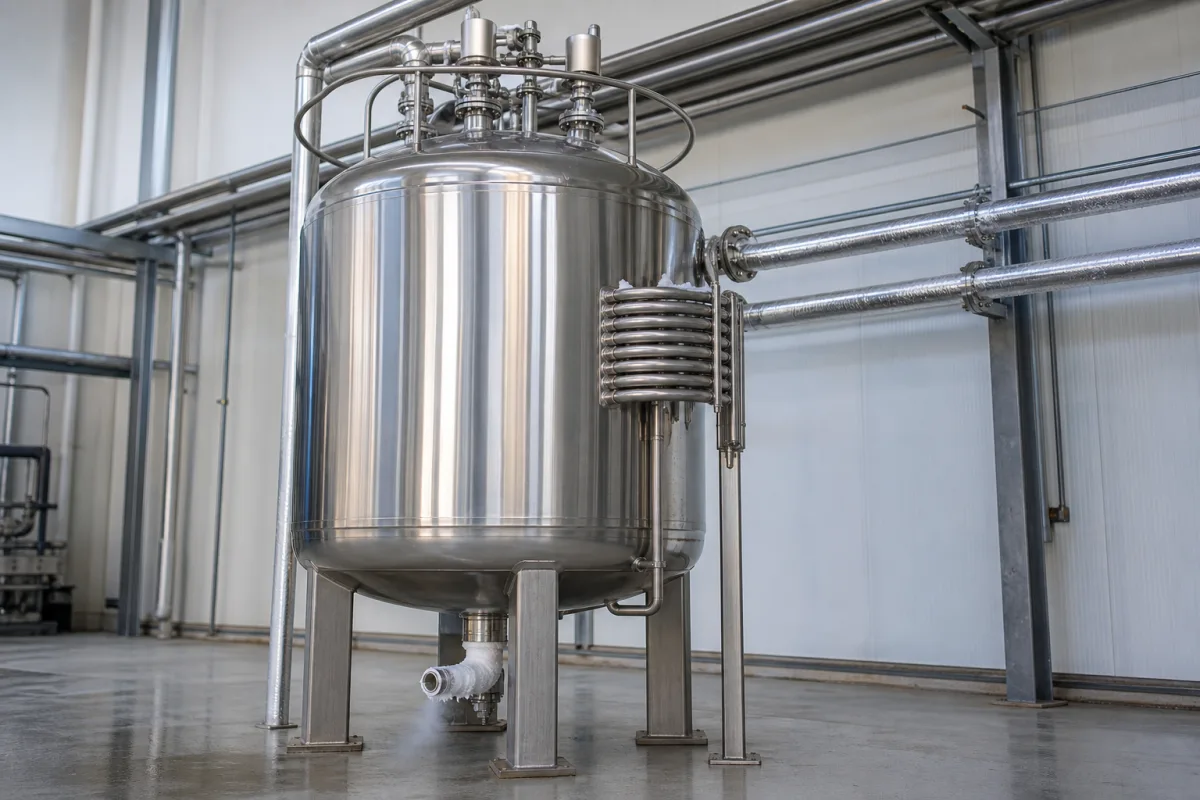
Cryogen Storage Vessel

Based on aggregated insights from multiple verified factory profiles within the CNFX directory, the standard Cryogen Storage Vessel used in the Machinery and Equipment Manufacturing sector typically supports operational capacities ranging from standard industrial configurations to heavy-duty production requirements.

Technical Definition & Core Assembly

A canonical Cryogen Storage Vessel is characterized by the integration of Inner Vessel and Outer Jacket. In industrial production environments, manufacturers listed on CNFX commonly emphasize Stainless Steel (typically 304 or 316L) construction to support stable, high-cycle operation across diverse manufacturing scenarios.

A specialized container designed to store cryogenic liquids at extremely low temperatures within a cryogenic injection system.
Product Specifications

Technical details and manufacturing context for Cryogen Storage Vessel

Definition
The Cryogen Storage Vessel is a critical component of the Cryogenic Injection System, responsible for safely containing and maintaining cryogenic liquids (such as liquid nitrogen, liquid oxygen, or liquid argon) at their required ultra-low temperatures. It ensures a stable supply of cryogen to the injection mechanism, featuring high-performance insulation to minimize boil-off and maintain pressure integrity.
Working Principle
The vessel utilizes vacuum insulation (often multi-layer superinsulation) to create a thermal barrier, significantly reducing heat transfer from the environment. It maintains the cryogen in a liquid state through pressure control. When injection is required, the internal pressure or a pump facilitates the controlled release of the cryogen into the system's delivery lines.
Common Materials
Stainless Steel (typically 304 or 316L), Nickel Alloy, High-Strength Aluminum Alloy
Technical Parameters
  • The nominal storage capacity of the vessel for cryogenic liquid. (L) Standard Spec
Components / BOM
  • Inner Vessel
    Directly contains the cryogenic liquid, constructed from materials suitable for extreme low temperatures.
    Material: Stainless Steel or Aluminum Alloy
  • Outer Jacket
    Forms the vacuum chamber with the inner vessel, providing structural support and housing the insulation.
    Material: Carbon Steel or Stainless Steel
  • Superinsulation
    Multi-layer reflective insulation within the vacuum space to minimize radiative heat transfer.
    Material: Aluminized Mylar
  • Pressure Relief Valve
    A safety device that automatically releases pressure if it exceeds a safe limit.
    Material: Stainless Steel
  • Fill/Dispense Port
    The connection point for filling the vessel with cryogen and for connecting to the injection system's delivery line.
    Material: Stainless Steel
Engineering Reasoning
0.1-2.0 MPa (1-20 bar) at 77-90 K
Material yield strength threshold: 250 MPa for 304L stainless steel at 77 K
Design Rationale: Thermal stress-induced fatigue from cyclic temperature fluctuations between 77 K and 293 K, causing crack propagation at stress concentrations exceeding 0.2% of material yield strength
Risk Mitigation (FMEA)
Trigger Vacuum jacket pressure rise above 1×10⁻³ mbar due to molecular sieve saturation
Mode: Thermal conductivity increase from 0.001 W/m·K to 0.1 W/m·K, causing boil-off rate escalation from 0.1% to 5% per day
Strategy: Dual-stage vacuum system with continuous pressure monitoring and automatic regeneration at 1×10⁻⁴ mbar threshold
Trigger Liquid nitrogen stratification creating 15 K temperature gradient across vessel height
Mode: Thermal convection currents generating 0.5 MPa pressure differentials, leading to structural resonance at 25 Hz natural frequency
Strategy: Active circulation system maintaining maximum 2 K temperature differential with piezoelectric vibration dampers tuned to 25 Hz resonance frequency

Industry Taxonomies & Aliases

Commonly used trade names and technical identifiers for Cryogen Storage Vessel.

Applied To / Applications

This component is essential for the following industrial systems and equipment:

Industrial Ecosystem & Supply Chain DNA

Complementary Systems
Downstream Applications
Specialized Tooling

Application Fit & Sizing Matrix

Operational Limits
pressure: Up to 10 bar (typical), with ASME Section VIII Div. 1 compliance
flow rate: 0.5-50 L/min (liquid phase), depending on outlet configuration
temperature: -196°C to -269°C (Liquid Nitrogen to Liquid Helium range)
slurry concentration: Not applicable for pure cryogens; for cryogenic slurries: up to 30% solids by volume
Media Compatibility
✓ Liquid Nitrogen (LN2) ✓ Liquid Argon (LAr) ✓ Liquid Oxygen (LOX)
Unsuitable: High-temperature thermal cycling environments (>200°C differentials)
Sizing Data Required
  • Required storage volume (liters)
  • Maximum allowable boil-off rate (% per day)
  • Required pressure rating for dispensing (bar)

Reliability & Engineering Risk Analysis

Failure Mode & Root Cause
Thermal stress cracking
Cause: Repeated thermal cycling during filling/emptying creates stress concentrations at weld joints and material transitions, leading to fatigue cracks in cryogenic temperatures.
Vacuum jacket degradation
Cause: Loss of vacuum insulation due to moisture ingress, perlite settling, or vacuum pump failure, resulting in excessive boil-off and pressure buildup.
Maintenance Indicators
  • Rapid increase in boil-off rate or pressure rise without operational changes
  • Visible frost formation on outer vessel surfaces indicating insulation failure
Engineering Tips
  • Implement strict thermal cycling protocols with controlled cooldown/warmup rates to minimize thermal stress
  • Maintain vacuum integrity through regular leak testing and proper desiccant/purge system maintenance

Compliance & Manufacturing Standards

Reference Standards
ISO 21029-1:2018 Cryogenic vessels - Transportable vacuum insulated vessels of not more than 1000 litres volume ANSI/CGA G-4.1:2021 Cleaning Equipment for Oxygen Service DIN EN 1251-2:2000 Cryogenic vessels - Transportable vacuum insulated vessels of not more than 1000 litres volume - Design, fabrication, inspection and testing
Manufacturing Precision
  • Outer shell concentricity: +/- 0.5 mm
  • Vacuum jacket leak rate: < 1x10^-9 mbar·L/s
Quality Inspection
  • Helium leak test for vacuum integrity
  • Ultrasonic thickness testing for inner vessel wall

Factories Producing Cryogen Storage Vessel

Verified manufacturers with capability to produce this product in China

✓ 94% Supplier Capability Match Found

P Project Engineer from United Arab Emirates Jan 05, 2026
★★★★★
"Great transparency on the Cryogen Storage Vessel components. Essential for our Machinery and Equipment Manufacturing supply chain."
Technical Specifications Verified
S Sourcing Manager from Australia Jan 02, 2026
★★★★★
"The Cryogen Storage Vessel we sourced perfectly fits our Machinery and Equipment Manufacturing production line requirements."
Technical Specifications Verified
P Procurement Specialist from Singapore Dec 30, 2025
★★★★★
"Found 25+ suppliers for Cryogen Storage Vessel on CNFX, but this spec remains the most cost-effective."
Technical Specifications Verified
Verification Protocol

“Feedback is collected from verified sourcing managers during RFQ (Request for Quote) and factory evaluation processes on CNFX. These reports represent historical performance data and technical audit summaries from our B2B manufacturing network.”

5 sourcing managers are analyzing this specification now. Last inquiry for Cryogen Storage Vessel from Brazil (1h ago).

Supply Chain Compatible Machinery & Devices

Heavy-Duty CNC Plasma Cutting Machine

Industrial machine for precision metal cutting using plasma arc technology

Explore Specs →
Automated Assembly Line System

Integrated production system for sequential component assembly operations

Explore Specs →
Automated Powder Coating System

Integrated industrial system for applying dry powder coatings to metal substrates.

Explore Specs →
Centrifugal Pump Impeller

Rotating component that transfers energy to fluid in centrifugal pumps.

Explore Specs →

Frequently Asked Questions

What temperature range can this cryogen storage vessel maintain?

Our cryogen storage vessels are designed to maintain cryogenic liquids at temperatures ranging from -196°C to -150°C (-320°F to -238°F), depending on the specific cryogen being stored.

What safety features are included in the cryogen storage vessel design?

Each vessel includes a pressure relief valve for overpressure protection, durable stainless steel construction (304 or 316L grade), and multiple layers of superinsulation to maintain temperature stability and prevent thermal transfer.

How does the superinsulation system work in these storage vessels?

The superinsulation consists of multiple reflective layers with vacuum-sealed spacing between the inner vessel and outer jacket, dramatically reducing heat transfer through radiation and convection to maintain cryogenic temperatures efficiently.

Can I contact factories directly on CNFX?

CNFX is an open directory, not a transaction platform. Each factory profile provides direct contact information and production details to help you initiate direct inquiries with Chinese suppliers.

Get Quote for Cryogen Storage Vessel

Request technical pricing, lead times, or customized specifications for Cryogen Storage Vessel directly from verified manufacturing units.

Your business information is encrypted and only shared with verified Cryogen Storage Vessel suppliers.

Thank you! Your message has been sent. We'll respond within 1–3 business days.

Need to Manufacture Cryogen Storage Vessel?

Connect with verified factories specializing in this product category

Add Your Factory Contact Us
Previous Product
Crushing Chamber
Next Product
Cryogenic Cooling Jacket