Editorial Technical Reference

Data Acquisition & Processing Unit

This page explains how Data Acquisition & Processing Unit is classified within Machinery and Equipment Manufacturing. Technical values and manufacturer relationships are research references; confirm the current specification and supplier evidence for each order.

Technical Definition & Core Assembly

A specialized electronic component within the Automated Metrology Module responsible for collecting, digitizing, and preprocessing measurement data from sensors before transmission to the control system.
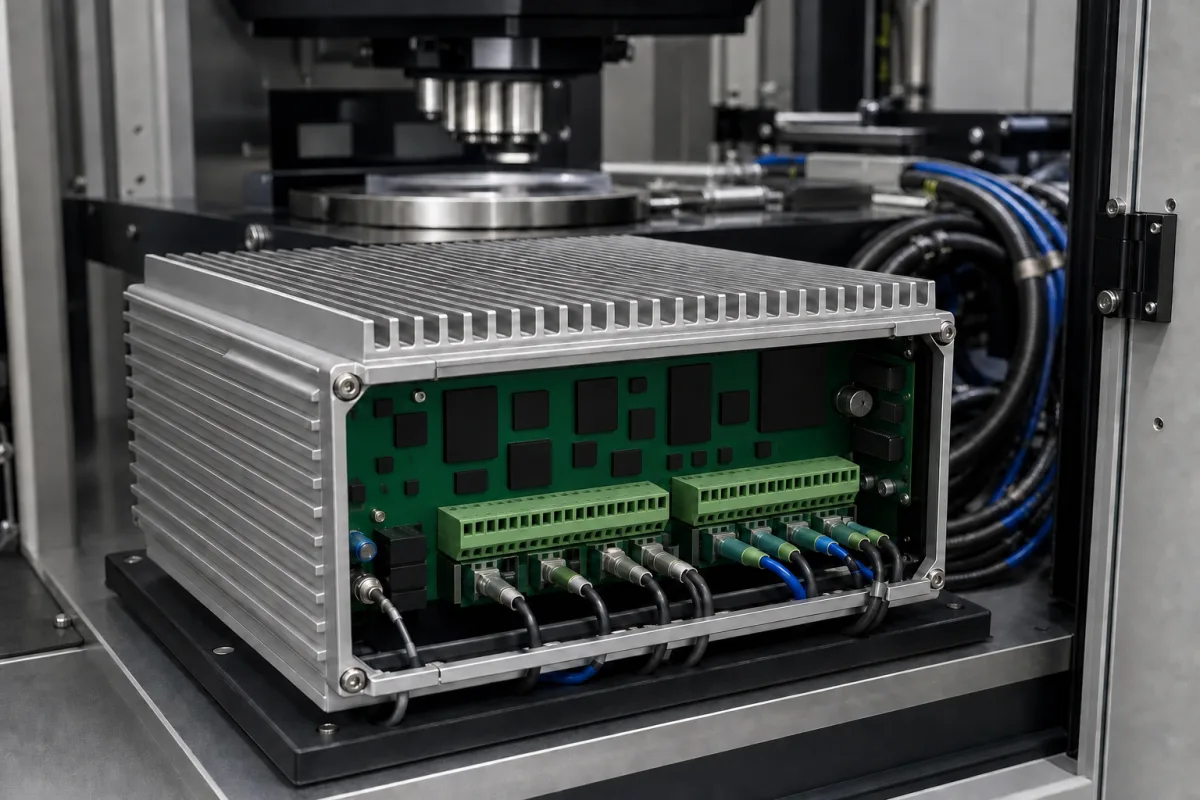
Representative product image. Confirm appearance and specifications with the manufacturer.

Product Specifications

Technical details and manufacturing context for Data Acquisition & Processing Unit

Definition
The Data Acquisition & Processing Unit is the core electronic subsystem of the Automated Metrology Module. It interfaces directly with various measurement sensors (e.g., laser scanners, vision cameras, probes). Its primary role is to acquire raw analog or digital sensor signals, convert them into precise digital data, perform initial processing (such as filtering, noise reduction, and unit conversion), and package the data for reliable communication to the module's central controller or external systems. It ensures data integrity and timeliness for quality control and process monitoring.

The unit typically features a printed circuit board (PCB) populated with electronic components (ICs, resistors, capacitors) and is housed in an aluminum alloy enclosure. It offers a sampling rate of 100–1000 kS/s, a resolution of 16–24 bits, and supports 8–32 input channels with an input voltage range of ±10 V. Accuracy is rated at ±0.05% of full scale. It operates over a temperature range of -40 to 85 °C (storage -40 to 105 °C) and humidity of 5–95% RH (non-condensing), with ingress protection ratings from IP54 to IP65. Power supply is 24 V DC (±10%), with consumption between 5 and 15 W. Communication interfaces include Ethernet and RS-485, and the unit weighs 0.5–2.0 kg.

These specifications are reference ranges for typical configurations; actual values must be confirmed with the manufacturer for the specific model and application. The unit complies with environmental standards such as IEC 60068-2-1/2 for temperature and IEC 60068-2-78 for humidity, and IEC 60529 for ingress protection. Always verify model-specific parameters and standards with the legal manufacturer or supplier before procurement.
Working Principle
The unit receives electrical signals from connected metrology sensors through input channels. An analog-to-digital converter (ADC) digitizes analog signals. A dedicated microprocessor or FPGA executes embedded firmware to process this digital data—applying calibration curves, digital filters, and algorithms to extract meaningful measurements (e.g., dimensions, positions). Processed data is formatted and transmitted via industrial communication protocols (e.g., EtherCAT, PROFINET, Ethernet/IP) to the host system. It often includes local buffering and error-checking mechanisms.
Common Materials
Printed Circuit Board (PCB), Electronic Components (ICs, resistors, capacitors), Aluminum Alloy Housing
Technical Parameters
ParameterTypical rangeNotes & selection driver
Sampling Rate100–1000 kS/sHigher rates for dynamic measurements
Resolution16–24 bitHigher resolution for finer precision
Input Channels8–32Number of simultaneous sensor inputs
Input Voltage Range±10 VTypical for industrial sensors
Accuracy±0.05 % FSIncludes linearity and repeatability
Operating Temperature-40–85 °CExtended range for harsh environmentsIEC 60068-2-1/2
Storage Temperature-40–105 °CNon-operating survival rangeIEC 60068-2-1/2
Humidity5–95 % RHNon-condensingIEC 60068-2-78
Ingress ProtectionIP54–IP65IP65 for dusty/wet environmentsIEC 60529
Supply Voltage24 ±10% V DCWide input range for industrial power
Power Consumption5–15 WDepends on channel count and speed
Communication InterfaceEthernet, RS-485Real-time data transferIEEE 802.3, TIA/EIA-485
Weight0.5–2.0 kgCompact design for modular integration

Ranges are indicative industry figures for RFQ preparation, not a supplier commitment. Confirm every value and standard with the legal manufacturer before ordering.

Components / BOM
  • Signal Conditioning Circuit
    Amplifies, filters, and isolates raw sensor signals to prepare them for digitization
    Material: PCB with discrete components
  • Analog-to-Digital Converter (ADC)
    Converts conditioned analog voltage signals into digital values with high precision
    Material: Integrated Circuit (IC)
  • Processing Unit (Microprocessor/FPGA)
    Executes firmware to process digital data, run algorithms, and manage communications
    Material: Semiconductor IC
  • Communication Interface
    Physical and protocol layer for transmitting processed data to external systems
    Material: PCB with transceiver ICs and connectors
  • Local Buffer Optional
    Holds measurement data on board so a busy network cannot drop samples.

Applied To / Applications

This component is essential for the following industrial systems and equipment:

Industrial Ecosystem & Supply Chain Structure

Complementary Systems
Downstream Applications
Specialized Tooling

Application Fit & Sizing Matrix

Operational Limits
pressure: 0 to 100 psi (non-pressurized enclosure)
other spec: Sampling rate: 1 kHz to 100 kHz, Input voltage: 24 VDC ±10%, IP65 rating
temperature: -20°C to +85°C operating range
Media Compatibility
✓ Clean dry air environments ✓ Non-corrosive gas measurement systems ✓ Precision optical sensor interfaces
Unsuitable: High-vibration industrial hammer mills or crushers
Sizing Data Required
  • Number of sensor input channels required
  • Maximum data sampling rate needed (Hz)
  • Communication protocol compatibility (e.g., Ethernet/IP, Profinet, Modbus TCP)

Reliability & Engineering Risk Analysis

Failure Mode & Root Cause
Sensor Drift/Calibration Loss
Cause: Environmental factors (temperature fluctuations, humidity, vibration) degrading sensor accuracy over time, or electronic component aging affecting signal integrity.
Data Corruption/Transmission Failure
Cause: Electromagnetic interference (EMI) from nearby equipment disrupting signals, or physical damage to connectors/cabling from improper installation or environmental exposure.
Maintenance Indicators
  • Inconsistent or erratic readings on the monitoring interface compared to known process values
  • Audible electrical buzzing/humming from the unit or visible signs of overheating (discoloration, burnt smell)
Engineering Tips
  • Implement regular calibration schedules using traceable standards and environmental controls (e.g., stable temperature/humidity) to maintain sensor accuracy.
  • Use shielded cables, proper grounding techniques, and physical protection (conduits, strain relief) for all connections to prevent EMI and mechanical damage.

Indicative industry ranges for design and RFQ preparation. Confirm the exact figures and applicable standard with the manufacturer before specifying.

Compliance & Manufacturing Standards

Applicable Standards
IEC 61000-6-2 Electromagnetic Compatibility CE Marking (EU Machinery Directive 2006/42/EC)

Quoted from the published standard.

Manufacturing Precision
  • Dimensional Accuracy: +/-0.05mm for mounting interfaces
  • Signal Integrity: +/-1% full-scale accuracy for analog inputs
Quality Inspection
  • Environmental Stress Testing (Temperature/Humidity/Vibration)
  • Electrical Safety Testing (Insulation Resistance/Dielectric Strength)

Manufacturers of Data Acquisition & Processing Unit

Manufacturer profiles associated with Data Acquisition & Processing Unit.

Sourcing Data Acquisition & Processing Unit from China?
Tell us your specification and target quantity — we will match it against manufacturer records and come back with the factories that fit.
Request manufacturers We manufacture this

Manufacturer listings support early research and capability understanding. They are not certification, ranking, or transaction guarantees.

Technical documentation
Request current drawings, revision history, and a signed specification sheet.
Manufacturing capability
Verify equipment lists, process limits, capacity, and representative production evidence.
Inspection readiness
Confirm test methods, calibrated equipment, sampling plans, and traceable reports.
Supplier transparency
Check the legal entity, factory address, ownership, certifications, and direct contacts.

CNFX does not score or rank suppliers. Buyers must verify all claims and documents with the legal manufacturer before ordering.

Supply Chain Compatible Machinery & Devices

Automated Powder Coating System

Integrated industrial system for applying dry powder coatings to metal substrates.

Explore Specs →
Centrifugal Pump Impeller

The centrifugal pump impeller is a critical rotating component that converts mechanical energy from the motor into kinetic energy in fluid systems.

Explore Specs →
High-Precision CNC Laser Cutting Machine

Computer-controlled industrial machine using focused laser beams to cut sheet metal with micron-level accuracy.

Explore Specs →
Industrial-Grade Hydraulic Cylinder Piston Rod

This industrial-grade piston rod is a precision-ground cylindrical component designed for use in hydraulic cylinders.

Explore Specs →

Frequently Asked Questions

What is the primary function of the Data Acquisition & Processing Unit?

It collects raw signals from metrology sensors, digitizes them, performs initial processing like filtering and calibration, and transmits the data to the control system for quality monitoring.

What communication interfaces does the unit support?

It supports Ethernet (IEEE 802.3) and RS-485 (TIA/EIA-485) for real-time data transfer. Other protocols may be available depending on the model.

What are the environmental operating limits?

The unit operates from -40 to 85 °C, with storage from -40 to 105 °C, and humidity 5–95% RH non-condensing. Ingress protection ranges from IP54 to IP65.

How should I verify the specifications for my application?

Always confirm model-specific values such as sampling rate, resolution, and standards compliance with the legal manufacturer or supplier, as the listed ranges are reference values.

Data Basis

Editorial classification, named public sources where available, and source-reviewed manufacturer records.

Preliminary Technical Classification
This page supports structured research, RFQ preparation, and supplier evaluation. It does not replace buyer-led supplier qualification, standards review, or technical approval.
Buyer enquiry

Request manufacturing insight for Data Acquisition & Processing Unit

Ask for use case, specification boundaries, supplier type, and RFQ preparation information for this product.

Where it goes
Straight to the CNFX editorial desk, and to the manufacturer if this product is linked to a claimed profile. Nothing is broadcast to a supplier list.
Your details stay here
We do not sell or rent enquiry data, and we do not add you to a mailing list. Used only to answer this request.
No commission, no middleman
CNFX is a directory. We take no cut of any order and never negotiate on a supplier's behalf.
What we don't claim
A listing is not an endorsement. Qualify every supplier and verify every figure yourself before ordering.

Your business information is used only to process this request.

Thank you! Your message has been sent. We'll respond within 1–3 business days.
Sorry, we couldn't send your message. Please try again, or email us at contact@cnfx.com.

Need to Manufacture Data Acquisition & Processing Unit?

Compare manufacturer profiles with relevant product and process capability.

Previous Product
Z-axis Ram/Spindle
Last Product
Get QuotesChat