Industry-Verified Manufacturing Data (2026)

Dispensing Valve

Based on aggregated insights from multiple verified factory profiles within the CNFX directory, the standard Dispensing Valve used in the Machinery and Equipment Manufacturing sector typically supports operational capacities ranging from standard industrial configurations to heavy-duty production requirements.

Technical Definition & Core Assembly

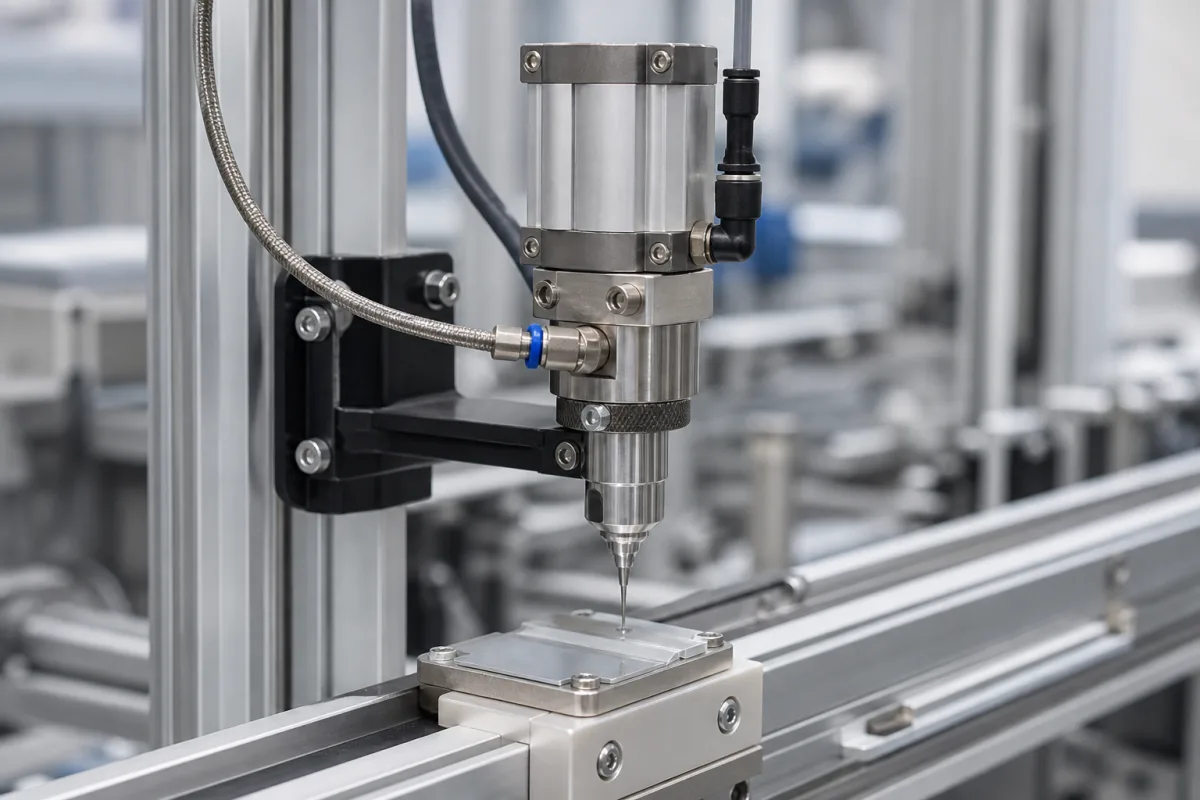
A canonical Dispensing Valve is characterized by the integration of Valve Body and Actuator (Solenoid/Pneumatic). In industrial production environments, manufacturers listed on CNFX commonly emphasize Stainless Steel (e.g., 316L) construction to support stable, high-cycle operation across diverse manufacturing scenarios.

A precision valve component that controls the release of measured quantities of feed ingredients within a metering system.
Product Specifications

Technical details and manufacturing context for Dispensing Valve

Definition
A dispensing valve is a critical component of the High-Precision Feed Ingredient Metering Module, responsible for the accurate, controlled, and repeatable discharge of pre-measured feed ingredients. It acts as the final control point, opening and closing on command to release the exact amount of material into the downstream process, ensuring precise formulation and batch consistency.
Working Principle
The valve operates by receiving an electrical or pneumatic signal from the module's control system. This signal actuates the valve mechanism (e.g., a solenoid, pneumatic piston, or rotary actuator), moving a sealing element (such as a plunger, ball, or gate) to open a flow path. When closed, the seal prevents any material from passing. The timing and duration of the open state directly control the dispensed volume, working in concert with the module's weighing or volumetric measurement system.
Common Materials
Stainless Steel (e.g., 316L), Food-Grade Plastics (e.g., PTFE, PEEK), Elastomeric Seals (e.g., EPDM, Silicone)
Technical Parameters
  • Orifice diameter, critical for determining flow rate and minimum controllable dose. (mm) Standard Spec
Components / BOM
  • Valve Body
    Forms the main structure and contains the flow path and connection ports.
    Material: Stainless Steel
  • Actuator (Solenoid/Pneumatic)
    Converts control signals (electrical/air pressure) into mechanical force to open/close the valve.
    Material: Various (Plastic, Metal, Coils)
  • Sealing Element (Plunger/Ball/Seat)
    Creates a leak-tight seal when closed and retracts to allow flow when open.
    Material: Stainless Steel, PTFE, Ceramic
  • Spring
    Provides return force to close the valve (in normally-closed designs) or assist actuation.
    Material: Stainless Steel
Engineering Reasoning
0.5-15 bar
18 bar differential pressure
Design Rationale: Cavitation-induced erosion at the valve seat due to localized pressure drop below 0.3 bar vapor pressure of the fluid
Risk Mitigation (FMEA)
Trigger Particulate contamination exceeding 25 μm in the feed stream
Mode: Seal abrasion leading to 0.1 ml/min leakage rate
Strategy: Install 10 μm absolute filtration upstream with differential pressure monitoring
Trigger Solenoid coil temperature exceeding 85°C due to continuous duty cycle
Mode: Insulation breakdown causing 5 mA ground fault current
Strategy: Implement PWM current control with thermal derating above 70°C ambient

Industry Taxonomies & Aliases

Commonly used trade names and technical identifiers for Dispensing Valve.

Applied To / Applications

This component is essential for the following industrial systems and equipment:

Industrial Ecosystem & Supply Chain DNA

Complementary Systems
Downstream Applications
Specialized Tooling

Application Fit & Sizing Matrix

Operational Limits
pressure: 0-10 bar (max operating)
flow rate: 0.1-100 L/min (adjustable)
temperature: -20°C to 150°C
slurry concentration: Up to 60% solids by weight
Media Compatibility
✓ Animal feed pellets ✓ Liquid feed additives ✓ Dry powder supplements
Unsuitable: Highly corrosive acidic solutions (pH < 2)
Sizing Data Required
  • Required flow rate (L/min)
  • Media viscosity (cP)
  • System operating pressure (bar)

Reliability & Engineering Risk Analysis

Failure Mode & Root Cause
Seal degradation and leakage
Cause: Chemical incompatibility between seal materials and dispensed fluids, compounded by thermal cycling and mechanical wear from repeated actuation cycles.
Internal clogging or flow restriction
Cause: Accumulation of particulate matter or dried/crystallized product residues due to inadequate flushing procedures, improper material compatibility, or exposure to contaminants during operation or maintenance.
Maintenance Indicators
  • Visible external leakage or weeping around valve body, stem, or connections during or after dispensing cycles.
  • Audible hissing or irregular flow noise (e.g., sputtering, gurgling) during operation, indicating partial blockage, cavitation, or internal seal failure.
Engineering Tips
  • Implement a routine preventive maintenance schedule that includes regular flushing with compatible cleaning agents to remove residues, and perform seal inspections/replacements based on cycle counts or operating hours rather than waiting for failure.
  • Ensure proper material selection for wetted parts (seals, valve body) based on chemical compatibility charts for the specific fluids dispensed, and install upstream filtration (e.g., 10–25 micron filters) to minimize particulate ingress that can cause abrasion or clogging.

Compliance & Manufacturing Standards

Reference Standards
ISO 5211:2017 - Industrial valves - Part-turn actuator attachments ANSI/ASME B16.34-2020 - Valves - Flanged, Threaded, and Welding End DIN EN 12266-1:2012 - Industrial valves - Testing of metallic valves - Part 1: Pressure tests, test procedures and acceptance criteria - Mandatory requirements
Manufacturing Precision
  • Seat Bore Diameter: +/-0.025mm
  • Valve Body Flatness: 0.05mm across sealing surface
Quality Inspection
  • Hydrostatic Pressure Test (leakage verification at 1.5x rated pressure)
  • Material Composition Verification via X-ray Fluorescence (XRF) Analysis

Factories Producing Dispensing Valve

Verified manufacturers with capability to produce this product in China

✓ 98% Supplier Capability Match Found

S Sourcing Manager from Singapore Jan 20, 2026
★★★★★
"The technical documentation for this Dispensing Valve is very thorough, especially regarding technical reliability."
Technical Specifications Verified
P Procurement Specialist from Germany Jan 17, 2026
★★★★☆
"Reliable performance in harsh Machinery and Equipment Manufacturing environments. No issues with the Dispensing Valve so far. (Delivery took slightly longer than expected, but technical support was excellent.)"
Technical Specifications Verified
T Technical Director from Brazil Jan 14, 2026
★★★★★
"Testing the Dispensing Valve now; the technical reliability results are within 1% of the laboratory datasheet."
Technical Specifications Verified
Verification Protocol

“Feedback is collected from verified sourcing managers during RFQ (Request for Quote) and factory evaluation processes on CNFX. These reports represent historical performance data and technical audit summaries from our B2B manufacturing network.”

5 sourcing managers are analyzing this specification now. Last inquiry for Dispensing Valve from Poland (31m ago).

Supply Chain Compatible Machinery & Devices

Heavy-Duty CNC Plasma Cutting Machine

Industrial machine for precision metal cutting using plasma arc technology

Explore Specs →
Automated Assembly Line System

Integrated production system for sequential component assembly operations

Explore Specs →
Automated Powder Coating System

Integrated industrial system for applying dry powder coatings to metal substrates.

Explore Specs →
Centrifugal Pump Impeller

Rotating component that transfers energy to fluid in centrifugal pumps.

Explore Specs →

Frequently Asked Questions

What materials are used in this dispensing valve to ensure food safety and durability?

The valve is constructed with 316L stainless steel for corrosion resistance, food-grade plastics like PTFE and PEEK for chemical inertness, and elastomeric seals such as EPDM or silicone to prevent contamination and ensure reliable sealing in food processing environments.

How does the dispensing valve integrate into a metering system for accurate ingredient release?

The valve works with solenoid or pneumatic actuators to precisely control the opening and closing of the sealing element (plunger, ball, or seat), allowing measured quantities of feed ingredients to be dispensed consistently, which is critical for batch accuracy and process efficiency in manufacturing.

What maintenance is required for the dispensing valve to ensure long-term performance?

Regular inspection and replacement of elastomeric seals and springs are recommended to prevent leaks and maintain accuracy. Cleaning protocols should follow industry standards, especially for food-grade applications, to avoid buildup and ensure the valve body and components remain free from contaminants.

Can I contact factories directly on CNFX?

CNFX is an open directory, not a transaction platform. Each factory profile provides direct contact information and production details to help you initiate direct inquiries with Chinese suppliers.

Get Quote for Dispensing Valve

Request technical pricing, lead times, or customized specifications for Dispensing Valve directly from verified manufacturing units.

Your business information is encrypted and only shared with verified Dispensing Valve suppliers.

Thank you! Your message has been sent. We'll respond within 1–3 business days.

Need to Manufacture Dispensing Valve?

Connect with verified factories specializing in this product category

Add Your Factory Contact Us
Previous Product
Dispensing Syringe/Barrel
Next Product
Display / Interface