Editorial Technical Reference

Feedback Encoder

This page explains how Feedback Encoder is classified within Machinery and Equipment Manufacturing. Technical values and manufacturer relationships are research references; confirm the current specification and supplier evidence for each order.

Technical Definition & Core Assembly

A sensing device that converts mechanical motion into electrical signals to provide position, speed, and direction feedback in servo systems.
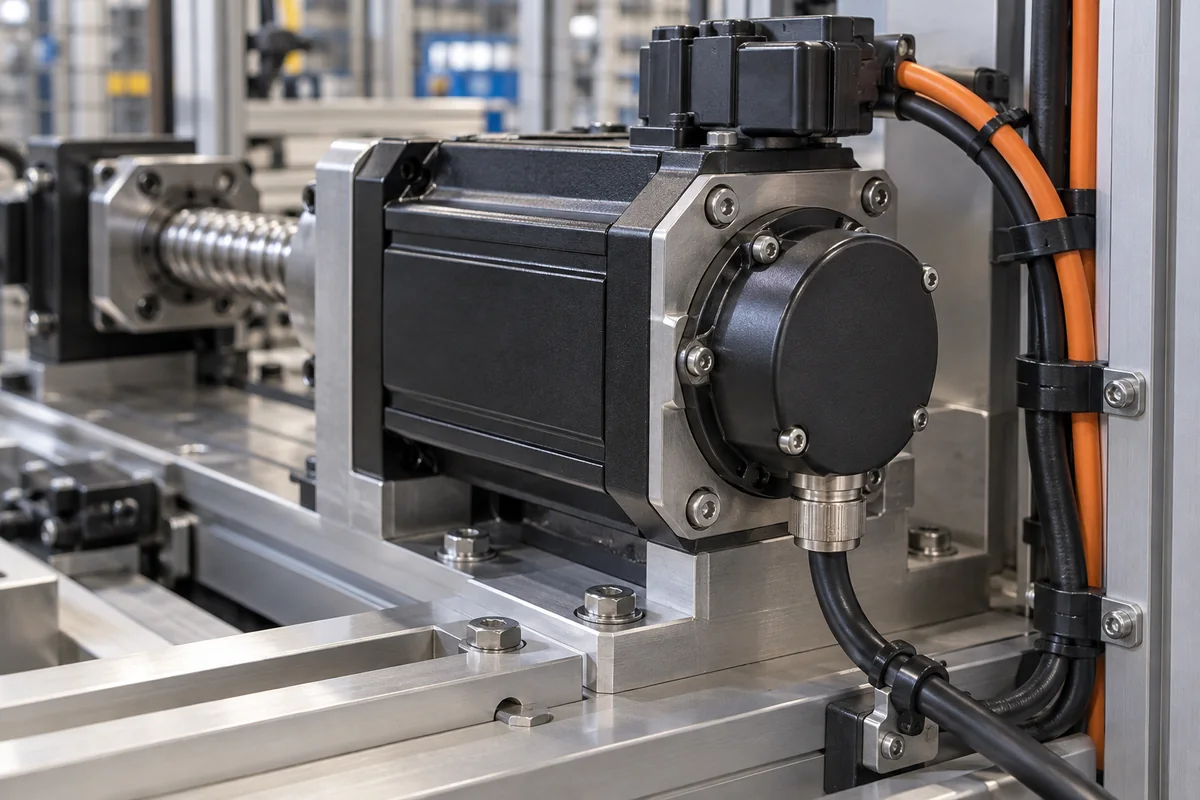
Representative product image. Confirm appearance and specifications with the manufacturer.

Product Specifications

Technical details and manufacturing context for Feedback Encoder

Definition
A feedback encoder is a critical component within a servo drive system that monitors the actual position, velocity, and direction of the motor shaft or load. It generates precise electrical signals (typically digital pulses or analog voltages) that are fed back to the servo controller, enabling closed-loop control for accurate motion regulation, error correction, and system stability. The encoder typically consists of a rotating disc with precise markings (optical, magnetic, or capacitive patterns) attached to the motor shaft. A sensor reads these patterns as the disc rotates, generating a series of electrical pulses. The controller counts these pulses to determine exact position, while pulse frequency indicates speed and phase relationship between channels indicates direction. This feedback loop is essential for applications requiring high precision, such as CNC machinery, robotics, and automated assembly lines. The encoder's performance is characterized by parameters such as resolution (100–5000 PPR), output signal (5–24 V DC), supply voltage (5–24 V DC), maximum response frequency (100–300 kHz), accuracy (±0.05°), operating temperature (-40–85°C), protection class (IP54–IP65 per IEC 60529), shaft diameter (6–12 mm), maximum shaft load (20–80 N), moment of inertia (1.0–5.0 g·cm²), and weight (0.2–0.5 kg). These values are typical ranges; actual specifications must be confirmed with the manufacturer for the specific model and application. The encoder housing is typically made of aluminum alloy, with a stainless steel shaft, and the code disc may be glass or metal. Sensing can be photoelectric or magnetic, and the internal PCB contains integrated circuits for signal processing. When selecting an encoder, consider the required resolution, output interface compatibility with the servo drive or PLC, environmental conditions (temperature, dust, moisture), and mechanical mounting constraints. Regular maintenance includes checking for signal drift, ensuring proper shaft coupling, and verifying that the protection class meets the installation environment. If the encoder fails, symptoms may include position errors, erratic motion, or loss of feedback, to system shutdown. Always verify model-specific values and standards with the legal manufacturer or supplier before procurement.
Working Principle
The encoder typically consists of a rotating disc with precise markings (optical, magnetic, or capacitive patterns) attached to the motor shaft. A sensor reads these patterns as the disc rotates, generating a series of electrical pulses. The controller counts these pulses to determine exact position, while pulse frequency indicates speed and phase relationship between channels indicates direction.
Common Materials
Aluminum alloy housing, Stainless steel shaft, Glass or metal code disc, Photoelectric sensors or magnetic sensors, PCB with integrated circuits
Technical Parameters
ParameterTypical rangeNotes & selection driver
Resolution100–5000 PPRHigher resolution for finer position control
Output Signal5–24 V DCCompatible with PLC and servo drives
Supply Voltage5–24 V DCStable voltage required for accurate feedback
Max. Response Frequency100–300 kHzHigher frequency for high-speed applications
Accuracy±0.05 °Critical for positioning accuracy
Operating Temperature-40–85 °COutside range may cause signal drift
Protection ClassIP54–IP65IP65 for dusty or wet environmentsIEC 60529
Shaft Diameter6–12 mmMust match motor shaft
Max. Shaft Load20–80 NExceeding may damage bearing
Moment of Inertia1.0–5.0 g·cm²Affects dynamic response
Weight0.2–0.5 kgConsider for mounting and vibration

Ranges are indicative industry figures for RFQ preparation, not a supplier commitment. Confirm every value and standard with the legal manufacturer before ordering.

Components / BOM
  • Code Disc
    Contains precise optical or magnetic patterns that are read by sensors to generate position signals
    Material: glass or metal with patterned coating
  • Sensor Array
    Detects patterns on the code disc and converts them into electrical signals
    Material: photodiodes or Hall effect sensors
  • Shaft and Bearings
    Provides mechanical interface to motor shaft and ensures smooth, accurate rotation
    Material: stainless steel with precision bearings
  • Signal Processing Circuit
    Amplifies, conditions, and converts sensor signals into standardized output formats
    Material: PCB with integrated circuits and connectors

Applied To / Applications

This component is essential for the following industrial systems and equipment:

Industrial Ecosystem & Supply Chain Structure

Complementary Systems
Downstream Applications
Specialized Tooling

Application Fit & Sizing Matrix

Operational Limits
pressure: 0 to 1 bar (non-pressurized)
other spec: IP65/IP67 sealing, 1000-10000 RPM max speed
temperature: -40°C to 85°C
Media Compatibility
✓ clean industrial air ✓ non-corrosive lubricants ✓ dry inert gases
Unsuitable: high-pressure hydraulic fluids or abrasive particulate environments
Sizing Data Required
  • required resolution (pulses/revolution)
  • shaft diameter and mounting configuration
  • electrical interface and supply voltage

Reliability & Engineering Risk Analysis

Failure Mode & Root Cause
Signal Drift or Loss
Cause: Contamination of optical or magnetic sensing elements by dust, oil, or debris, leading to inaccurate position feedback or complete signal failure.
Mechanical Wear or Binding
Cause: Degradation of bearings, seals, or coupling mechanisms due to misalignment, excessive vibration, or lack of lubrication, causing increased friction, backlash, or seizure.
Maintenance Indicators
  • Intermittent or erratic output signals during operation, such as sudden jumps or dropouts in position data.
  • Unusual audible noises like grinding, clicking, or excessive vibration from the encoder housing during rotation.
Engineering Tips
  • Implement regular cleaning and inspection of the encoder's sensing area and seals to prevent contamination ingress, using appropriate compressed air or non-abrasive cleaning methods.
  • Ensure precise alignment and secure mounting of the encoder to the driven shaft, and maintain proper lubrication of mechanical components as per manufacturer specifications to reduce wear.

Indicative industry ranges for design and RFQ preparation. Confirm the exact figures and applicable standard with the manufacturer before specifying.

Compliance & Manufacturing Standards

Applicable Standards
ANSI/ASME B46.1-2019 Surface Texture DIN 4000-100:2019-12 Geometrical Product Specifications

Quoted from the published standard.

Manufacturing Precision
  • Shaft Diameter: +/-0.01mm
  • Runout: 0.005mm
Quality Inspection
  • Dimensional Verification with CMM
  • Functional Performance Test under Load

Manufacturers of Feedback Encoder

Manufacturer profiles associated with Feedback Encoder.

Sourcing Feedback Encoder from China?
Tell us your specification and target quantity — we will match it against manufacturer records and come back with the factories that fit.
Request manufacturers We manufacture this

Manufacturer listings support early research and capability understanding. They are not certification, ranking, or transaction guarantees.

Technical documentation
Request current drawings, revision history, and a signed specification sheet.
Manufacturing capability
Verify equipment lists, process limits, capacity, and representative production evidence.
Inspection readiness
Confirm test methods, calibrated equipment, sampling plans, and traceable reports.
Supplier transparency
Check the legal entity, factory address, ownership, certifications, and direct contacts.

CNFX does not score or rank suppliers. Buyers must verify all claims and documents with the legal manufacturer before ordering.

Supply Chain Compatible Machinery & Devices

Automated Powder Coating System

Integrated industrial system for applying dry powder coatings to metal substrates.

Explore Specs →
Centrifugal Pump Impeller

The centrifugal pump impeller is a critical rotating component that converts mechanical energy from the motor into kinetic energy in fluid systems.

Explore Specs →
High-Precision CNC Laser Cutting Machine

Computer-controlled industrial machine using focused laser beams to cut sheet metal with micron-level accuracy.

Explore Specs →
Industrial-Grade Hydraulic Cylinder Piston Rod

This industrial-grade piston rod is a precision-ground cylindrical component designed for use in hydraulic cylinders.

Explore Specs →

Frequently Asked Questions

What is the typical resolution range for a feedback encoder?

The resolution typically ranges from 100 to 5000 pulses per revolution (PPR). Higher resolution allows finer position control, but the actual required resolution depends on the application's precision needs. Always confirm the specific model's resolution with the manufacturer.

What output signals are available for feedback encoders?

Feedback encoders typically provide digital pulses or analog voltages. The output signal voltage range is 5–24 V DC, which should be compatible with the servo drive or PLC input. Verify the exact output type and voltage with the manufacturer.

What is the operating temperature range for these encoders?

The operating temperature range is -40 to 85°C. Operating outside this range may cause signal drift or damage. Ensure the encoder is installed in an environment within this range, and consider the protection class for dust and moisture.

How do I verify the protection class of a feedback encoder?

The protection class is rated IP54 to IP65 according to IEC 60529. This indicates the level of protection against dust and water. For dusty or wet environments, choose a higher IP rating. Always check the manufacturer's datasheet for the specific model's rating.

Data Basis

Editorial classification, named public sources where available, and source-reviewed manufacturer records.

Preliminary Technical Classification
This page supports structured research, RFQ preparation, and supplier evaluation. It does not replace buyer-led supplier qualification, standards review, or technical approval.
Buyer enquiry

Request manufacturing insight for Feedback Encoder

Ask for use case, specification boundaries, supplier type, and RFQ preparation information for this product.

Where it goes
Straight to the CNFX editorial desk, and to the manufacturer if this product is linked to a claimed profile. Nothing is broadcast to a supplier list.
Your details stay here
We do not sell or rent enquiry data, and we do not add you to a mailing list. Used only to answer this request.
No commission, no middleman
CNFX is a directory. We take no cut of any order and never negotiate on a supplier's behalf.
What we don't claim
A listing is not an endorsement. Qualify every supplier and verify every figure yourself before ordering.

Your business information is used only to process this request.

Thank you! Your message has been sent. We'll respond within 1–3 business days.
Sorry, we couldn't send your message. Please try again, or email us at contact@cnfx.com.

Need to Manufacture Feedback Encoder?

Compare manufacturer profiles with relevant product and process capability.

Previous Product
Z-axis Ram/Spindle
Last Product
Get QuotesChat