Precision Calibration Pump
View system integration details
This page explains how Feedback Encoder/Resolver is classified within Machinery and Equipment Manufacturing. Technical values and manufacturer relationships are research references; confirm the current specification and supplier evidence for each order.
A sensing device that converts mechanical position or motion into electrical signals for closed-loop control systems.
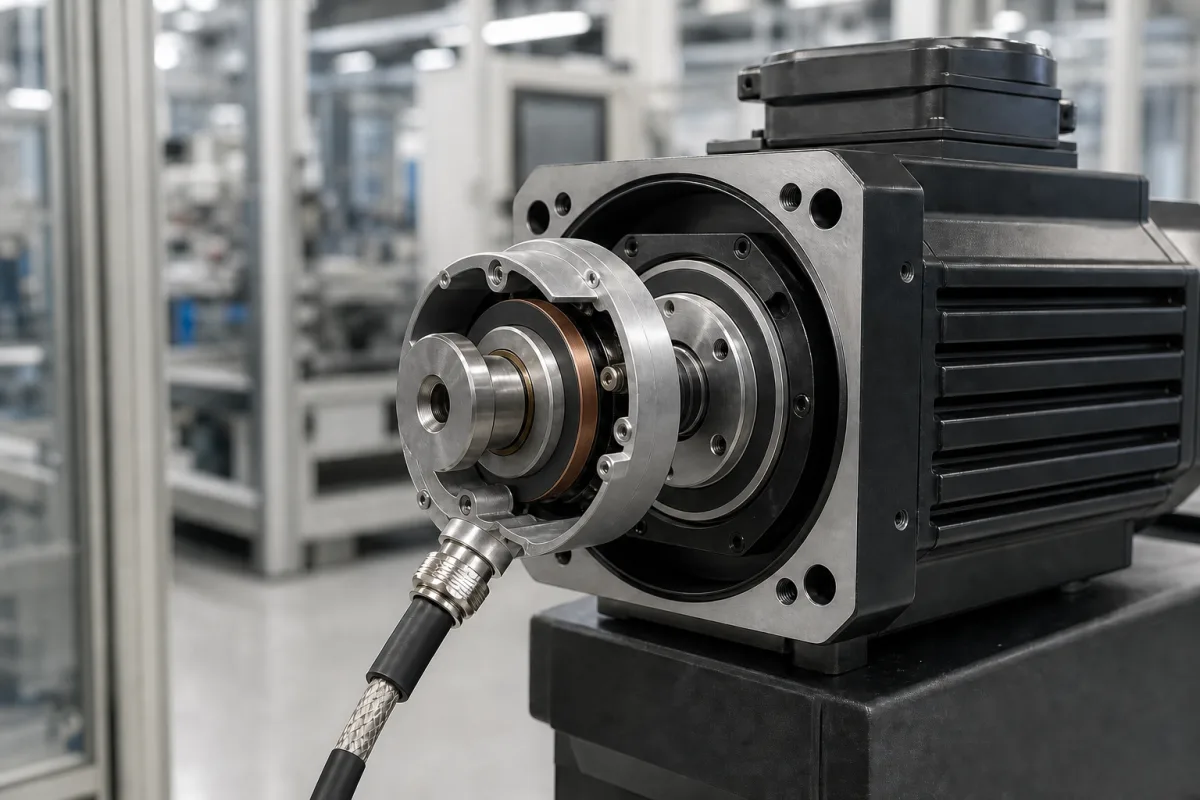
Technical details and manufacturing context for Feedback Encoder/Resolver
| Parameter | Typical range | Notes & selection driver |
|---|---|---|
| Resolution | 13–23 bit | Higher resolution for smoother motion control |
| Accuracy | ±0.01–±0.05 ° | Critical for positioning applications |
| Supply Voltage | 5–30 V DC | Typical for industrial encoders |
| Output Signal | TTL/HTL | Compatibility with PLCs |
| Operating Temperature | -40–85 °C | Extended range for harsh environments |
| Protection Class | IP54–IP67 | IP67 for washdown or dusty environmentsIEC 60529 |
| Max Speed | 6000–12000 rpm | Higher speed requires dynamic balancing |
| Shaft Diameter | 6–16 mm | Match to motor shaft |
| Connection Type | Cable/Connector | Connector for quick replacement |
| Weight | 0.2–1.5 kg | Affects inertia and mounting |
Ranges are indicative industry figures for RFQ preparation, not a supplier commitment. Confirm every value and standard with the legal manufacturer before ordering.
This component is essential for the following industrial systems and equipment:
| pressure: | 0 to 100 psi (non-submersible) |
| other spec: | IP65/IP67 rating, 1000-10000 RPM max speed |
| temperature: | -40°C to +125°C |
Indicative industry ranges for design and RFQ preparation. Confirm the exact figures and applicable standard with the manufacturer before specifying.
Quoted from the published standard.
Manufacturer profiles associated with Feedback Encoder/Resolver.
Manufacturer listings support early research and capability understanding. They are not certification, ranking, or transaction guarantees.
A practical evidence checklist for RFQ preparation and supplier evaluation.
CNFX does not score or rank suppliers. Buyers must verify all claims and documents with the legal manufacturer before ordering.
An encoder uses optical, magnetic, or capacitive sensing to generate digital pulse signals proportional to movement, while a resolver uses electromagnetic induction to produce analog sine/cosine voltage outputs corresponding to angular position. Both provide feedback for closed-loop control, but they differ in sensing technology and output type.
Typical specifications include a resolution of 13-23 bits, accuracy of ±0.01 to ±0.05 degrees, supply voltage of 5-30 V DC, output signal TTL/HTL, operating temperature -40 to 85 °C, protection class IP54-IP67, max speed 6000-12000 rpm, shaft diameter 6-16 mm, connection type cable/connector, and weight 0.2-1.5 kg. These are ranges; verify exact values for your model.
Consider the required resolution and accuracy for your application, the operating environment (temperature, dust, washdown), the shaft size and speed, and the output signal compatibility with your controller. Also check the protection class and connection type. Always confirm specifications with the manufacturer.
Regularly inspect the cable/connector for damage, ensure the housing is clean and free from debris, and check for any signs of wear on the shaft or bearings. If the device fails, it may need replacement. Follow the manufacturer's guidelines for maintenance and troubleshooting.
Editorial classification, named public sources where available, and source-reviewed manufacturer records.
Ask for use case, specification boundaries, supplier type, and RFQ preparation information for this product.
Compare manufacturer profiles with relevant product and process capability.