Editorial Technical Reference

Coil Assembly

This page explains how Coil Assembly is classified within Computer, Electronic and Optical Product Manufacturing. Technical values and manufacturer relationships are research references; confirm the current specification and supplier evidence for each order.

Technical Definition & Core Assembly

A precision electromagnetic component within a detection sensor head that generates or senses magnetic fields for detection purposes.
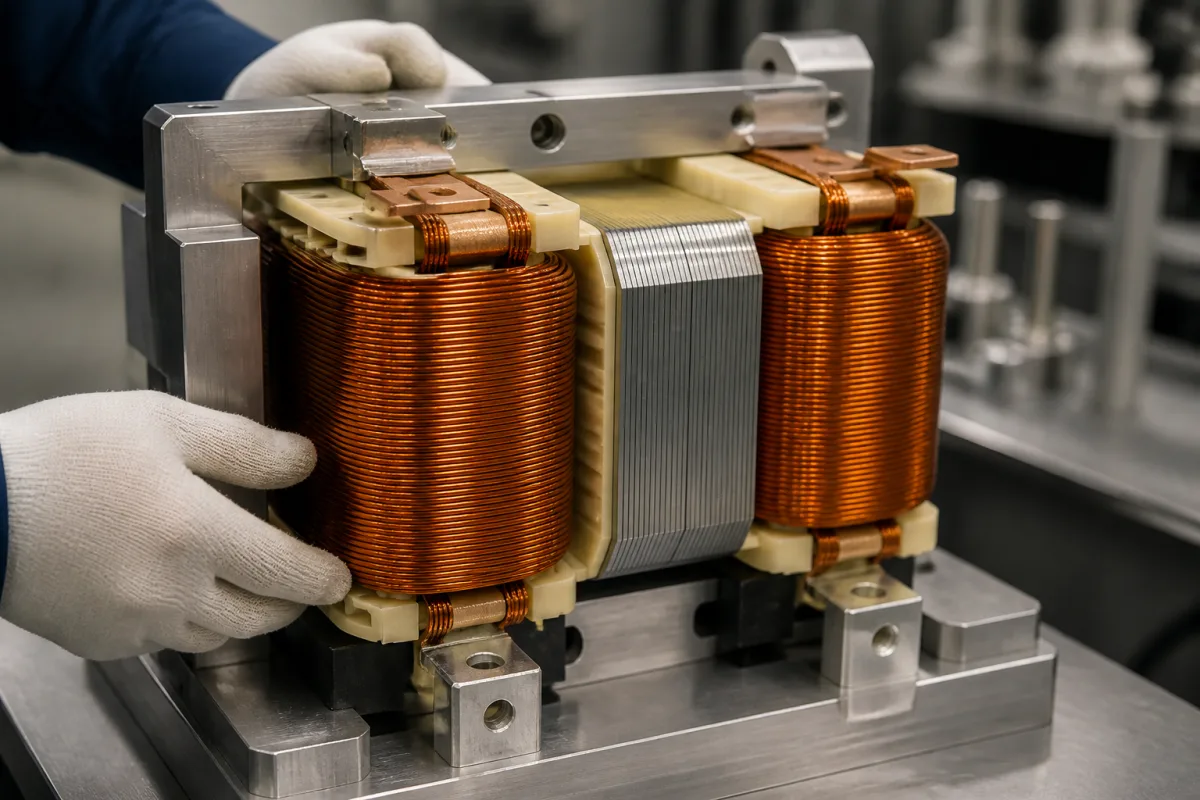
Representative product image. Confirm appearance and specifications with the manufacturer.

Product Specifications

Technical details and manufacturing context for Coil Assembly

Definition
The coil assembly is a critical sub-component of a detection sensor head, typically consisting of wound conductive wire around a core material. It functions as the electromagnetic transducer that either generates a magnetic field for active sensing or detects changes in magnetic fields for passive sensing applications. Within the detection sensor head, it converts electrical signals to magnetic fields or vice versa, enabling the sensor to detect metallic objects, measure distances, or identify material properties. The assembly is constructed from copper wire wound around a ferrite or laminated silicon steel core, with insulation material and a protective housing. Key parameters include inductance (10–100 mH), DC resistance (50–200 Ω), rated current (10–50 mA), operating temperature (-40 to +85 °C), insulation resistance (≥100 MΩ at 500 V DC), dielectric strength (500–1000 V AC), wire diameter (0.05–0.20 mm), number of turns (100–1000), coil outer diameter (10–30 mm), coil height (5–15 mm), weight (5–20 g), and IP rating (IP54–IP65). These values are reference ranges and must be verified for the specific model and application. The coil assembly is used in various detection sensors, including inductive proximity sensors, metal detectors, and position sensors. It operates on electromagnetic principles, where current through the coil generates a magnetic field, or changing external magnetic fields induce voltage. This enables non-contact sensing of metallic objects, position detection, or material characterization. The assembly is designed to meet standards such as IEC 60068-2-1/2 for temperature, IEC 60243 for insulation, IEC 60317 for wire, and IEC 60529 for ingress protection. Always confirm model-specific values and standards with the legal manufacturer or supplier.
Working Principle
The coil assembly operates on electromagnetic principles. When electrical current flows through the wound conductor, it generates a magnetic field (transmitting mode). Conversely, when exposed to changing magnetic fields from external sources, it induces an electrical voltage in the coil (receiving mode). In detection sensors, this electromagnetic interaction allows for non-contact sensing of metallic objects, position detection, or material characterization. The core material (ferrite or laminated silicon steel) concentrates the magnetic field, enhancing sensitivity. The number of turns and wire diameter determine inductance and resistance, affecting performance. The coil's geometry (outer diameter and height) influences the magnetic field distribution. The protective housing and insulation ensure durability and electrical safety. The operating temperature range and IP rating define environmental limits. The coil assembly is a passive component that requires an external circuit to drive or read signals. Its performance is characterized by parameters such as inductance, DC resistance, and rated current, which must be matched to the application requirements. Proper selection and verification of these parameters are essential for reliable sensor operation.
Common Materials
Copper wire, Ferrite core, Insulation material, Protective housing
Technical Parameters
ParameterTypical rangeNotes & selection driver
Inductance10–100 mHDetermines sensitivity and frequency response
DC Resistance50–200 ΩAffects power consumption and signal strength
Rated Current10–50 mAExceeding may cause overheating or saturation
Operating Temperature-40–+85 °COutside range may degrade insulation or magnetic propertiesIEC 60068-2-1/2
Insulation Resistance≥100 At 500 V DC; lower values indicate moisture ingressIEC 60243
Dielectric Strength500–1000 V ACEnsures insulation integrity under surgeIEC 60243-1
Wire Diameter0.05–0.20 mmAffects resistance and current capacityIEC 60317
Number of Turns100–1000 turnsDetermines inductance and sensitivity
Core MaterialFerrite or laminated silicon steelFerrite for high frequency, silicon steel for low frequency
Coil Outer Diameter10–30 mmFits sensor head dimensions
Coil Height5–15 mmAffects magnetic field distribution
Weight5–20 gImportant for portable devices
IP RatingIP54–IP65Protects against dust and water ingressIEC 60529

Ranges are indicative industry figures for RFQ preparation, not a supplier commitment. Confirm every value and standard with the legal manufacturer before ordering.

Components / BOM
  • Coil Winding Part
    Conductive element that carries electrical current to generate magnetic fields
    Material: Copper or aluminum wire
  • Core Part
    Concentrates and directs magnetic flux for enhanced sensitivity
    Material: Ferrite, iron powder, or air core
  • Bobbin Part
    Structural support for winding the coil wire in precise layers
    Material: Plastic or ceramic
  • Terminals Part
    Electrical connection points for integrating with sensor circuitry
    Material: Brass or copper alloy

Applied To / Applications

This component is essential for the following industrial systems and equipment:

Industrial Ecosystem & Supply Chain Structure

Complementary Systems
Downstream Applications
Specialized Tooling

Application Fit & Sizing Matrix

Operational Limits
pressure: 0 to 10 bar
other spec: Max magnetic field strength: 500 mT, Vibration tolerance: 5g RMS
temperature: -40°C to +125°C
Media Compatibility
✓ Non-corrosive gases ✓ Clean liquids ✓ Dry particulate solids
Unsuitable: Conductive slurries with high metal content
Sizing Data Required
  • Required detection distance
  • Target object material properties
  • Available power supply voltage

Reliability & Engineering Risk Analysis

Failure Mode & Root Cause
Coil deformation or collapse
Cause: Thermal stress from rapid temperature changes or over-temperature conditions, leading to material fatigue and loss of structural integrity.
Internal fouling or scaling
Cause: Accumulation of mineral deposits, corrosion products, or biological growth due to poor water quality or inadequate filtration, reducing heat transfer efficiency.
Maintenance Indicators
  • Audible hissing or gurgling sounds indicating internal flow restriction or air entrapment
  • Visible external corrosion, leaks at connections, or abnormal condensation patterns suggesting compromised integrity
Engineering Tips
  • Implement regular water treatment and filtration to maintain fluid cleanliness and prevent scaling/corrosion
  • Install temperature monitoring with alarms to prevent thermal shock and ensure operation within design limits

Indicative industry ranges for design and RFQ preparation. Confirm the exact figures and applicable standard with the manufacturer before specifying.

Compliance & Manufacturing Standards

Applicable Standards
ASTM A480/A480M - Standard Specification for General Requirements for Flat-Rolled Stainless and Heat-Resisting Steel Plate, Sheet, and Strip CE Marking - Conformity with EU safety, health, and environmental requirements

Quoted from the published standard.

Manufacturing Precision
  • Coil Diameter: +/- 1% of nominal diameter
  • Wire Gauge: +/- 0.01mm
Quality Inspection
  • Dimensional Verification using Coordinate Measuring Machine (CMM)
  • Electrical Resistance Test

Manufacturers of Coil Assembly

Manufacturer profiles associated with Coil Assembly.

Sourcing Coil Assembly from China?
Tell us your specification and target quantity — we will match it against manufacturer records and come back with the factories that fit.
Request manufacturers We manufacture this

Manufacturer listings support early research and capability understanding. They are not certification, ranking, or transaction guarantees.

Technical documentation
Request current drawings, revision history, and a signed specification sheet.
Manufacturing capability
Verify equipment lists, process limits, capacity, and representative production evidence.
Inspection readiness
Confirm test methods, calibrated equipment, sampling plans, and traceable reports.
Supplier transparency
Check the legal entity, factory address, ownership, certifications, and direct contacts.

CNFX does not score or rank suppliers. Buyers must verify all claims and documents with the legal manufacturer before ordering.

Supply Chain Compatible Machinery & Devices

Industrial IoT Gateway

The Industrial IoT Gateway is a ruggedized edge computing device designed for industrial environments.

Explore Specs →
Modular Industrial Edge Computing Device

This modular industrial edge computing device is a ruggedized system designed for deployment in harsh industrial environments to perform real-time data processing, analytics, and control functions at the network edge.

Explore Specs →
Industrial Smart Camera Module

The Industrial Smart Camera Module is a compact, self-contained vision processing unit designed for integration into industrial machinery and production lines.

Explore Specs →
Surface Mount Resistor

Passive electronic component for current limiting and voltage division in circuits

Explore Specs →

Frequently Asked Questions

What is the typical inductance range for this coil assembly?

The inductance range is 10–100 mH, which determines sensitivity and frequency response. Verify the exact value for your specific model with the manufacturer.

What standards apply to the operating temperature and insulation?

Operating temperature is tested per IEC 60068-2-1/2, and insulation resistance per IEC 60243. These standards are references for verification, not proof of compliance.

Can this coil assembly be used in outdoor environments?

The IP rating is IP54–IP65, indicating protection against dust and water ingress. Confirm the exact rating for your application and ensure proper installation.

How does the core material affect performance?

Ferrite cores are suitable for high-frequency applications, while laminated silicon steel is used for low-frequency. The core material influences inductance and sensitivity.

Data Basis

Editorial classification, named public sources where available, and source-reviewed manufacturer records.

Preliminary Technical Classification
This page supports structured research, RFQ preparation, and supplier evaluation. It does not replace buyer-led supplier qualification, standards review, or technical approval.
Buyer enquiry

Request manufacturing insight for Coil Assembly

Ask for use case, specification boundaries, supplier type, and RFQ preparation information for this product.

Where it goes
Straight to the CNFX editorial desk, and to the manufacturer if this product is linked to a claimed profile. Nothing is broadcast to a supplier list.
Your details stay here
We do not sell or rent enquiry data, and we do not add you to a mailing list. Used only to answer this request.
No commission, no middleman
CNFX is a directory. We take no cut of any order and never negotiate on a supplier's behalf.
What we don't claim
A listing is not an endorsement. Qualify every supplier and verify every figure yourself before ordering.

Your business information is used only to process this request.

Thank you! Your message has been sent. We'll respond within 1–3 business days.
Sorry, we couldn't send your message. Please try again, or email us at contact@cnfx.com.

Need to Manufacture Coil Assembly?

Compare manufacturer profiles with relevant product and process capability.

Previous Product
CO2 Sensor Array
Next Product
Collimating Lens Assembly
Get QuotesChat