Edge Guide System
View system integration details
This page explains how Guiding Actuator is classified within Machinery and Equipment Manufacturing. Technical values and manufacturer relationships are research references; confirm the current specification and supplier evidence for each order.
A mechanical or electromechanical device within an Edge Guide System that physically adjusts the position of material edges during processing.
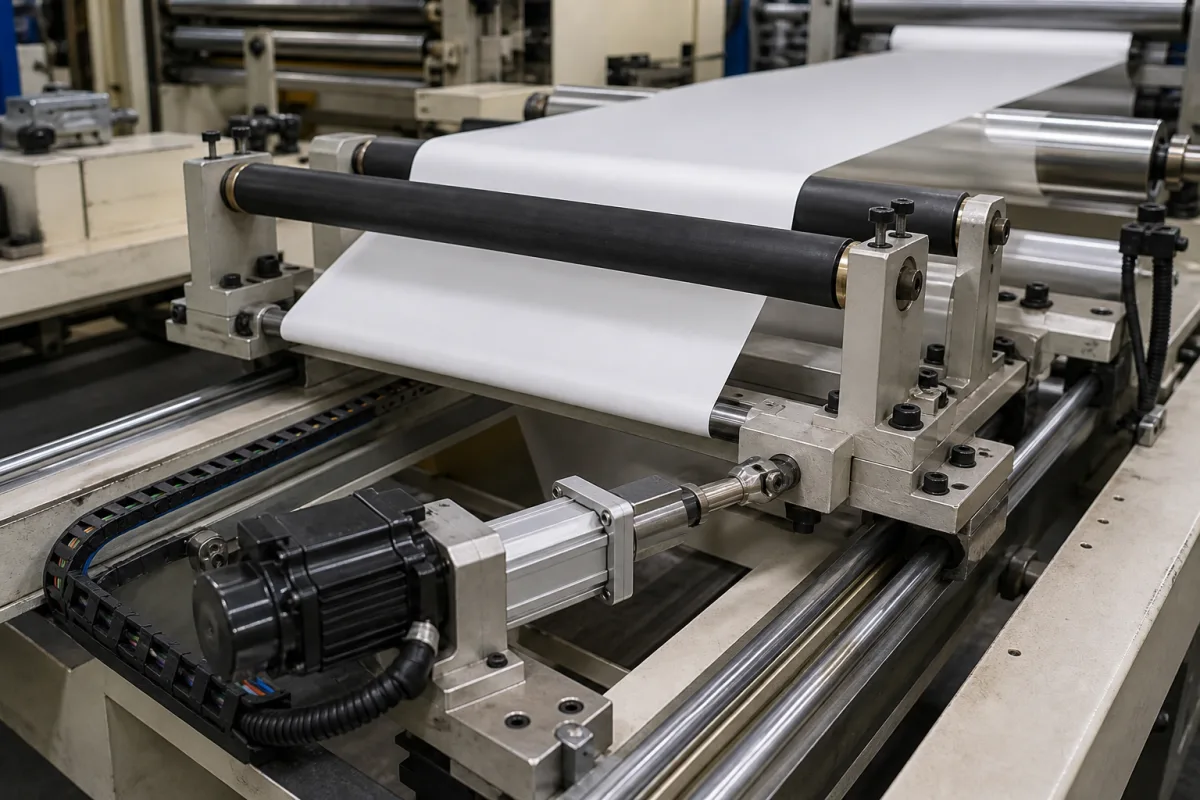
Technical details and manufacturing context for Guiding Actuator
| Parameter | Typical range | Notes & selection driver |
|---|---|---|
| Rated Stroke | 25–100 mm | Select based on material width variation |
| Thrust Force | 500–3000 N | Must overcome web tension and friction |
| Positioning Accuracy | ±0.05 mm | Critical for edge alignment tolerance |
| Repeatability | ±0.02 mm | Ensures consistent edge positioning |
| Operating Pressure | 1.0–1.6 MPa | |
| Operating Temperature | -40–85 °C | Outside range may affect seals and electronics |
| Ingress Protection | IP54–IP65 | IP65 for washdown environmentsIEC 60529 |
| Supply Voltage | 24 ±10% V DC | For electromechanical versions |
| Power Consumption | 30–120 W | Depends on load and speed |
| Material | Aluminum/Steel | Corrosion-resistant coating optional |
| Weight | 5–15 kg | Varies with stroke and force rating |
Ranges are indicative industry figures for RFQ preparation, not a supplier commitment. Confirm every value and standard with the legal manufacturer before ordering.
| pressure: | 0 to 10 bar |
| other spec: | Max linear speed: 1 m/s, Positioning accuracy: ±0.1 mm |
| temperature: | -20°C to +80°C |
Indicative industry ranges for design and RFQ preparation. Confirm the exact figures and applicable standard with the manufacturer before specifying.
Quoted from the published standard.
A practical evidence checklist for RFQ preparation and supplier evaluation.
Compare the published product scope and source details, then include your specifications and quantity in an enquiry.
Manufacturer profiles associated with Guiding Actuator.
Explore company information and manufacturing capabilities, then discuss the scope of your project with a relevant supplier.
Ask for use case, specification boundaries, supplier type, and RFQ preparation information for this product.
The Guiding Actuator receives control signals from an edge guide system and converts them into precise physical movements. These movements adjust the lateral position of continuous materials, such as webs or films, to maintain proper alignment during processing.
Typical specifications include a rated stroke of 25–100 mm, thrust force of 500–3000 N, positioning accuracy of ±0.05 mm, and repeatability of ±0.02 mm. Operating pressure is 1.0–1.6 MPa, temperature range is -40 to 85 °C, and ingress protection is IP54–IP65. These are reference ranges; confirm with the manufacturer for your model.
Sensors monitor the material edge position and send feedback to a control system. The control system compares the actual position to a setpoint and sends a correction signal to the actuator. The actuator then moves a guide roller or other element to adjust the material path, ensuring alignment within tolerances.
Guiding Actuators are commonly made from aluminum alloy, stainless steel, or engineering plastics. Some models may have a corrosion-resistant coating. The choice of material depends on the application environment and required durability.
This component is essential for the following industrial systems and equipment:
Editorial classification, named public sources where available, and source-reviewed manufacturer records.
Compare manufacturer profiles with relevant product and process capability.