Industry-Verified Manufacturing Data (2026)

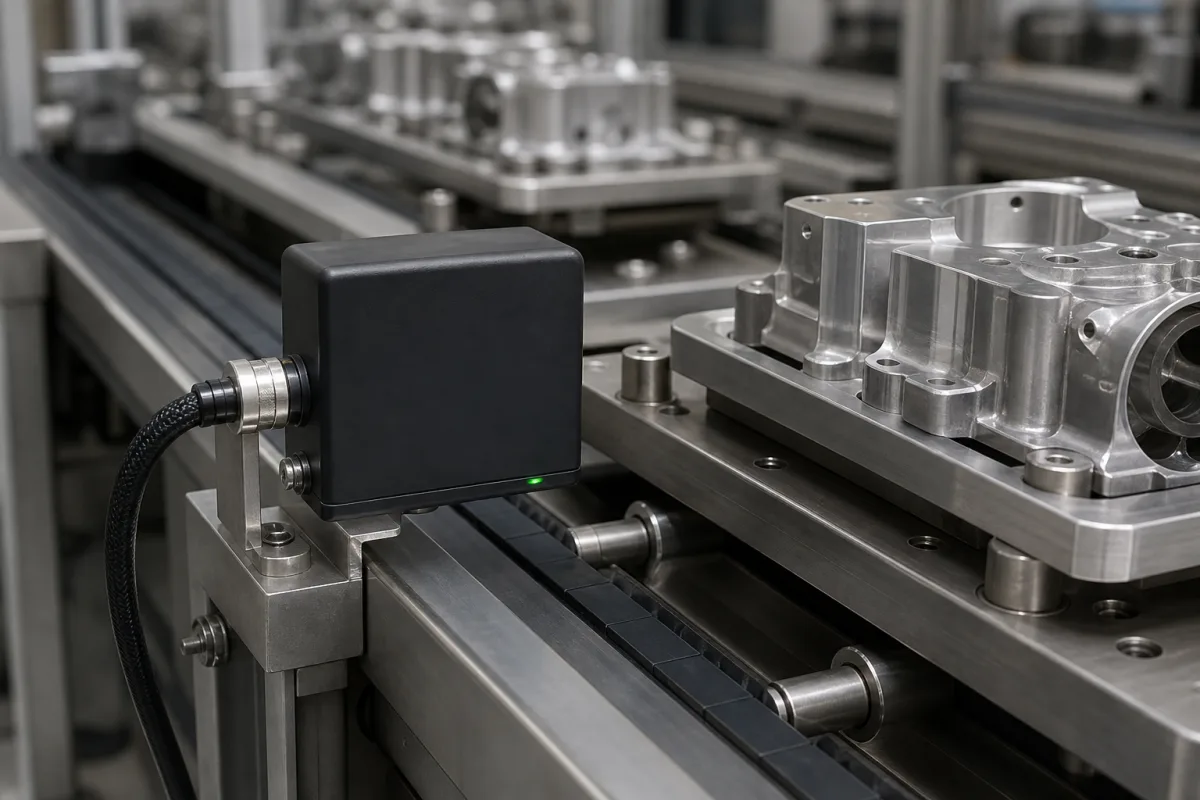
Identification Reader

Based on aggregated insights from multiple verified factory profiles within the CNFX directory, the standard Identification Reader used in the Machinery and Equipment Manufacturing sector typically supports operational capacities ranging from standard industrial configurations to heavy-duty production requirements.

Technical Definition & Core Assembly

A canonical Identification Reader is characterized by the integration of Antenna/Scanner Head and Signal Processor. In industrial production environments, manufacturers listed on CNFX commonly emphasize Plastic housing construction to support stable, high-cycle operation across diverse manufacturing scenarios.

A component within the Tool Identification System that reads and interprets identification data from tools or equipment.
Product Specifications

Technical details and manufacturing context for Identification Reader

Definition
The Identification Reader is a critical component of the Tool Identification System responsible for detecting, reading, and interpreting identification markers (such as RFID tags, barcodes, or QR codes) attached to tools or equipment. It enables automated tracking, inventory management, and operational control by providing real-time identification data to the system's central processing unit.
Working Principle
The Identification Reader operates by emitting a signal (radio frequency for RFID, optical for barcodes/QR codes) to detect nearby identification markers. It captures the encoded data from these markers, decodes the information, and transmits it to the system controller for processing and verification against the tool database.
Common Materials
Plastic housing, Electronic circuit board, Copper wiring
Technical Parameters
  • Physical dimensions of the reader unit (mm) Per Request
Components / BOM
  • Antenna/Scanner Head
    Emits signals and receives responses from identification markers
    Material: Copper coil (RFID) or optical lens (barcode)
  • Signal Processor
    Decodes and processes the raw data from identification markers
    Material: Silicon chip
  • Communication Interface
    Transmits processed identification data to the system controller
    Material: Copper wiring with connector
Engineering Reasoning
0.5-2.0 m
1.5 mW/cm² optical power density at sensor surface
Design Rationale: Photodiode saturation and thermal damage from excessive incident radiation, governed by the Stefan-Boltzmann law (σ=5.67×10⁻⁸ W/m²K⁴) and semiconductor bandgap energy (e.g., 1.12 eV for silicon)
Risk Mitigation (FMEA)
Trigger Ambient electromagnetic interference exceeding 10 V/m at 13.56 MHz (RFID frequency)
Mode: Signal-to-noise ratio degradation below 20 dB, causing misreads
Strategy: Shielded enclosure with 40 dB attenuation at 13.56 MHz and ferrite chokes on all cables
Trigger Condensation forming on optical window due to 85% relative humidity at 40°C ambient
Mode: Optical scattering losses exceeding 3 dB, preventing tag decoding
Strategy: Hermetically sealed housing with desiccant (silica gel, 30 g) and anti-fog coating (contact angle >110°)

Industry Taxonomies & Aliases

Commonly used trade names and technical identifiers for Identification Reader.

Applied To / Applications

This component is essential for the following industrial systems and equipment:

Industrial Ecosystem & Supply Chain DNA

Complementary Systems
Downstream Applications
Specialized Tooling

Application Fit & Sizing Matrix

Operational Limits
pressure: 0 to 2 bar
other spec: Reading distance: 5-100 mm, Data transfer rate: Up to 1 Mbps
temperature: -20°C to +85°C
Media Compatibility
✓ Metallic tool surfaces ✓ Plastic tool tags ✓ Ceramic-coated equipment
Unsuitable: High-vibration environments (>10g RMS)
Sizing Data Required
  • Tool identification code format (e.g., RFID, barcode, QR)
  • Required reading speed (tools per minute)
  • Installation mounting constraints (space, orientation)

Reliability & Engineering Risk Analysis

Failure Mode & Root Cause
Lens contamination and fouling
Cause: Accumulation of dust, oil mist, or debris on optical surfaces due to inadequate environmental sealing or lack of regular cleaning in industrial settings
LED degradation and failure
Cause: Thermal stress from prolonged operation without proper heat dissipation, leading to reduced illumination intensity and eventual complete failure
Maintenance Indicators
  • Intermittent or inconsistent reading performance despite proper alignment and target presence
  • Unusual heating of the device housing or audible buzzing from internal components
Engineering Tips
  • Implement regular cleaning schedules with appropriate optical-grade cleaning solutions and lint-free wipes to maintain lens clarity
  • Ensure proper thermal management through adequate ventilation, avoiding direct heat sources, and monitoring ambient temperature to prevent LED and electronic component degradation

Compliance & Manufacturing Standards

Reference Standards
ISO/IEC 14443:2016 (Contactless smart cards) ANSI/INCITS 256:2001 (Card reader interoperability) CE Marking (Electromagnetic compatibility directive 2014/30/EU)
Manufacturing Precision
  • Reading distance tolerance: +/- 0.5mm
  • Alignment flatness: 0.2mm across mounting surface
Quality Inspection
  • RF signal strength and consistency test
  • Environmental stress screening (temperature/humidity cycling)

Factories Producing Identification Reader

Verified manufacturers with capability to produce this product in China

✓ 96% Supplier Capability Match Found

S Sourcing Manager from Australia Jan 16, 2026
★★★★★
"Standard OEM quality for Machinery and Equipment Manufacturing applications. The Identification Reader arrived with full certification."
Technical Specifications Verified
P Procurement Specialist from Singapore Jan 13, 2026
★★★★☆
"Great transparency on the Identification Reader components. Essential for our Machinery and Equipment Manufacturing supply chain. (Delivery took slightly longer than expected, but technical support was excellent.)"
Technical Specifications Verified
T Technical Director from Germany Jan 10, 2026
★★★★★
"The Identification Reader we sourced perfectly fits our Machinery and Equipment Manufacturing production line requirements."
Technical Specifications Verified
Verification Protocol

“Feedback is collected from verified sourcing managers during RFQ (Request for Quote) and factory evaluation processes on CNFX. These reports represent historical performance data and technical audit summaries from our B2B manufacturing network.”

10 sourcing managers are analyzing this specification now. Last inquiry for Identification Reader from India (1h ago).

Supply Chain Compatible Machinery & Devices

Automated Assembly Line System

Integrated production system for sequential component assembly operations

Explore Specs →
Automated Powder Coating System

Integrated industrial system for applying dry powder coatings to metal substrates.

Explore Specs →
Centrifugal Pump Impeller

Rotating component that transfers energy to fluid in centrifugal pumps.

Explore Specs →
High-Precision CNC Laser Cutting Machine

Computer-controlled industrial machine using focused laser beams to cut sheet metal with micron-level accuracy.

Explore Specs →

Frequently Asked Questions

What is the primary function of this identification reader in machinery manufacturing?

This identification reader is a core component of Tool Identification Systems, designed to read and interpret identification data from tools or equipment to enable tracking, maintenance scheduling, and operational efficiency in manufacturing environments.

What materials are used in the construction of this identification reader?

The reader features a durable plastic housing for protection, an electronic circuit board for processing, and copper wiring for reliable electrical connections, ensuring longevity in industrial settings.

What are the main components in the Bill of Materials (BOM) for this identification reader?

The BOM includes three key components: the Antenna/Scanner Head for data capture, the Signal Processor for interpreting identification data, and the Communication Interface for transmitting information to control systems.

Can I contact factories directly on CNFX?

CNFX is an open directory, not a transaction platform. Each factory profile provides direct contact information and production details to help you initiate direct inquiries with Chinese suppliers.

Get Quote for Identification Reader

Request technical pricing, lead times, or customized specifications for Identification Reader directly from verified manufacturing units.

Your business information is encrypted and only shared with verified Identification Reader suppliers.

Thank you! Your message has been sent. We'll respond within 1–3 business days.

Need to Manufacture Identification Reader?

Connect with verified factories specializing in this product category

Add Your Factory Contact Us
Previous Product
I/P Converter
Next Product
Idler Rollers