Industry-Verified Manufacturing Data (2026)

Tool Identification System

Based on aggregated insights from multiple verified factory profiles within the CNFX directory, the standard Tool Identification System used in the Machinery and Equipment Manufacturing sector typically supports operational capacities ranging from standard industrial configurations to heavy-duty production requirements.

Technical Definition & Core Assembly

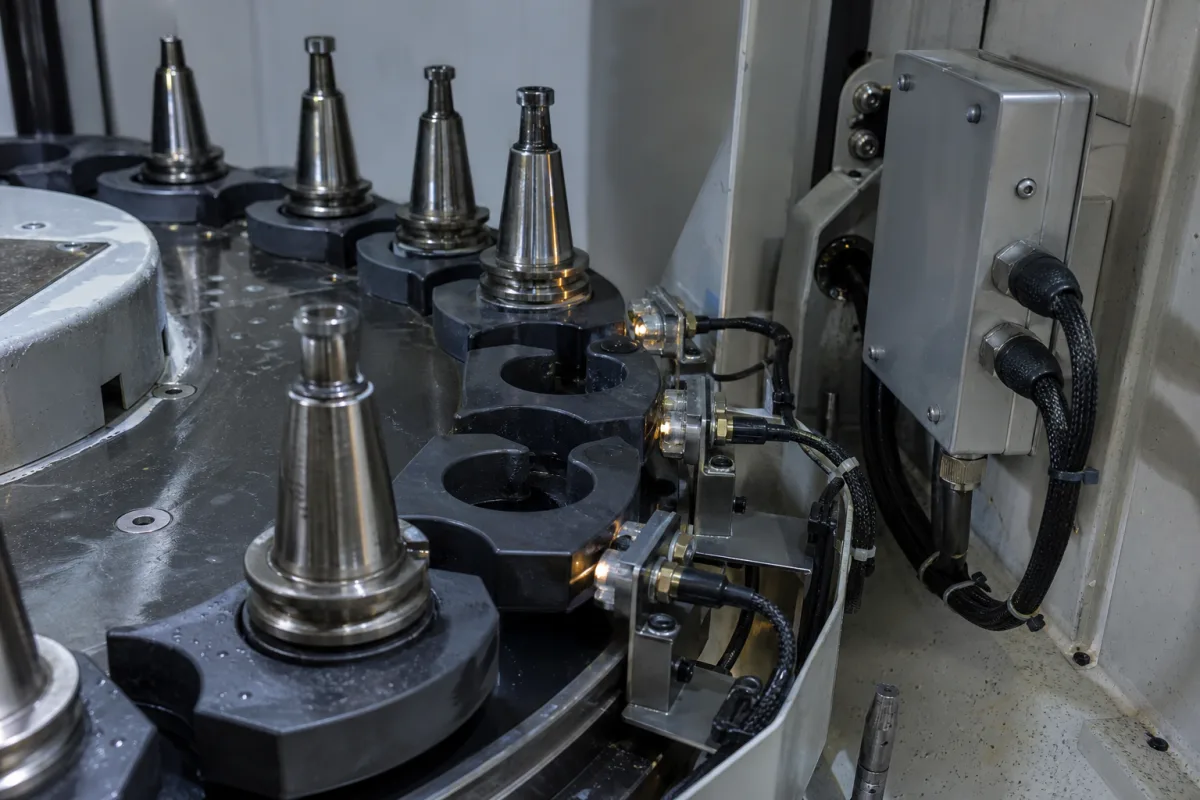
A canonical Tool Identification System is characterized by the integration of Identification Reader and Identification Tags. In industrial production environments, manufacturers listed on CNFX commonly emphasize Stainless steel housing construction to support stable, high-cycle operation across diverse manufacturing scenarios.

A system integrated within a tool magazine that automatically identifies and tracks individual tools using electronic or optical methods.
Product Specifications

Technical details and manufacturing context for Tool Identification System

Definition
The Tool Identification System is a critical component of modern tool magazines in CNC machining centers and automated manufacturing systems. It functions as the identification and tracking mechanism that enables the tool magazine to manage multiple tools efficiently. This system typically uses RFID tags, barcodes, or other electronic/optical identification methods attached to each tool holder. When tools are loaded into or retrieved from the magazine, the system reads the identification data to verify tool identity, track usage history, monitor tool life, and ensure the correct tool is selected for specific machining operations. This prevents tooling errors, optimizes tool management, and supports automated tool change sequences.
Working Principle
The system operates by having identification tags (RFID, barcode, or similar) attached to each tool holder. When a tool is placed into the magazine or retrieved, a reader (RFID antenna, optical scanner) detects the tag and transmits the unique identification data to the machine control system. The control system then matches this data with its tool database, verifying tool type, dimensions, wear status, and other parameters. This enables automated tracking, tool life management, and prevents incorrect tool selection during machining operations.
Common Materials
Stainless steel housing, Electronic components (RFID chips, sensors), Plastic/composite materials for tags
Technical Parameters
  • Physical dimensions of the identification system components to ensure compatibility with tool magazine design (mm) Customizable
Components / BOM
  • Identification Reader
    Reads identification data from tags attached to tool holders
    Material: Stainless steel housing with electronic components
  • Identification Tags
    Store unique identification data for each tool
    Material: RFID chips with protective plastic/composite casing
  • Control Interface Module
    Processes identification data and communicates with machine control system
    Material: Electronic circuit board with communication components
  • Mounting Bracket
    Secures the identification system to the tool magazine structure
    Material: Steel or aluminum alloy
Engineering Reasoning
0-85°C ambient temperature, 15-30V DC supply voltage, 0-100% relative humidity (non-condensing)
RFID tag read failure at >1.5m distance from reader, optical recognition failure at >2000 lux ambient light, communication failure at >5ms latency
Design Rationale: RFID signal attenuation exceeding -30dB at 13.56MHz beyond 1.5m distance, photodiode saturation at >2000 lux causing optical sensor blinding, electromagnetic interference from adjacent 400Hz spindle motors inducing >50mV noise in signal lines
Risk Mitigation (FMEA)
Trigger Electrostatic discharge exceeding 8kV during tool handling
Mode: RFID chip permanent damage with >10Ω resistance increase in antenna circuit
Strategy: ESD-protected tool pockets with 1MΩ surface resistivity and grounded conductive paths to chassis
Trigger Coolant ingress exceeding IP67 rating with 1bar pressure differential
Mode: Optical lens contamination reducing light transmission below 60% at 650nm wavelength
Strategy: Hermetic sealing with Viton O-rings rated for -40°C to 150°C and 10⁶ Pa·s/m gas permeability

Industry Taxonomies & Aliases

Commonly used trade names and technical identifiers for Tool Identification System.

Applied To / Applications

This component is essential for the following industrial systems and equipment:

Industrial Ecosystem & Supply Chain DNA

Complementary Systems
Downstream Applications
Specialized Tooling

Application Fit & Sizing Matrix

Operational Limits
pressure: Atmospheric to 1.5 bar (typical industrial environment)
other spec: Tool magazine rotation speed: 0-30 RPM, Identification accuracy: 99.9%, Response time: <100ms
temperature: 0°C to 50°C (operating), -20°C to 70°C (storage)
Media Compatibility
✓ CNC machining centers ✓ Automated assembly lines ✓ Robotic tool changers
Unsuitable: High-pressure washdown environments with direct water/chemical exposure
Sizing Data Required
  • Number of tools in magazine
  • Tool change frequency (cycles/hour)
  • Required identification method (RFID, optical, barcode)

Reliability & Engineering Risk Analysis

Failure Mode & Root Cause
Misidentification due to label degradation
Cause: Environmental exposure (moisture, chemicals, UV) causing barcode/QR code fading, label peeling, or surface contamination
Sensor/reader malfunction
Cause: Accumulation of dust, debris, or oil on optical sensors, or electromagnetic interference disrupting RFID/NFC signals
Maintenance Indicators
  • Increased frequency of 'unreadable tag' or 'no tool found' system alerts
  • Visible damage to identification labels (fading, scratches, peeling) or physical damage to RFID/NFC tags
Engineering Tips
  • Use durable, chemically-resistant labels with protective overlaminates and install readers in clean, shielded locations away from interference sources
  • Implement regular cleaning schedules for readers/sensors and establish periodic label/tag inspection and replacement protocols

Compliance & Manufacturing Standards

Reference Standards
ISO 9001:2015 - Quality Management Systems ANSI/ASME B107.400 - Hand Tool Safety Requirements CE Marking - Machinery Directive 2006/42/EC
Manufacturing Precision
  • Bore Diameter: +/-0.02mm
  • Surface Flatness: 0.1mm per 100mm
Quality Inspection
  • Dimensional Verification with CMM
  • Hardness Testing (Rockwell C Scale)

Factories Producing Tool Identification System

Verified manufacturers with capability to produce this product in China

✓ 92% Supplier Capability Match Found

S Sourcing Manager from United States Jan 24, 2026
★★★★★
"Reliable performance in harsh Machinery and Equipment Manufacturing environments. No issues with the Tool Identification System so far."
Technical Specifications Verified
P Procurement Specialist from United Arab Emirates Jan 21, 2026
★★★★☆
"Testing the Tool Identification System now; the technical reliability results are within 1% of the laboratory datasheet. (Delivery took slightly longer than expected, but technical support was excellent.)"
Technical Specifications Verified
T Technical Director from Australia Jan 18, 2026
★★★★★
"Impressive build quality. Especially the technical reliability is very stable during long-term operation."
Technical Specifications Verified
Verification Protocol

“Feedback is collected from verified sourcing managers during RFQ (Request for Quote) and factory evaluation processes on CNFX. These reports represent historical performance data and technical audit summaries from our B2B manufacturing network.”

19 sourcing managers are analyzing this specification now. Last inquiry for Tool Identification System from Vietnam (1h ago).

Supply Chain Compatible Machinery & Devices

Hydraulic Press

Industrial machine using hydraulic pressure to compress, form, or assemble materials

Explore Specs →
Heavy-Duty CNC Plasma Cutting Machine

Industrial machine for precision metal cutting using plasma arc technology

Explore Specs →
Automated Assembly Line System

Integrated production system for sequential component assembly operations

Explore Specs →
Automated Powder Coating System

Integrated industrial system for applying dry powder coatings to metal substrates.

Explore Specs →

Frequently Asked Questions

How does the Tool Identification System improve manufacturing efficiency?

The system automatically identifies and tracks tools in real-time, reducing manual tool checks, minimizing setup time, preventing tool misplacement, and ensuring correct tool usage in CNC machines and other equipment.

What types of identification methods does this system support?

It supports both electronic (RFID chips) and optical methods for tool identification, allowing flexibility based on your manufacturing environment and tool types. The system can read identification tags mounted on individual tools.

Is the system compatible with existing tool magazines and machinery?

Yes, the system is designed for integration with standard tool magazines through mounting brackets. The control interface module connects with existing machinery control systems, and identification readers can be installed in various magazine configurations.

Can I contact factories directly on CNFX?

CNFX is an open directory, not a transaction platform. Each factory profile provides direct contact information and production details to help you initiate direct inquiries with Chinese suppliers.

Get Quote for Tool Identification System

Request technical pricing, lead times, or customized specifications for Tool Identification System directly from verified manufacturing units.

Your business information is encrypted and only shared with verified Tool Identification System suppliers.

Thank you! Your message has been sent. We'll respond within 1–3 business days.

Need to Manufacture Tool Identification System?

Connect with verified factories specializing in this product category

Add Your Factory Contact Us
Previous Product
Tool Holders
Next Product
Tool Joint