Industry-Verified Manufacturing Data (2026)

Induction Heating Station

Based on aggregated insights from multiple verified factory profiles within the CNFX directory, the standard Induction Heating Station used in the Machinery and Equipment Manufacturing sector typically supports operational capacities ranging from standard industrial configurations to heavy-duty production requirements.

Technical Definition & Core Assembly

A canonical Induction Heating Station is characterized by the integration of Induction Coil and Power Supply/Inverter. In industrial production environments, manufacturers listed on CNFX commonly emphasize Copper (for induction coils) construction to support stable, high-cycle operation across diverse manufacturing scenarios.

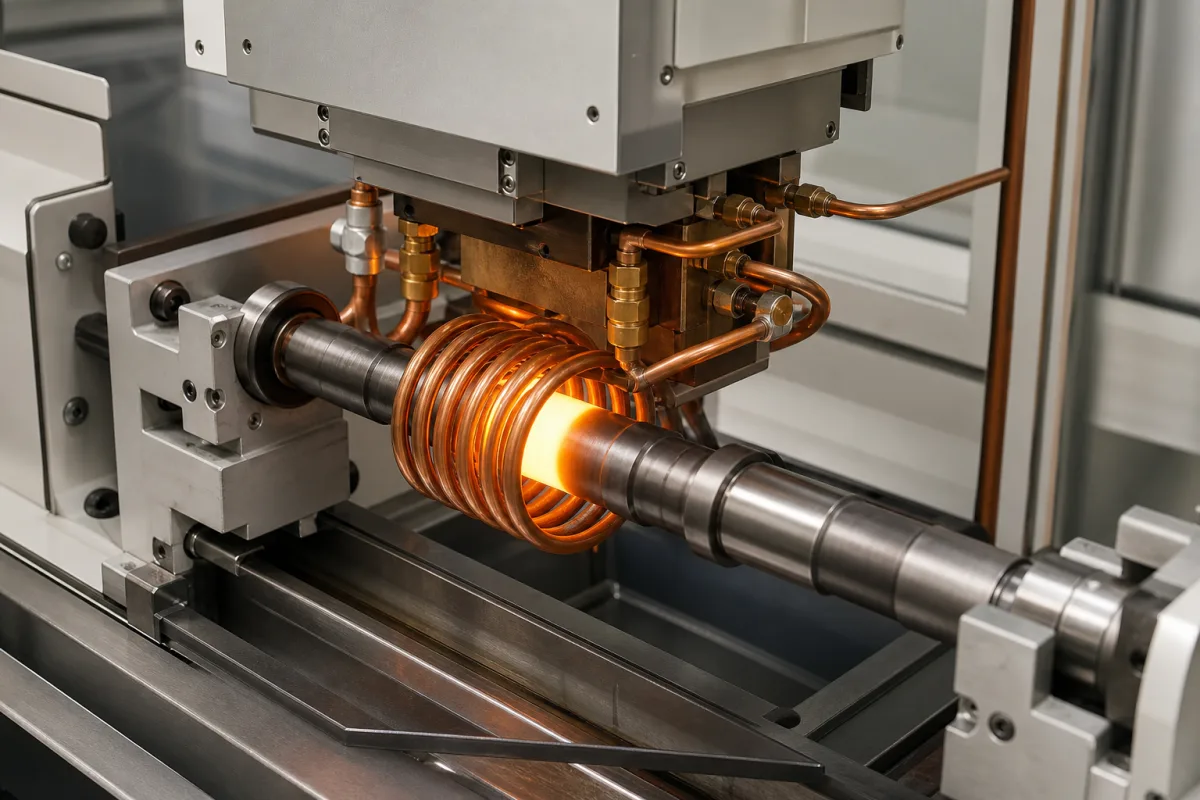
A specialized station within an automated forging line that uses electromagnetic induction to rapidly and precisely heat metal workpieces to forging temperatures.
Product Specifications

Technical details and manufacturing context for Induction Heating Station

Definition
The Induction Heating Station is a critical component of the Automated Multi-Station Forging and Stamping Production Line. It is responsible for rapidly and uniformly heating metal billets or blanks to the precise temperature required for subsequent forging or stamping operations. This station ensures consistent material properties, reduces oxidation compared to traditional furnaces, and enables high-speed, automated material flow between stations.
Working Principle
The station generates a high-frequency alternating electromagnetic field via an induction coil. When a conductive metal workpiece is placed within this field, eddy currents are induced within the material. The electrical resistance of the metal to these currents causes rapid Joule heating, raising the temperature of the workpiece from the inside out in a controlled and efficient manner.
Common Materials
Copper (for induction coils), Ferrous Alloys (for workpiece, e.g., steel), Ceramic/Refractory Materials (for thermal insulation)
Technical Parameters
  • Rated power output of the induction heating generator, determining heating capacity and speed. (kW) Per Request
Components / BOM
  • Induction Coil
    Generates the alternating electromagnetic field that induces eddy currents in the workpiece.
    Material: Copper tubing
  • Power Supply/Inverter
    Converts mains AC power to the required high-frequency AC for the induction coil.
    Material: Electronic components (IGBTs, capacitors), steel enclosure
  • Workpiece Handling Mechanism
    Automatically positions and feeds metal billets into and out of the induction coil.
    Material: Steel, actuators
  • Cooling System
    Circulates coolant (often water) to remove heat from the induction coil and power electronics.
    Material: Stainless steel, plastic tubing, pump
  • Control Panel & Temperature Sensor
    Monitors workpiece temperature (e.g., via pyrometer) and controls the heating cycle parameters.
    Material: Steel enclosure, electronic sensors, HMI
Engineering Reasoning
800-1250°C workpiece surface temperature, 3-10 kHz frequency, 50-500 kW power output
Coil insulation breakdown at 180°C, workpiece melting at 1538°C (pure iron), water cooling failure at 60°C inlet temperature
Design Rationale: Skin effect depth violation (δ = 503√(ρ/μf) mm) causing uneven heating, joule heating (P = I²R) exceeding material Curie temperature (770°C for steel)
Risk Mitigation (FMEA)
Trigger Coolant flow reduction below 15 L/min per 100 kW
Mode: Induction coil insulation thermal degradation
Strategy: Redundant centrifugal pumps with 22 L/min capacity and RTD temperature sensors at coil outlets
Trigger Workpiece misalignment exceeding 5 mm from coil center
Mode: Localized overheating causing surface melting
Strategy: Laser positioning system with 0.1 mm accuracy and servo-driven workpiece manipulators

Industry Taxonomies & Aliases

Commonly used trade names and technical identifiers for Induction Heating Station.

Industrial Ecosystem & Supply Chain DNA

Complementary Systems
Downstream Applications
Specialized Tooling

Application Fit & Sizing Matrix

Operational Limits
pressure: Atmospheric (no pressure rating required for heating chamber)
other spec: Power range: 50-500 kW typical, Frequency: 1-10 kHz for deep heating, 100-400 kHz for surface heating, Heating rate: 100-500°C/sec
temperature: Ambient to 1300°C (typical forging range 900-1250°C)
Media Compatibility
✓ Carbon steels (AISI 1045, 4140) ✓ Alloy steels (tool steels, stainless steels) ✓ Nickel-based superalloys (Inconel, Hastelloy)
Unsuitable: Non-conductive materials (plastics, ceramics, wood) or highly corrosive salt bath environments
Sizing Data Required
  • Workpiece material and required forging temperature
  • Workpiece dimensions (diameter, length) and mass
  • Required production rate (parts/hour) and heating time

Reliability & Engineering Risk Analysis

Failure Mode & Root Cause
Coil insulation breakdown
Cause: Thermal cycling and overheating leading to insulation degradation, often from inadequate cooling or excessive power cycling
Power component failure (IGBT/SCR)
Cause: Voltage spikes, thermal stress from poor heat dissipation, or electrical overstress from improper load matching
Maintenance Indicators
  • Unusual arcing sounds or visible sparks from induction coil connections
  • Overheating components (discoloration, burning smell) or abnormal temperature readings on cooling system
Engineering Tips
  • Implement regular thermal imaging inspections to detect hot spots before catastrophic failure
  • Maintain strict water quality standards in cooling systems to prevent mineral buildup and ensure optimal heat transfer

Compliance & Manufacturing Standards

Reference Standards
ISO 9001:2015 - Quality Management Systems CE Marking - Electromagnetic Compatibility Directive 2014/30/EU ASTM E309 - Standard Practice for Eddy-Current Examination of Steel Tubular Products Using Magnetic Saturation
Manufacturing Precision
  • Coil Alignment: +/-0.5mm
  • Temperature Uniformity: +/-5°C across heating zone
Quality Inspection
  • Leakage Current Test - Electrical Safety
  • Thermal Imaging Analysis - Heating Performance Verification

Factories Producing Induction Heating Station

Verified manufacturers with capability to produce this product in China

✓ 97% Supplier Capability Match Found

T Technical Director from Canada Jan 22, 2026
★★★★★
"Standard OEM quality for Machinery and Equipment Manufacturing applications. The Induction Heating Station arrived with full certification."
Technical Specifications Verified
P Project Engineer from United States Jan 19, 2026
★★★★☆
"Great transparency on the Induction Heating Station components. Essential for our Machinery and Equipment Manufacturing supply chain. (Delivery took slightly longer than expected, but technical support was excellent.)"
Technical Specifications Verified
S Sourcing Manager from United Arab Emirates Jan 16, 2026
★★★★★
"The Induction Heating Station we sourced perfectly fits our Machinery and Equipment Manufacturing production line requirements."
Technical Specifications Verified
Verification Protocol

“Feedback is collected from verified sourcing managers during RFQ (Request for Quote) and factory evaluation processes on CNFX. These reports represent historical performance data and technical audit summaries from our B2B manufacturing network.”

17 sourcing managers are analyzing this specification now. Last inquiry for Induction Heating Station from Mexico (1h ago).

Supply Chain Compatible Machinery & Devices

Automated Assembly Line System

Integrated production system for sequential component assembly operations

Explore Specs →
Automated Powder Coating System

Integrated industrial system for applying dry powder coatings to metal substrates.

Explore Specs →
Centrifugal Pump Impeller

Rotating component that transfers energy to fluid in centrifugal pumps.

Explore Specs →
High-Precision CNC Laser Cutting Machine

Computer-controlled industrial machine using focused laser beams to cut sheet metal with micron-level accuracy.

Explore Specs →

Frequently Asked Questions

What are the main advantages of using an induction heating station in automated forging?

Induction heating stations provide rapid, precise, and energy-efficient heating of metal workpieces to exact forging temperatures, reducing oxidation, improving consistency, and increasing production throughput in automated forging lines.

What types of metals can be processed with this induction heating station?

This station is primarily designed for ferrous alloys like various steel grades, but can be configured to heat other conductive metals. The induction coils and power settings are optimized for the specific workpiece material requirements.

How does the temperature control system work in this heating station?

The station uses integrated temperature sensors and a sophisticated control panel to monitor and adjust power output in real-time, ensuring workpieces reach and maintain precise forging temperatures with minimal temperature variation.

Can I contact factories directly on CNFX?

CNFX is an open directory, not a transaction platform. Each factory profile provides direct contact information and production details to help you initiate direct inquiries with Chinese suppliers.

Get Quote for Induction Heating Station

Request technical pricing, lead times, or customized specifications for Induction Heating Station directly from verified manufacturing units.

Your business information is encrypted and only shared with verified Induction Heating Station suppliers.

Thank you! Your message has been sent. We'll respond within 1–3 business days.

Need to Manufacture Induction Heating Station?

Connect with verified factories specializing in this product category

Add Your Factory Contact Us
Previous Product
Induction Heating Coil
Next Product
Industrial Camera