Final Inspection Station
View system integration details
This page explains how Inspection Control Console is classified within Machinery and Equipment Manufacturing. Technical values and manufacturer relationships are research references; confirm the current specification and supplier evidence for each order.
The Inspection Control Console is a specialized component designed for integration within a Final Inspection Station in machinery and equipment manufacturing.
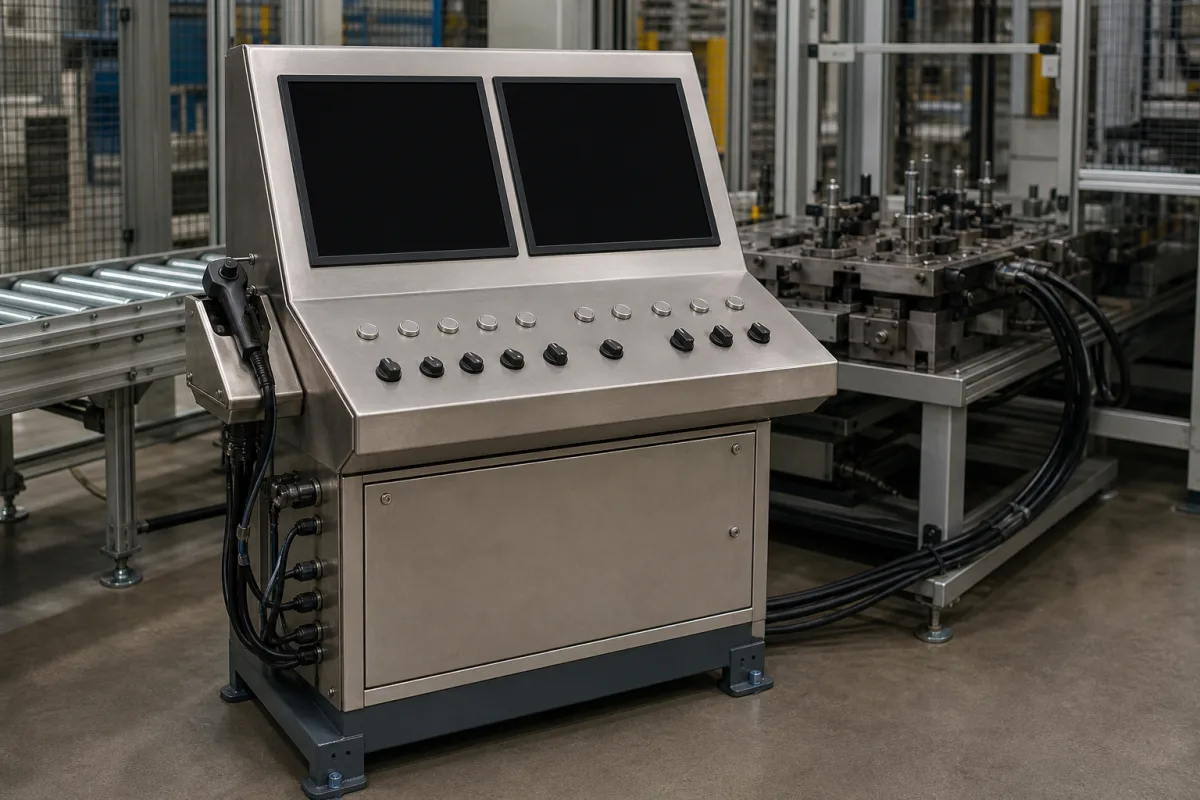
Technical details and manufacturing context for Inspection Control Console
| Parameter | Typical range | Notes & selection driver |
|---|---|---|
| Rated Capacity | 200–1000 kg | Determines maximum load for inspection fixtures |
| Inspection Accuracy | ±0.01 mm | Higher precision required for tight tolerancesISO 2768 |
| Measurement Range | 0–500 mm | Covers typical part dimensions |
| Response Time | ≤0.5 s | Fast response for real-time monitoring |
| Operating Temperature | 0–50 °C | Outside range may affect sensor accuracy |
| Storage Temperature | -20–70 °C | Protect from extreme conditions |
| Humidity Range | 20–80 % RH | Non-condensing; high humidity may cause corrosion |
| Ingress Protection | IP54–IP65 | IP65 for dusty or wet environmentsIEC 60529 |
| Supply Voltage | 220 ±10% V AC | Stable voltage required for consistent operation |
| Power Consumption | ≤500 W | Lower power consumption reduces operating cost |
| Display Resolution | 1920×1080 pixels | High resolution for clear data visualization |
| Communication Interface | RS485, Ethernet | Enables integration with factory networksIEC 61158 |
| Weight | 80–150 kg | Affects installation and portability |
| Dimensions (W×D×H) | 1200×800×1800 mm | Ensure adequate floor space |
Ranges are indicative industry figures for RFQ preparation, not a supplier commitment. Confirm every value and standard with the legal manufacturer before ordering.
| pressure: | Atmospheric only (non-pressurized enclosure) |
| other spec: | IP54 rated, 85-264V AC input, ≤85% humidity non-condensing |
| temperature: | 0°C to 50°C (operating), -20°C to 70°C (storage) |
Indicative industry ranges for design and RFQ preparation. Confirm the exact figures and applicable standard with the manufacturer before specifying.
Quoted from the published standard.
A practical evidence checklist for RFQ preparation and supplier evaluation.
Compare the published product scope and source details, then include your specifications and quantity in an enquiry.
Manufacturer profiles associated with Inspection Control Console.
Explore company information and manufacturing capabilities, then discuss the scope of your project with a relevant supplier.
Ask for use case, specification boundaries, supplier type, and RFQ preparation information for this product.
The console serves as the central human-machine interface for operators at a Final Inspection Station. It provides access to inspection data, system controls, and quality monitoring tools, allowing operators to manage inspection parameters, view real-time results, and make quality decisions during final product verification.
Key specifications include rated capacity (200–1000 kg), inspection accuracy (±0.01 mm per ISO 2768), measurement range (0–500 mm), response time (≤0.5 s), operating temperature (0–50 °C), storage temperature (-20–70 °C), humidity (20–80% RH non-condensing), ingress protection (IP54–IP65 per IEC 60529), supply voltage (220 V AC ±10%), power consumption (≤500 W), display resolution (1920×1080), communication interfaces (RS485, Ethernet per IEC 61158), weight (80–150 kg), and dimensions (1200×800×1800 mm). These are reference ranges; confirm with the manufacturer for the specific model.
The console typically includes data logging capabilities and interfaces with quality management systems via communication interfaces such as RS485 and Ethernet, following IEC 61158. This allows for seamless data transfer and integration into factory networks for centralized quality monitoring.
Regular verification of calibration, communication interfaces, and environmental conditions is recommended. Ensure the console operates within specified temperature, humidity, and ingress protection limits to avoid sensor inaccuracies or damage. Consult the manufacturer's guidelines for specific maintenance procedures.
This component is essential for the following industrial systems and equipment:
Editorial classification, named public sources where available, and source-reviewed manufacturer records.
Compare manufacturer profiles with relevant product and process capability.